October at Light Industry
The Machine That Kills Bad People
Monday, October 5, 2026 at 7pm
Light Industry, 361 Stagg Street, Suite 407, Brooklyn
Anybody's Woman, Bette Gordon, 1981, digital projection, 24 mins
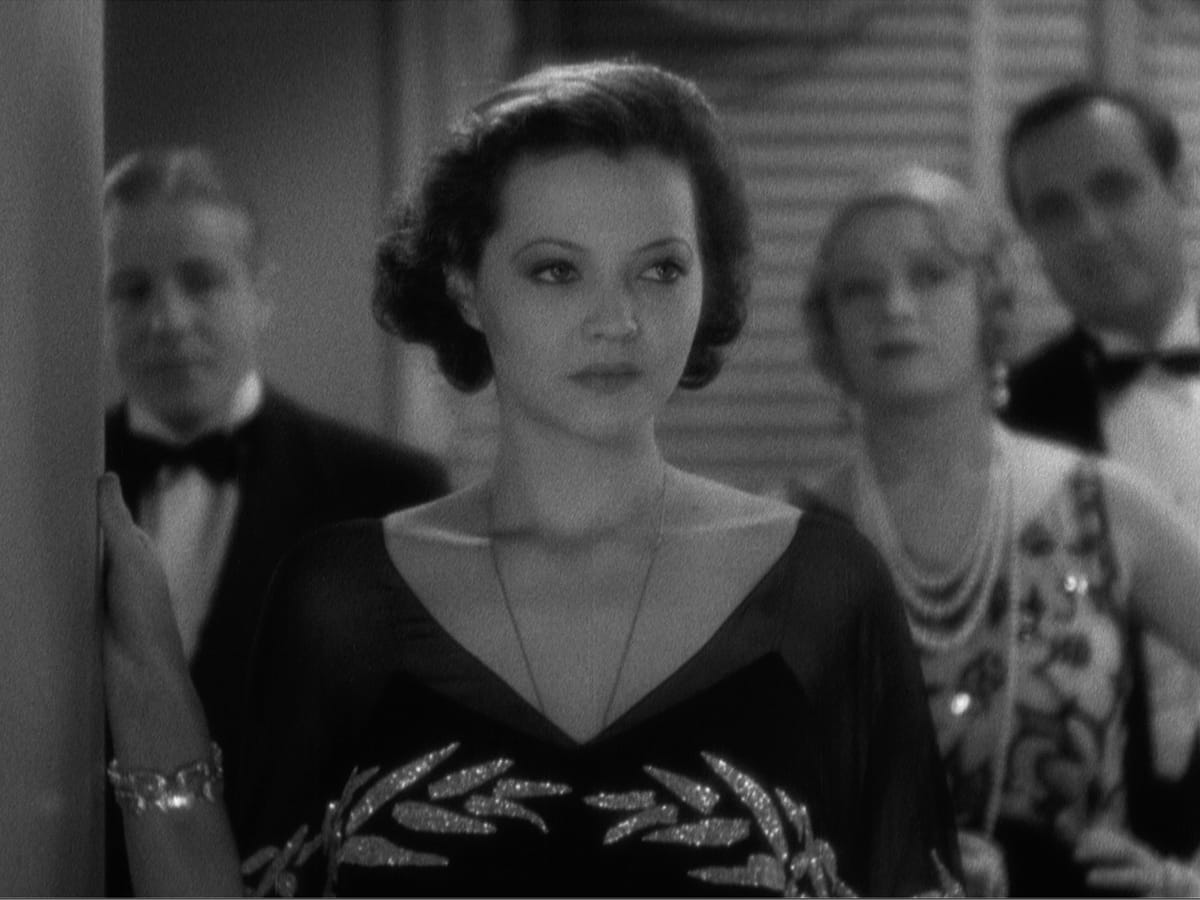
Merrily We Go to Hell, Dorothy Arzner, 1932, digital projection, 83 mins
The Machine that Kills Bad People is, of course, the cinema—a medium that is so often and so visibly in service of a crushing status quo but which, in the right hands, is a fatal instrument of beauty, contestation, wonder, politics, poetry, new visions, testimonies, histories, dreams. It is also a film club devoted to showing work—“mainstream” and experimental, known and unknown, historical and contemporary—that takes up this task.
Programmed by Erika Balsom, Beatrice Gibson, Maria Palacios Cruz, and Ben Rivers, The Machine that Kills Bad People showed double bills at London’s Institute of Contemporary Arts on a bimonthly basis between 2018 and 2026. June of this year brought an end to our regular slot but also marked the publication of a book assembling 39 of the essays commissioned to accompany our screenings.
To celebrate this collection, published by The Visible Press, we’re presenting Merrily We Go to Hell and Anybody’s Woman. The first is a pre-Code feature by Dorothy Arzner, full of marital woes, alcohol, and adultery. The second is Bette Gordon’s Super 8 precursor to Variety (1983), featuring Wooster Group members Spalding Gray and Nancy Reilly discussing pornography and fantasy against the backdrop of Arzner’s filmmaking and the Variety theater.
- MTKBP
Tickets - Pay what you can ($10 suggested donation), available at door.
Copies of the book will be available for sale at the snack bar.
Please note: seating is limited. First-come, first-served, except for members subscribed at $8/month or more, who may reserve a seat by emailing [email protected] at least two hours prior to showtime. Box office opens at 6:30pm. No entry 10 minutes after start of show.

On A.A.A. Offresi
Tuesday, October 6, 2026 at 7pm
Light Industry, 361 Stagg Street, Suite 407, Brooklyn
A lecture by Erika Balsom
On the eve of the Berlusconi era, when social mores were changing and Italian television was beginning its rapid transformation into a private enterprise, a feminist collective under contract to public broadcaster RAI2 made an experimental video work that became a national scandal. In 1981, Maria Grazia Belmonti, Anna Carini, Rony Daopoulo, Paola De Martiis, Annabella Miscuglio, and Loredana Rotondo used hidden cameras to observe the interactions of French sex worker Véronique Lacroix and her clients in a Roman apartment—unbeknownst to the men involved. When asked about their use of this technique, they responded, “It’s profoundly dishonest. But everything that relates to the image is always dishonest.” They called their film A.A.A. Offresi; roughly translatable as “A.A.A. Services Offered,” the title recalled a classified ad for sex work, with the three A’s at the start ensuring a good position in alphabetical order.
The documentary premiered without incident at the Berlin International Film Festival in February, in what would turn out to be nearly its only official public screenings. On the day it was scheduled to air on Italian television a few weeks later, it was censored. Politicians who had never seen the film were certain it was assault on morality, even though it showed almost no sex and instead focused on discussions before and after, mostly about money. The public weighed in from the left and the right, with one letter-writer going so far as to threaten to blow up a cinema or poison the water supply to the RAI offices if it went on air. Soon, the collective faced criminal charges for the facilitation of prostitution and the invasion of privacy, even though they took care not to show any of the men’s faces. The subsequent trial ended in a full acquittal, but the judge ordered that A.A.A. Offresi remain under indefinite sequestration owing to its use of non-consensual recording. This illustrated talk will tell the story of this controversial film, long presumed to be lost.
- EB
FREE
Please note: seating is limited. First-come, first-served, except for members subscribed at $8/month or more, who may reserve a seat by emailing [email protected] at least two hours prior to showtime. Box office opens at 6:30pm. No entry 10 minutes after start of show.
Alfred E. Green’s Four Faces West + André de Toth’s Ramrod
Tuesday, October 13, 2026 at 7pm
Light Industry, 361 Stagg Street, Suite 407, Brooklyn
Presented by Narrow Margin
7pm
Four Faces West, Alfred E. Green, 16mm, 1948, 90 mins
9pm
Ramrod, André de Toth, 16mm, 1947, 95 mins
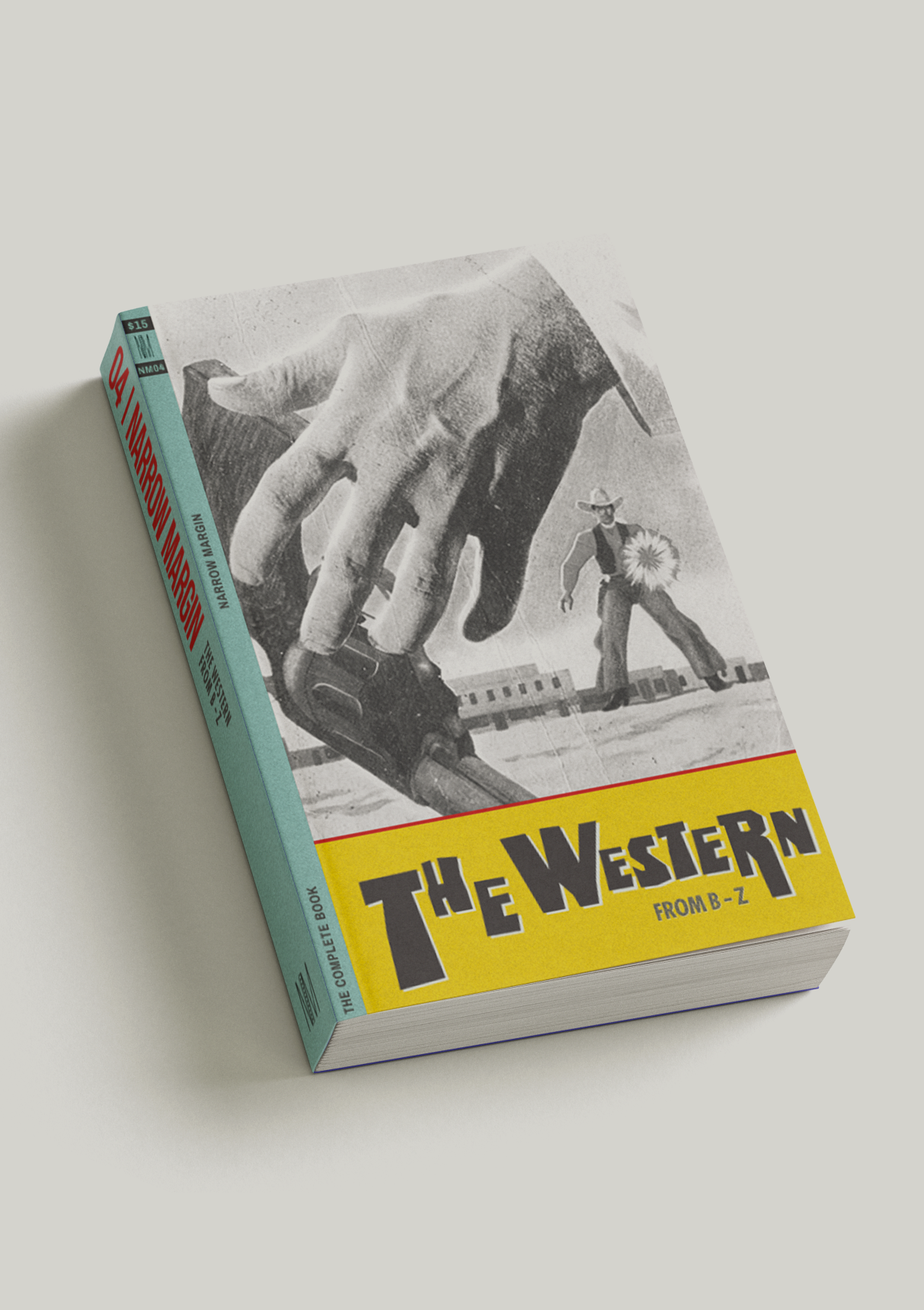
To mark the release of the fourth issue of Narrow Margin, its editors will present two rarely-screened westerns starring Joel McCrea: Four Faces West, directed by Alfred E. Green, and Ramrod, directed by André de Toth. Issue four, The Western: From B-Z, is dedicated to westerns made at the margins, produced with little means and made from the scraps of the studio system: cheap programmers of Poverty Row, seventy-minute features of cowboys with guns ablaze on the backlot. At once popular and peripheral, these westerns were the morass upon which American cinema was built, the crude oil that fueled an empire. However, they also exist in another lineage, one that includes the films of Luc Moullet, Paul Vecchiali, and any other filmmaker who made art with a poverty of means. With meager resources at their disposal, the filmmakers of these minor westerns discovered that simplicity is often the most honest attitude toward all that is criminal and beautiful in cinema’s Wild West.
*
Ramrod and Four Faces West not only star Joel McCrea, one of the horse opera’s most cherished stars during the 1940s and 50s; both were also photographed by Russell Harlan, who would go on to shoot Red River, Lust for Life and Hatari!. Just from this partial filmography, Harlan’s sensitivity to the landscape and its inhabitants is obvious: the shrublands traversed by thousands of cattle in Red River; the grasslands filled with giraffes, elephants, and rhinos in Hatari!; the pastoral landscapes of Auvers-sur-Oise and Arles in Lust for Life.
Shot on location in Zion National Park, de Toth’s Ramrod is especially sensitive to the life of the desert landscape. The film is the first of a cycle of westerns about ranching released after WWII: Hawks’s Red River, Walsh’s The Tall Men, Mann’s The Furies, Fuller’s Forty Guns, Dwan’s Cattle Queen of Montanna. Like these other westerns, Ramrodgorgeously captures the landscape and the cattle that travel through it. Yet de Toth adopts a quieter tone than Hawks and his sublime bovine masses, more modest in his portrayal of ranch life. His film depicts Zion and its animal inhabitants with relished happenstance: cattle, horses, chickens, goats, and deer living out their own little dramas with not a care in the world for McCrea and his co-star. As the Los Angeles Times reported of Ramrod in 1946: “A deer, uncalled for in the script…moved into the scene just as cinematographer Russell Harlan began shooting it, and practically stole the scene from Joel McCrea and Veronica Lake.” Ramrod reveals something almost too embarrassing to state but which will remain profound whenever it is shown: there is beauty in simplicity. Sometimes, a horse wide-eyed and lapping water from the Colorado River is more than enough.
*
Perhaps most well-known as the western in which not a single shot is fired, Green’s Four Faces West is a parable of fundamental values: self-respect, courage, and integrity. The film was part of a trend of postwar westerns that offered an escape from the paranoia of McCarthyism and the Cold War: Tourneur’s Stars in My Crown, Springsteen’s Hellfire, Witney’s Stranger at My Door, and Ford’s Wagon Master. Against the cynicism of a High Noon or even a Silver Lode, these films embraced the naïveté of their genre, treating it as a Saturday matinee sermon on doing right by one’s neighbor.
The film’s protagonist Ross McEwen (played by McCrea) is a good man who has done a bad thing to help those he loves: robbing a bank to support his impoverished father. Over time, he’s been repaying the bank anonymously, mailing back cash whenever he is able to find occasional work or win a little bit of money from gambling. Ultimately, McEwen must decide whether or not to turn himself in—to resolve whether he was justified in acting according to his own moral code. Unlike the westerns of Anthony Mann starring Jimmy Stewart and Gary Cooper, Four Faces West is not about a bad man making good but a good man who might have done wrong. The question the film asks is a fundamental one: “Can past wrongs be righted?” Though the story concerns McEwen’s past transgression, the crimes of history—the violent conquest of the American West—haunt the images of Four Faces West.
Green’s story of redemption is set around El Morro. Otherwise known as Inscription Rock, this immense slab of limestone is covered with carved words and figures made across several epochs, from the Ancestral Puebloans to Spanish conquistadors, American land surveyors, and other early settlers. “Isn’t it strange, how everything is made from sacrifice,” Fay Hollister asks, standing before the rock and its countless etchings. Like so much of the dialogue in this film, Hollister’s remark carries at least two meanings: one that refers to the generations of people who have inscribed their messages in the rock, the other to the decision McEwen must ultimately make to retain his self-respect. McEwen’s past comes back to haunt him in an environment possessed by other crimes: all the men and women “sacrificed” in the making of the West.
This history of conquest emerges not just in the story and its setting but also in the way they are shown, the style of the film’s landscape cinematography harkening back to earlier visual traditions. For the scenes shot on location, Harlan drew on pre-existing photography of the American West, particularly the 1870s photographs of Timothy O'Sullivan. Four Faces West almost exactly recreates two of his photographs of El Morro. Moreover, when McEwen sets the canyons aflame, it is hard not to see O’Sullivan’s well-known photograph of Canyon de Chelle. In that image, O’Sullivan depicts an entirely depopulated terrain marked by the ruins of Puebloan cave dwellings. Only a decade prior, Navajo were forcibly removed from those canyons by Kit Carson, who scorched their farmland and killed their livestock. When McEwen sets the landscape ablaze, this other past leaks into the film: one that cannot or will not be righted. McEwen’s reflection of his own deeds might as well reflect the mindset of innumerable Americans: “If we can forget what’s happened, I think it’s worth it.”
Four Faces West appears to be a naive story of doing good and paying one’s debts yet it communicates something far more ambivalent and mysterious. However direct and candid they may appear, every image, phrase, and gesture invites multiple readings; even McEwen’s final, seemingly valiant act leaves an aftertaste more sour than sweet. Perhaps the western remains fascinating because so often it ends with questions rather than answers, its simplicity in fact an irresolvable multiplicity.
- John Winn
Copies of the print edition of the fourth issue of Narrow Margin will be for sale at the event.
Tickets - Pay what you can ($10 suggested donation), available at door. One ticket good for both shows.
Please note: seating is limited. First-come, first-served, except for members subscribed at $8/month or more, who may reserve a seat by emailing [email protected] at least two hours prior to showtime. Box office opens at 6:30pm and re-opens at 8:30pm. No entry 10 minutes after start of show.
Love is Strong as Death: The Antioquian Cinema of Luis Alberto Álvarez and Víctor Gaviria
Sunday, October 18, 2026 at 5pm
Light Industry, 361 Stagg Street, Suite 407, Brooklyn
Presented by the Theater of the Matters and Archipelago Books
The Theater of the Matters and Archipelago Books present an evening dedicated to Luis Alberto Álvarez (1945-1996), the late Claretian priest and film critic from the city of Medellín, Colombia.
Throughout the 70s and 90s, Álvarez was a galvanizing force in Colombian cinema, a figure akin to André Bazin in the Paris of the 50s. With his prolific writing in El Colombiano and Kinetoscopio, the film journal he co-founded in 1990, Álvarez shaped the ethics and aesthetics of a devoted circle of followers in Medellín, a city far from the center of the national film industry in Bogotá. Guided by a Catholic love for being and for reality, and a belief that “where sin abounds, love abounds much more,” Álvarez was a strong opponent of the placeless tendencies of mainstream Colombian moviemaking, advocating instead for an authentic, regional cinema grounded in the place, people, and tongue of the country, particularly the poor of the Antioquia region and the street youth of his city. An erudite writer on opera and classical music as well, Álvarez found in cinema the “splendor of order”: an art of looking at the world in all its disordered beauty and ugliness and organizing it into a splendid, emotional form.
To honor Álvarez’s legacy, we present a chronological selection of films by his friend and student, poet and filmmaker Víctor Gaviria. In Álvarez’s eyes, Gaviria was his country’s first auteur, whose films both observe and transfigure reality on the margins of society, showing a Colombia at once familiar and invisible. This four-film program is organized for the release of Aside From My Heart, All is Well, a novel by Héctor Abad based on the life and times of Álvarez, published in a new English translation by Archipelago Books.
A “visual poem for blind children,” Gaviria’s debut film, Buscando tréboles, was made in collaboration with students and teachers from the Campo Valdés School for the Blind and Deaf in Medellín. The film unfolds as a series of tactile actions, at once everyday and dream-spun, all conceived by the children themselves: they type on a typewriter; read braille; wrestle with a monkey; swim in the pool; feel for clovers in the garden; record themselves singing on a tape recorder and delight in playing it back. In 1979, Gaviria, then a psychology student and author of a few books of poetry, created an earlier version of the film with an 8mm camera gifted to him by his sister. This first effort was awarded top prize at an inaugural Super 8mm Festival in Medellín, earning Gaviria 15,000 pesos and a visit to the house of the festival’s head juror, Father Luis Alberto Álvarez. For Álvarez, Gaviria’s film signaled the birth of a new cinema: “Those eight minutes, so easy to overlook, are the most real eight minutes in Colombian cinema in a long time, perhaps ever.” A year later, armed with the prize money from the festival, Gaviria “remade” Buscando tréboles in 35mm under the tutelage of Alvarez. This was the beginning of a long mentorship, lasting until Alvarez’s premature death in 1996.
Continuing the experiments of Buscando tréboles and his early shorts—often made in 8mm with friends as crew members, including Luis Alberto Álvarez as sound recorder—Gaviria worked entirely with a cast of young non-professionals for his first narrative medium-length film, Los habitantes de la noche. Produced by FOCINE, a short-lived but influential state-run production unit, the film tells the tale of a group of marginalized youths who attempt to rescue their friend from a mental institution, a story Gaviria shaped from the kids’ own testimonies. Moving through a nocturnal city by foot and on bikes, the boys communicate via a late-night call-in radio show familiar to all denizens of Medellín, “The Inhabitants of the Night.” Shot in situ on the streets, Gaviria heightens the real-world locations with subtly expressive shafts of light, hinting at the fairy tale neo-realism of later films like La vendedora de rosas. When it premiered on television in 1983, a time of heavy drug trafficking and gang warfare in the city, the film was a revelation: “With Los habitantes de la noche, a new Medellín was revealed to us amidst the safety of our homes: the characters in this story spoke like street people, their actions were as swift and tragic as the sidewalks of our adolescence” (Julián David Correa Restrepo).
Born from extensive field research and interviews with his actors and collaborators, Gaviria’s films are an amalgam of social memory: “I make films with what others cast aside: with stories that traverse the social realm, with what the actors of life have to say.” With La vieja guardia, his follow-up to Los habitantes de la noche, Gaviria shifted away from the streets of Medellín to the paisa culture of rural Antioquia. The film centers on a group of aging retirees from the defunct National Railways. In the ruins of an old train station, in the light-dappled dust of the past, the old-timers’ imaginations roam free. They talk of their past deeds and conjure up palpable visions, alternately playful and dangerous. Shot with all natural light by cinematographer Rodrigo Lalinde, who hauled his equipment to remote locations far from the capital—a feat Gaviria and Luis Alberto Álvarez once compared to “Hannibal crossing the Appenines, pushing elephants through the snow”—it’s a film that speaks of the immense material weight of history bearing down on the present. La vieja guardia was particularly loved by Álvarez, who wrote of it: “I believe Víctor’s basic learning is complete. He is no longer just a promising talent, but a fully formed filmmaker.”
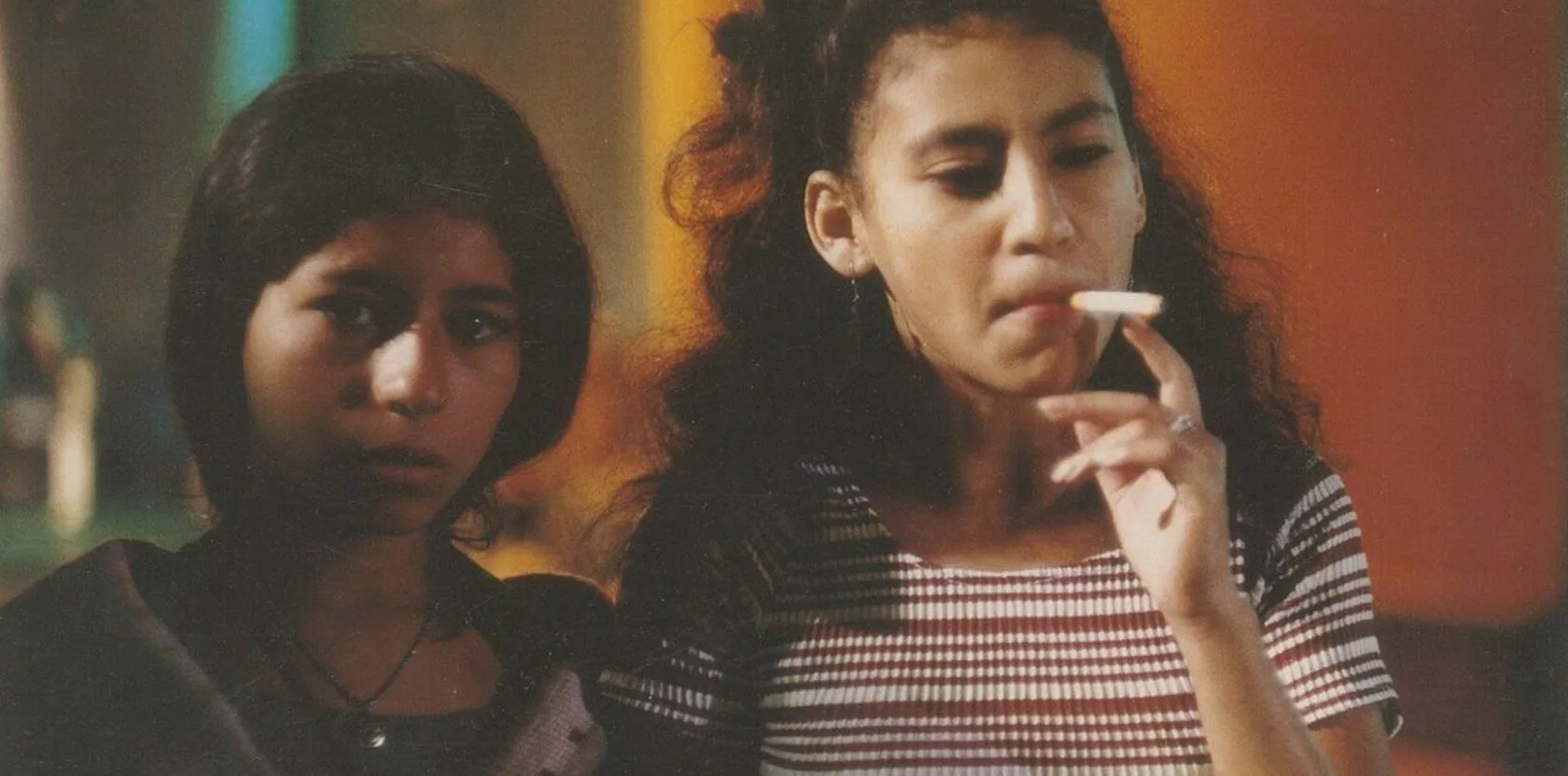
Gaviria’s second feature, La vendedora de rosas, is a luminous culmination of his decades-long work with non-professionals. The film loosely adapts the Hans Christian Anderson tale “The Little Match Girl” and fuses it with the real-life story of a teenage girl from the slums of Medellín, who eked out a living selling roses in the city’s nightclubs, and who wound up dead on the streets on Christmas Eve. Gaviria spent months among the street kids who populate the film, observing without judgment their way of being, their means of survival, their codes, their colloquial speech, which they directly transposed to the dialogue of the film. “What is impressive to see is that the street children themselves are looking for a way to reach a place from which they have been evicted as children, which is a world of original love,” wrote Gaviria. Over the course of a single night, Gaviria’s moving camera meticulously observes this vast ensemble, made up mostly of young girls, as they hustle in Medellín’s lower depths. They sniff glue, steal, deal drugs, evade police, and sell anything they can get their hands on, while the threat of violence looms everywhere. As tragic as it is comic, the film was widely rejected at the time of its release, its unsentimental truths too hard to swallow for Medellín’s middle class.
- TM
Part 1
Buscando tréboles (Searching for Clovers), Víctor Gaviria, digital projection, 1980, 10 mins
Los habitantes de la noche (The Inhabitants of the Night), Víctor Gaviria, 1983, digital projection, 20 mins
La vieja guardia (The Old Guard), Víctor Gaviria, 1984, digital projection, 25 mins
INTERMISSION
Part 2
La vendedora de rosas (The Rose Seller), Víctor Gaviria, 1998, digital projection, 115 mins
Tickets - Pay what you can ($10 suggested donation), available at door.
Please note: seating is limited. First-come, first-served, except for members subscribed at $8/month or more, who may reserve a seat by emailing [email protected] at least two hours prior to showtime. Box office opens at 4:30pm.
Light Industry is supported by our members. Public assistance is provided by the New York City Department of Cultural Affairs, in partnership with the City Council, and the New York State Council on the Arts, with the support of Governor Kathy Hochul and the New York State Legislature.
Light Industry Benefit Book Sale
accompanied by
Lush Themes from Motion Pictures: Film Music and Easy Listening, 1955-1975
Sunday, October 25, 2026
