Week 19 - Graduating into something different
Around this time of year it's typically graduation season across college campuses. And many of these campuses are looking empty this time around. I grew a bit sympathetic towards those who missed out on their final semester of college / grad school / law school / med school / etc. But it also prompted me to think about how will higher education (or all education to be frank) will change. The price of education has been a hot topic for the last decade considering a four-year degree tends to sink students deep into student loan debt. Really forcing fresh graduates to evaluate... whether it was worth it to begin with. Here are a few articles that stuck out on predictions and actions happening now in the midst of all this.
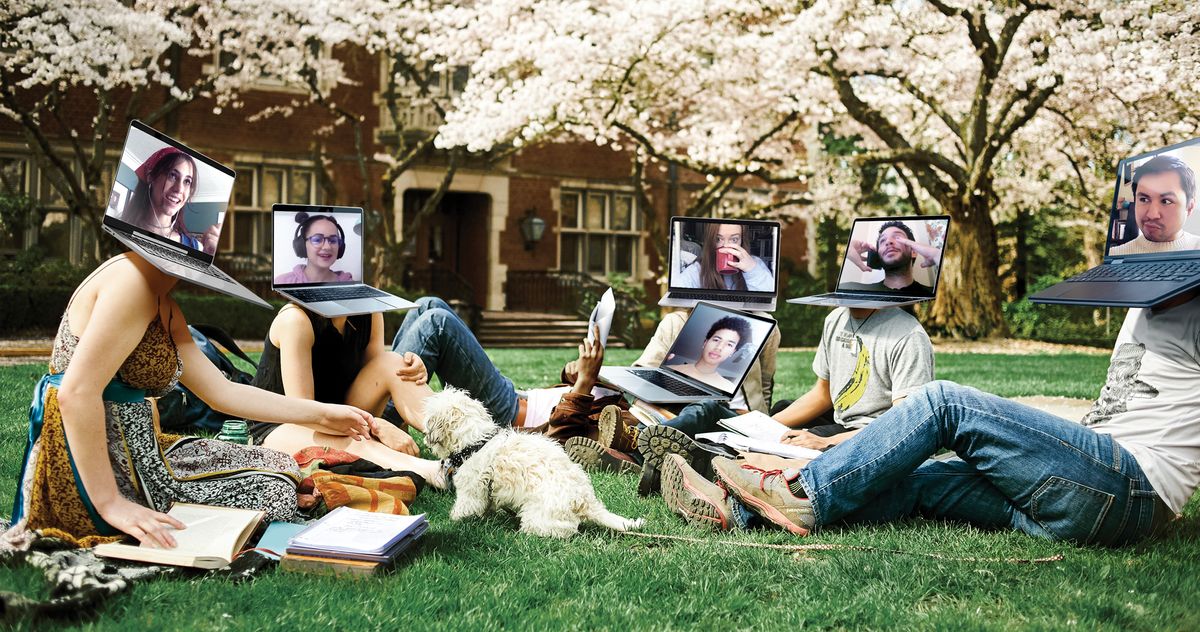
Bueller? Bueller? Anyone?
https://www.nytimes.com/aponline/2020/05/04/us/ap-us-virus-outbreak-tuition-lawsuits.htmlClass-action lawsuits demanding tuition refunds have been filed against at least 26 colleges, targeting prestigious private universities, including Brown, Columbia and Cornell, along with big public schools, including Michigan State, Purdue and the University of Colorado, Boulder.
... The suits reflect students’ growing frustration with online classes that schools scrambled to create as the coronavirus forced campuses across the nation to close last month. The suits say students should pay lower rates for the portion of the term that was offered online, arguing that the quality of instruction is far below the classroom experience.
...Schools insist that, after being forced to close by their states, they're still offering students a quality education.
... [student] said the online classes he’s been taking are poor substitutes for classroom learning. There’s little interaction with students or professors, he said, and some classes are being taught almost entirely through recorded videos, with no live lecture or discussion.
... A complaint against the University of California, Berkeley, says some professors are simply uploading assignments, with no video instruction at all. A case against Vanderbilt University says class discussion has been stymied and the "quality and academic rigor of courses has significantly decreased.
Along with tuition, the cases also seek refunds for fees that students paid to access gyms, libraries, labs and other buildings that are now closed. All told, the complaints seek refunds that could add up to several thousand dollars per student at some schools.
The lawsuits ask courts to answer a thorny question that has come to the fore as universities shift classes online: whether there’s a difference in value between online instruction and the traditional classroom. Proponents of online education say it can be just as effective, and universities say they've done everything they can to create rigorous online classes in a matter of weeks.
Less Face to Face, More Facetime this Fall

The Cal State system is projecting losses of $337 million for the spring term alone as a result of the pandemic, including loss of revenue from student housing, parking and campus bookstores, as well as unanticipated costs related to cleaning, overtime and the shift to distance education. The figure does not reflect offsets from federal aid or operational savings.
He also acknowledged that the university system lacks the resources to provide coronavirus testing for everybody and to trace the contacts of infected people should there be an outbreak on a campus.
...Trustees did not make any decisions about tuition or fees for the fall term. But several of them, led by ex officio trustee Lt. Gov. Eleni Kounalakis, urged the board to avoid considering a tuition hike to plug budget holes.
“There’s going to be a lot of students questioning the value of going into debt for higher education if you’re not physically in the classroom,”
Ivy League - Powered by F.A.A.N.G
How Coronavirus Will Disrupt Future Colleges & Universities
NYU Stern School of Business professor Scott Galloway predicts a handful of elite cyborg universities will soon monopolize higher education.
This whole interview is rather fascinating. So I'll only pick out the parts that really forces us to re-imagine what colleges could look like.
re: the collapse It will be like department stores in 2018. Everyone will recognize they’re going out of business, but it will take longer than people think. There will be a lot of zombie universities. Alumni will step in to help. They’ll cut costs to figure out how to stay alive, but they’ll effectively be the walking dead. I don’t think you’re going to see massive shutdowns, but there’s going to be a strain on tier-two colleges.
There will be a dip, the mother of all V’s, among the top-50 universities, where the revenues are hit in the short run and then technology will expand their enrollments and they will come back stronger. In ten years, it’s feasible to think that MIT doesn’t welcome 1,000 freshmen to campus; it welcomes 10,000. What that means is the top-20 universities globally are going to become even stronger. What it also means is that universities Nos. 20 to 50 are fine. But Nos. 50 to 1,000 go out of business or become a shadow of themselves. I don’t want to say that education is going to be reinvented, but it’s going to be dramatically different.
How? Ultimately, universities are going to partner with companies to help them expand. I think that partnership will look something like MIT and Google partnering. Microsoft and Berkeley. Big-tech companies are about to enter education and health care in a big way, not because they want to but because they have to.
Can you walk me through what that kind of online curriculum might look like? Well, I was a graduate-student instructor in micro- and macroeconomics in business school for Christina Romer, who went on to be part of the Obama Cabinet. And she taught one big class a week, 400 kids in a big class. And then there were two classes taught by the GSI, so we had smaller classes of 20 to 30 kids. She was the big star and then there were two classes done in person. I think she’d probably teach the class people come to campus for and then we’d break up and do online courses.