[Archive] Product Newsletter | July to Nov 2019
Happy end of the year, everyone! Here is the list of articles from this year's newsletter. Here's to continuing this experiment into 2020!
Week of July 8
Leveraging & Pumping of Assets (Economist)
“Ten or 20 years ago it never crossed your mind to leverage your art collection. But the word is out now,”..... As interest rates have fallen, borrowing has become more attractive. Open public registers make it easy to check if art is encumbered. Price estimates and auction results available online since the early 2000s have made underwriting easier. In America collectors can even keep encumbered art on their wall.
Learn faster with this hack (Business Insider)
He came up with a three-step process that can help anyone learn faster and retain more: self-quizzing, summarizing and sharing, and associative learning.......Even just thinking that you'll need to teach someone can make you learn more effectively. According to the researchers, "When teachers prepare to teach, they tend to seek out key points and organize information into a coherent structure. Our results suggest that students also turn to these types of effective learning strategies when they expect to teach."
The Beginning & Future of Data Scoring (Economist)
Well into the 20th century, systematic data on potential borrowers barely existed. The early American credit bureaus were local operations that scoured newspapers for information: notices of arrests, marriages, promotions and more. They included all sorts of dubious stuff, including information about people’s marital troubles, sex lives and political activities. Little science was involved....“Good” loans, it turned out, were correlated with telephone-ownership, longer time at the same address, longer employment in the same job and the applicant’s age.
Constructing a story with data (Medium::Sequoia)
It is valuable to identify key orthogonal metrics that matter the most. These metrics can help tell a compelling story that answers your primary question. Identify these metrics and start probing the story they tell.
Week of July 15
The continuing difference between platforms vs. aggregators (Stratechery)
Shopify is not doing everything on their own: there is an entire world of third-party logistics companies (known as “3PLs”) that offer warehousing and shipping services. What Shopify is doing is what platforms do best: act as an interface between two modularized pieces of a value chain.....What is powerful about this model is that it leverages the best parts of modularity — diversity and competition at different parts of the value chain — and aligns the incentives of all of them. Every referral partner, developer, theme designer, and now 3PL provider is simultaneously incentivized to compete with each other narrowly and ensure that Shopify succeeds broadly, because that means the pie is bigger for everyone.
Infinite digital inventory hampering a user's & brand's experience (Bloomberg Opinion)
This is emblematic of one of Amazon’s greatest weakness. It can be a great place to shop if someone knows exactly what she’s looking for, or for relatively undifferentiated purchases like toothpaste. Again and again, though, Amazon can be clueless about guiding people who aren’t sure what they want, or if they care a lot about how a product looks or works.
Email & Audience continuing to be big for creators even in 2019 (Fortune)
Chen has big dreams about what the company could become — a one-stop shop for content creators that allows them to make real money from day one. “Substack could provide the tooling, the audience, the monetization hooks, the promotion, and maybe even give you ideas for things to write about,” he said.
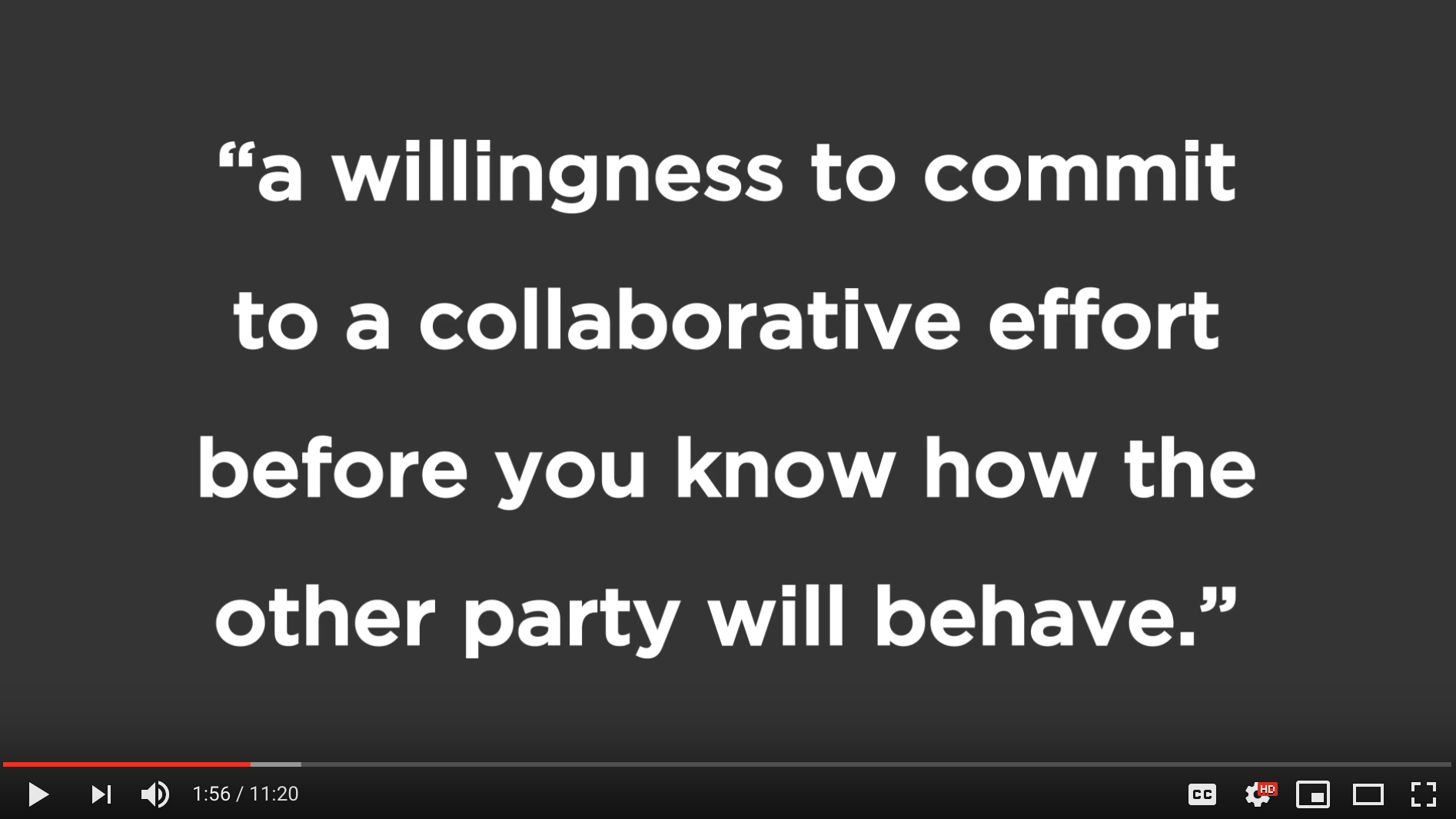
Trust is a combination of different cues just digitized (Youtube video)
Working definition of trust:
Product Strategy is all about framing a cohesive narrative (Medium::Alex Plutzer)
You don’t need to present a roadmap. Just help people understand how you get from today to your vision.
Week of July 29
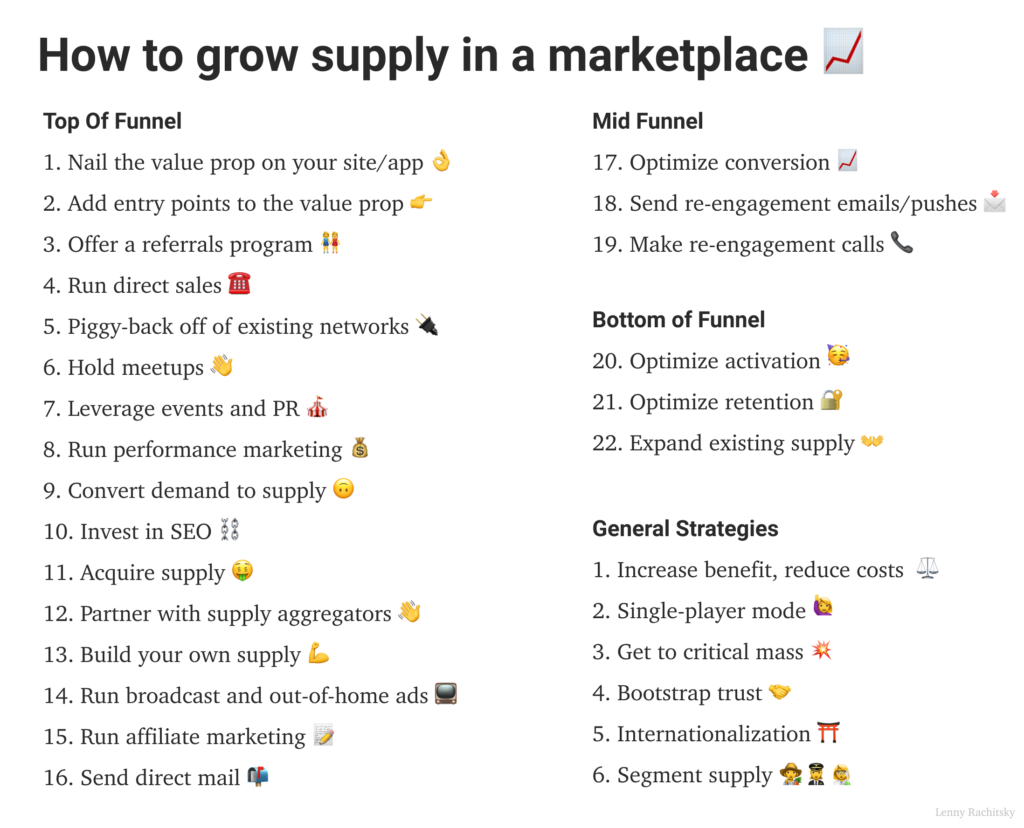
28 ways you can grow the supply side too (Andrew Chen)
The nuts & bolts to scripting a comeback for Etsy (Fortune)
Silverman has moved to improve search, payment and checkout, and shipping—the nuts and bolts that build customer trust....Fisher, the technology chief, says improved search results added tens of millions of dollars to GMS last year, but there’s room for improvement. ...Sellers currently have great leeway to set shipping fees, something that the company believes can turn off buyers. Some 30% of items are eligible for free shipping; Silverman wants to push that figure toward 100%, even at the risk of upsetting sellers.
Creators-as-a-customer for Youtube (The Verge)
YouTube is adding more ways for video creators to make money, as the company and its users work toward becoming less reliant on sometimes-uncertain advertising deals. The new features include more subscription options, additional merchandise partners, and another way to receive tips during live streams.
Viral lessons from the Blair Witch project (NYT)
That particular strategy may be hard to duplicate now, but the deeper lessons about connecting with fans in a media-driven age are still relevant.
“I think ‘The Blair Witch Project’ was the first example of what the power of fandom would do in Hollywood,” said Monello, now the founder of Campfire, an entertainment-marketing agency. “When you connect fans together on the internet, their shared passion deepens.”
Week of Aug 5
There's a mental model for everything
Mental Models Box is a collection of models with fairly broad applicability. While there are a lot of great resources out there on mental models, we've tried to maintain a focus on brief descriptions with simple, real life examples of the models in use.
It pays to be seen...or is it they’ll pay to be seen (The Verge)
This is actually a link within last week's article on Youtube. It's from 2017, but interesting to see how they took a seemingly normal product (comments) and monetized it.
Soon, when someone goes on a live stream, you’ll see a dollar bill symbol in the chat window. Clicking this button opens up a slider that lets you set the dollar amount you’d like to send the YouTuber. The more you pay, the longer the comment gets pinned. You’ll also get a few more characters for your message as well.
Speed-as-a-feature (Economist)
So why does the Fed want its own? First, it is not convinced that tch’s system will ever connect to all the country’s tiny banks. Mr Ledford says that tch’s plan is to reach smaller banks through the technology companies that provide their computing systems. Second, it fears that without competition prices will be too high, quality too low and innovation too slow. (The tch has promised not to discriminate against small banks. It charges sending banks a flat 4.5 cents and receiving ones nothing.) Third, it worries that a single service will create a “single point of failure”. Doubling up will make the whole system safer.
Week of Aug 12
Changing consumer behavior changing the business landscape (NYT)
Yet even as delivery apps create new kinds of restaurants, they are hurting some traditional establishments, which already contend with high operating expenses and brutal competition. Restaurants that use delivery apps like Uber Eats and Grubhub pay commissions of 15 percent to as much as 30 percent on every order. While digital establishments save on overhead, small independent eateries with narrow profit margins can ill afford those fees.
The opportunity & costs of enabling liquidity within 2.23 billion (WSJ)
Facebook Inc. created an online flea market where users not only see all the bicycles, bird houses and BMWs for sale nearby, but also the names, profile photos and general locations of buyers and sellers....It is so popular that more than one in three people in the U.S. use it monthly....But the experiences of many people who use the marketplace suggest that creates a false sense of security and a fertile ground for scams or misconduct—on both ends of transactions.
Instagram says it doesn’t receive compensation directly for the sales it enables through hosting influencers’ posts. Instead, it basks in the traffic they bring. The more people engage on their platform, the greater its value to advertisers....According to a 2019 survey from Pew Research, 63% of users check in every day, with 42% checking in multiple times a day. There are 4.2 billion likes a day on Instagram, according to social-media analytics company Sprout Social, suggesting the feature itself is well-liked.
Loving your own leverage (Techcrunch)
Going forward, copyright owners will no longer be able to monetize creator videos with very short or unintentional uses of music via YouTube’s “Manual Claiming” tool. Instead, they can choose to prevent the other party from monetizing the video or they can block the content. However, YouTube expects that by removing the option to monetize these sorts of videos themselves, some copyright holders will instead just leave them alone.
Week of Aug 19
The resilient yet strong dark horse of e-commerce, Shopify (FT)
Logistics is a problem Mr Lütke has wanted to tackle for many years. Small businesses — which make up the vast majority of Shopify’s merchants — find it “wickedly difficult” to keep up with the messy, expensive business of shipping, returns and storing inventory, particularly in light of the high consumer expectations set by the likes of Amazon, which sees orders delivered within a day or two....
Mr Lütke is betting that a large number of Instagrammers will still end up using Shopify to run their stores’ back-end, even if some steps in the purchasing chain are owned by Facebook. “The more people engage in internet buying and selling, the better our business will work,” he said.
A vision into the IG shopping experience (Medium::Cheddar)
“If you look at overall commerce, it’s a larger part of GDP (gross domestic product) than marketing is today,” Shah told Cheddar. “E-commerce is a smaller part of overall commerce and mobile is even smaller. So I think there’s a while before we can get to a place where it is as meaningful as our ads business today. But the reason we’re excited about the opportunity is I think the market is quite, quite large.”....We have 25 million businesses on the platform, half of whom don’t list a website. So Instagram is their digital platform. And so they’re already engaging with their customers in Feed and in Stories and through Direct (messaging). And so being able to turn that discovery and consideration mechanism into an actual purchase is something that I think is great for businesses, great for people, and truly could be good for our business.
It's smart business to be where the fans are even as behaviors change (WSJ)
“The reality is all of her fans are on our platform,” says Marian Dicus, Spotify’s head of artist and label services.
In announcing the album in June, she used her social-media accounts to encourage fans to “pre-add, pre-save, pre-order (all the pre stuff you feel like doing),” referring to ways streaming users can flag albums they want in their libraries before they are released.
“Holding out from streaming now is really like cutting off 80% of your face,” says Nielsen Music analyst David Bakula. “The business has gotten to that level where it’s not just important to be there, it’s important to be very prominent there.”
Week of Sept 2
Diversified content, but no diversified businesses in Podcasting (WSJ)
the podcast business is posting a tidy 18% compound annual growth rate for weekly listeners. The troubling news is that rate is far below the 45% growth rate in podcast advertising revenue, a disparity that has many questioning whether we’ve reached peak podcast.
Mr. Granger says that while advertising money and new podcasts currently appear to be an infinite resource, it’s unclear how many more people will tune in.
“The volume of content is increasing rapidly; the volume of advertising is increasing rapidly; but the volume of available listening hours can’t keep up with this pace,” he said. “The demand from advertisers is going to eclipse the growth rate of the expansion of new audiences.”
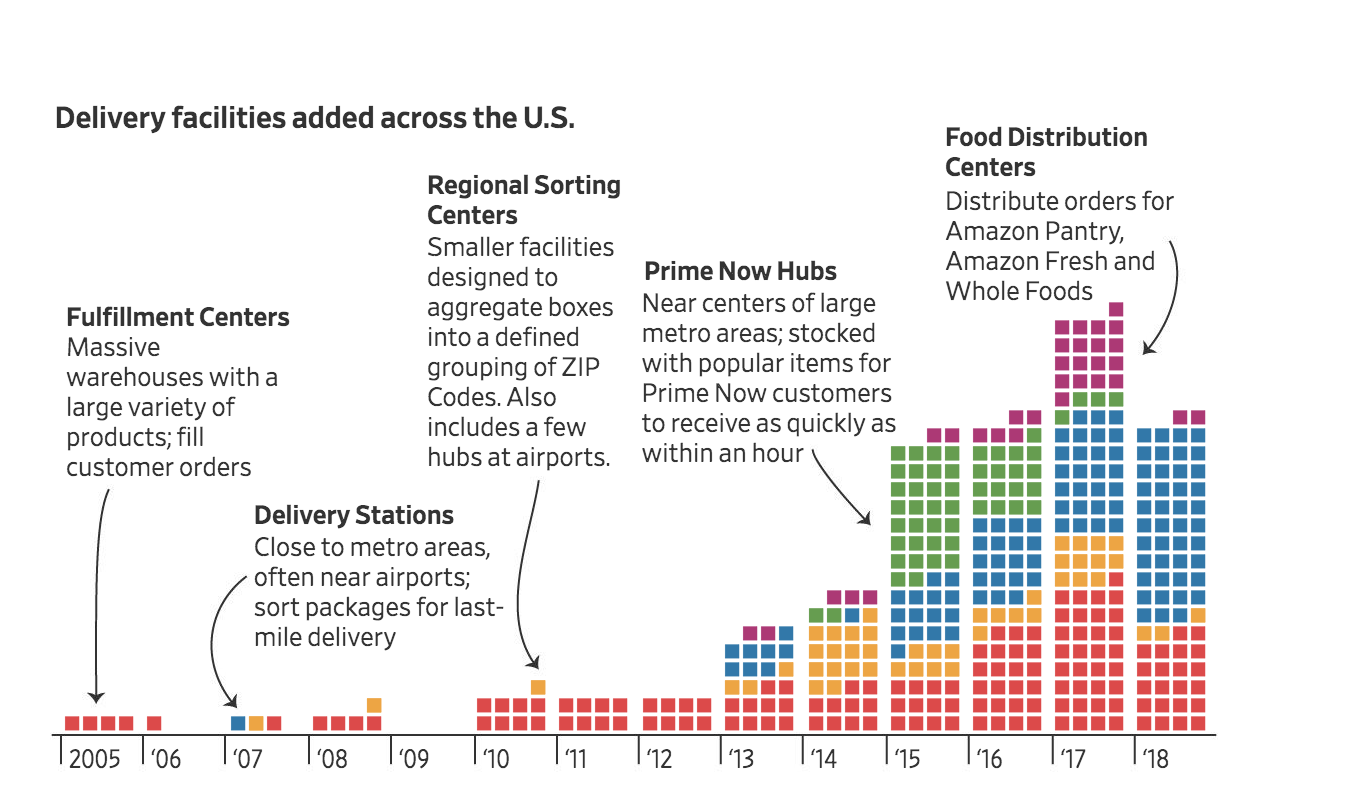
Graphical growth of growing distribution (WSJ)
A company once about mission now a company of mercenaries (VOX)
When Etsy was founded, there was no such thing as a reliable platform from which to start a small, creative business. There is still not really any other platform from which to start a small, creative business.
But the shadow of Amazon looms over him too. He can’t imagine what would happen if he told someone, in 2019, that something they want to buy won’t be available until production catches up in “a few months.” He doesn’t offer 24-hour customer service because he doesn’t think there’s a way to do so that wouldn’t be detrimental to his employees’ health, and some people have not been particularly understanding of that.
“We talk about educating people about handmade, I think it’s also about educating people about good practices for small businesses,” Cummings says. “This isn’t a corporation.” This is not so much an Etsy problem as it is the fundamental problem of any online business, on any platform.
“I think the most important thing to focus on for sellers, for small-business owners, is the broader lesson that e-commerce stores can’t put their eggs in one basket,” Kate Kennedy tells me, shuddering when she remembers what happened to everyone who built audiences on Vine. “It’s important to leverage platforms like Etsy that give you passive access to high volumes of new customers. But you have to build it in tandem with properties that you own and have control over.”
Week of Sept 9
Diversifying Airbnb's company product portfolio with unique brands (WSJ)
Airbnb has been rapidly expanding its experience offerings, from 500 in 12 cities in 2016 to 40,000 in more than 1,000 cities today, the company said.
“As we grow, it’s important that we maintain unique, high quality supply,” Airbnb said. “With Atlas Obscura specializing in unusual and obscure travel destinations, this relationship continues to build on our intention to offer something more authentic and less mass-produced.”
“What we have is a very powerful brand that is not dependent on the traditional lines of revenue that digital media has depended on,” Mr. Plotz said. “Because of our deep connection with our community, we are trusted to be a travel partner and there are all these opportunities and people are hungry for them.”
Shopify seriously fulfilling on its fulfillment promise (pymnts)
The acquisition will help Shopify boost the growth of its Shopify Fulfillment Network, the fulfillment network it launched in June to ensure timely deliveries, lower shipping costs, and provide superior customer experience for merchants and their customers. The addition of 6 River Systems’ cloud-based software and collaborative mobile robots to the network will increase the speed and reliability of warehouse operations.

##Week of Sept 16
It literally pays to be part of the inner circle (The Atlantic)
Many of the Instagram users who have caught on to this financial hack are lifestyle influencers charging money for friendship at its most literal—broken down into its component parts, which are then sorted into various tiers of ascending value. (Like high school!) Others are artists and creative types funding specific projects, charging $1 a month for behind-the-scenes content on their cosplay or illustration accounts. Podcasts and YouTube channels with loyal followings charge for extra, more intimate access to their hosts. Former venture capitalist Jenny Gyllander, who now runs the product-review Instagram account @thingtesting as her full-time job, offers a $100 lifetime membership to her Close Friends list—300 people have signed up, and she’s now working her way down a waiting list.
Tinder's creative onboarding to change up the mundane (NYT)
The project, called SwipeNight, consists of four episodes. One will air each week on the Tinder app. In each episode, users who participate will be ushered through an apocalyptic scenario and prompted to make a series of choices, from the seemingly unimportant (how to best D.J. a party) to the critical (whose life to save). The show features a cast of young diverse actors and, like a video game, gives the user a first-person perspective on the action.
Participants will then show up in each other’s lists of potential matches. Some of the choices they made during the show will be visible on their profiles. That is when, the company hopes, a number of those people will swipe right on each other and talk about what they experienced.
Tinder has traditionally been viewed as a predate experience. SwipeNight looks to collapse some elements of a first date — the mutual experience of some diversion — into its platform.
First Principles easy to understand, but hard to practice (twitter)

##Week of Sept 23
eCommerce runs the (digital) world, and will grow (WSJ)
In the U.S. alone, quarterly e-commerce retail sales have doubled since the beginning of 2014 to $146 billion in the second quarter, according to the Commerce Department. That still makes up just 11% of the $1.36 trillion of total retail sales in the quarter, leaving lots of room for growth.

3rd Party Marketing Money Rules the IG world (WSJ)
...Instagram has spawned a behind-the-scenes industry that brokers content and followers to sell sponsored posts. Meme factories—creators of posts designed to go viral—are reshaping how Instagram content is made, following social media’s basic formula: More shareable content yields more followers, which makes more money.
...Social media has had little incentive to crack down while the money is flowing, especially since it is impossible to know how long a network will remain hot. The more user views across an app, regardless of content authenticity, the more it can charge advertisers.
Instagram’s head of product, Vishal Shah, said the platform was trying to balance enforcement of its rules with users’ freedom to determine quality. “People are the best judge of what makes sense for them at the end of the day,” he said. “We try to keep a close eye on what exactly the ecosystem is trending toward without saying where it should go.”
Rent the Runway, the clothing rental startup with a $1 billion valuation, has put a freeze on its expansion so it can address logistics problems and shipping delays.
Some aspects of the service haven’t kept up with its growth, including technology systems and customer service. In early July, Rent the Runway sent out a separate “We’re Sorry” email promising to double its customer-service staff and make other changes.
(via linked article) A central challenge for the company is navigating the tenuous early months of a membership, when customers are still getting accustomed to renting rather than owning clothes, some of the people familiar with the matter said. As members stay with the service longer they contribute more to profits, they said.
Week of Sept 30
[Transparency is the new black (NYT)] (https://www.nytimes.com/2019/10/02/technology/online-ads-transparency.html?smid=nytcore-ios-share)
Publishers routinely complain that the opaque nature of the digital ad pipeline is inefficient and expensive, with middlemen taking an outsize share of ad spending. Newspaper and magazine publishers, by some estimates, collect only 30 to 40 cents of every dollar spent on their ads online, compared with about 85 cents in the pre-internet days.
The companies are all looking for a path to prosperity in an industry criticized for a lack of transparency, for hidden fees and for rampant ad fraud. The companies in the initiative, called Source, are trying to demonstrate that a more efficient, more open marketplace can exist.
They want to be a viable alternative to Google and Facebook, which supply tools for ad buyers and sellers and run the auctions within their digital walls. The tech giants, which are able to offer advertisers huge audiences, increasingly hold sway.
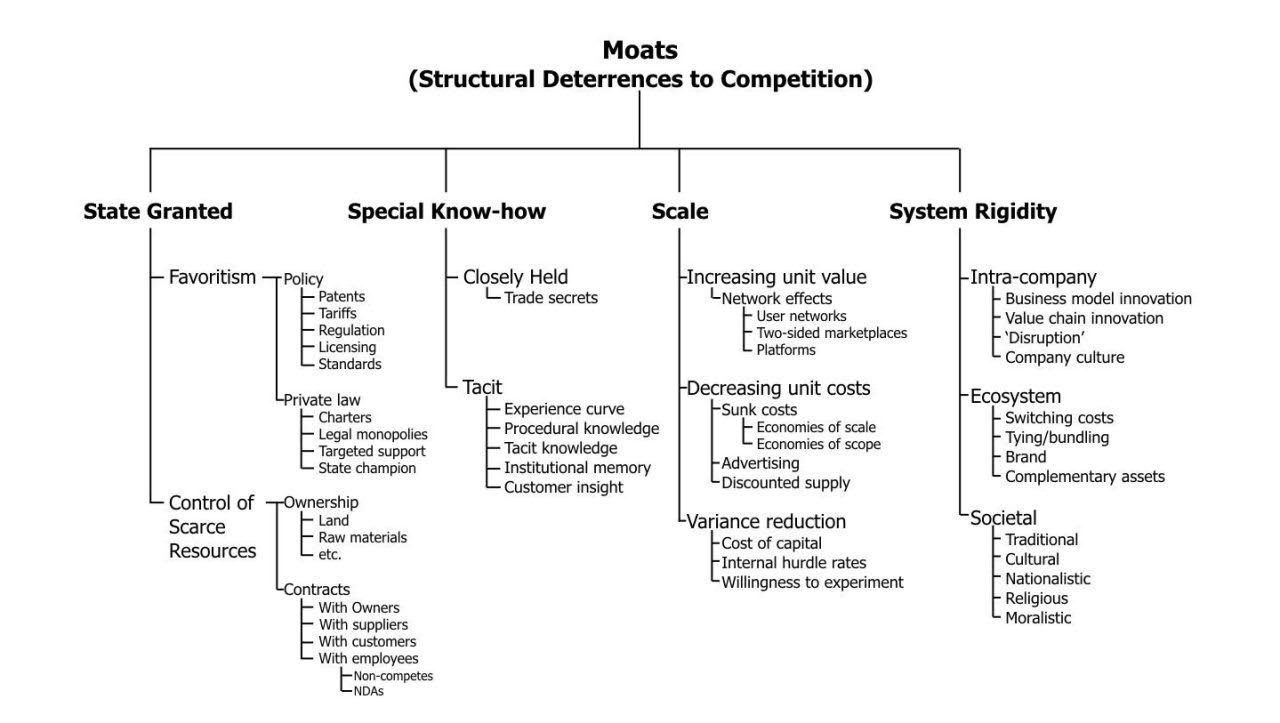
Understanding Moats (reactionalwheel)
Value is created through innovation, but how much of that value accrues to the innovator depends partly on how quickly their competitors imitate the innovation. Innovators must deter competition to get some of the value they created. These ways of deterring competition are called, in various contexts, barriers to entry, sustainable competitive advantages, or, colloquially, moats. There are many different moats but they have at their root only a few different principles.
Reviewing Reviews for an alternative view (WSJ)
Chris McCabe, who evaluated seller performance while employed at Amazon and who now runs a consulting firm for its retailers, estimates the number of inauthentic reviews on the site to be around 30%. Amazon estimates it at less than 1% and said it spent more than $400 million last year alone to protect customers from reviews abuse, fraud and misconduct, leading to action against more than 5 million reviewers. Even so, “Amazon doesn’t have the right defenses,” Mr. McCabe said.
Amazon is just one of many sites where shady practices show up in reviews. In recent years, an increasing amount of information has surfaced about how vendors hire click farms to post positive comments about their products. TripAdvisor recently reported that, last year, its review analysis system rejected 1.4 million submissions out of 66 million.
Week of Oct 7
Removing features is the new product development (business insider)
"We are removing it becasue only a small number of people use the Following tab regularly. Additionally, we've heard from people that they think the Following tab is a very hidden feature that they don't find to be very useful, especially when compared to a similar feature like Explore," the spokesperson said.
"People didn't always know that their activity is surfacing," Shah told Buzzfeed News. "So you have a case where it's not serving the use case you built it for, but it's also causing people to be surprised when their activity is showing up."
'Passion' tools proliferating (a16z)
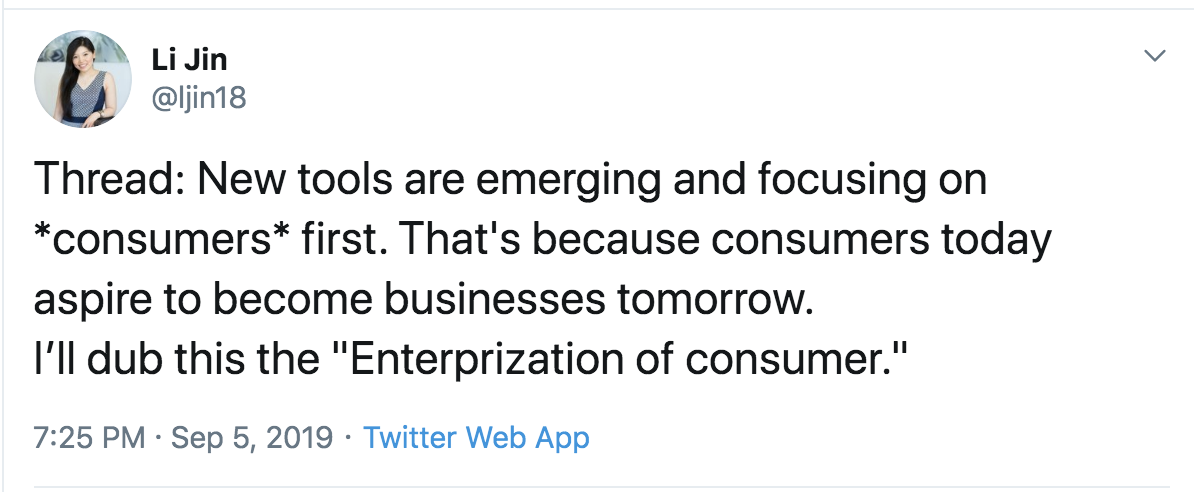
These stories are indicative of a larger trend: call it the “creator stack” or the “enterprization of consumer.” Whereas previously, the biggest online labor marketplaces flattened the individuality of workers, new platforms allow anyone to monetize unique skills. Gig work isn’t going anywhere—but there are now more ways to capitalize on creativity. Users can now build audiences at scale and turn their passions into livelihoods, whether that’s playing video games or producing video content. This has huge implications for entrepreneurship and what we’ll think of as a “job” in the future.
Productivity-as-a-business (ben evans)
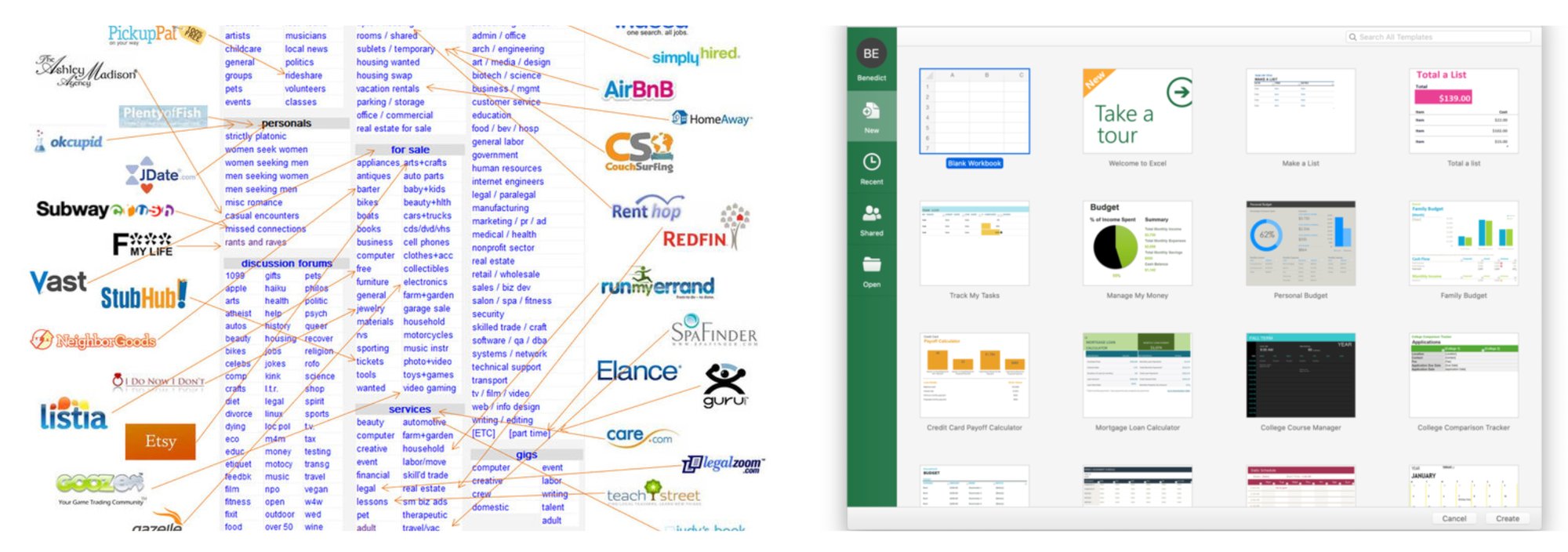
So, in 2010 Andrew Parker made a much-copied graphic showing how many startups were unbundling parts of Craigslist into dedicated vertical marketplaces. Today we’re also unbundling both LinkedIn and Excel, in the same ways and for the same reasons. There’s an old joke that every Unix function became an internet company - now every Craigslist section, or LinkedIn category, or Excel template, becomes a company as well. Depending on the problem, that might be a new collaboration canvas, or a new networked app, or a new network or marketplace, and you might switch from one form to the other. Github is a developer tool that also became a network - it became LinkedIn for developers.
Week of Oct 14
Ancillary services by third party apps elevate the core experience (NYT)
apps can help drivers, especially those new to the job, plan out their day, position themselves in the right places at the right time and wait for the most lucrative fares. “Drivers who just turn on Lyft or Uber and take whatever rides it sends are not making as much as they could,” Mr. Avedian said.
There is one hurdle, however: Lyft and Uber aren’t always keen on sharing their data. There’s a basic misalignment of goals, said Harry Campbell, founder of The Rideshare Guy.
The ancillary apps face a number of other challenges. Ride-share companies have begun adding information like event schedules in some cities, so the new apps “have to distinguish themselves by providing a layer of information that Uber and Lyft can’t provide or are not willing to provide,”
Trust erodes on platforms in ways you can't always see (WSJ)
But a whiff of deceit now taints the influencer marketplace. Influencers have strained ties with advertisers by inflating the number of their followers, sometimes buying fake ones by the thousands. They also have damaged their credibility with real-life followers by promoting products they don’t use.
“When Instagram started, it was a place you looked at images posted by your friends or other people you trusted,” he said. “Brands ruined it by injecting their own messages. Consumers are wising up to the fact that just because an influencer posts about a product doesn’t mean they actually like it.”
Nothing is ever linear when solving problems (Nesslabs)
Have you ever tried to fix a problem, only to make things worse? That’s called the Cobra Effect—when an attempted solution results in unintended consequences. Because most of our cause-to-effect experiences involve very simple, direct relationships, we tend to think in terms of linear chain of events. But the world is much more complex than we realise. In a real-world system, there will be multiple reinforcing and balancing connections between events, resulting in often unpredictable feedback loops.
The term “Cobra Effect” originated during the time of the British rule of colonial India. The British government wanted to tackle the worrying number of venomous cobra snakes in Delhi. Their strategy was to offer a bounty for every dead cobra. Creating this incentive was initially a successful strategy—many rewards were claimed and the number of cobra snakes spotted in Delhi started to decrease. However, the number of dead cobra snakes presented to the bounty office for the reward kept on rising.
Week of Oct 21
A recipe for decisioning is data with a dash of instinct (WSJ)
KPMG LLP’s recent global CEO survey shows just 35% of executives highly trust their organization’s data. Two-thirds of CEOs ignored insights provided by data analysis or computer models in the past three years because it contradicted their intuition.
...For starters, data can be manipulated, hard to interpret or impossible to apply.
Cassie Kozyrkov, Google’s chief decision scientist (yes, such a job exists at Alphabet Inc. ), warned in a recent Harvard Business Review piece that data isn’t infallible. Much like intuition, it’s malleable and can be distorted to confirm pre-existing biases.
Spotify's bets for growth & revenue is a must given variable+fixed costs of licensing (Fortune)
Spotify makes its money in just two ways. It generates less than a tenth of its revenue, or $291 million in the first half of this year, by selling advertising against its free listening service, which offers limited, on-demand access to its audio catalog. It generates the vast remainder—91% in the first half of the year, or $2.89 billion—from fees for its paid subscription service, which offers unlimited access to the catalog, online and off. The company has long held that its free service serves as a funnel to its paid counterpart, and it has the data to back up the claim: More than 60% of new paid subscribers to Spotify upgraded from its free tier. Most of the company’s growth has been the result of working within these two categories: more effectively monetizing its free customers, and attracting more paid subscribers. Annual growth in both categories tops 30%, and the company keeps a tight enough lid on fixed costs so as not to outpace revenue growth.
“There are a few ways for us to grow,” she says. “Growth within existing markets. Expanding into new territories. Enhancing our product offering. It’s not just one thing. You have to have enough bets in enough buckets.”
To date, Spotify has bets in 79 buckets—far more than Amazon Music, which is available in about three dozen countries, but well behind Apple Music, which operates in more than 110. To broaden its reach, Spotify announced in July what it dubs Spotify Lite, “a small, fast, and simplified version” of its signature streaming service that’s optimized for older computer hardware and slower cellular networks. It launched Lite in three dozen emerging markets, including Argentina, Brazil, Canada, India, and Mexico.
Week of Oct 28
Multipronged approach to profitability for Spotify (The Verge)
Spotify’s shareholder letter outlines a variety of reasons for this turn to profitability — a faster new subscriber rate that has boosted the company to 248 million monthly active users (113 million of which are paying, Premium users), less money spent on promoting original content and artist marketing, and new tools for artists like sponsored recommendations that will expand Spotify’s “two-sided marketplace.”
It continues to bet heavy on podcasts, bought music production marketplace SoundBetter, and has marched forward into new territories like India.
Spotify introduced a new bundle plan in a handful of Latin American and European countries called Duo, which is a discounted subscription for two people. Like the family plan, Duo members must reside at the same address in order to take advantage of the deal.
No more free logged-out content for you at Instagram (The Next Web)
The photo-sharing social network has begun locking down its platform by preventing signed-out users from having unlimited access to public profiles.
While it definitely makes sense that the company would want to keep its content behind login barriers, pressure tactics like this could also help drive more people to sign up for the service, if they haven’t already.
Although growth solves many problems at startups, unit economics is not one of them. When you’re losing money on every transaction, you can’t make it up in volume. In fact, the more revenue that a businesses with negative unit economics generates, the more money it loses.
Week of Nov 4
A visual learning guide to the biggest ad machine in the world (WSJ Interactive)
Google says that the way its ad products work together is one of the primary attractions for publishers, advertisers and other tech companies. “Publishers use our technology to access demand from over 700 partners, of which Google is just one source,” a Google spokesman said in a written statement. “Advertisers use our technology to buy inventory on over 80 exchanges. Interoperability across the ad tech landscape allows publishers and advertisers to mix and match technology partners to meet their different needs.”
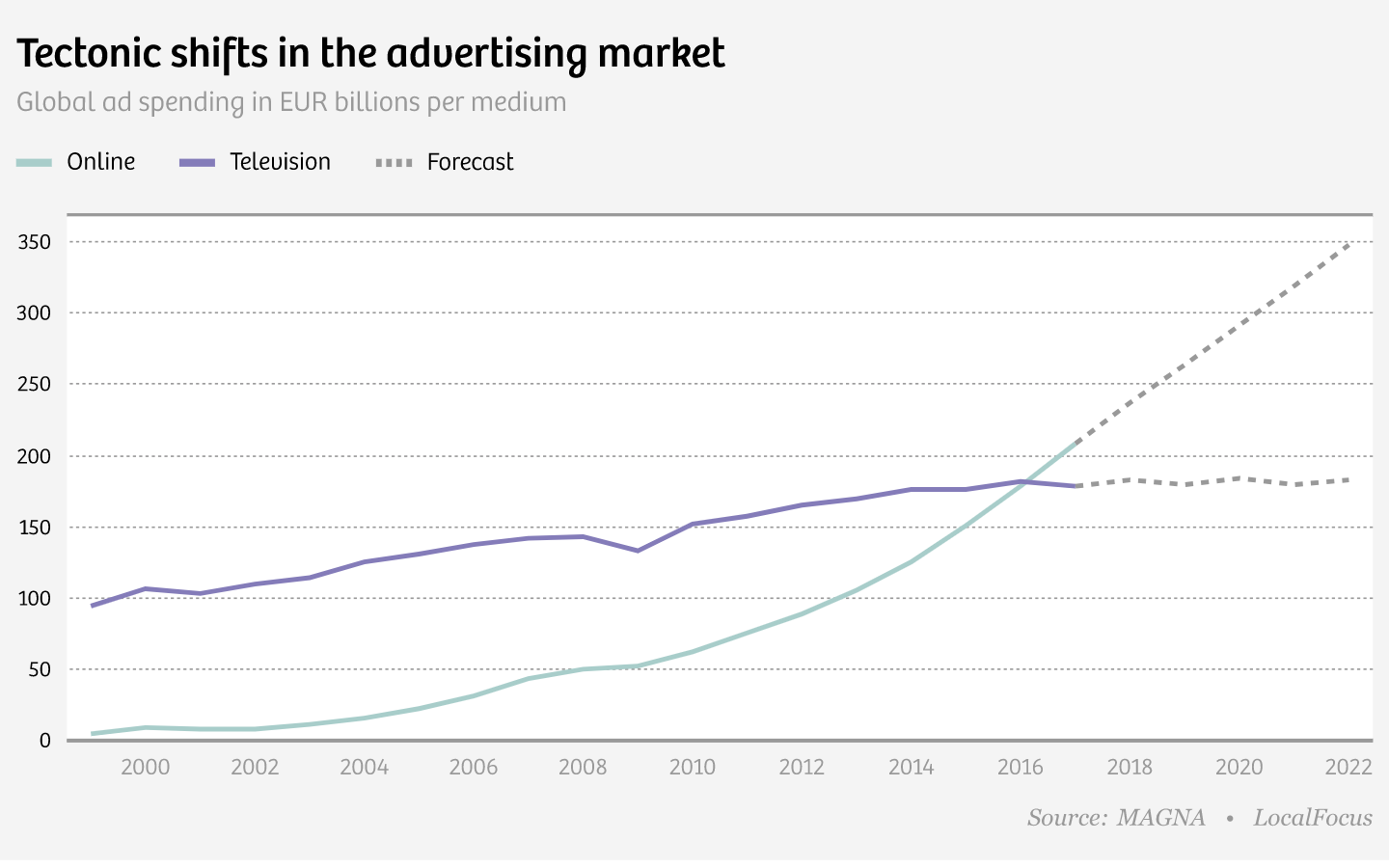
Online advertising is the $273bn elephant in the internet room
Jessica Walker, president and chief executive of the Manhattan Chamber of Commerce, said small and midlevel independent businesses are squeezed by rising rents, minimum-wage increases and mandatory sick leave. Crowdfunding can help fill the gap.
“If a business is struggling, it’s much harder to get a bank loan,” Ms. Walker said. “It’s most helpful to people, such as women and people of color, who don’t necessarily have access to a ton of wealth within their networks or an abundance of angel investors waiting in the wings.”
Week of Nov 11
“Especially from a small publisher, small business, sustainability perspective, subscriptions and memberships are such a key foundational element to monetizing your site in 2019,” says Mark Armstrong, the founder of Longreads and an editor at Automattic (WordPress.com’s parent company). The idea was to build something simple that could be integrated relatively easily, so that sites could immediately begin collecting revenue from their audiences.
Stumbling into product market fit by way of witnessing customer behaviors (Medium:: Craft Ventures)
In November 1999, our customer service rep forwarded me an email from an eBay power seller. The eBay seller had turned the PayPal logo into a nice-looking button for her auctions and was asking our permission to use it.
It seemed extraordinary that an eBay seller had taken the time to create her own PayPal auction button. If she cared that much, how many others did too?
We went to the eBay website and searched for ‘paypal’. Hundreds of auctions appeared in the search results because PayPal was mentioned in the item description as a possible method of payment. Our minds were blown!
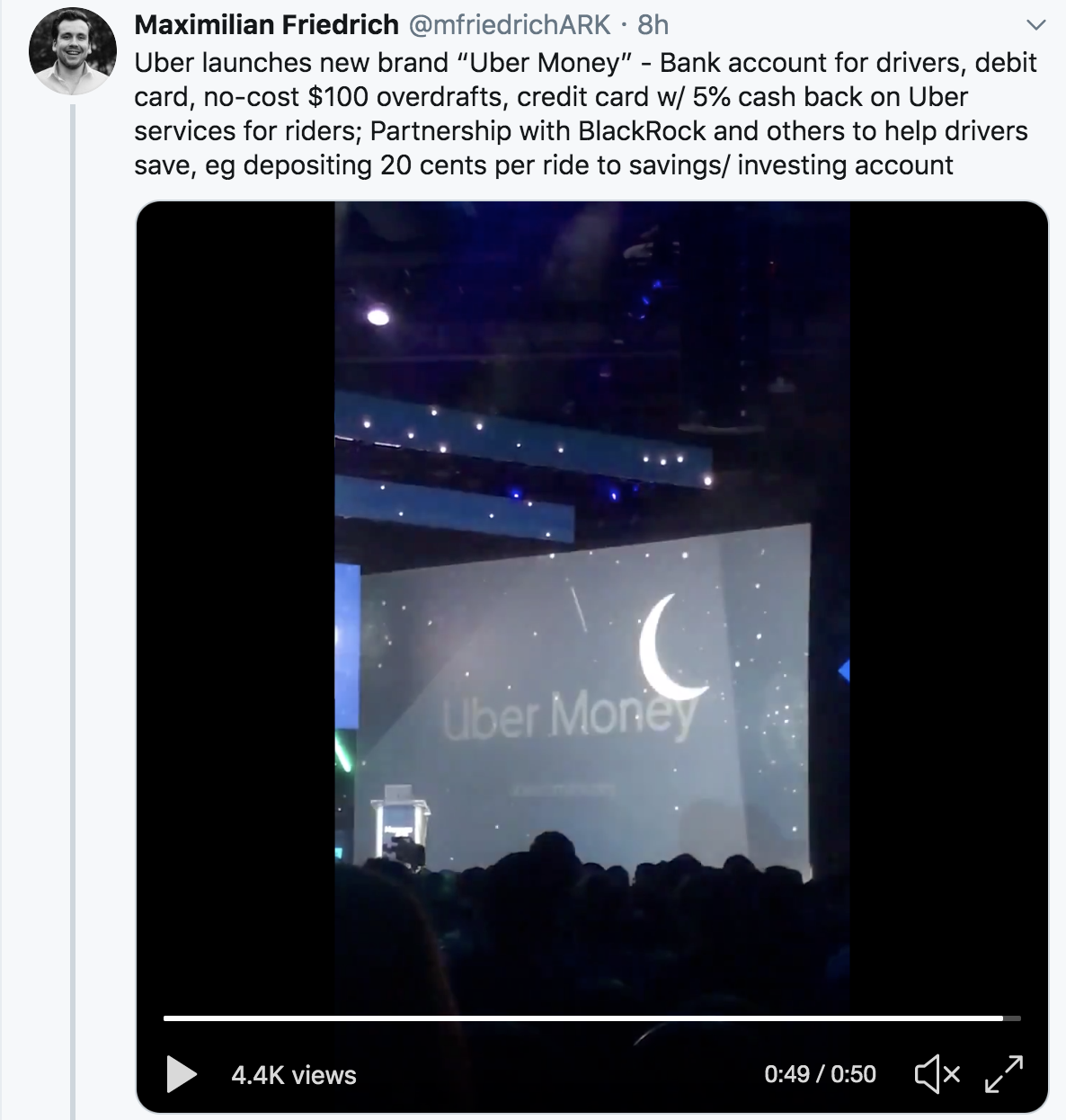
Every software company will be a fintech company eventually as moving money becomes commoditized
