
LLTT Newsletter - January 2026

LLTT Newsletter - January 2026
The beginning of a new year can bring a peculiar energy to shorthand practice. New students are enthusiastic, armed with fresh notebooks and determination. Returning students look at their progress from last year — some pleased, others not so much. But whether you're starting fresh or continuing your journey, it offers something valuable: a chance to examine not just your goals, but your methods. This month, we're focusing on a simple question: Are you practising effectively, or just repeatedly?
"You don't rise to the occasion, you fall to the level of your training."
Stop Drilling Word Lists. Start Writing Sentences.
What if the way you've been practising is actually working against how your brain naturally processes language?
You've written "necessary" fifty times. You know the outline. Yet when it appears in dictation at speed, surrounded by other words, your hand hesitates.

Why: Your brain doesn't process language word-by-word.
When someone says "it is necessary to establish substantial evidence," your brain doesn't hear seven separate words. It hears a thought. A phrase. A complete idea as one unit.
But how do most people practise? Word. By. Word. By. Word.
Ultimately, you're training your brain for a situation that will never exist. Real dictation doesn't pause between words. Real speech flows in sentences. Yet you're preparing by writing isolated outlines with no connection to each other, no context, no meaning.
It's like learning piano by drilling individual notes. You may play each ‘note’ perfectly, but you'll never make music.
What Actually Happens
When you drill "necessary" in isolation, you create one mental pathway: Word → Outline.
When you write "necessary" in the sentence "It is necessary to establish the evidence," you create dozens: how "necessary" feels after "is," how your hand transitions from "is" to "necessary" to "to," what "necessary" means in this context, how the phrase "it is necessary to" flows as a unit.
The Real Test
You think you've mastered "government" because you can write it perfectly when it's alone on your practice page. Beautiful outline. Technically correct.
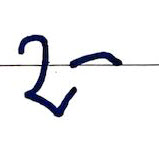
Then it appears mid-sentence at 100 wpm, sandwiched between "the" and "announced," whilst you're simultaneously trying to listen to the next phrase.
And you freeze.
Because the real test was never "do you know the outline?" The real test was "can you write it automatically whilst your brain is doing three other things?"
Isolated practice can't prepare you for that. Only context can.
What to Do Instead
Take those problem words and put them in sentences and in different order.
Don't write:
necessary (×30)
substantial (×30)
evidence (×30)
Instead, write:
"It is necessary to establish the substantial evidence." (×10)
"The evidence makes substantial changes necessary." (×10)
"Substantial evidence is necessary under these circumstances." (×10)
Same focus words. Completely different result.
Now you're training your brain to write these words the way you might actually encounter them — in context, in flow, in real sentences.
You're learning transitions.
You're learning phrase patterns.
You're learning how words connect in real speech.
Professional Teeline writers don't think in single words. They think in phrases: "I am writing to inform you," "with reference to your letter," "we are pleased to announce."
These phrases ultimately flow as connected units. Each word leads naturally into the next — the brain and hand working together in a smooth sequence rather than making five or six isolated decisions.
You can't develop that flow by constantly drilling individual words.
One Change
This month, decide to make one change to how you practise problem words.
When you encounter a new or difficult outline, go ahead and practise it in isolation five or six times to get it in hand. Visualise it. Feel how your hand moves through it. Get comfortable with the shape.
But then — and this is crucial — immediately start looking for ways to build with it.
Put it in a sentence. Write that sentence ten times. Then write a different sentence using the same word. Then another.
Three sentences. Ten repetitions each. Thirty meaningful repetitions that teach your brain how to use it at speed.
Not "government" ×50.
Instead:
"The government announced new measures yesterday." (×10)
"Local government officials attended the meeting." (×10)
"She works in government relations." (×10)
Same word. Same practice time. Infinitely more effective.
Need some help coming up with practice sentences? Try wordhippo.com (who comes up with these names?!).
Here is what it returned for ‘government’
How to use "government" in a sentence
Find sentences with the word 'government' at wordhippo.com!
If you've been with us for a while, you'll remember our January 2024 newsletter: "Drilling is not training." This advice builds on that principle.
Let’s be clear. Drills do have their place — but only as the starting point, never the destination. And you can spend an awful lot of time on individual words only to be frustrated when it comes time to sit down with an actual dictation. You must understand the difference and adjust your studies accordingly.
The real learning happens when you move from isolated repetition to varied, contextual practice.
Your brain processes language in context. Your Teeline practice should too.
Stop drilling word lists. Start writing sentences.
As always, if you have suggestions or topics you'd like to see covered in future newsletters, please contact us:
https://www.letsloveteelinetogether.com/contact-us
If you find this newsletter helpful, please help us spread the word and forward to a friend!
A Parting Thought
Be sure to visit us at the LLTT Website, YouTube, Facebook, Instagram, Quizlet and Soundcloud.
If you’re looking for Teeline reading practice, Skill Building Through Reading 📗 - is available for purchase online.
Much work (and ❤️!) has gone into this 48 page, 6x9 softcover book:
Five 5️⃣ carefully selected passages: Improve your sight 👁️ recognition of outlines and word groupings.
Dual Format: Each passage includes both printed Teeline and the longhand ✍️ transcription.
Proven Learning Approach: Reading printed 🖨️ shorthand is a method long-favoured by skilled practitioners.
Whether you're a student, journalist, or professional seeking to improve your note-taking, this book will be a valuable addition to your Teeline learning resources.
To order, please visit the book’s landing page or respond to this email with any questions.



Add a comment: