
February 2026, Amiright?
Leoh Blooms February 2026 newsletter includes family of origin and empathy along with photos.
Hello gentle reader. I hope you are well. (Do we know what “well” means anymore?) Happy belated Valentine’s Day. I love you.
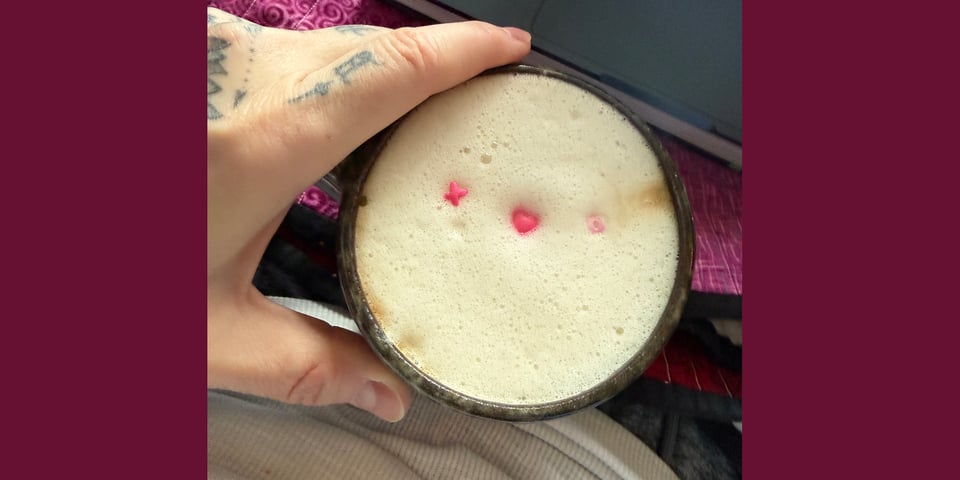
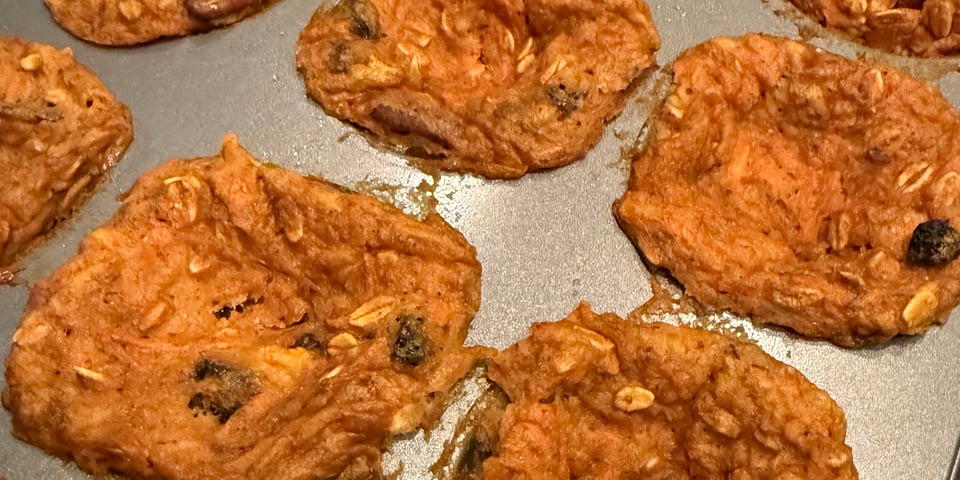
This last month I made some spectacularly terrible-looking muffins based on the peanut butter and banana flour-free muffins recipe that is everywhere and I’m here to tell you not only can that recipe not be easily modified for other plant matter, but they still tasted pretty good.
I went on a few adventures in February and during one of them, I saw some pretty trees with lovely bark patterns.

Family Story Time
I took a step back from my family of origin about a decade ago. It was felt by them “all of a sudden,” but had been slowly coming on for years. Politically and religiously, we were so far apart it was hard to even see each other. I know I hurt many of them with the distance. I couldn’t figure out another way to have the space I needed. They had too many ready opinions and assertions full of shame and beliefs that crowded me in areas where I needed expanse to think, feel, discover, and grow. The cult of Mormonism does not allow members to have their own individual beliefs and I needed to get far away to find all of myself.
About eighteen months ago, some siblings started reaching out to see if I’d like to reconnect. I wondered if it was time (or if they had decided as a group that it was time). I decided to give a couple of them a try, slowly.
I set up a recurring phone chat with one brother, which I actually attended every other month or so. I texted photos and family updates every so often with a sister. Another sister invited me to join a family book club which I agreed to attend.
Today, I’d give my intention at that time to reconnect with my siblings a solid B and my followthrough a C-.
Hard to give it 110% when it was touch and go in every conversation. I couldn’t speak freely about what I cared about (anything good in our world seeping out the cracks with Trump leading the way) and I don’t believe they could, either. I’m a queer trans person, they don’t believe trans people are real. Through conversations with them, I’ve learned they view me (still) as mentally ill, a conduit to evil, a woman presenting as a man (nonbinary doesn’t seem to be something they can grasp, and a danger simply by being in the same room as children, whether or not I speak, and/or an outright “groomer.”
In some of these conversations, there were nods in my direction along the lines of, “Yes, Trump’s not a very smart person and kind of a jerk,” which was too far away from the truth, which is, he’s a felon, racist, bigot, sexist, wanna-be-dictator, continuously undermining our democracy, a liar who abuses his power in every way conceivable, and who mocks the disabled and downtrodden just to name a few. How can any true christian support him?
No, but seriously - how?
Hope?
Last September, following Charlie Kirk’s assassination, my siblings invited me and my partner to share in a family zoom call why we think he was a controversial figure to us. After the tiny steps we had all taken together, I hoped that explaining why, as a trans person, I wasn’t a fan of Charlie Kirk, would mean something to them. It was a big deal to try and speak to them all as a group. (I’m the seventh of eight siblings.) I took a beta-blocker to try and calm my anxiety.
We explained why Trump was such a scary ring leader for violence and how Kirk contributed. We shared our fears for ourselves and our children and communities. Both myself and my partner shared experiences that were very tender to our hearts. We both cried. It was the most vulnerable either of us had been with them, me in decades, her ever.
As we concluded, several of them thanked us for sharing and seemed moved by our stories. We ended the call with a feeling that was very close to hope that we were at least heard and partly understood. We went to bed believing the emotional cost of us sharing those stories was worth it.
One of my brothers wrote a long text in our sibling chat the following morning, excoriating us for being manipulative and trying to force them all to “vote how we say or else.” He lectured that he would never bow down to manipulation and would continue to vote in what he considered was his best interest.
My partner and I were blown away. We had not seen that response coming, not in the least. Nothing we had said was in “or else” language. Shocked, I replied to his text, asking if that’s how others felt as well, and one by one, they almost all replied that yes, they felt manipulated by us and didn’t like it.
How did us sharing our heartfelt stories get seen as manipulation?
Metaphors Smiling In A Way That Frightens*
I’ve been looking into words and how we interpret their meanings. Metaphors and similes are everywhere in language and how we understand language. It’s like our human brains can only understand something if we have other things to put that thing up against, to find the similarities and the contrasts.
I can tell you something I’m holding is soft, but if I tell you it’s as soft as baby chick fluff, you get the imagery that it’s even softer, even if you’ve never actually touched baby chick fluff. Because you’ve surely touched something soft in your life, your brain fills in the gaps.
Empathy works in a similar way. If I tell you I stubbed my toe, your brain automatically finds something to compare it to, probably a time when you stubbed your own toe. If your brain is successful, you feel a small portion of the hurt I feel, combined with the mental model of what you know about me and what that hurt means to me.
Empathy doesn’t always show up in the way we predict it will, though. I would predict that if someone came up to me on the street asking for help, I would help them. I’m making that prediction from my studio recliner, while in a relaxed state, drinking coffee, with my fireplace making me feel cozy.
If, instead, I was on the street and it was raining and I didn’t have an adequate coat, or I was hungry and late to meet someone for dinner, or I’d had a really challenging day, or any number of things that create a less hospitable space for me to empathize with others, I might instead wave them off and hope someone else would help them. In that altered state, I might actually feel impatient with them or maybe annoyed. And if my brain goes into annoyance, I might start to judge them for making me feel bad about myself, because not wanting to help people makes me feel bad, and in that moment, it’s their fault because they need help.
How wild is that? Me, blaming someone who needs help for making me feel bad that I don’t want to help them?
Toxic empathy is a term coined by conservative christians. It suggests that you can care too much and that it’s not in your best interest to do so. It’s very America First. Men first. White people first. Straight people first. Me and Mine first.
Seems very antithetical to their version of Jesus, who was very “suffer the little ones” and “bring me the sick and afflicted” and “take care of each other.” I would never have previously put my siblings in the camp of believing in toxic empathy, but maybe I was wrong.
I’ve gone back to a more comfortable distance with my siblings, (not only because of that conversation, but other things as well).
If you’re experiencing a dug-in-heels resistance with folks in your life, it could be due to empathy looked at as a toxic choice. It has perplexed me why, when someone is sharing with you how something hurts, you’d take an even stronger stand along the lines of “suck it up,” or, “that’s not something I care about,” or even, “you’re trying to manipulate me.”
But, back to my earlier point, if I’m feeling frustrated at people who are “making me feel bad” when it’s inconvenient to help them, I would guess toxic empathy fits in right along those lines. They don’t want to help me and they don’t want me to “make” them feel bad about it. Hard to pull off when it’s me just existing that frustrates them.
So, I get it. We’re all complicated humans, seeing things through our lived-experience lens. I want to be fair to my siblings. I also don’t believe that caring less about people, especially if they are sharing their heartfelt experiences, is the right way to go. And seeing this played out on a national, or even global, stage is heartbreaking.
Welp.
Oh, would that I had something cute to end this missive with! But alas, I have only Victorian-era verbiage to somewhat buoy our moods and help us be more bricky. And the news of an upcoming colonoscopy (which I hope is as boring as Eden’s) and perhaps an ankle implant surgery this summer (every girl’s dream is to stop peeing her pants after birthing children).
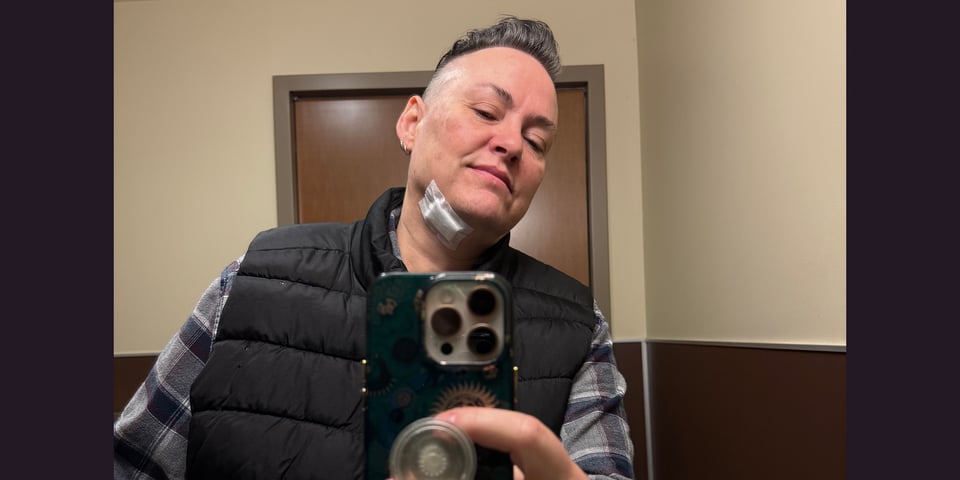
There’s a small cave on my neck from having a skin cancer scare that turned out to be sebaceous hyperplasia. I had new x-rays taken of my back that show increased lumbar dextroscoliosis (when you swing to the right, if you know what I mean) and osteoarthritis in my pelvic bowl and hips, but nothing too major.
Also, I read a book called Someone You Can Build A Nest In by John Wiswell, and it’s a unique and amazing queer love story that I devoured (every pun intended). I don’t like gratuitous violence in books, but this managed to also be beautiful and funny in a way that kept me turning pages. Heads-up: I will be mentioning it to everyone this year.
Here’s actual footage showing the pure light Brandelyn is made of.
Lastly, the song Fear by Blue October has literally gotten me off the floor a couple of times this past month. (I will cry every. single. time. Justin screams get back up at 3:45.)
*This is from a tremendous piece called Litany in Which Certain Things Are Crossed Out, By Richard Siken.
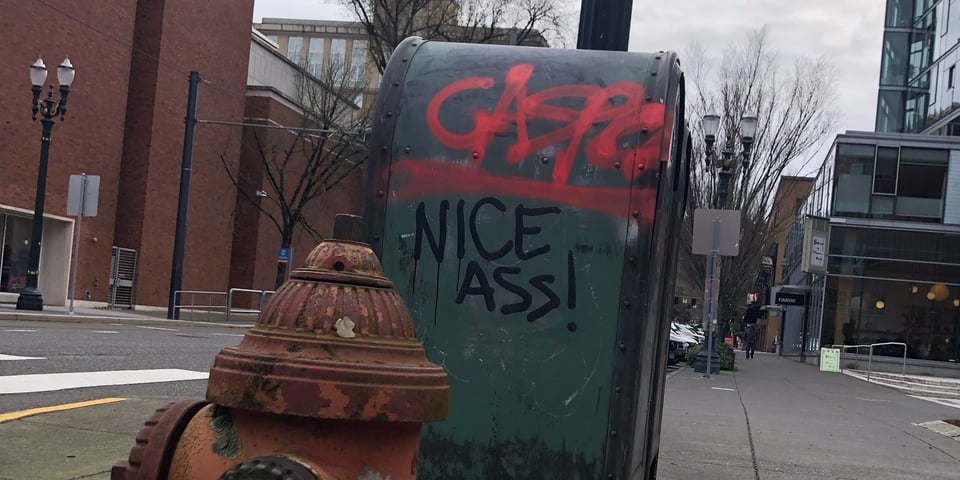
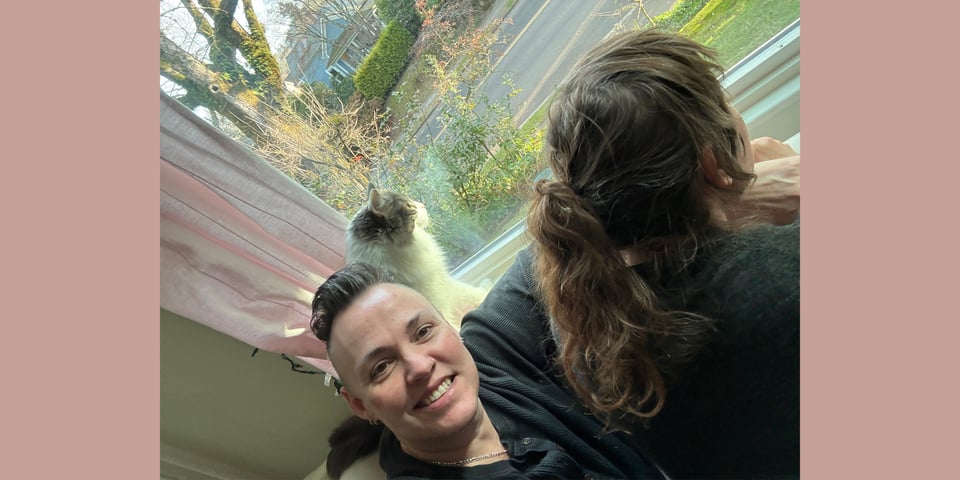
Thanks for being here. I hope you didn’t miss above where Portland thinks you have a cute ass. I’ll see you soon and I do mean to suggestionize that in the meantime we avoid getting the morbs if at all possible. Leaving you with this adorable Portland family photo of me, Psyche, and Princess Violet.
Hi! Know anyone who needs me? I’m a trauma informed personal mentor and small business coach who specializes in creating highly effective, customized containers for folks who benefit from having an accountability partner. I have extensive experience working with clients who are neurodivergent, queer, or are dealing with chronic illness.
Whether you’re just starting out or have been growing your business for years, I’d be honored to bring compassionate witness to where you’re stuck, and will partner with you in ways that deeply support you and your business. Learn more here or book a session here. Can’t wait to hear from you!
-
💜💜💜
Add a comment: