
lend me ur eyes 096
2026-01-25
WATCHING
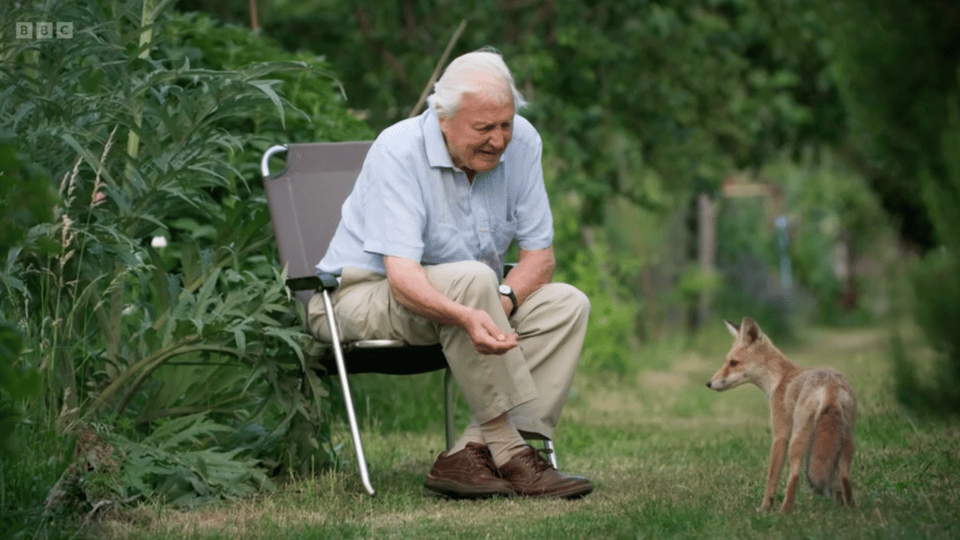
To start the year off, I watched the latest David Attenborough BBC special, Wild London. I found it very good, and unexpectedly moving too. I heard about it from SL, and then watched it the same day, excited at the prospect of seeing what animals they would feature and what the locations would be. We were having a conversation—no idea why—about which creatures transform as part of their development into adulthood, having observed that adult humans have more or less the same form as baby ones do, only with every body part slowly getting larger as they grow older. SL said that he had seen on this programme how nymphs become dragonflies, two forms that are basically unrecognisable from each other but share the same starting point—also totally different in form—of an egg. At every moment in a nature programme like this, upon seeing all the strange and varied animals that inhabit the earth, it is hard not to wonder: how can these things exist? Why do beavers look like that and do what they do? How can the musculature of horses be so elaborate and precise? How can an egg become a larvae and then an insect after that? It all seems to be impossible to be true.
I liked the programme because it had lots of animals in it, of course, but I also liked it because it was about how those animals are found within a city—my city—often in incongruous places. As the programme explains, London’s abundance of parkland—apparently largely a result of directives instated by King Henry VIII who closed off large green areas around the city as his private hunting grounds, protecting the natural spaces that later became the Royal Parks from the rapid development that occurred all around them—has resulted in the creation of an urban landscape that facilitates a degree of biodiversity that is rare for a metropolis of its density and scale. It is certainly true that the amount of green space that can be found all over London is a major reason that it remains a place that it is tolerable to inhabit, and seeing a programme like this is a good reminder of that. But these animals also survive and thrive in the built up parts of the environment too, on streets, inside buildings, and in back gardens, scavenging, enterprising, and making do. As the programme shows, beavers, foxes, deer, hedgehogs, pigeons, parakeets, falcons, and more—rats, noticeably, go unmentioned, as do the mice you see on the tube—have all made a life for themselves within disparate corners of the concrete city, cohabiting with all the millions of humans, sometimes undetected but often side by side.
I found the programme moving for a number of reasons. The first reason is that David Attenborough is very old. He is 99-years-old, and he seems to be doing very well, both mentally and physically. The second is that it is familiar. I know the places that the programme features well, so intimately in fact that next month I will be moving to the exact run of roads that one part of the programme—the section featuring foxes that run between rows of allotments and high street chicken shops—was shot on. The third reason is that it is just very sweet. In one scene, Attenborough holds a baby falcon in his hands and talks to it like it is his own offspring. A giant birdman who has lived on this planet through two world wars and more besides still continues to experience the same profound wonder we all feel when we first see animals up close.
READING
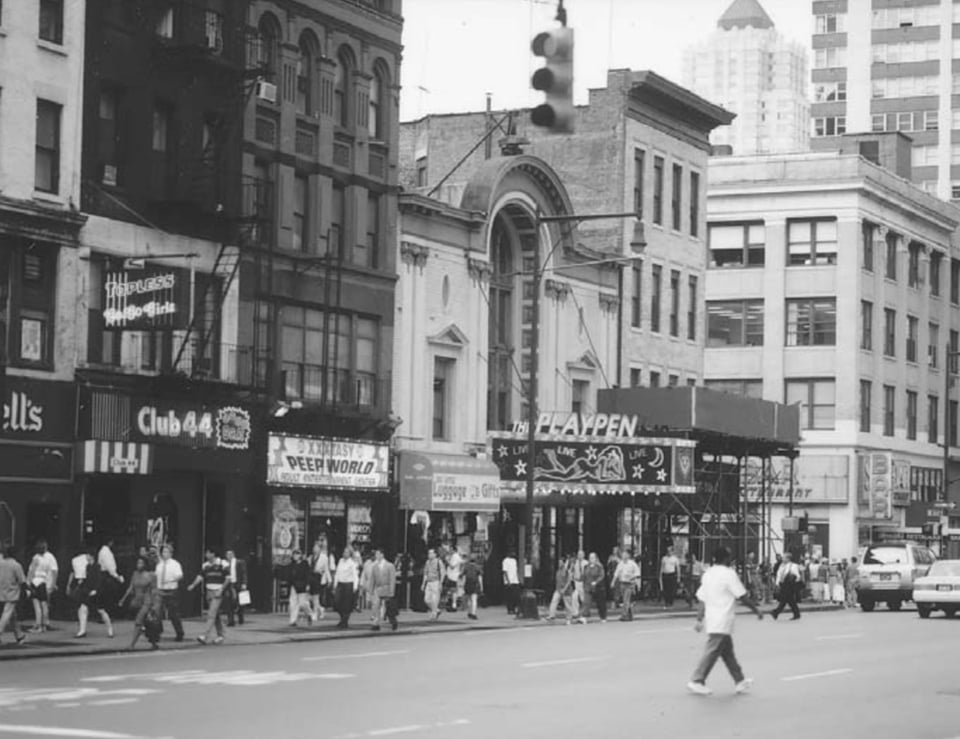
At the same time I was watching the above programme, I was reading a book I had long intended to get to, also about the subject of cities and how their inhabitants modify them: Samuel Delany’s Times Square Red, Times Square Blue. It is a book that starts as reportage-slash-reflection on the author’s patronage of the New York porn theatres he frequented for casual gay sex between the 1960s and their 1990s shutdown, before going on to make a wider theoretical argument about how urban environments can and should function as sites of radical interaction, pleasure, and play. In the book’s second half, he defines two types of social encounter, making the distinction between what he calls “networking,” wherein organised, self-selecting groups of similar kinds of people meet for specific, calculated, often careerist purposes, and “contact,” a more incidental, natural kind of social interaction that crosses classes and facilitates difference. The latter, of course, is healthier for everyone, because it gets them out of their bubble and forces them to face up to the unfamiliar and to come into contact with things they cannot predict or control, but it is the sort of encounter that disappears when the homogenising presence of big business forces out the types of venues and visitors Delany describes. The loss, Delany explains, is not just felt by those who want to have sex in public places, but by everyone who wants to inhabit liveable cities, because when everything is cleansed and commodified, and when all the friction and frisson is taken out of life, any and all opportunities for genuine incidental interactions between different types of people disappears. It is the kind of expertly explained, continually relevant argument that seems so obvious when you read it that it feels like you have just now been given the language to express something you already innately understood. “Life,” Delany writes in the book’s very first sentence, “is at its most rewarding, productive, and pleasant when large numbers of people understand, appreciate, and seek out interclass contact and communication conducted in a mode of good will.”
Don't miss what's next. Subscribe to lend me ur eyes:
