still dancing
Last Saturday, just after ten in the morning, seven other people and I stood in a bright room looking out onto the rooftops of Berne’s old town. Most of us were barefoot. We had come to learn something about 'the essence' of embodied connection in dancing. The workshop was open to everyone who loved to dance, whatever their preferred style or skill level. As we would soon discover, too much skill was not that helpful, anyway.
According to our two teachers, Bigi and Anna, the simplest way of accessing embodied connection in dancing with another person is through fully inhabiting our own body and learn to move from the inside out. Most of us, me included, don’t usually feel very free or relaxed inside when we dance. And whatever you feel inside, our teachers said, you bring into a dance with another. Well then, I thought.
After a long warming up, Anna had us all choose a spot in the large room. She instructed us to stand there by ourselves, arms hanging by our side, shoulders dropped, knees slightly bent.
‘We call this still dancing,’ she said. ‘It’s the movement that happens when you seem to not be moving at all. It’s about noticing the myriad things that go on inside you as you supposedly stand still. And then to make space for those things. To notice how alive the stillness is. Imagine the surface of a lake early in the morning. Imagine that stillness.’
I took a few breaths. I began to sway. The stillness Anna had invited us into was neither punishing nor restrictive, it was spacious.
After a moment she said: 'Everything is still moving in this stillness. Feel that. And let a movement rise up in you, as you stand here now.’
I felt myself become calm, which is not a state I have experienced very often lately. The tiger of anxiety and stress that had been breathing down my neck for weeks ceased her hunt, curled up and closed her eyes for a while.
I found that, while my conscious mind often didn't know what to do with a phrase such as 'there is stillness in movement and movement in stillness', my body had no trouble entering this paradox. Here I was, in my old running shorts, both still and moving, my chest gently rising with my breath, my heart beating, my diaphragm climbing up and down. My naked toes spreading across the hardwood floor. My muscles and fascia holding my skeleton upright, adjusting themselves continuously; a little bit here, a little bit there. Still dancing, I felt, was an abundance of action.
As I rode my bike home afterwards through the thick city air, water-starved trees providing shade, I repeated it to myself like a mantra:
In this fever dream of now, still dancing
In this heat that we have made, still dancing
In the waves of things to come, still dancing
In the great sorrow, still dancing
In the dark, still dancing
In everything that dies, still dancing
In everything that is being nurtured into life, still dancing
In everything I have to give up, still dancing
In everything that is, still dancing
I feel the weight of paradox more so this year than any of the other years before: The more I slow down, the faster everything moves. The more I try to understand what is happening in the world, the more confused I become. I think part of the practice is just being with that. I’m still dancing and, also, I am still dancing.
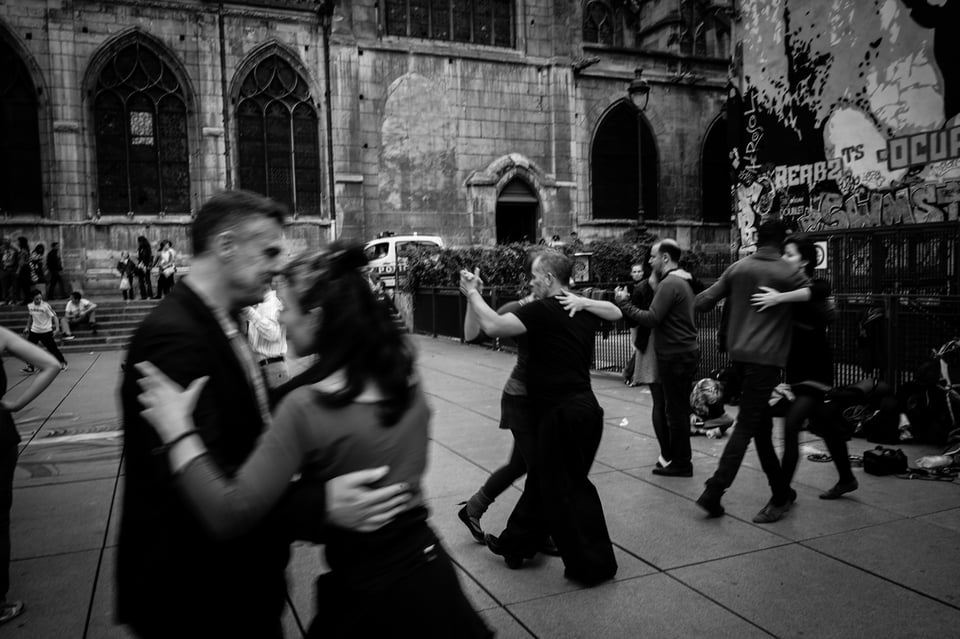
Dancing, for me, is also a form of rest. A place where I get to be in the flux of things, unfinished, where I can lose my balance and find it again, laughing most of the time. I’ve written about rest and its powerful political dimensions here in ‘the snail’s deserted house’. In that piece, I quote the inimitable Báyò Akómoláfé quite a bit and sure enough, his words came back to me this week: ‘The time is very urgent – we must slow down.’
Maybe you want to try your own version of still dancing? It can be done sitting, lying down or standing up; it does not matter what kind of body you have. And there is no wrong way to do, either.
From Monday, June 29, to Friday, July 24, Mercury will be retrograde in Cancer. This transit will probably send us on one or two nostalgia trips while also upping everyone's tendency to assume 'it was understood'. Remember: it’s not understood. You will have to spell things out, even if you don’t feel like spelling them out. From now until the end of July, just try communicating what you know to be true for right now. No need to give anyone the ‘full picture’ if you don’t have it yet yourself.
One day after Mercury goes retrograde, we have a Full Moon in Capricorn. That's a pretty rough setup on its own but warrior-planet Mars, newly in Gemini, is fast approaching revolutionary-planet Uranus with a proverbial gasoline can. The two planets meet for their first conjunction towards the end of the week on July 4. Their next conjunction will happen two years from now. Though the meeting between Mars and Uranus will be mathematically exact on July 4, I imagine we'll see Gemini-related things (technology, communications and travel, that is) become magnified and possibly unstable as soon as Mars moves into the sign two days from now, on June 28.
And so, these final days of June and the first days of July are confronting, both on a collective and on a personal level. An exclamation mark in a year full of exclamation marks. It’s a moment where patience and caution are advised. The paradox is that a Mars-Uranus conjunction can make us feel rather impatient, and we might want to throw caution to the wind.
I hope that, however this coming week and July as a whole unfolds for you personally, you can enter stillness, even if only for a moment at a time. I think when Báyò Akómoláfé says ‘we must slow down’ he does not mean ‘you will be punished if you don’t’. It’s not that simple. But I think he’s gesturing at the haunted, wild places inside ourselves we can enter if only we try. Our conditioning may tell us to keep going while our bodies, weary and wise, want to offer us a path into the paradox: It’s good to be alive. It hurts to be alive. It’s good to be alive.
For the curious
If you’re in the Berne area and want to deepen your movement practice, Bigi Wälchli’s and Anna Blöchlinger’s ‘Embodied Connection’ courses are a great starting point. Their most recent course cycle just ended but you can find the dates for the Fall cycle on this page (in German)
If you’d like to know more about Still Dancing as a methodology, I like this introduction by researcher Tania González.
The essay by Báyò Akómoláfé I quote from in this newsletter can be found on Báyò’s beautiful website