
smoke
Did you know that the 'tech' in technology comes from the Ancient Greek ‘tékhnē’ which meant 'knowledge of how to make things'? Technology used to refer to objects and machines we built and understood: a loom, a wheelbarrow, a mechanical bird.
We have now, perhaps for the first time, built a machine we don't entirely understand, though it certainly pretends, in long flowering paragraphs, to understand us perfectly, all the time.
I resist the term 'artificial intelligence': not even machine learning experts can agree on its meaning or its use. Also, the term seems inseparable from dystopian ideologies and dubious marketing claims. I’m concerned about both, but I want to do something more than shout into the void.
So, for now, I'll call it the machine, or a Large Language Model (LLM). I first started using the machine three years ago, right after OpenAI began offering its ChatGPT-3.5 model to the public for free. I spent hours trying to write a prompt that would make it produce a weird little poem (It never worked, the machine was too behaved. Sonnets were all I ever got). I also liked playing a game with it called ‘Smoke’, where you try to describe a famous person through metaphors.
‘If Alan Turing were a colour, what kind of colour would he be?’
‘A bright blue,’ the machine would say.
If Toni Morrison were a type of smoke, what kind of smoke would she be?
‘Toni Morrison would be the slow, deep smoke of burning cedarwood at dusk.’
I have not played any games with the machine in at least two years (I’ve played ‘Smoke’ with other humans though and found it delightful). For a while there, I still used the machine for tasks, if not for poetry. But the more time passed, even using it for tasks began to feel strange. I had this idea that you know something or someone better the more time you spend with them, the more you learn about them. The machine teaches me otherwise: it works like a distorting mirror, giving me back a sinless reflection of myself (in the machine’s view, I am never at fault) while concealing its own inner otherness. I find myself still curious about that otherness. I’d like to meet the machine not as my slave or my toy or my perfect girlfriend/therapist/tutor. I’d like to know it as itself.

Over and over, I remind myself that there’s no ‘there’ there. The machine is not conscious, not alive, not thinking. It’s not ‘manipulating’ me into psychosis or into investing all my money by having me believe I’ve made a breakthrough in quantum physics; these misfortunes are my own. The machine just exacts a high price for self-knowledge. If I project my loneliness, my desire to be seen, or my love of shortcuts onto other people, those people might have their way with me but eventually – if I’m lucky – they move on. The machine doesn’t. It is I who must find the exit, see past the smoke. If, indeed, I still can.
Apart from the fact that it seems to cloud our view of reality and ourselves, there are countless other good reasons to discount the machine entirely: There are the proto-fascist tech bros, making ‘predictions’ about LLM’s that serve only to increase their bottom line or their upcoming IPO. There are the military contracts which permit humans to use the machine to ‘shorten the kill-chain’. There are the rivers and forests and wildlife habitats that are no more because Microsoft is building another 15 data centres in Mount Pleasant, Wisconsin this year alone. There are the thousands of stolen novels which were used as training data and now turn a profit for the machine-business but not the artists.
I care about all these things. And I care about my writing and how there is now a machine that could imitate me perfectly, if I let it. I’m fairly sure that most of the people I love use the machine, use it daily, in fact. What’s the harm, they say. It’s simple, asking the machine.
‘Relationship among all things appears to be complex and reciprocal—always at least two-way, back and forth. It seems that nothing is single in this universe, and nothing goes one way.’ This is a quote from a speech the writer Ursula K. Le Guin gave back in 2014, at a conference titled ‘Anthropocene: Arts of Living on a Damaged Planet’. As I typed this just now, it seemed that my ‘helpful’ autocorrect wanted to initiate some back and forth by changing ‘Living’ to ‘Loving’. I typed the word again.
I have nothing but questions at this point. I wonder how I might cultivate a more robust curiosity about the machine. A way of getting to know its workings without being naïve about its powers, and the greed of the people who sell its service. I’m curious to hear what you think.
I’ll end this very long Star Container with a bit of Astro. We have a Full Moon in Scorpio this Friday, on May 1. Full Moons, with their abundance of bright light, are a chance to encounter the things you have hidden from yourself. In the sign of Scorpio, they come with added depth, and the invitation to let something go.
In other news, the planet Uranus moved into Gemini a few days ago, on April 26. The combination of the revolutionary energy of Uranus with the fast-moving curiosity of Gemini is quite the speedball. Since Uranus will be in this new sign for the next seven years, we’ll have some time getting used to this heightened pace, and probably plenty of opportunities to learn new things and change our minds.
Amidst all that, let the Full Moon be a still point, a moment of gathering yourself. Let whatever anguish you have held inside bubble up, so you no longer carry it all by yourself. And if you can, take yourself to a body of water this weekend. Watch its surface for a while. And imagine its depths.
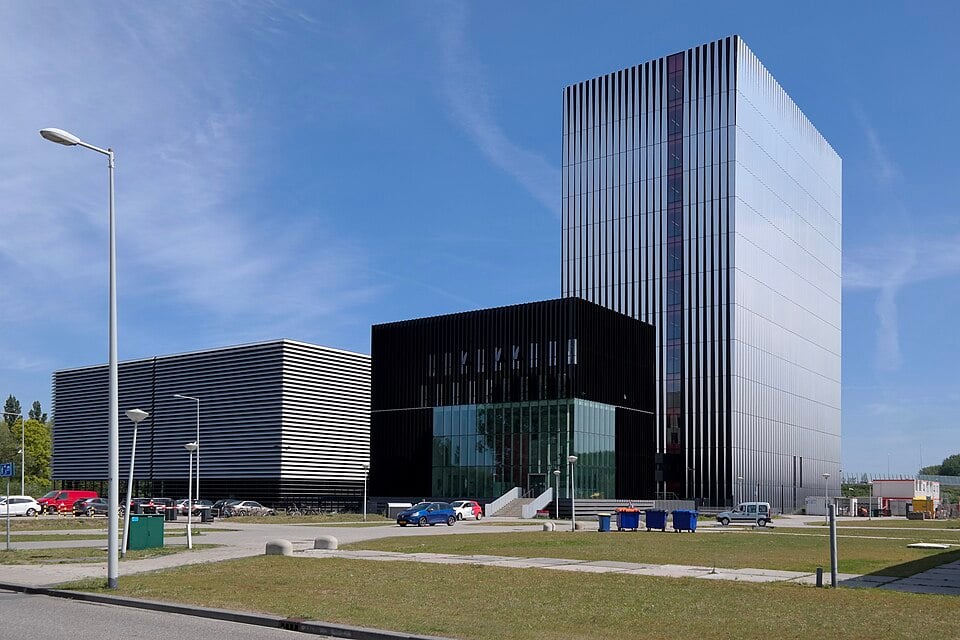
A note about the images in this newsletter: Most LLM-imagery deliberately conceals the ecosystems within which the machines do their work. It’s all sleek cables, weightless vectors, glass-skinned robots. But the machines exist by virtue of the earth. They require minerals from deep within the ground for their chips, along with continuous cooling in large, highly secured buildings while they run.
Resources
A lot of different scientists and writers have shaped and challenged my thinking on the machine in recent years. Here are a few:
James Bridle. James is an artist working across different media who has been thinking critically and expansively about machines for a long time. They have written two books, both of which I loved: ‘Ways of Being: Animals, Plants, Machines’ (Farrar, Straus & Giroux, 2022) and ‘The New Dark Age: Technology and the End of the Future’(Verso, 2018).
Emily M. Bender. Emily is a professor of computational linguistics and an outspoken critic of the hype around the machine. You can find her incisive Medium-posts here and her academic publications here.
Joy Buolamwini. Joy is a computer scientist and a ‘poet of code’ whose research at MIT led her to found ‘The Algorithmic Justice League’. Find out more about Joy here and read her new book ‘Unmasking AI: A Mission to Protect what is Human in a World of Machines’ (Random House, 2024).
Eryk Salvaggio. Eryk describes himself as a ‘blend of hacker, researcher, curator, and artist’. He is currently doing a PhD at Cambridge, examining the relationship between archival practices and generative AI. His Substack and website ‘Cybernetic Forests’ are a joy.
The quote from Ursula K. Le Guin was published as a chapter called ‘Deep in Admiration’ in the book ‘Arts of Living on a Damaged Planet: Ghosts and Monsters of the Anthropocene’ (Minneapolis: University of Minnesota Press, 2017)