
Saturn
‘The colour of a lonely bone,’ I wrote in my notebook the first time I ever saw Saturn in the sky. I had been practicing astrology for a while, knew about the myths, had lived through my Saturn return, but I had never before seen this distant giant. I used no telescope, just my eyes. My tired eyes. Saturn’s light looked washed-out but insistent.
When the ancient Greeks observed the painfully slow movement of this faraway planet, they decided to associate it with Cronus, the father of Zeus. Cronus was a god famed for establishing stability and power over large timescales. If there was any planet he’d choose as his own sacred sphere, it would be this one. Later, the Romans named this same planet ‘Saturn’, after their very own god who was famed for establishing stability and power over large timescales. Astronomers at the time inferred that, due to its dim light, Saturn had to be much further away from the Sun than Jupiter. To them, this planet marked a border, a limit beyond which they could not see.
The ancient Greeks were as interested in astronomy as they were in astrology, especially during the Hellenistic period. The reading and interpreting of birth charts was common. Here is what 2nd century astrologer Vettius Valens wrote about the influence of Saturn:
Saturn (…) causes humblings, sluggishness, unemployment, obstacles in business, interminable lawsuits, subversion of business, secrets, imprisonment, chains, griefs, accusations, tears, bereavement (…) It also causes falling on the face.
As a metaphor, ‘falling on the face’ really encapsulates what a bad Saturn transit feels like. Though I also like the mention of ‘humblings’. I am not in the business of fortune telling, or misfortune telling, for that matter. When people come to me for a birth chart reading, I don’t calculate the likelihood of an interminable lawsuit. But when I ask people about their experience with Saturn, they begin to speak of a very specific kind of grief and loneliness. They speak of obstacles, delays and psychological chains.
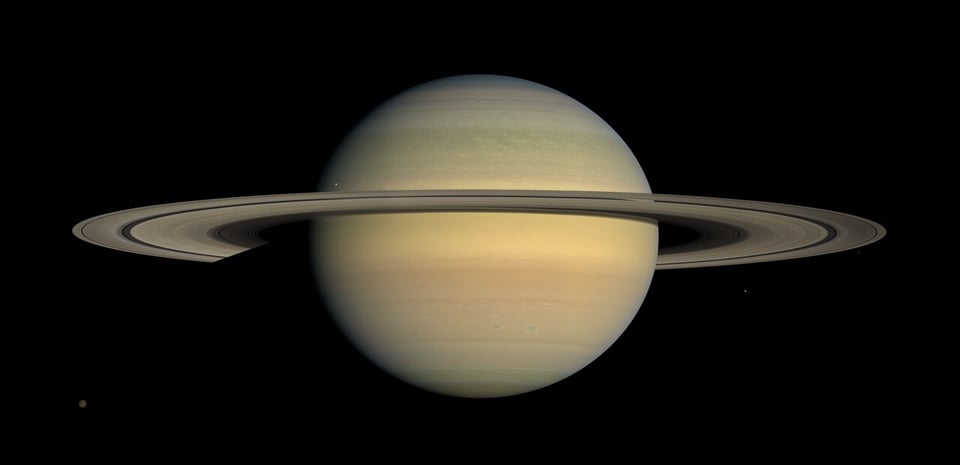
Saturn rules over chronological time. As a principle, Saturn provides a sense of reality and structure. The astrologers I studied and studied with – most of them modern ones – think of Saturn not so much as a bully but as a teacher. Saturn wants you to understand that the sand in the hourglass is finite. It wants you to show up, be responsible, be accountable. If you say you prioritise something, it asks for the receipts.
There are people for whom all this seems simple enough. You know who they are: They get their taxes done on time, they have spent a decade honing a certain skill, they do not feel confined by routine or discipline. They like all this Saturnian structure. In fact, they couldn’t live without it.
And then there are the people who shudder at these Saturnian vibes. Just the whole entire serious grown-up-ness of it. I certainly used to be one of them: I preferred improvisation and a bit of chaos in all things. What did I have to learn from a god who was such an awful drag?
As it turns out, this was the wrong question to ask. Saturn’s bitter lessons come to everyone, and generally, the people who are good with structure and responsibility suffer just as much as, say, aspiring writers in their late twenties with a dwindling bank account. The suffering is just different.
To experience Saturn, either through a challenging transit or as a natal placement, is to experience loss, isolation, depression, and the feeling that you have to work twice as hard to get half as far. Saturn is also the endless refrain of ‘I should’ along with ‘Why didn’t I?’. Regrets and guilt are Saturnian; so are consequences.
In a birth chart, the placement of Saturn speaks to the ways in which we are inhibited, hard on ourselves, shy, hypercritical and rigid. Saturn's influence slows us down and creates scarcity where before there was abundance. Under Saturn’s cold gaze, we are microdosing misery. Sometimes we macrodose.
Saturn is the part of us who says: yes, I hate my job and I buckle under my responsibilities and I'm depressed but there is nothing I can do. Bills need to be paid. I have to be realistic. It is what it is.
And the thing is, you're the only who knows whether this is a misplaced sense of security (or scarcity) talking or whether the real circumstances of your life demand this level of drudgery. In either case, you need to contend with Saturn: You may choose to adjust to the changed reality of no longer working a dead-end job and budget accordingly (another Saturn thing) or continue to bear it. Obviously, for many people in late-stage capitalism, this isn’t a choice.
The real danger with Saturn is that we become so focused on security and stability that we never lift our faces up to the sky and imagine something different. I am careful not to say ‘better’, because who knows. I think the promise is not necessarily liberation but indeterminacy. Or: the right to make it up as we go along.
Gods are famously not afraid of anything (they are gods, after all) but we know Saturn was afraid. A long time ago, the goddess Terra (‘Gaia’ to the Greeks) predicted that one of his children would overthrow him one day. So, he devoured his children, one by one. Saturn was terrified of change. Instead of allowing the future to replace the past, instead of permitting his children to take his place, he tried to reverse the process, thus increasing both his power and his loneliness. To contend with Saturn inside our own psyche is to contend with the part of us that wants everything to stay the same.
‘We each have an appointment with ourselves, though most of us never show up for it,’ the Jungian analyst James Hollis said. It can be easy to sleepwalk through our lives, to do the things everyone expects of us, to make everyone else happy and to avoid the work that is ours to do. I believe Saturn is the force who kicks your ass when you miss the appointment with your Self too many times. It’s not a gentle kick, either, but be grateful anyway. Saturn, for all the sorrow he brings, helps you get your act together.
One of my wise astrology teachers, Verena Bachmann, once shared a phrase that helped her cope with her own inner Saturnian critic: Every time she caught herself thinking ‘I should’ she replaced it with 'I can, if I want to. And I choose.'
Often, with Saturn, all the available choices are shitty. Still, it helps to remember we have a choice and that our growth and wisdom lie in the act of choosing.
Small, actionable steps. Patience and consistency. It does not get any more boring than this, I am afraid. But remember that cathedrals are built this way. Imagine Saturn as a stone mason, a grey-haired meditator, a dedicated mathematician, a firm but kind headteacher, a former addict going to weekly meetings. Saturn’s gift is clarity and the knowledge that a daily practice adds up over time.
Remember the fistful of sand you are given in this life and make a list of the things that really matter to you. Not the things that should matter, but the things that do. Saturn will be there, waiting, checking on your progress.
Resources
Vettius Valens, Anthologies: Translated by Mark T. Riley (1990s); Skyscript digital ed. (2010).
I’m grateful to the translation from Valens by Classics scholar Mark T. Riley. As you might have spotted, Riley uses the word ‘Saturn’ in this translation even though Valens would not have used that name in the second century yet.
I first heard the James Hollis quote on the brilliant This Jungian Life podcast, though I don’t remember which episode. I can recommend them all, though. This one about The Odyssey is a recent favourite.