
The Mayor's Grove & the General's Tree
Currie planted a copper beech tree, and it still grows in the park. The grove features other tree specimens planted by people such as Winston Churchill and the King of Siam.
The Battle of Vimy Ridge took place from April 9th to 12th, 1917. The First World War battle saw all four divisions of the Canadian Corps fighting together for the first time. The Canadians managed to take the ridge and gain a large amount of territory from the Germans, something attacks by other nations were not able to accomplish.
Vimy Ridge plays an outsize role in Canada’s national mythology, symbolizing a moment when Canadians stood out from the shadow of Britain and entered the world stage in its own right. In his book, Vimy: The Battle and The Legend, historian Tim Cook refers to the French hillside as a site of “mass killing and myth making.” Whether one believes in the national myth of the Battle of Vimy Ridge, it is a point that has been reinforced and debated by Canadians since the 1930s.
Among the commanders at Vimy Ridge was Major-General Arthur Currie who led the 1st Canadian Division. His efforts at the battle earned him a knighthood and a promotion to commander of the Canadian Corps.
The General Returns
Currie lived in Victoria before the First World War. He served in the local militia and worked as a school teacher, insurance broker, and real estate speculator. In 1931, as Canadians continued to struggle with the human cost of the war, Currie made a triumphant return to Victoria. He gave lectures, visited with dignitaries, and attended a dinner in his honour at the Bay Street Armoury – now renamed the General Sir Arthur Currie Armoury.
Currie was also invited to take part in the Victoria tradition of planting a tree in the Mayors Grove at Beacon Hill Park. Established in 1927, the grove became a location for Mayors to commemorate their administration and people that they admired.
Victoria Mayor Herbert Anscomb invited Currie to plant a tree in the grove during the 1931 visit. A series of photographs captured the event.
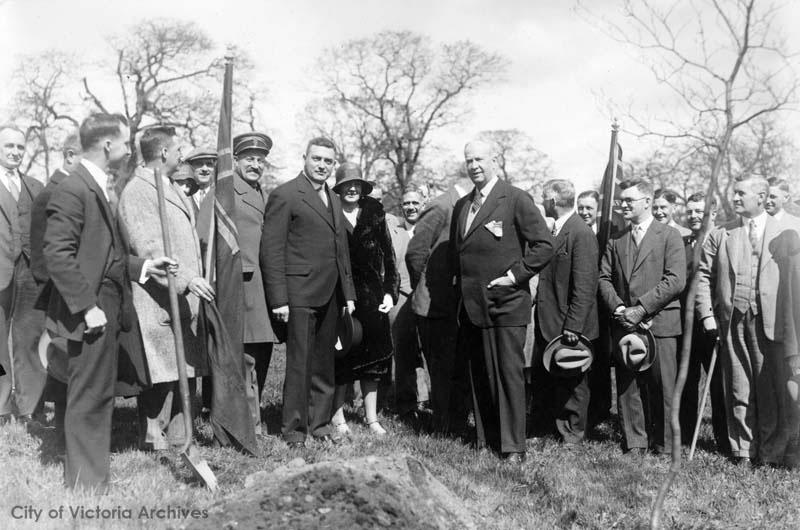
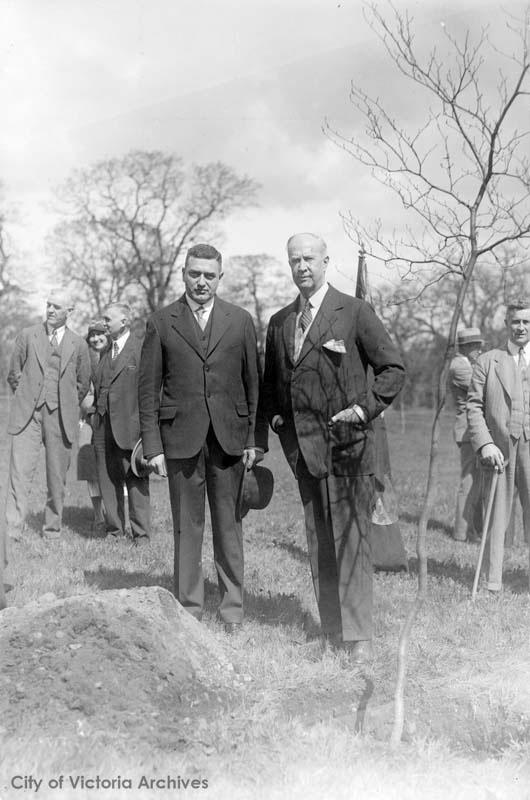
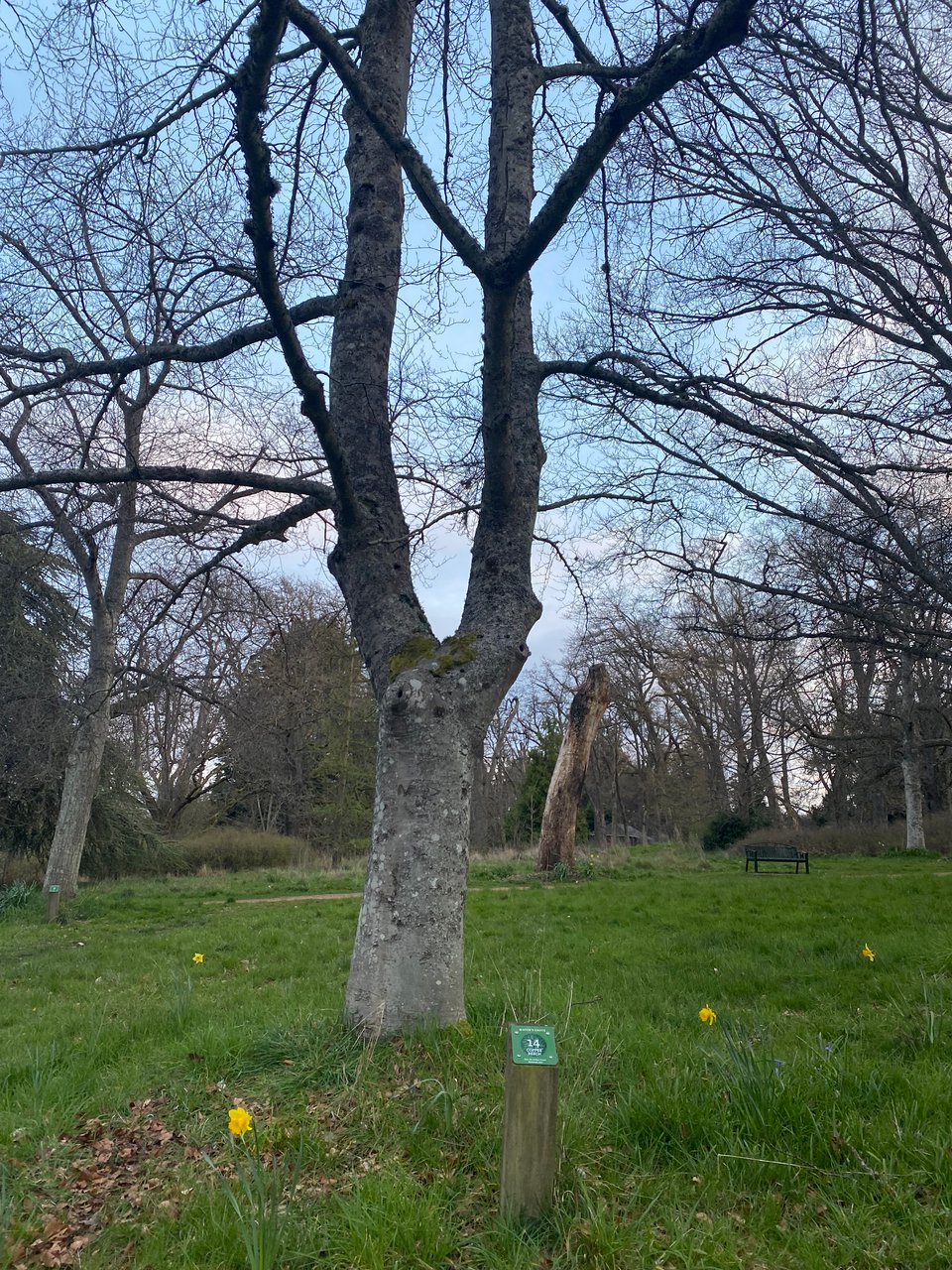
Currie planted a copper beech tree, and it still grows in the park. The grove features other tree specimens planted by people such as Winston Churchill and the King of Siam.
Trees were a popular form of commemoration after the First World War. The best known examples in Greater Victoria are the Shelbourne Memorial Trees. In 1921, over 600 planetrees were planted along Shelbourne Avenue and other streets as a memorial to Canada’s war dead.
Trees also became a symbol of remembrance for Lieutenant Leslie Miller of Ontario who collected some acorns from the oak trees at Vimy Ridge at the conclusion of the battle in 1917. He later planted the oaks on his farm when he returned from the war. One hundred years later, saplings from his farm were brought back to Vimy Ridge and planted.
Shells rather than lives
Not everyone thought highly of Arthur Currie and his accomplishments. In 1917 and 1918 some politicians and soldiers blamed him for the high death toll wrought by the war. While Currie was not without his faults, Tim Cook argues that there were no winners in trench warfare and that he was an effective leader:
Currie listened to his subordinates, relied on his experienced British General Staff officers, worked hard, was morally brave, and, although this was not always apparent to his men, always tried to ration their lives in the attritional battles of the Western Front. As one subordinate officer noted, Currie was willing to spend shells rather than the lives of his men to achieve his objectives.
When Currie returned to Victoria in 1931 he had successfully reclaimed his reputation and his visit was cause for celebration – a feeling best captured by a copper beech tree that still grows in Beacon Hill Park.
Subscribe now