
Mobilizing Canada
In response to the threat of air raids during the Second World War, communities such as Victoria worked together to prepare.
The Second World War is referenced a lot these days – the rising fascism and the build up of armaments offer many parallels. Politicians, too, like to evoke the Second World War as representative of their nation building efforts, an example of a time when Canada stood by its allies and invested heavily in manufacturing and socio-economic supports to win the war.
It’s certainly true that the federal government is ramping up money for the armed forces, but to do so it is making cuts to the programs that support Canadians during vulnerable and uncertain times, especially in the areas of healthcare, childcare , and public transit.
The Second World War brought big military investment of course, but most politicians these days do not make reference to the era's price controls, rationing, nationalization of key industries, social housing, and community planning.
I have previously written about Wartime Housing Limited, the 1940s federal initiative that provided publicly built housing for war workers, veterans, and their families. In that article, I made reference to Seth Klein’s 2020 book A Good War: Mobilizing Canada for the Climate Emergency. Klein argues that the federal government’s intervention into Canada’s economy during the Second World War offers lessons for the problems of today.
“Mobilizing Canada” to address the emergencies we face – whether it’s the climate, housing, poison drugs, or grocery prices – is something the politicians won’t commit to. The prime minister has made it clear he wants to mobilize capital, instead. If Canadians have been mobilized it’s only for the purposes of political sloganeering, best evidenced by putting a flag in your window or an “Elbows up” bumper sticker on your car. We are a long way from the sense of shared commitment requiring our time, resources, and cooperation that characterized much of Canadian public life during the Second World War.
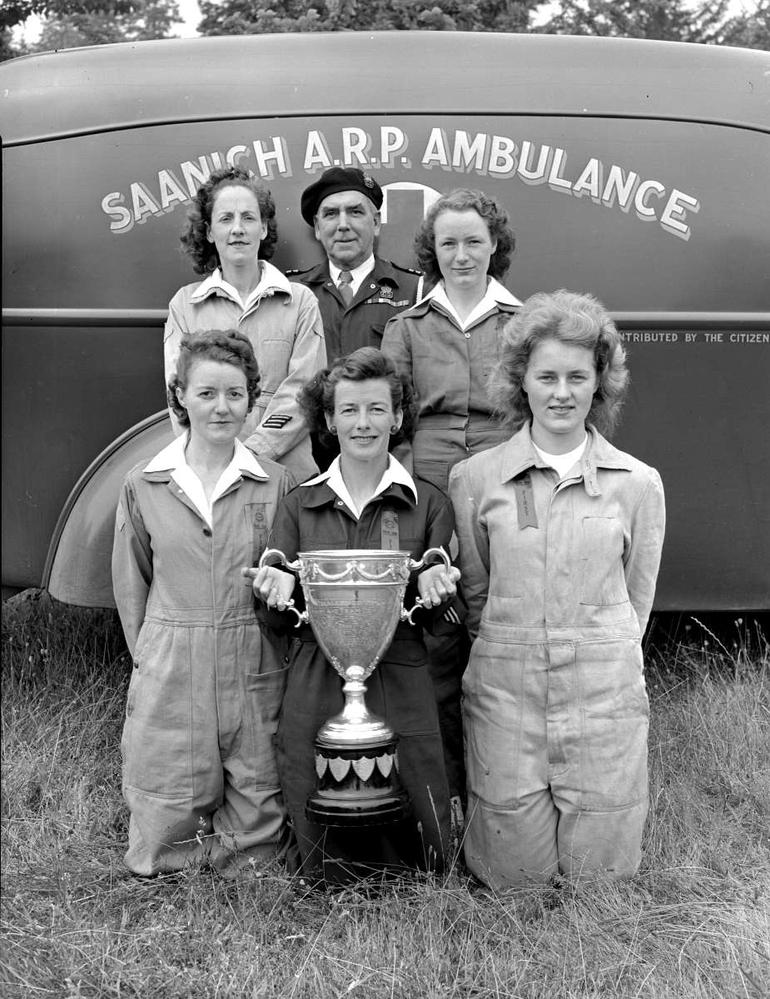
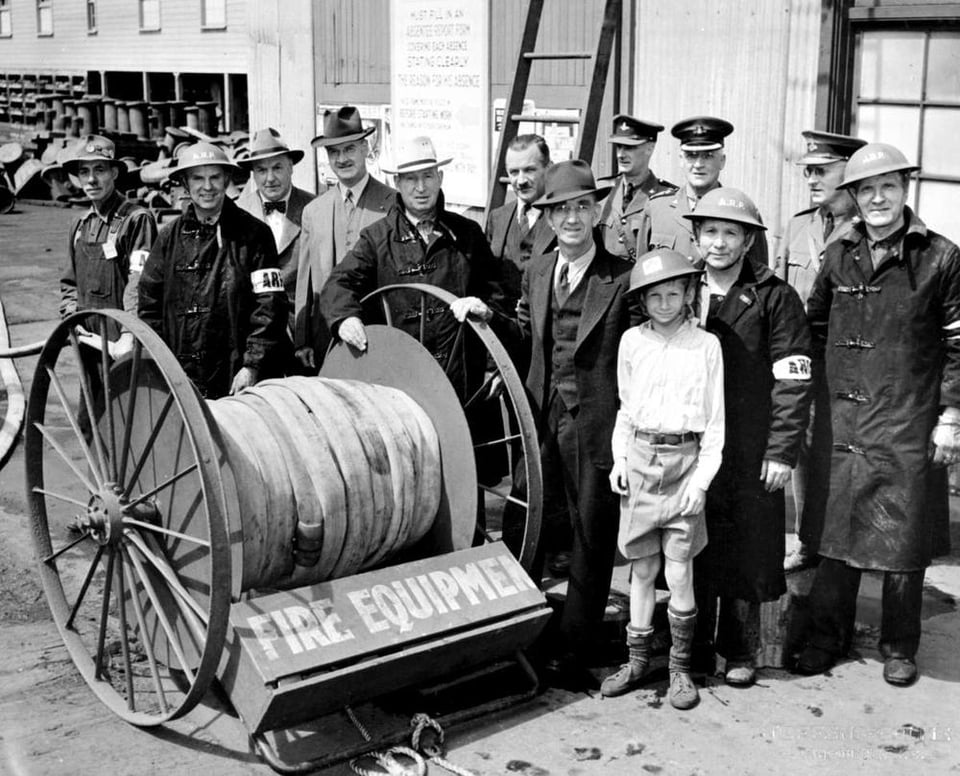
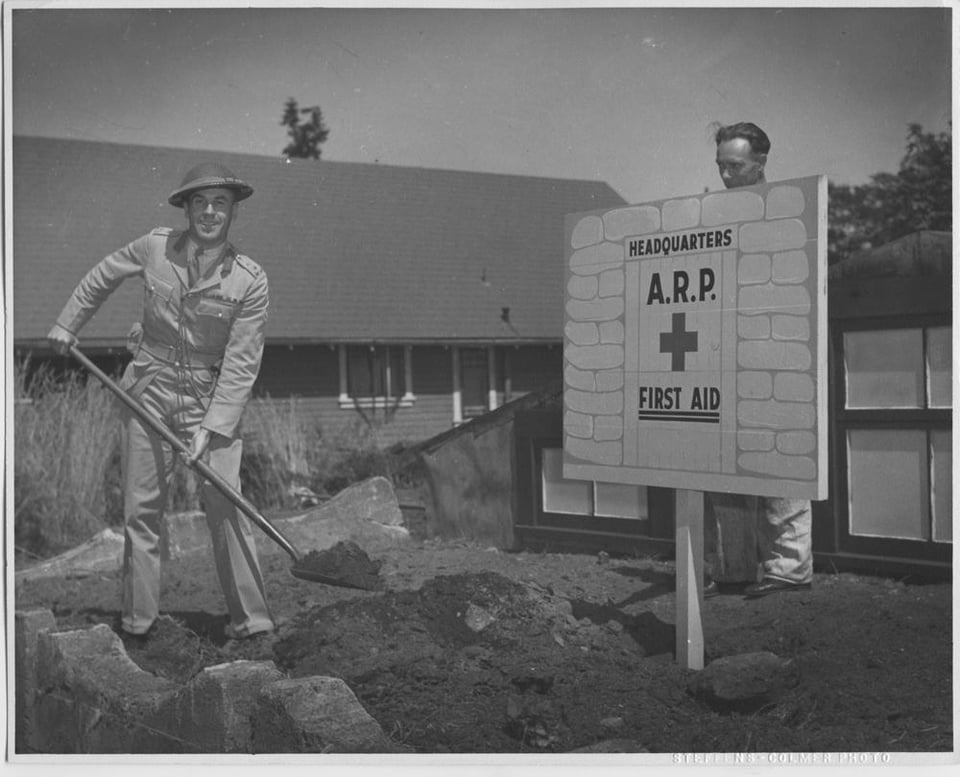
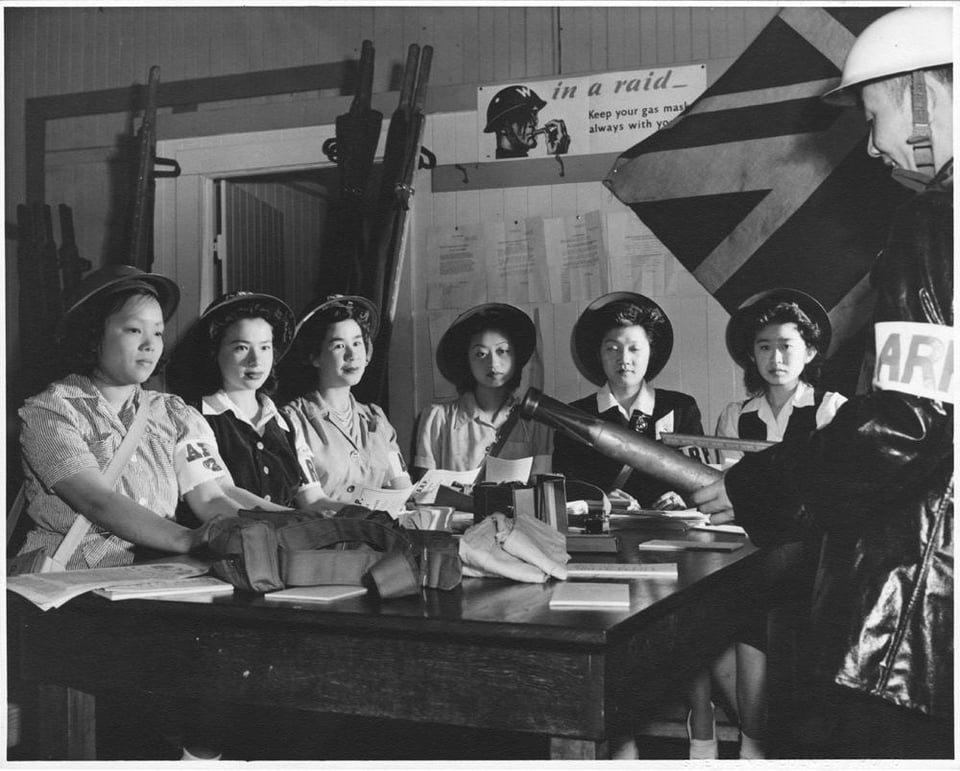
There are many great examples of war time mobilization that Klein highlights in his book, but one that does not get covered in much detail is civil defence and the implementation of Air Raid Precautions (ARP). In response to the bombing of London and the threat of air raids from Japan, coastal communities worked together to prepare. All levels of government, civilians, and businesses coordinated efforts to respond to fire, gas, and medical emergencies. They also worked together to eliminate bombing targets, by blacking out their windows at night and limiting travel after dark.
The BC Archives holds many great photographs that highlight the planning and practice that went into civil defence/Air Raid Precautions.
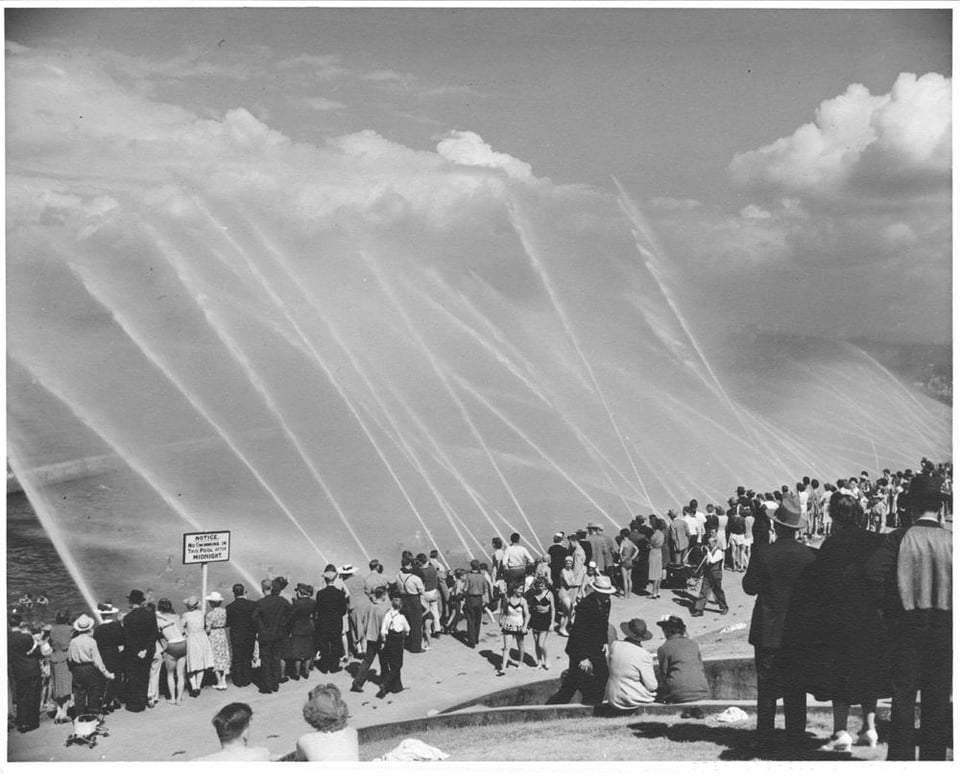
A recent news story about the military’s approach to fending off drone attacks at its air and navy bases had me thinking about the Second World War and the ARP program. Then, anti-aircraft guns were positioned across Victoria, but civilians were also asked to work together to reduce the risk. Now, civilians are asked to leave it to the generals and emerging technology.
So it goes with Canada’s response to our present-day emergencies; we are not being asked to mobilize in any meaningful way. Even a basic national effort such as taxing the rich to pay for mitigation and solutions is off the table.
There are plenty of lessons to be learned from the Second World War. Unfortunately, our governments wish only to communicate to us that they have learned these lessons and, therefore, do not need our help.
