sixty-one: 𝄽
So, apologies, because this edition is a week late (I never know if you guys notice; I do). It’s been an incredibly politically and socially tumultuous month here, and not in ways I can relegate or delegate; in the way that forces you to triage where your time goes and basic household resources come from, accelerate one of your projects wildly, and start to set up backup plans.
I actively debated whether I was sending a newsletter this month, because my head is overfull of things not for sharing in a broadcast medium (boring, personal, unconstructive), and somehow, I wasn’t sure I had anything to say. I mean, I could have performed a newsletter, but I didn’t want to with nothing to actually say.
So March was an indeterminate amount of weeks long, but this is going to be a shorter edition by virtue of that situation.
cotyledon and on and on
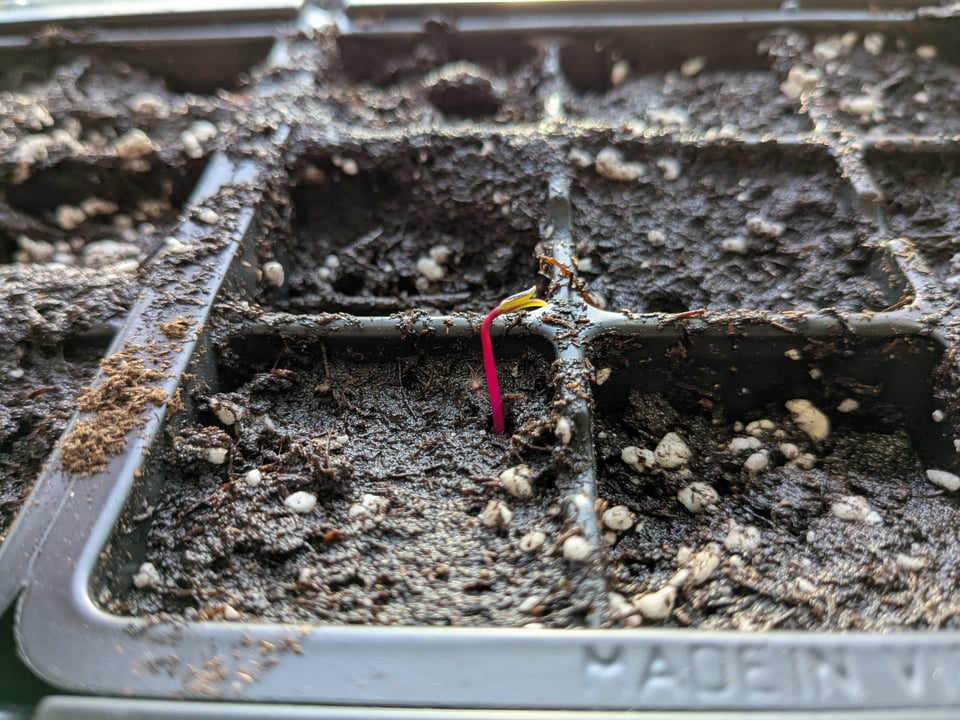
I’ve had a somewhat sedate start to garden season: The first seeds went into the starter early March. I am currently host to some spindly leeks, beets, scallions, and brussels sprouts which, thanks to Homestead (which started the same week), are my last leggy seedlings because now I know what I did wrong here. A proper garden fork and some seedling pots entered the chat today. There will have to legit be a grow light soon.
I still don’t have my garden plan put together for some reason; it’s templated out on paper, but segmented, floating.
I may have been half waiting for the Homestead garden planning session, which happened tonight. We have 900-odd square feet at the farm, and it’s going to produce a lot; there is value in knowing a bit of what I don’t actually need to plant at home because I’ll be full up. I’m simultaneously still riding the Tetris-brain pleasure of putting the plot together and thinking how different it is from container planning. The containers are a small anthology of haiku; you shift them for flow, but the constraint dictates everything. A plot this big is free verse. I don’t know how to work that much unstructure. It was a pleasant surprise, watching myself start to circle the problem like a stubborn poetry draft.
I’m going to sit back and think about how to approach the balcony haiku this week, now that I know what’s covered. More potatoes here, I think, and more peas. Daikon, and lavender.
editorialist
I’m also easing back into the Reckoning submissions pile, which is both a positive familiar situation and a little odd, like stretching out a sleeping limb.
While I’ve had fairly steady editorial gigs — usually two a year, which I realize happen pretty quietly in the background? — they haven’t been the type that asks me to communicate with authors. It’s been grant jurying, contests, some writing workshop admissions, I haven’t written rejection letters in probably four years now.
While it’s not a muscle you lose — I’ve had the same basic feedback formula for declining a story for a large amount of years — I’m fascinated by how people respond to it now. I’m getting thank you notes for the basic template at a rate almost double what used to come in. I don’t think this is particularly a virtue on my part; I have a sneaking suspicion that the working culture has slid so far toward form rejections and outright editorial ghosting that people find the same rejection feedback I’ve given year in, year out, for twenty years to be special attention now.
I would suggest this is bad for us. It is the normal attention people working with each other’s art ought to be paying each other. It is good for the stories, and it makes us all more sociable and generous critiquers and learners instead of paranoid hunched industry weirdos who bang on about gatekeeping as if making things is siege.
Anyways, slush is as ever a social good. I like it.
things watched
A few documentaries of note this month: Shtetlers (2020), about the former pre-WWII shtetls of Ukraine from the memories of the very old inhabitants of those villages, now scattered all over the world. This was surprisingly lovely, not just for a lot of very soothing green rolling rurality and rain dripping off red-clay-tiled houses and geese, but how it focuses on how the Jews and Christians of former Ukrainian small agricultural towns talk about each other. There is so much affection between them: They grow up together, do favours for each other, cook each other’s recipes, discuss both very painful things (warning: genocide, but you knew that) and fond ones with the intimacy of community.
It obviously validates my own personal preconceptions (natch), but it’s one of those hours where you see it reflected back to you: That yes, people act incredibly well or badly in moments of great stress, fear, and want. But even wars pitched on ethnic lines have all kinds of people nibbling the edges of that wall, keeping relationships, being their actual selves in the thick of it, finding ways to pass on food or still be friends or look the other way to let someone disappear to safer shores. People break the rules of enmity all the time. It is harder than you think, on the whole, to extinguish that. And believing too readily in the rigidity of those battle lines, having a little too much faith in enemies and monsters? Makes you a little more susceptible to being one of the people who under pressure, acts the twat.
It’s a lovely, messy watch. Everywhere in the world, all kinds of people are doing absolutely everything.
I followed that up with The Wobblies (1979), a documentary made about the IWW from when some of its organizers were still alive, talking cheerfully about labour conditions in 1910, and it’s a great — if ultimately grim — chaser. Because obviously the government of the day takes it to them, and some of the ways people are treated when they’re striking are — okay, for me, who spent five years reading histories of prison systems and genocides and the US pre-Civil War labour landscape until I had a map of violence habits in my head? I recognized them and went same as it ever was. But for the 99% of people who didn’t do that with their time, probably appalling. I can’t measure this; my goalposts have moved.
(I think this is one of the research points that’s made me a little less patient with people claiming their particular identity group has been singled out for the cruel and unusual. This is a collection of regularly repeating habits; a loose process that staffs and restaffs itself over the course of decades and centuries. Andrea Pitzer did a great book about it, if deeply grim.)
On the upside, though: That same sense of solidarity, no? In a landscape that’s casually, almost wildly violent coming down off the Gilded Age, people so cheerfully and casually take care of each other, without making some big production out of it. Also, IWW organizers seem to understand the value of fun: they talk a lot about the value of music and, bluntly, trolling. Some of the ways they talked about sabotaging strikebreakers are actively hilarious.
The combination had me picking at that crucial difference again: These are people who like people. And I don’t mean extroverts; they just like other people as a fundamental setting. They understand how to be together without trying to bonsai each other into more copies of themself.
Finally: The Investigator (2023), which is — kids, this is about prosecuting genocidal war crimes. Specifically, in this case, in the former Yugoslavia. If you haven’t spent years picking at every angle of mass violence (yo) and already seen mass graves — I recommend you do not do this because you will be sad. Basically: major content warning if for you this constitutes new weight.
One important piece from this. Right at the beginning, addressing a UN lecture audience, he says: It’s very important that we understand one thing. There might be some students from the former Yugoslavia here, and I’ll be using the specific examples.
Please: We shall leave the demons of the war sleeping.
Oh, thank you, says I. An adult. I need more of that.