
seventy-two: no one's interested in something you didn't do
It’s not what the Tragically Hip meant when they said it, but this month it’s taken on a 360-degree overtone: both very good and very irritated. Complain endlessly about things but never show up to act upon them? Make the cornerstone of your survival withholding and resource hoarding? Well, no one’s interested in something you didn’t do. This is a shockingly applicable paradigm: at a certain point, the absence of effort just doesn’t count as news.
You can probably tell from that last one that just like last month, it’s been something of a state of extremes, and a great many words out of this month’s edition likewise went to the river. You only get the deleted scenes if you take me out and get me entertainingly drunk.*
*Note I have upgraded my offer.
On the other axis: It’s turning into a good cure for the ideas stuck in the realm of potential energy. Have an interesting thought in your head? Well, no one’s interested in something you didn’t do, so — if it’s fun, there’s less and less reason not to at least try it. Today’s just as good as tomorrow. It’s been a month where gratifyingly enough, lots of people are interested in what I’m yes doing this month, and I’m deeply interested in what they’re doing, so the ecologies of mutual appreciation are flowing decently indeed. The other face of this paradigm is — it’s helping me not hesitate. Or, let’s be real. Hesitate less.
It is mildly shocking to realize what just sailing into situations with a do it not later, do it now ethos has done to my schedule this month. I have been holding so much energy back for the strategic reserves of I’ll need this when the next inevitable crisis comes. As per last month we have gone Gattaca on that situation, and it’s been grindingly busy — legitimately, unsustainably so if this goes too much into the long term* — but the output? 2024 Me would be shocked at how much is actually back in motion for eight weeks’ effort in the year.
*To be fair, it didn’t help that the massive snowstorm + extreme cold weather alert meticulously cancelled an entire week of plans and commitments, and when those fell into the weeks after? Haven’t caught up since. Some of this has been Act of God.
It’s an oddly impatient, kinetic space to inhabit. I can feel the shortness of my fuse. I can’t tell if I’m being deeply socially unpleasant right now or if this is what crisis recovery is made of, or yes/and/both. I am also not trying to be too hard on myself about it. Every time I do check the news, something else is pointedly on fire, as if to prove some point about burning, so y’know, it’s not like I’m just tromping around Utopia like a big noisy asshole by being impatient at same? All the pent-up results-bearing energy of years of dysfunction and obstruction is upon me, and it wants to be set free.
What that’s boiled down to is a month big on action and uncooked work-in-progress that’s not ready to mention yet, and not so big on good thoughts to share (to be fair, that Disco Elysium piece was a biggie). So I think this is going to be a little light as an issue, but. It’s been a strange month, and everything that went to the river should be there.
all tomorrow’s parties
Meetings can be parties if you keep a party hard spirit.
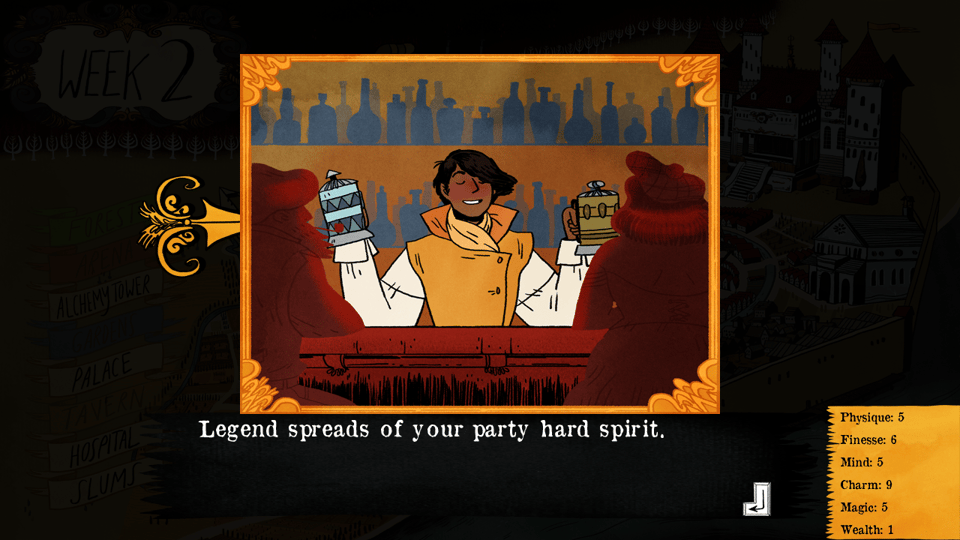
I mentioned that Good Toronto is on a full-court press so far in 2026, and despite a small Sick Interregnum mid-month, this month has been rife with the fun meetings: the ones where people are enthusiastic and competent and funny and geared up to get shit done. And that doesn’t even include the week and a half I had to miss because of a raging February chest cold of the old-school, pre-COVID style.
A small selection thereof:
The month started with an organizing meeting for an advocacy project focused on keeping Council in touch with the City’s climate commitments. It’s really patient relational stuff, co-organized by someone I know from Climate Grants Jury*, and even though it was a morning! on a weekend! when it was -20 C out and ohgod! I was so tired! it was a really solid, smart, good room.
*Surprising that it took three years to check out each other’s bands.
It is an odd thing to be told by someone you’ve just met “So you’re a force, aren’t you?” when — inside, you know that you’re actually on four hours’ sleep, seeing the world through the underslept wavy underwater filter, and also in massive pain dissociation because your shoulder’s seized up and there’s no way to unstick it until you’re home and can twitch into the right gradual positions and howl. So, by my own lights, I was barely present in the room; the little autopilot dybbuk I send to handle things in my place when I’m off being in pain was managing the situation.
On one hand, after years of this, I still don’t know how I feel about the fact that apparently a lot of people don’t notice the difference. (Or at least don’t mention it? Like, man, that’s complicated to swallow.) On the other, well. At least the dybbuk is reasonably personable and capable, knows a fair few things about systems analysis, and can apparently off-the-cuff an entire angle for climate project finance without really thinking about it. If this is going to be the glitchy consciousness I live with, at least I can trust it to hold the fort for me.
***
The second interesting situation was an unexpected invite to the Green Neighbours Network’s awards/connecting/potluck situation first week of February. (See: Local organizing podcast referenced a few months back, as a nice blueprint for grassroots action.) I’d volunteered a few copies of Ashes and Reckoning for their annual fundraising auction, and they called me up and said actually, do you know what, do you want to just come to our thing and bring them along? It is nice to be invited to parties, so I went.
This was a very good party: a really interesting, generous, mix-activities-up sort of pleasant climate summer camp vibe. The honouree turned out to be someone apparently I actually have met before, years ago in passing at my Community Environment Day, talking about school programs. We didn’t remember each other’s faces off the bat but we both remembered the conversation vividly. It turns out there are still only 30-50 core people in any given initiative in Toronto (we only pretend to be a city of 3.5 million humans). I think there were 60 seats in this thing and I’d already met at least 20 of the people filling ‘em, some in very different contexts and as far back as 20 years ago.
After thinking on that beyond ha, that’s funny, this town: I suspect this is what some people in the city see as cliquishness; it is actually just evidence that the core skill of Toronto is showing up*. I’m not saying things don’t have their drama, scene politics, etcetera, but a shocking amount of decision-making power and civil society-shaping ends up concentrated in the hands of people who are basically willing to put in some work and persistence over a longer time frame than you might expect.
*Actually, I watched a bunch of Anthony Bourdain shows this month and in his Toronto one, the then-lineup of Fucked Up actually come straight out and say that. I found this wonderfully validating. Also yes, I used to eat at literally every restaurant and drink at every bar profiled on that episode when it was still 2012, still get my knives sharpened at Tosho, and had my last birthday at Cocktail Bar because they used to be the only place in town that made an Aviation and can do me celiac-safe smoked trout dip that pairs wonderfully with something bourbony. I am grappling with the realization that at a certain point, I was on-trend without knowing it. But: they were wrong about Poutini’s for soaking up late-night drunk. Mates, that’s a job for the Lakeview.
I’m kinda fine with this. It’s a shop-floor apprenticeship system, or maybe a dojo: show up, learn to sweep woodchips or work mise en place, and just keep happening. By the time you learn how to kill a man in this discipline/mixed metaphor, in terms of policy-making or organizing or whatever, you have long since internalized how the flows around you work, what proportion is, what people around you need or value, and how to do things other than hit 95% of the time. There are many things in this world that you should only be allowed out with after writing your million words of crap. There are reasons why community-level decisions should work that way.
That said: Part of the showing up persistently is you meet new people too, and I met some fun ones there. I am especially looking forward to chatting with the couple who turned their whole house into a solar panel efficacy citizen science project for 20! years! because nobody had measured certain stuff, so might as well get started; the shark scientists who are building a shark science RPG (!!!); and the cheerful photography volunteer who was hiding a 1) hydrobiology Ph.D and 2) an encyclopedic knowledge of Nigerian short speculative fiction in her back pockets. People are sweet once you get ‘em talking.
a forest
I am simultaneously ahead and behind on my research work: the cold and one recurrence of one of those 8- to 10-year-old problems knocked out my ability to put together a good literature review, and now that is late. But what I can do with no brain is set up interviews, and conduct a few quick ones. So that is early. On the scales of the universe, I am hoping this balances.
The conversations I’m having are, fortunately, already paying off in spades. After years of searching around to very little result (literally: years) I finally found someone who could point to what’s interrupted one of the major skills transmission factors here — and then off a whole other inquiry, found someone else whose organization is about a year out from doing a little work on it, and really wants to pull me into one of their working groups. That second chat was great: the kind where both people are visibly thrilled about what could get done here, and how these projects could support each other. Win-win stuff. 🙂
There’s also been a chance to pursue one of the shadow goals (!) of this project: Making people talk with each other already.* I’ve been collecting questions people have and offering to match them with other interviewees who have something like process or answers as I go (yes, this was premeditated), and people are taking me up on that one in excellent quantities — even if they don’t have much to contribute to the project except their knowledge areas and needs. I like this. It furthers my private war goals of living in a functioning society.
*A bizarre percentage of what we’d call my ~organizing practice~ is just me making people talk to each other already. This is a mild indictment.
I have seen people call this kind of work a whole lot of terms I don’t quite like on the tongue: glue work in tech (I do not render horses); movement-building in non-profit (I am not Les Miserables); network weaving in two particularly wanky cases (I am not Johnny Mnemonic). I’m not just being a little dickish here about other people’s words: there’s something in this, I think, about the amount of spaces where doing the baseline work of community is being approached this laboriously, with such abstracted and reified metaphors. Like, people are really having to work their way into describing — and describing as worthwhile and respectable — something that’s a ground-floor function of any human relationship. Really trying to big that up and make it sound like it’s spooky action at a distance.
Because I’m hip-deep in writing something that involves thinking about productive and reproductive labour (will report next issue, when it’s happened and something I did do, see title), I have an instinct that something quite gendered is happening here. Rather overcompensatingly grandiose and masculinized, aren’t these? Needing to invent new words to justify that this is actually work? Well, it’s not girly care work if you make it carpentry or hacking! or the Paris barricades, it’s actually being Hiro Protagonist, pizza delivery network weaver! so there.
But I don’t think that’s all of it. (Seriously: Definitely part of it, but too pat by far.) Even stripped of the chest-out posturing respect-me vibes, I still find all the available terms too abstract, too unbodily for the act of knowing people, remembering people, using the right valence of judgment to fit the need to the response. All this language takes that floating into the rarefied air above the jawline, and where I think of this work living is really deep: gut and earth. I don’t have a metaphor yet that fits — or perhaps, almost don’t feel it needs one. Why tunnel in from the outside, to something that’s so inherently within? Why build artifice around the basic stuff of human life?
This is not exactly going to help out my CV, but if anyone has thoughts on this one, I’d be interested. I will have to put I make people talk to each other already on there sometime.
things watched
A good crop this month with some solid recommendations, actually, partially because of the chest cold interregnum. All the getting-things-done energy regardless, there’s a restfulness to understanding you are sick, and should do nothing but bundle up and watch TV.
I had a few leftover Kanopy credits at the end of January (use your fake movie currency allowances to the full) so watched I, Dalio: a little half-hour documentary essay on Marcel Dalio’s film career which I’d been saving, since it’s got bearing on one of those slow-grow things I have going.
It’s mostly a retrospective of Dalio’s career in fictionalized narration: solid research, some great archive clips, and a very particular lens. He’s a visibly Jewish actor working from the 1930s or so to the 1970s, and while it’s rarely said, the word Jew, he’s typecast in two different ways in French film and then in Hollywood: gangsters, cowards, and bastards in France, but in America, the hyperactive jolly Frenchman. He’s a name in France — always with his own dedicated frame in the credits — for playing that ugly racial stereotype; he gets respected characters in America and has his credit buried in the crowd.
It’s a small point but one vital and well-made: seemingly sweeping ideas of cultural identity and value are really, really local, they’re moving targets, and they’re way complicated. Jewishness, particularly, is treated so many ways in so many places that — and this is not me issuing invitations to open the worm can? But this is why I roll my eyes when people say Jews are white. Aside from the obvious reductionism there, even Ashkenazi Jews have been cast in every sociocultural role known to man within societies that themselves change all the time. So it’s hard to take any given blanket statement seriously. It’s just too visibly subjective and temporary: Another will shortly be along to play, and it’ll fit just as badly. C’est la guerre.
So this is a small point, diligently made, but it’s also quite fun. Dalio’s a visibly excellent character actor, and the film itself has a real sense of comic timing. Recommended.
***
The longer watch, as mentioned above — actually a rewatch, although it’s been over 20 years — was Anthony Bourdain’s A Cook’s Tour.
I wasn’t as attached to Bourdain as some? I would call myself more an Iron Chef kinda girl in terms of ingredient philosophy (respect the original flavour, work local and seasonal, craft exists so you can break the rules with panaché and intention). But I remember watching these on terrestrial television and really liking them, and weirdly enough, I do remember finding out he’d died: in the waiting room for an early-morning allergist appointment, one of those rare moments of actually scrolling my phone to kill time (usually I have a book). So he must have made a quieter impact on me at 20 or 21.
As travel shows — nascent food travel shows, sort of the prototype of the form? These hold up in a lot of ways, and they’re actually really lovely as both food documents and — god, I hate to say it, but little time capsules? Here was, at this point in time, some of the infinite variety the world had going? Here was the bigness of the world.
They are, like a lot of what I’ve been watching lately, of an era. This is very 2001, for good and ill: a lot less technique on show — I think the audience might not have been past what into how yet — and that pre-9/11 casual, reflexive kindness is still there, so relaxing to be with. I sincerely think it’s faded a bit into everyday memory, the difference between how people used to be with each other before that, and then after.
On the other side of the ledger, you see a few assumptions society’s aged past for, I think, the better: there’s one episode in Puebla, where he’s tagging along to his Mexican sous-chef’s family home for a massive barbeque, and it’s — sort of treated a whole different way that many of the cooks in New York restaurants are undocumented immigrants; that this man, his work BFF, has a whole family in Puebla but lives and works in New York, coming home twice a year. That he’s visibly a little uncomfortable either on camera, or crossing these particular streams; hard to tell, really. In 2026, that would have been the story. Migrant labour that makes you miss your children’s childhoods is sort of just a cheerful fact of life: nothing to see here.* Things do change.
*Actually, when I rethink that, I might want to go less sweeping: That is absolutely the normative attitude of a culinary industry lifer at that point in time. They work 14-hour days: they would consider missing your children’s childhoods par for the course because most of them were/are doing it. I don’t think kitchens were starting to organize for living wage and sane hours around here until — what, ten years ago, and then really once COVID hit? Maybe I will go less sweeping about that.
Bourdain himself is — I’m reminded he’s wonderfully generous, as either host or guest. He’s got that laconic open-handedness that I sort of mentally shorthand as the best self of New Yorkers, and he’s foundationally curious. Even when saying “America has a bad impression of this food, and I am not sure about it,” he is going to put that in his mouth, take it on its merits, and be sincerely appreciative to the person who cooked it. Actually: menschkeit. That’s the word I’m looking for. Guy’s a mensch.
The overwhelming impact of rewatching these, though (during sick week, all in a row) was a really warm, quiet red thread back to a few boxes in the mental attic: not as sharp or profound as autumn’s horror fest, but a version of myself who had real ambitions to one day eat a meal at Alinea. Who liked to go exploring. I know quite well what took that urge out: getting diagnosed with celiac in the middle of a COVID lockdown; it’s not a mystery.
But after about fifteen of these, one of those core-to-me feelings that’s been hard to reawaken over the past few years stirred a little: It made me want to cook. Experimentally, extravagantly, with an eye to flavours marrying and presentation. Something I used to do almost every day.*
*Wow, shit gets degraded down to parts in a years-long emergency.
So no shit, there I was, clearing my sinuses at three in the morning, wondering if despite my lack of lemons, grapefruit hollandaise might be in the cards.
It’s taking a while to instantiate, because dairy + mucus = no, but apparently yes, that is a thing that exists. I’m going to try it once my chest definitively clears. No one’s interested in something you etc. etc.
things played
During the January bout of stress sleeplessness, I had a little spate of videogaming (it’s physical-ish or at least interacts back when most things won’t at 3:00 am, it’s regular, it’s a contained environment). And it was fun so it carried over a little into February, as a form of actual downtime I could give myself when it’s -25 C out and the sensible thing is to stay in for the night.
I wrote up Disco Elysium in the omake issue, since there was so, so much to say about it, but a few shorter ones for the road:
Strange Horticulture and Strange Antiquities — a game and its sequel, from the same creators — that combined excellent mystery plots with a flair of creativity, a really calm baseline set of mechanics, and some lovely illustrated art. It’s mostly identifying things from clues, pattern-matching, and making choices about which solution to apply in which moment: simple mechanic, integrated well with a spooky plot. Like The Curse of the Golden Idol or Orwell, you basically label stuff, to great efficacy.
There’s something incredibly flow-state calming about having to use my whole attention to identify what on my shelf here is fitting these oblique clues, and also pairing it with light and colour and narrative, and the exquisitely satisfying practice of shelving a store. I don’t know how many people here have ever shelved a bookstore (I know we’ve got a few former booksellers in da house), but when it’s not being a pain in the ass — when it’s good — it’s incredibly spatially meditative. I used to remember book titles by physically moving my hand along my mental model of the shelf, even from another room, until I found the thing I wanted physically and plucked the title from there. When you’re really in touch with your shelving, it’s extended cognition for miles.
And these are mystery games, but they’re also shelving a bookstore on a certain level — a little bit of room to just order some information how you like it — and they let me throw my voice out into a set of shelves in an incredibly satisfying way.
I took three specific runs at Strange Horticulture not just to get different endings, but to try different . . . almost load management strategies as I went? Like, here is the set of known things/plants I have tagged; here is the set of plants I don’t know yet, how do I want to literally spatially sort them differently on the little cartoon shelves, just to manage the cognitive space of this situation in my head? What feels better? Where do these systems clog? Can we tinker?
I don’t know if cozy, rain-soaked cognitive load management playspace actually sounds fun to other people but: I assure you. It is quasi-magic, quasi-Victorian solving problems with attention and retail and just organizing things in your own time. It’s really, really lovely. You can pet the cat.
things to read
My review of Mercedes Eng’s documentary poetry collection cop city swagger is in the new issue of Herizons Magazine. This was one of the more complex assignments to date: a very short wordcount to cover a book documenting systemic police brutality and gentrification in Vancouver’s Downtown East Side, fit it in with the tradition of documentary poetics, and try to balance the extreme validity of its trauma with the ways its approach is taking trauma shortcuts in thinking about other people and handing trauma on to its readership. In short: Hard mode here in the world of many things can be true at once. Intent true, impact also true.
It’s a Vancouver Book Award finalist and that is a very socially promising thing, but it is also a book I would recommend people handle as an atrocity report. Go in informed, basically, that this book is a trauma document, it mostly knows it is a trauma document, and so it will not be prioritizing reader experience. It still carries the assumption that how you make someone want to do something about a wrong is to hurt them, and that has implications for how it faces its readership.
It’s an important book, and also after reading it I tapped out of reviewing trauma literature for the foreseeable because this is not a relationship I want books to try to have with me anymore. No one chooses trauma or enters into it as a perpetrator. I understand the mechanics of its healing are relational, and can’t happen without other people. But still and yet, I can no longer live and breathe in the tiny little violent assumptions of that particular logic.
It turns out: That works out surprisingly okay. There are a lot of books I have a lot to say about that work on other assumptions, and legitimately I am a better reviewer when I’m not fighting that much friction between me and the text.
what’re we gonna do! now?
(Whoa, today years old when I finally read the lyrics to this despite having owned it since I was 17. The Clash does not mess about.)
So I’m realizing in the final revision here that wow, I’m in no mood right now (she sent us an email to say fuck everyone, how nice dear) and have a very full plate yet and still, but can commit to better content next month. There are a boatload of reviews coming down the chute after this winter’s ongoing spate of commissions; some of them should become announceable soon. A few interesting organizing coffees are planned, and that always means action. One of the student union food security projects is slated to go live (I’m legit really proud of that). There are a few topics I’m toying with for an omake! edition: one arts criticism, one about arts industry. Things will, at this rate, decidedly and inevitably change inside the next 30-odd days.
I have no idea what that’s going to look like at present. But that seems to be the operant theme right now all over? (Seriously, guys: I sent in a poetry submission this afternoon, got the autoresponder which said Our replies can take up to seven months, and said out loud: “Seven months? Countries will be redrawing borders before you read those poems.” It was surprisingly absurd.)
So yeah, mes amis: onward along the event horizon?

