
seventy-one: the water sustains me without even trying / the water can't drown me / i'm done / with my dying
I wrote thousands of words in the first two weeks of this month about rage and sleepless fear and reactions to things other people are doing. Midmonth I gave them to the river.
Those things are all still true? I am not writing you from an outpost of sanctified calm, and this wasn’t an act of — well, will or control. The problem with having a live sense of extrapolation is that the deep hole of my 4:00 am is just as resourceful as I am, if not smarter, and I assure you, that’s bad. But leaning into the terror cycle (or, y’know, even trying to argue with it) wasn’t doing what I need done, and I wasn’t getting what I actually needed by making it the point. So — it made more sense to do something else. (See: the answer is not in this known space, the existence of a social script/known path/situation-tragedy* does not connote an obligation to stay on it, off you go, kid: into the trees.)
*Sit-tradge? Sit-trad? Help me out here.
And what was persistently emergent is that if I don’t like what I’m living in, start making it different; and if I’m terrified and sleepless because I feel my choices being narrowed and taken from me, think back to what I do want, and get to making choices. Like, the disastrous things other people do with their time clearly don’t obviate what I want to be doing or feel is the point of the exercise, so — maybe I should just stay on point. Get back to the point.
And the point was: we are going to the woods.
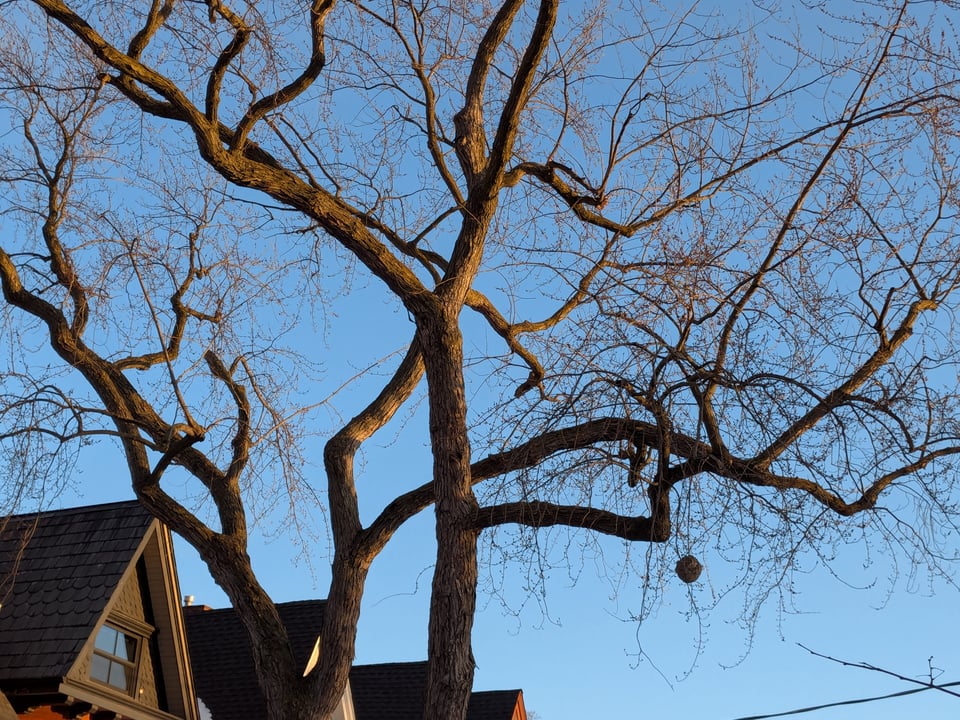
all that i have is a river / the river is always my home
This is not to say, to put it as only British English can, that I did not spend much of this month absolutely fucked off with many, many things in a very audible way, and it’s definitely showing. I’m remembering a particular modality of how I draw lines and boundaries when I am well and truly done, and that it seems to (!) elicit results.
I like the results! (So many longstanding little dysfunctions put to bed the past few weeks.) I’m also remembering where I landed on this stuff a few prior times: I really don’t love that this is what works to get them. ie, how much I have to visibly give up on things and people before they actually start responding; that more people respond more cooperatively to my cold indifference, immovable demands, and occasional quiet contempt than consideration, cooperation, and equitable relationship. I mean, if someone wants to get something done with you, those are fucked-up operating terms to set. Don’t make me cosplay The Terminator to get forms filled out, please. These are not interactions that need my absolute last nerve.
On the other end: The people who are actively care about good repair have whew showed up to their desks this month. Prosociality is out in force. There have been some lovely organizer calls and hangouts already, celiac snack arrangements for a few events have gone smooth as butter, the friend-of-a-friend network seems to be up and solving problems again (yesss), coffees are being comped and stacking reciprocal favours done for no real reason except because we can. Like, Good Toronto started 2026 with its shit together and a commitment to excellence.

It’s made for a few weeks of surprising extremes: Everything that’s dysfunctional, obstructive, and sulky is extra stupid and useless; everything that wants function and relationship and repair is just extra truly on point.
It’s producing almost heavyhanded contrasts. Item: Passing by a right-wing media reporter who had plastered his digital billboard truck in a very specific niche anti-Ukraine ad and was trying to lure any man 18-45 into shot for an interview during a full-on rainstorm. He was studiously, near-comically avoiding the eyes of any women or children and hadn’t really dressed for cold, wet weather (seriously, it was raining horizontally). His very silly pickup artist hat was getting quite damp. I was on my way to the secondhand bookstore to pick up some climate books from consignment and talk about concerts and Frankenstein, and I watched him a little on the way there and then on the way back because I have rarely seen such a purely formed avatar of a certain kind of reality breakage: the Angry Internet trying desperately to override the messy context of the world, to hold its breath and dictate terms to physics and atmospherics, and that signal visibly flickering under something like a metaphysical bandwidth limit as the rain insisted on being wet and women insisted on existing.
I don’t think I’ve ever seen someone almost struggling like that to instantiate. It was weirdly funny high-grade Debord shit; something cyberpunk almost flinging itself against a plate glass window like a stunned bird, trying to get into the world. It seemed to explicate something about the whole, well, situation and nature of crisis, and how — well, it’s kind of an avoidance problem. The more you shut out any experience of the world, the more situations are going to be novel, context-free, and terrifying, and the more you will thrash around like a 1980s quicksand stereotype, wrecking the landscape, being disproportionate, and dragging everything down with you.*
Like, of course anything you don’t show up to or learn about will become a crisis: it’s literally the equivalent of showing up to one of those nightmares about public speaking, having made sure in advance to hide all your clothes. Of course any system you don’t understand, if you don’t go find out about it (and how it works, and in which ways it doesn’t), will become a source of free-floating grievance, then helplessness, then violence. And — that’s why, when I think about it, there are people who I can bully into results but can’t respect and collaborate into them: the missing link between conflict-avoidant propriety, timidity, dissociation, and passivity and behaving, in an actual argument, like a complete social arsonist.
*—wait, whoa, there was actually something in the weird 1980s quicksand fixation. It’s about keeping your head. It’s the middle of the Cold War. Whoa, hell, I was today years old. 🤯
It’s incidentally something that actually was touched on in Mark Watson’s episode of the Blank Podcast (recommended as a whole series: the description reads very self-helpy but it’s actually excellent for people talking about creative process thoughtfully, with humour and friendliness and dignity): the way things that push his limits or frighten him in the moment, that he wouldn’t do in a short-term framework, later come back as benchmarks for what capacity can or could mean. As in: Okay, this transit glitch is bad, but it’s not skydiving. Self, you have skills, you know.
I mean, after watching No More Jockeys I am a little frightened by this guy’s capacity for yes/and, let’s put the caveat there, but it makes the problem surprisingly simple in some respects, doesn’t it? (Note: simple, not easy.) Like, catastrophe can be what it may, but if you don’t starve yourself of operating resources, like just don’t coward yourself down into the proverbial shit pit, there’s some room for outcomes. Scared, sure, obviously. But there’s perpetual traction available if you can be scared without being a coward about it.
***
So along those lines, with my nervous system scrabbling and flaring, hitting every note on the HALT Protocol (collect the set, get bonus beverage), I went out and did a bunch of stuff? Thumbs up? Yeahhh? >.<
Item! Attended the second meeting of the thing I wasn’t being coy about last month, just sussing out a little; so far so interesting. (I was also on two hours’ sleep, so that’s a whole full-day meeting/workshop viewed through the wavy watery lines of being very bemusedly exhausted.) Still sussing a little on how to treat this one in terms of scope and what it’ll actually accomplish. It’s a room, though, with a lot of very deep organizing experience across a whole lot of local portfolios, and we are already trading phone numbers to connect up work outside the umbrella of this project. The collaboration potentials have me deeply excited.
Eventually I will chew this enough for better comment. I’m still wrapping my head around what role this is going to play, here, and what role I’m going to play in it? I’ll be more forthcoming when it’s better settled in my head.
Item! Got started (finally) on my rescheduled research semester, where I get to do the work I was doing with ostensible institutional support, but realistically I think it might be shaking out to well, if I’m firm about boundaries repeatedly they won’t get entirely in my way. The university is, unfortunately, one of those things that’s been spitting up better results when I treat it like a bratty sub, and while I know that’s a lot to do with burnout, provincial budget cuts, and the general intersections of student poverty, academic honesty deluges, and life bullshit? Also: no.
Getting back into the matter of fruit tree policy research itself, though? So, so good. The hop between rather cartoonishly explaining to an academic supervisor that no, I do not want rigid week-by-week structure and repeated applications of "are you sure you're not taking on too much?" for a 5-6k research paper with 13 weeks’ time budget (pinched, averse, cowarding)* and the actual literature/conference recordings/emails, where people are trying things out and result-hunting (okay, fair enough, how do I work this) was — satisfying.
*Don’t ever tell anyone who’s managed to get a novel or two through the dysfunctional doors of publishing what they can’t do.
There are people in cities across the English-speaking world I’m emailing soon, because I have caught the scent of them trying shit, and the thought of all that notes-comparing is currently rather gleeful. We’re much farther into the game than you’d think if you don’t go digging for it, it’s much simpler to dig out than one might fear, and there’s actually a lot of projects and people to work with; I found myself explaining to someone this week that all the pieces for this problem meaningfully exist. The challenge I have here is one of wiring, or plumbing infrastructures: what needs to hook up to what in which directions to produce the flow, to produce the effects right. It’s the question inherent in how lines of poetry work; it’s also just, when it comes down to it, having set my own real-world game of The Incredible Machine. And I always liked The Incredible Machine. It’s funny and silly and rigorous. Your failures are frequently their own punchlines. I’m good at it.
So every day I spend wrapped in double blankets at my desk midafternoon, exhaustedly riffing to myself about the fact pipes leak, and electrical cables are lossy, and social energy has transmission units and very real limits in terms of bodies, and desire, and there will be ways to build it differently than how it failed the last time(s) so it doesn’t all fall down again* — it’s a good day. Every day I can just throw into a pot of coffee, snacks, and something to do with my hands while scanning survey papers or Cities for Everyone webinars for yet another operating model waiting out there, wanting to be spoken with? Even if I get scared and don’t sleep that night? Is a legitimately good day too.
*This story is a foundational myth cycle of infrastructures.
things read
All the book-reading this month is for reviews (there’s a satisfyingly high amount of commissions on the books reviewing spreadsheet right now). But amidst the articles, a few worth sharing:
First, this excerpt on how we transmit unverbalizable pieces of culture: relevant for praxis reasons, for memory-lives-in-bodies reasons, but also because quite shallowly I saw the title, "Your body is an archive," and went yup, it sure is, and bookmarked.
This starts a little over-basic but gets interesting fast: both in the tacit foundation that you can't actually extract and replicate many kinds of knowledge without the embodied context, and the context is made of people, so you can't do the thing without the people, uh-oh! Désolé. Humanist sick burn! But also because it turns into an interesting little meditation on practice and advice: how much of a thing do you need to be able to model or explain to send someone towards a sufficiently correct version — one that gets the gist of it, one that gets the result, one that also (and I do find this important) allows for style choices?
There's an interesting concept of what constraint is here: it's more like focus. These are the only things you can treat as variables from a given space, so you don't have to think about the other things. It's almost the establishing of constants — and that clicked really well with a lot of things I've been repeating in workshops and teaching critiques for years about how to write prose in a way that's interfacing generously with its readers.
There's an interesting extension available here, not in the piece, but think about it: where both faulty infrastructure and equity problems become nothing more than the constraints are set too narrow. Too many constants, not enough variables; let some air into the piece. And that turns into something — well. Not as hard, really, as sometimes people make it.
(I am keeping the phrase tacit knowledge. What we know but cannot say. Oh look, it's the Mystery™. The thing I spend my life building little arks and scaffolds around. Hello world. 😊)
***
Second, one on Swiss cartographers’ apparent habit of hiding lovely, peaceful little illustrations in their topographical maps. It points out that yes, there is an argument that this is distorting the truth somewhat, but they reminded me more than anything of medieval monks’ marginalia: little doodles of cats and inside jokes and funny faces alongside Latin scripture. There is something very life-affirming for me in the lengths people will quietly go to to slip in a little joke.
And also the idea that — there is a difference between mimetic, accurate, and truth. It is entirely probable that a slip of a fish is the truth of a marsh; that a long spider is the truth of a mountain. That a glacier is a marmot is ice is fur is eyes. What struck me so deeply here is the instinct that there are multiple dimensions to mapping, and that it’s worth it, trying to capture all of them. Even if it’s on the sly. Especially if it is? Mysteries require a little mystery in reciprocation? Describe things in their own languages? Anyways, it’s great.
so wide is my river / the horizon a sliver / the artist has run out of paint
So yeah, I’m getting a lot done here on some actually deeply unpleasant sources of energy, and a lot of it turns out, after I cut literally 4,000 words out of this, to have been about one thing after all? Holy shit, the deleted scenes really illustrate the problem I’ve been working seemingly around the clock?*
It’s anything but tidy, and even odds on whether I’ll sleep tonight either, but I kinda like how this has started re: what we plant instead of trauma-logics in our diet. There’s something out here in these trees. To be continued?
*I assure you, you don’t want the deleted scenes. It was Thirteen Ways of Looking at the “Everyone in this town is bitches” panel from Scott Pilgrim and even skimming it, I got tired of my own bullshit. The river will keep it.
some are the melody and some are the beat
(I was stopped dead mid-staircase on January 2nd by a subway station busker playing this on keyboard. Turned around, slowly walked back up to the northbound platform, sat on the bench next to him, and listened to the whole song, mouthing the lyrics along. I think I was visibly teary with relief, the kind you get when something abruptly unpeels the rush and armour and lets you breathe again, and the TTC track worker sitting at the other end of the bench grinned at me, and I grinned back, and for a moment everything in the world was well and all things would be well and all manner of things would be well.)

