Watching One Battle After Another the week of Assata Shakur's passing
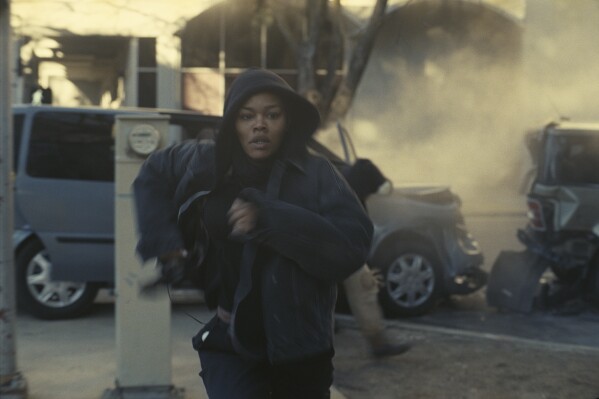
Not a review of the film’s quality but a stream-of-consciousness list of my thoughts while watching Paul Thomas Anderson’s three hour action movie and all the thoughts that flowed outward from that:
Who gets to be called a political prisoner, who gets to be called a freedom fighter and who is deemed a terrorist. Who decides on that language. Fugitivity. Northern California. The knowledge protected by redwoods. The aesthetics of revolution vs. revolution itself. I thought of The Battle of Algiers, and Born in Flames, and Army of Shadows, and Judas and the Black Messiah, and The Weather Underground. The first partner who introduced me to most of those films. My young years of political consciousness awakening. My years in the Bay Area. The radical incubator of Oakland and Berkeley that I only barely brushed with. Wearing a cardigan at socialist meetings in San Francisco as the fog rolled in from the bay. Discussing John Brown in homes in the redwoods north of Santa Cruz where the windows were always open, the air always chilly and damp. Reading The Wretched of The Earth on the Highway 17 bus from work in Scotts Valley home to Santa Cruz. The very first Let Gaza Live protest I attended, at the Civic Center, in January 2009. The police had just murdered Oscar Grant. I thought of Sorry to Bother You. And No Other Land, to a certain extent. Then I thought about how From Ground Zero has gotten much less publicity and acclaim. Standing Rock. The Sumud Flotilla. The Minneapolis Third Precinct burning to the ground. The Stop Cop City movement and the RICO charges slapped on the forest defenders. The solidarity encampments. The student intifada. White fear of Arabic chants, a fear disingenuously mischaracterized as distaste for violence. The liberatory language of the oppressed that gets demonized, policed, corralled. The continuous admonishment of the colonized for not demurely appealing to their jailers and their jailers’ allies. “Love Me, I’m a Liberal” by Phil Ochs. I wondered how many people would watch the opening jailbreak scene, the liberation of the concentration camp, and make the connections that beg to be made. I thought of June Jordan’s letters to Audre Lorde, the rupture between them, how June Jordan was correct. Assata Shakur in Cuba, becoming fluent in Spanish. Obama placing a $2 million bounty on her head. I wanted to know what Black women thought of this film. The disconnect between Black women revolutionary characters created by white men and Black women revolutionaries in reality. Black and Palestinian solidarity. Irish and Palestinian solidarity. Murals for Hind Rajab in Dublin. Murals for Gaza in Free Derry. Murals for George Floyd in Bethlehem. Palestinians sharing resources during the Ferguson uprisings in 2014, teaching organizers how to treat tear gas injuries. Leqaa Kordia. How Leqaa Kordia has gotten much less attention than Mahmoud Khalil. “Black Stacey” by Saul Williams. And every song I know by The Coup but especially this one. And this song by Erykah Badu. All of Janelle Monae’s The Electric Lady. The regenerating memes of The Revolution Will Not Be ________. Who is willing to risk and what they are willing to risk and why. What risk looks like. Where we could all risk more. What revolution looks like to white men. More white men should throw sandwiches at ICE. What radicalizes people. What book or film or poem it takes for the connection to finally click. Which one was it for you?
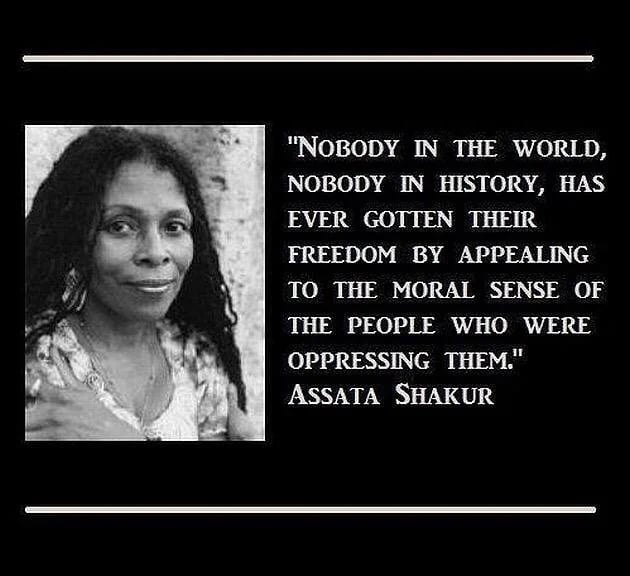
If you want to read an actual review of this film, one from the perspective of a Black woman comparing and contrasting Teyana Taylor’s character with Assata Shakur, read this piece by Brooke Obie as well as her eulogy for Shakur. For more perspectives from Black women, you can also read this review by Zeba Blay, this review by Khalilah Archie, and this one by Ellen E Jones.


Add a comment: