Plants of Los Angeles
Throughout the city, in private gardens, public patches of grass by the sidewalk, undeveloped hillsides, in parks and on trails, there are plants I’ve tracked throughout the seasons. Their appearances signal to me the seasonal changes that too many people swear don’t exist in Southern California. Here is a short list of the winter/early spring plants. All photos taken by me.
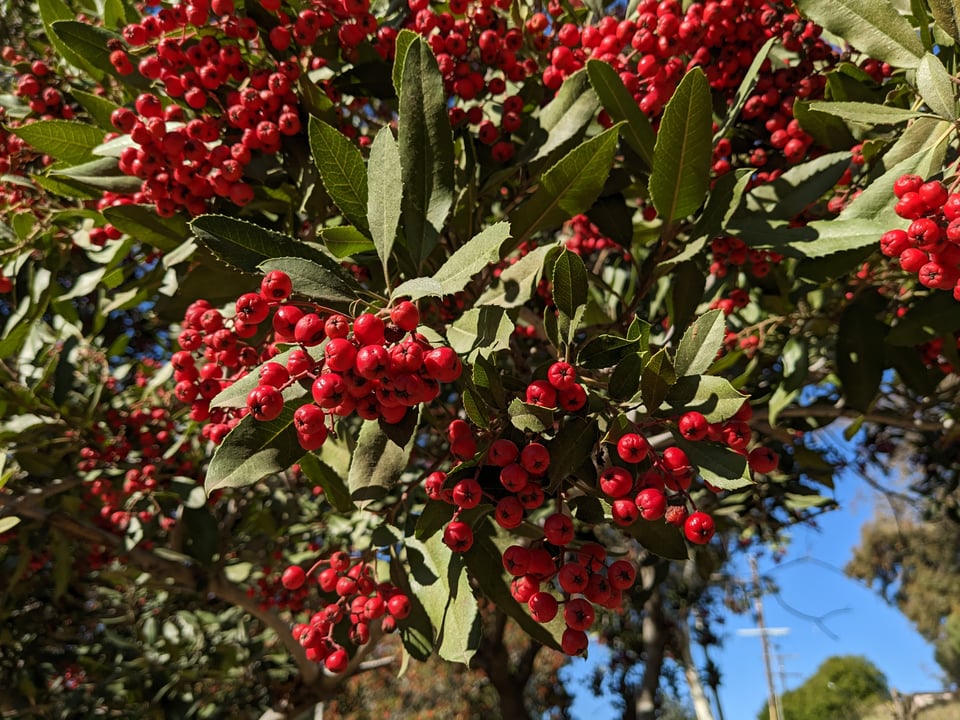
Ashuwet / Toyon berries
Bright red berries that ripen in December. The white settlers named it the Christmas Berry or California Holly. The Spanish name is Toyon. The indigenous Tongva peoples call it Ashuwet, whose flowers and leaves they boil for tea, whose bark they use for woundcare, and whose berries they roast or boil or jam. These are the plants I see in the neighborhood and in city parks on clear December days, when the light is low and the shadows are long.

Oxalis / Common Yellow Woodsorrel
Fields of their delicate clovers and yellow flowers spring up in the winter, during the rainy season, around December and January.
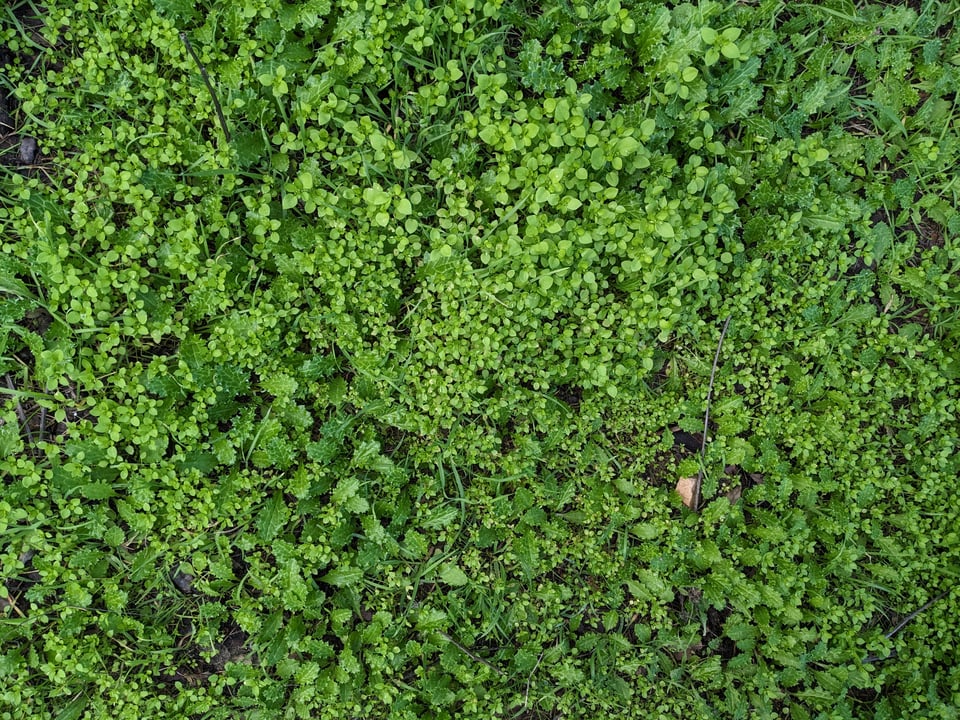
Chickweed
Another tender green weed that pops up all over lawns and undisturbed patches of land. Its leaf rosettes are edible and perfect for spontaneous snacking on hikes.
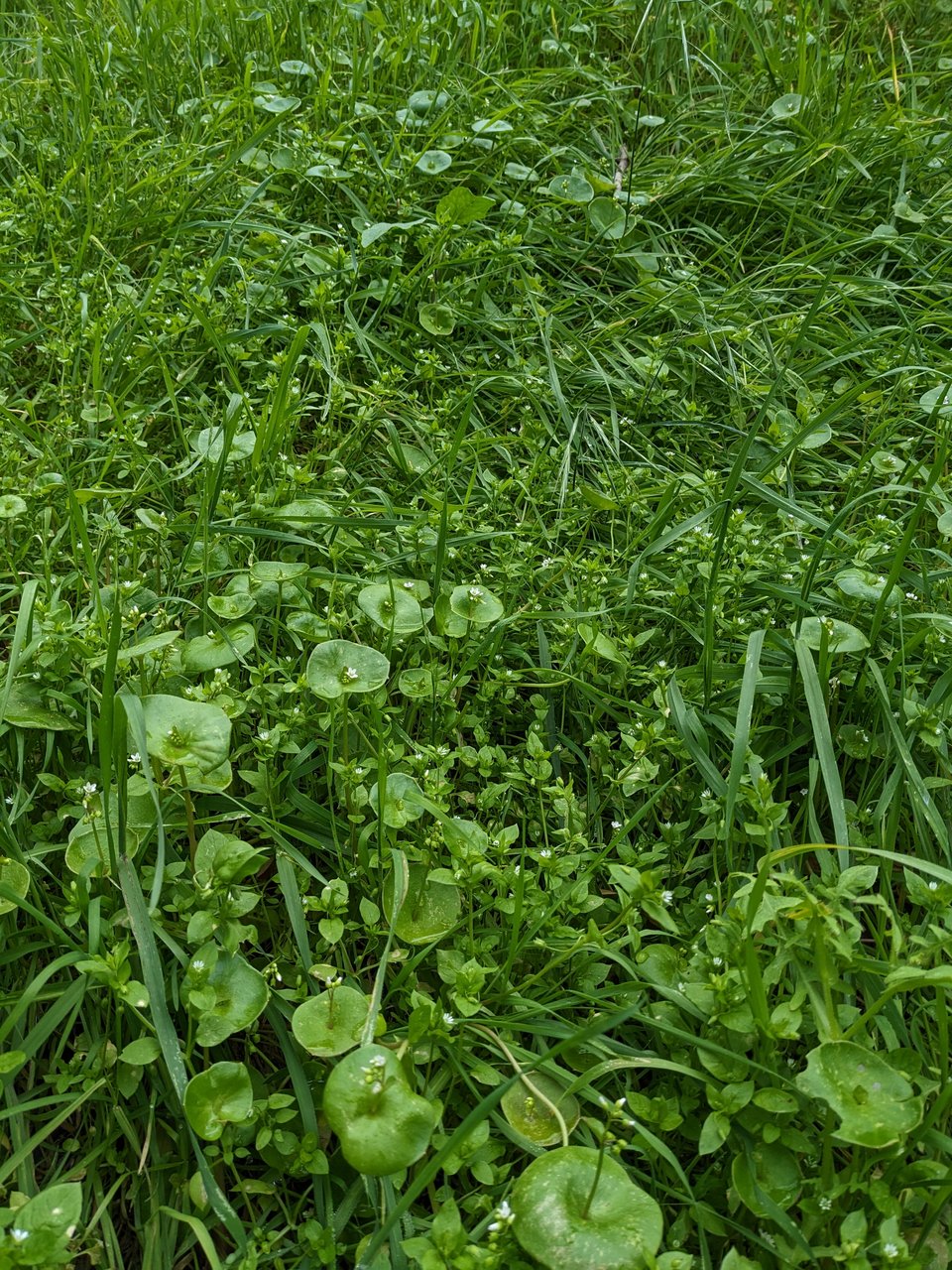
Miner’s lettuce
I would find these growing on shady slopes at Griffith Park or Elysian Park that turn bright green during rainy winters. They look like glossy lily pads with a single stem protruding from the leaf. I pick them sparingly and eat them raw on the trail or add them to salads.
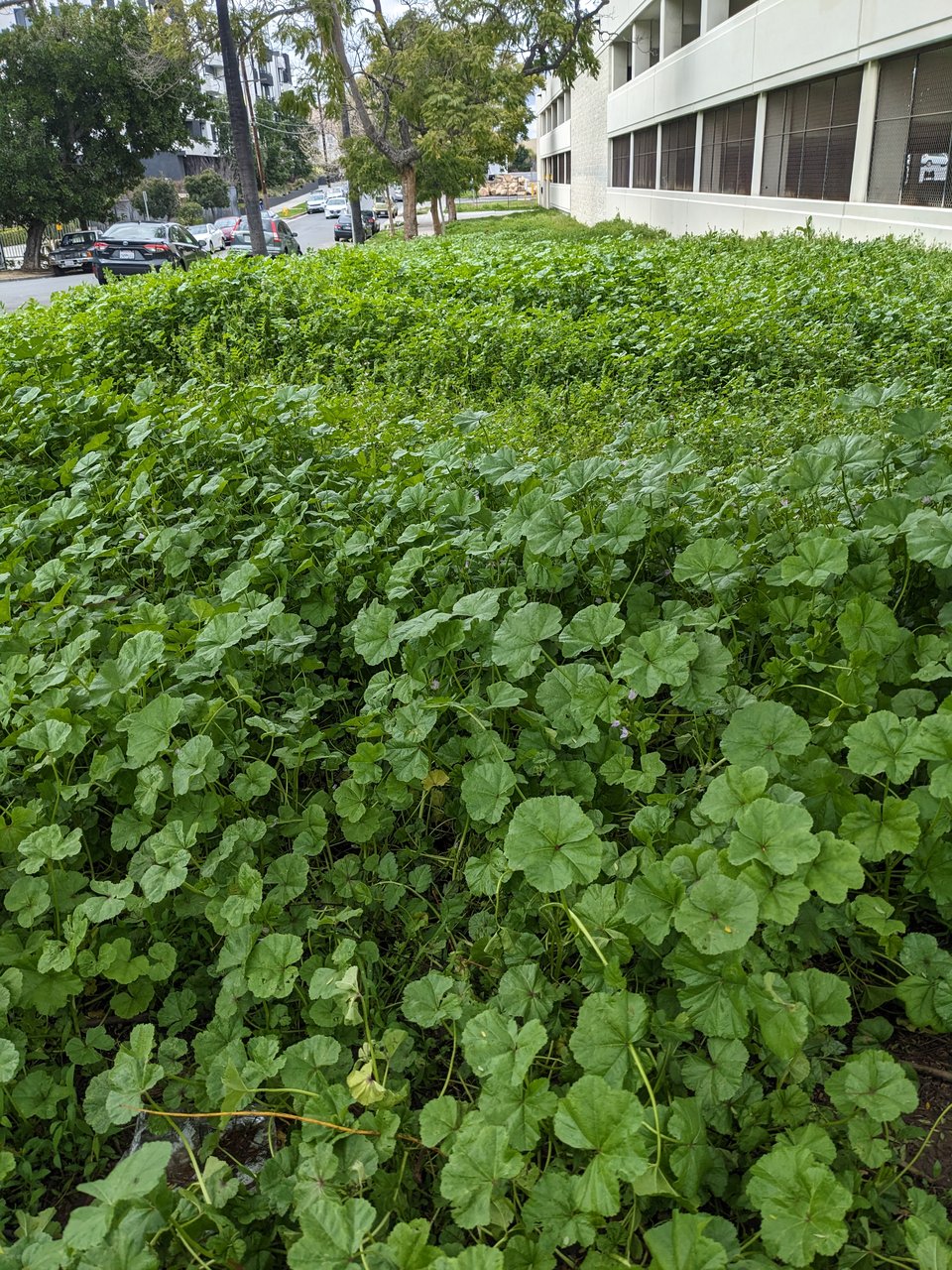
Common Mallow
After the rains, when the sun starts to warm everything up again, common mallow flourishes beside the streets, with pinwheel leaves and buds that look like miniature cheesewheels (earning mallow its nickname of cheeseweed). Mallow grows wild in Palestine, too, where it’s called khobiza. During the last two years of genocide, when Israel has blocked nearly all aid from Gaza, Palestinians have foraged for khobiza on their indigenous homeland to survive this forced starvation campaign. Now, whenever I see mallow on my walks, I think of Gaza.

Apricot Mallow or Desert Globemallow
There is a public staircase surrounded by an herb garden in my neighborhood. The Hoover Stairs. During the first few months of Covid shelter-in-place orders, I took walks and learned the names of the plants. Apricot mallow has traditionally been used to ease respiratory ailments. When I would walk by the Hoover Stairs in Spring of 2020, I would pour out a little water for the Apricot Mallow there and say a prayer to protect people from the virus.
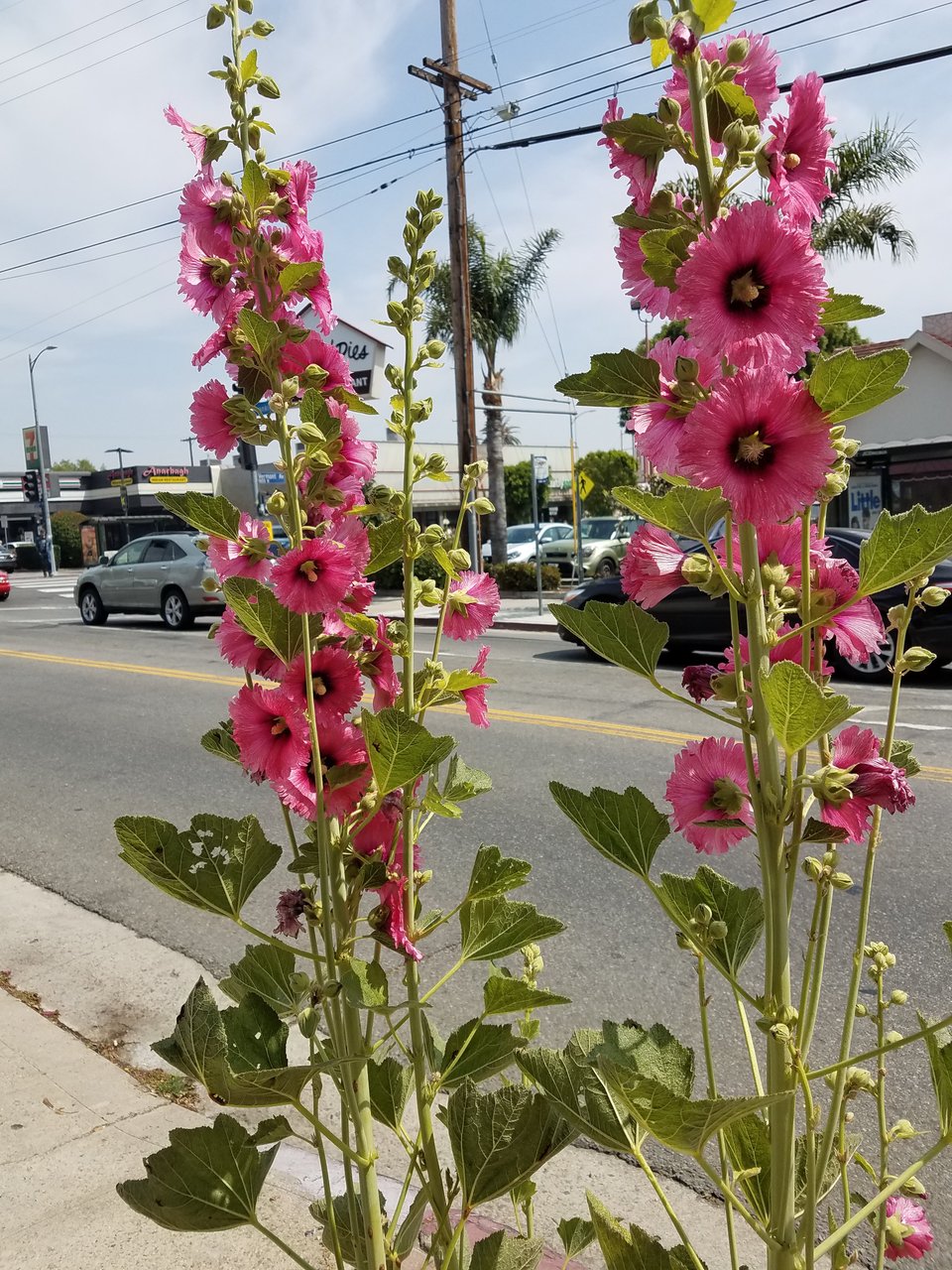
Hollyhock
Tall stalks with giant floppy blooms. They look like pageant staffs. They are tended to at the Frank Lloyd Wright Hollyhock house but I’ve also seen them growing errantly in patches of grass by the sidewalk.
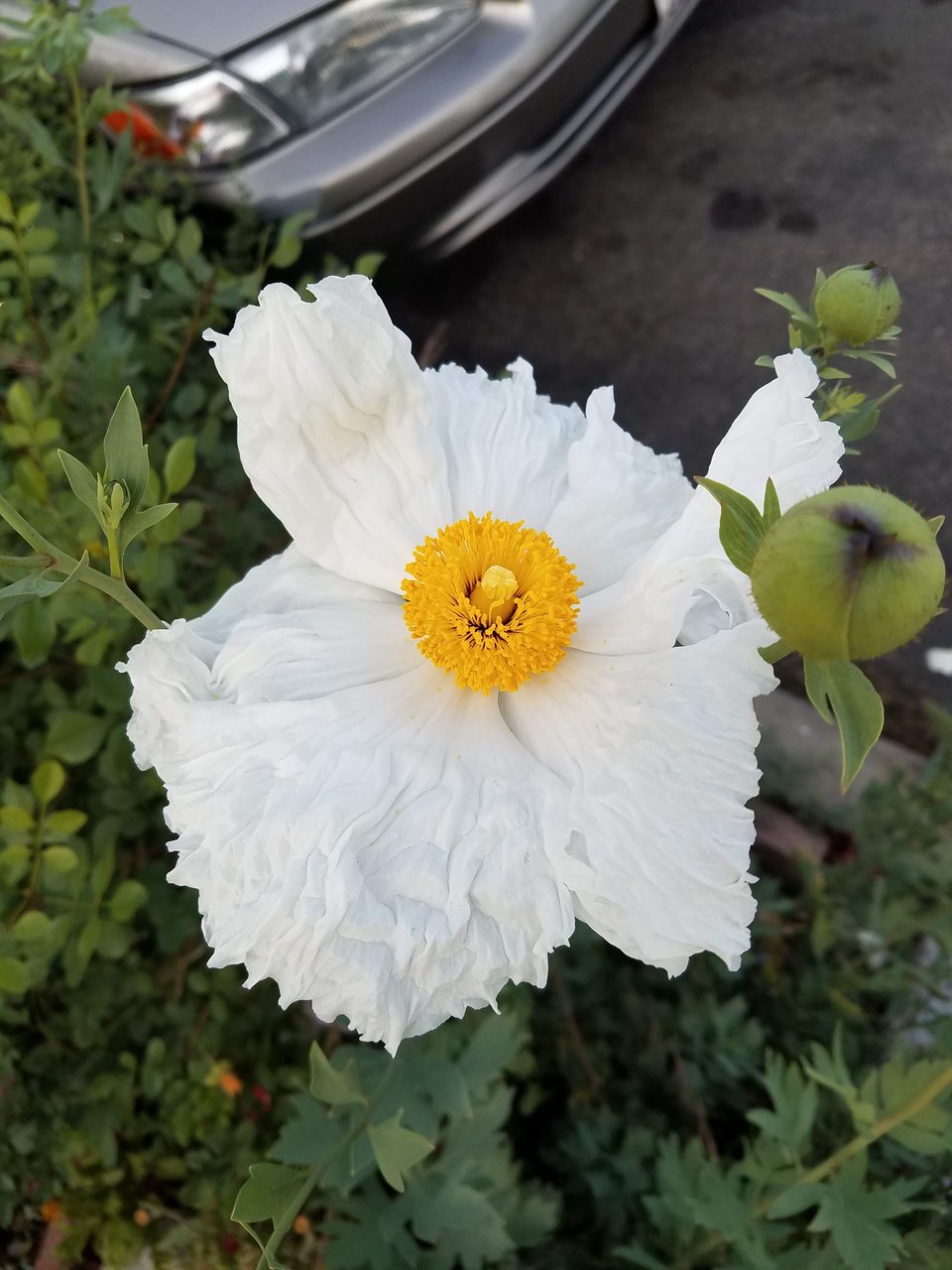
Matilija Poppies
Native California flowers that look like fried eggs. In the springtime, they poke through the fences of neighbor’s front gardens. I like how the white petals surrounding the golden center look like crepe paper. The Chumash peoples use them to treat wounds and stomachaches. (This flower is also the namesake of the Matilija Lending Library, a POC-centered community space in the San Gabriel Valley.)
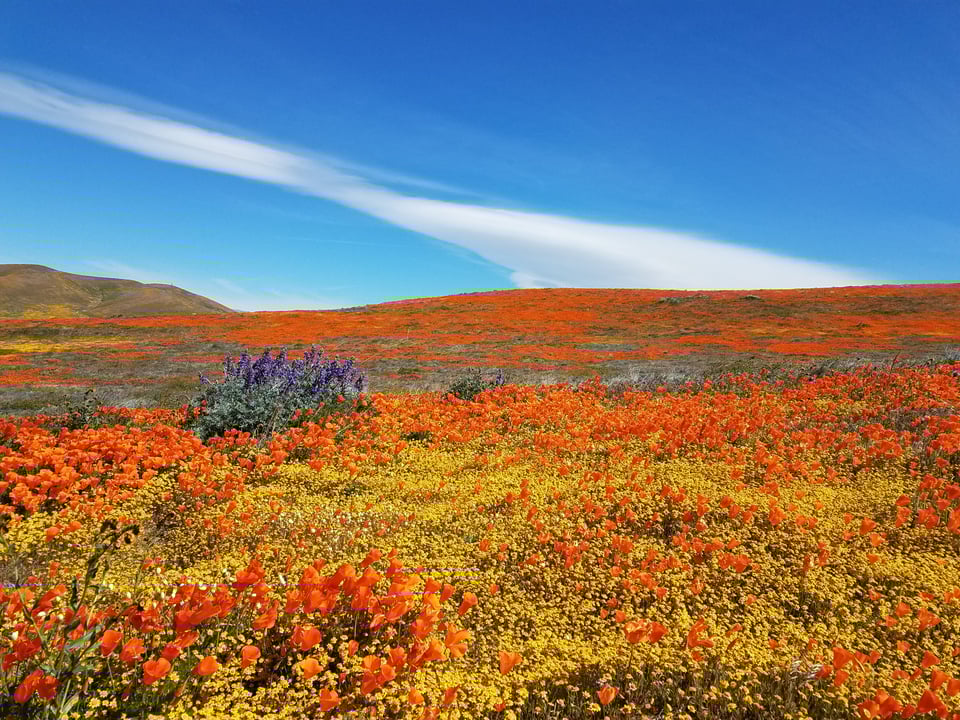
California Poppies
The most amazing superbloom I’ve ever seen was in the spring of 2019 when my mom and I visited the Antelope Valley Poppy Preserve. A vast butte of orange and golden flowers, dotted with a few purple lupines. The atmospheric river rains of early 2019 had nourished the winter seeds so they could bloom all over the high desert. We had to stay on the designated paths, to avoid trampling these protected state flowers, and to keep away from the rattlesnakes that liked to hide among them.
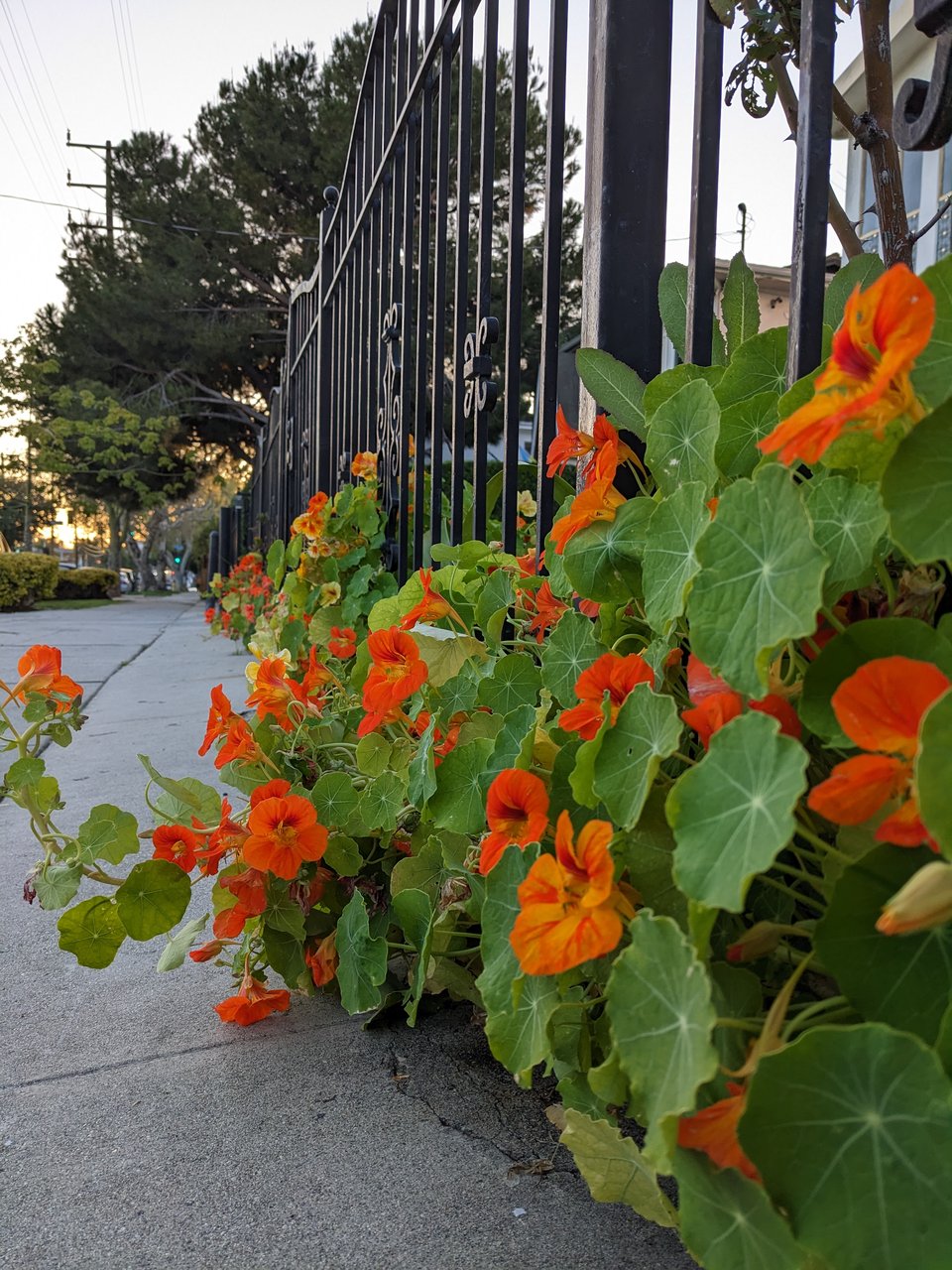
Nasturtiums
I’d gather their flowers from a wild patch growing on a hillside in Elysian Park, to add a peppery kick to my spring salads.
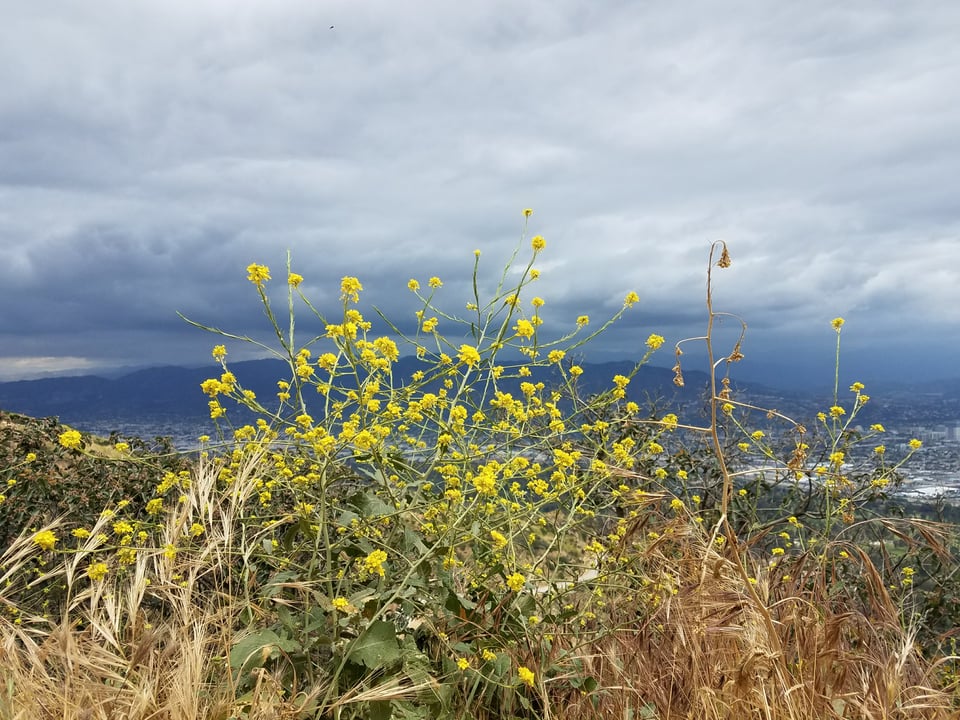
Black Mustard
To me, black mustard signals the end of the green season. It’s a tenacious, non-native plant that explodes after the rain, covering the hillsides in a bright yellow. As the rainy season subsides and the green grasses on the hills go to seed, fading to silver and then tawny beige, mustard hangs on to its yellow for months, before drying out to extremely combustible sticks. Black mustard presents a conundrum of Los Angeles weather. It grows wild and unchecked during heavy rains, but once dry it becomes rocket fuel for summer and fall wildfires. There have been many efforts to remove it from wildfire-prone areas, but it seems nearly impossible to eradicate. Part of the brassica family (which brings you kale, cabbage Brussels sprouts, etc), wild black mustard is not necessarily tasty, but edible. I remember a Griffith Park hike I took on a sunny April day after a few days of rain. The wet mustard leaves heating up in the warm spring sun made the trail smell like steamed broccoli.
-
Ya know what? I am so darned thankful for you and Laur's Poetica!


Add a comment: