
Extra: Dispatches from Minneapolis
The content for February newsletters is all planned out, so I wanted to send an extra one this week with links to articles I’ve read about the community response to ICE’s siege of Minneapolis.
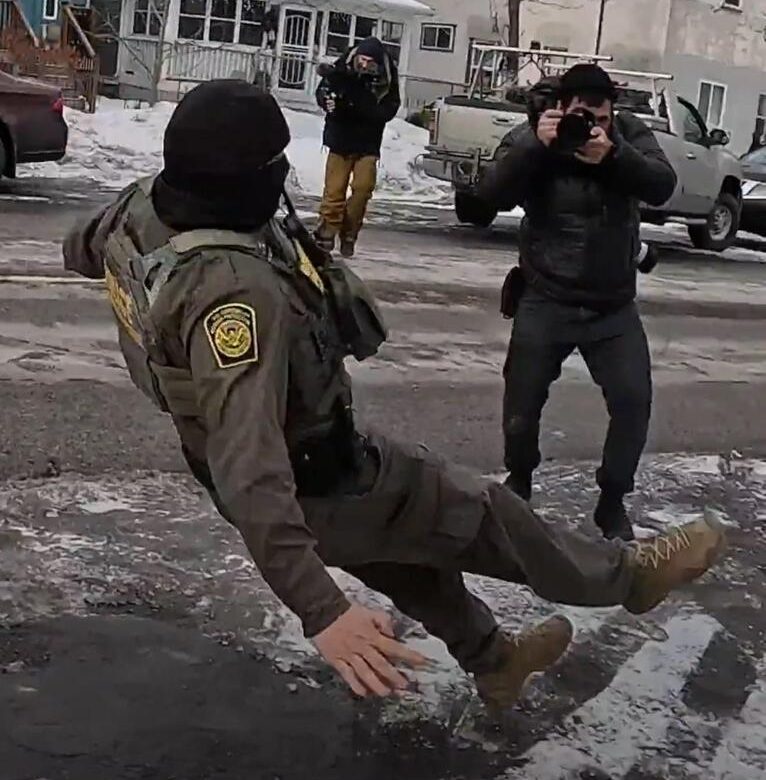
Unity
Margaret Killjoy writes about the unity she sees when she travels to Minneapolis:
Before I decided to come up to cover the anti-ICE resistance up there, I reached out to a friend who lived there. “It’s going to be really, really cold this week. Will people still show up?”
“Minnesotans will be there,” they told me. “ICE will be miserable.”
Because, as another friend put it to me: “ICE made a classic Nazi mistake: they invaded a winter people in winter.”
ICE Vs. Everyone
Erin West has an editorial at N+1 about how the affordability of Minneapolis punk living has made it easier to devote time to organizing.
What we’re doing now is this: The trainings have evolved into street medic workshops on protecting yourself from chemical weapons and lessons on digital security; there’s a meet-up to sew reinforced umbrellas as shields from mace and a collection spot for barricade materials. And this is what it’s like: Sometimes you’re chasing ICE off your street, maybe you’re buying groceries for a family, but a lot of the time you’re on your phone. Behind every actionable piece of organizing are hours spent coordinating in Signal threads, calling to check up on someone, scrolling live feeds. At night, over dinner, it’s all anyone can talk about. Did you hear? Did you see that post? Did you read in the thread?
We take care of us
Elie Mystal writes in The Nation about how the people of Minnesota have stepped up to do more quickly and more powerfully what the law and elected Democrats have been slow to accomplish:
What’s happening in Minnesota is not some kind of weird inversion of the normal order of things. It’s not strange that the people are ahead of the law. This is usually how change happens: The law is a lagging indicator of social justice. The law is not now nor ever has been a leader in reversing fascism, authoritarianism, or atrocity. Movements start in the streets and later, often years later, the law tries to catch up and codify what movements have already made a reality. We celebrate legal and legislative victories—like Brown v. Board of Education or the Civil Rights Act—as bloodless acts of social change, but we forget that these victories are not possible without the toil and blood of people who take to the streets, willing to risk it all for progress and justice.
Abolitionist groundwork
Jonathan Stegall and Anne Koseff-Jones illustrate how the Black Lives Matter uprisings of 2020 in Minneapolis set the ground for abolitionist demands in anti-ICE organizing today:
Lessons of 2020 are now being expanded upon. While building rapid response practices, community members are also attempting to train and be trained, make connections with other organizations and cities, and provide support for each other’s material and emotional needs. Groups are absorbing (while trying to practice both safety and hospitality) a vast number of people — across all the city’s neighborhoods — who were previously not connected to each other, and maybe not involved with organizing at all.
Neighborliness
Margaret Killjoy checks in again to write about the revolutionary spirit inherent in the decentralized community response:
I asked people in Minneapolis what they wanted other people to know about their struggle, and one person replied: tell people about the beauty here too. The most horrific acts of the state capture the headlines—and for good reason—but there’s a specific beauty to what’s happening here.
When I ask people where all of this came from, the answer was never some specific organization or network or coalition. Organizations, networks, and coalitions are part of this, absolutely. But the core of the resistance is just neighborliness.
Domestic War
Robin D. G. Kelley explains why it’s not enough to abolish ICE.
As the coercive arm of the state, the police— including CBP and ICE— are the primary instruments of state violence within the borders of the United States. They function as an occupying force in America’s impoverished ghettos, barrios, reservations, on the Southwest border, and in any territory with high concentrations of subjugated communities. For people who reside in these communities, keeping us safe is not the objective. Instead, the modern police force—whether local, state, or federal— wages domestic war.
What are you waiting for?
And Andrea Pitzer reminds us that, “The correct response to Dachau was not better training for the guards.”
You can’t reform a concentration camp regime. You have to dismantle it and replace it. We have a thousand ways to do it. And most U.S. citizens—particularly white ones—have the freedom to act, for now, with far less risk than the many people currently targeted.

Remembering Hind
Today marks two years since Zionist occupation forces murdered five year old Hind Rajab in Gaza while she was trapped in a car among the bodies of her six family members who had also been shot and killed. Zionist forces fired 335 bullets into the car while Hind pleaded for help on the phone with the Red Crescent. They also murdered Yusuf al-Zeino and Ahmed al-Madhoun, the paramedics who tried to rescue her.
You may know about the Oscar-nominated drama, The Voice of Hind Rajab. You might not know about the Al Jazeera Faultlines documentary, The Night Won’t End, in which Hind Rajab’s mother, Wissam, speaks about Hind’s harrowing last moments. Or The Hind Rajab Foundation, which has been working to expose and demand accountability from the perpetrators of the genocide.
After Jonathan Ross murdered Renee Nicole Good, he and other ICE agents refused to allow a nearby medic to run to her aid. ICE agents did the same thing after they murdered Alex Pretti. They killed both Renee and Alex because both people were defending their community. Alex was helping a woman that ICE agents were assaulting. Renee was acting as a legal observer. The Zionist state has a documented history of blocking ambulances from reaching the scene to aid Palestinians shot by occupation forces or settlers. They also have a documented history of assassinating paramedics and other aid workers.
Mr. Rogers famously said to “look for the helpers.” Fascists, in every iteration, harass, surveil, imprison, assault and kill the helpers. Fascists will do anything to stop us from helping each other.
That’s why these community responses are so vital. The people patrolling their neighborhoods with flyers and whistles, the people delivering groceries, offering rides, making spreadsheets, giving street medic trainings, offering childcare, sharing self-defense resources, teaching people how to break out of zip ties and how to treat tear gas injuries. I hope that in the coming days, we all find ways to step outside of our comfort zone, that we all find ways to be braver than we thought we could be.


Add a comment: