
I Wanna Be Your Fan: The Legacy of Beatlemaniacs
NOTE: This is an essay I wrote for a college class last year. It’s an idea I’m really interested in and will probably expand upon one day, but considering the pieces I’m writing right now likely won’t be ready for a good while, I figured it would be worth sharing in the meantime!
Pop music fandoms are some of the most attractive subcultures for teenagers and young people. The image of screaming teens trailing a megastar is as synonymous with the idea of “pop music” as the music itself. Teenagers have been the dominant force in Western popular music ever since the end of World War 2, and over the last 80 years, they have helped elevate artists to new heights and shape popular culture through their fandom. Through their essential position within the music industry, and the music industry’s influential position within modern culture, these fandoms have a very real cultural and economic impact. The influence of this type of subculture will be analyzed through the fandom that laid the blueprint for the Swifties and the BTS Army that influence our culture today, the Beatlemaniacs.
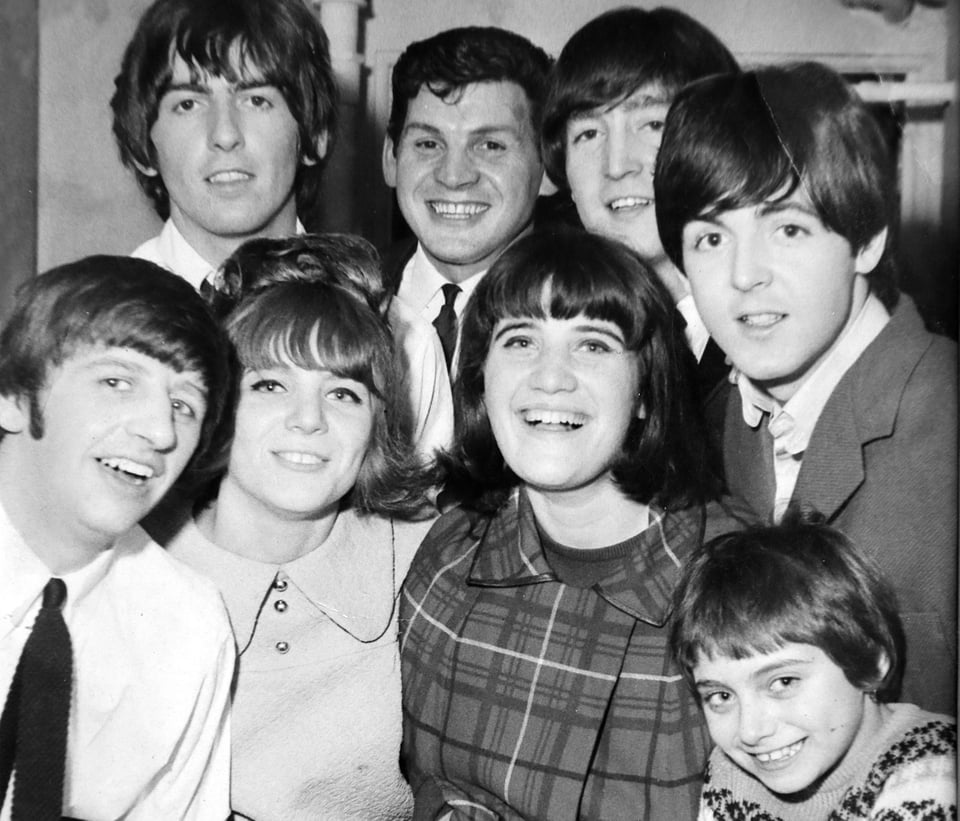
Beatlemaniacs are the Beatles superfans; the people with entire rooms of their house dedicated to Beatles memorabilia, the scholars who have combed through every session the band ever held and have extensively documented their history, and most relevantly, the teenagers who’d scream and faint and try to break into their hotel rooms when the group was at their peak. These superfans have existed for nearly as long as the band itself. As early as the beginning of the 1960s, when the Beatles were still performing in clubs in Liverpool and Hamburg, their strain of rock with lyrics emphasizing dating and courtship, vocal harmonies, and memorable, visceral hooks resonated with the teenagers of the time (Feldman-Barrett 2022). Their popularity spread throughout the UK once they started releasing recordings in 1963, and by 1964 they were an international phenomenon and Beatlemania culture was spreading worldwide. 1963 to 1966 were the years where the Beatles were the most famous pop group in the world, and it was during this time when the defining, influential traits of Beatlemania would be established.
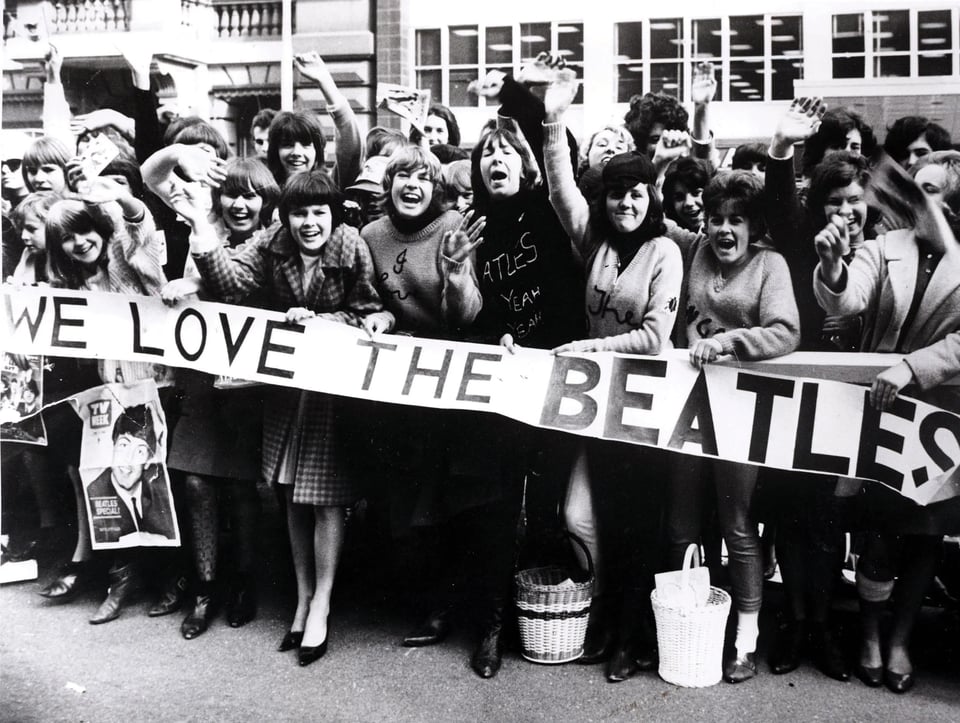
In the popular imagination, the fanbase of the Beatlemania era can be summarized in one image: excited teenage girls, screaming in the streets and waiting for any glimpse of the Fab Four. This striking image was very easy to translate into film, first seen at the height of Beatlemania in 1964’s A Hard Day’s Night. Initially meant as a quick cash grab to capitalize on the band’s success, the film has become an acclaimed showcase of 60s British humor, as well as a snapshot of a booming youth culture of the time. The film follows a day in the life of the band as they prepare for a television appearance and do their best to avoid hordes of teenage fans. While the film is largely about the experiences of the Beatles themselves, the slapstick comedy of the teenagers chasing them all over England has become arguably the most famous portrayal of Beatlemania. Director Richard Lester does an impressive job of capturing the chaos that the Beatles were causing by their mere presence, and laid the groundwork for deeper explorations of fandom to follow.
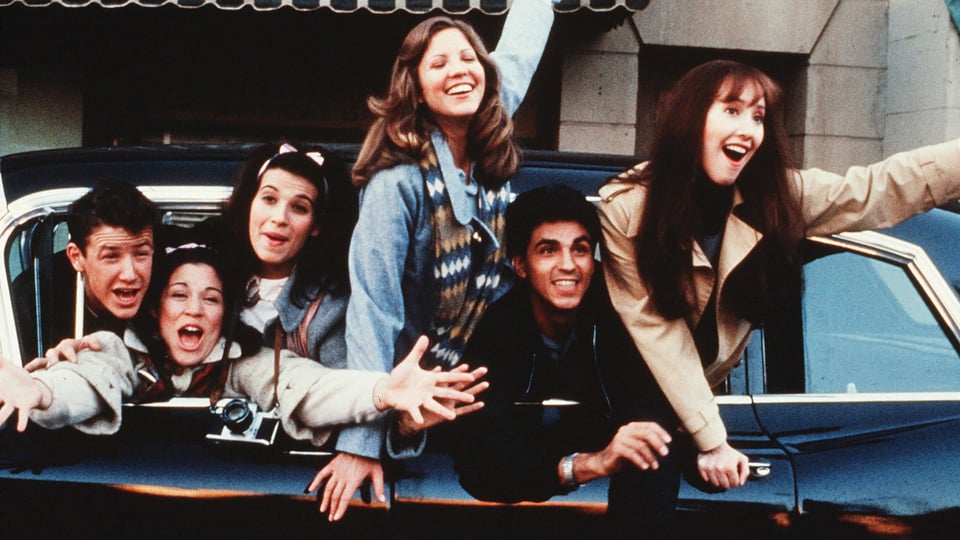
In 1978, when Beatle nostalgia was first emerging, director Robert Zemeckis made his debut with I Wanna Hold Your Hand, a comedy about the Beatlemaniac subculture itself. It follows a group of teenagers as they travel to New York and try anything to get a glimpse of the Beatles, whether it’s in their hotel room or on the Ed Sullivan show. The film is partially based on true stories, as the teenagers snoop around the hotel, trying to get into their hotel room (teenagers would really do this, including some that were featured in the 2024 documentary Beatles ‘64). With the benefit of hindsight, I Wanna Hold Your Hand was able to showcase more of the subculture that was actively forming in 1964. Within the crowds of young girls outside the band’s hotel, girls are interviewed about who their favorite member is, often saying they want to marry their chosen Beatle, and the fan clubs and excessive merchandising of the band mentioned in Christine Feldman-Barrett’s “The Rise of Beatlemania” are on full display. It also showcases how adults reacted to this subculture, with some not understanding the fanfare, and others using these young consumers for their own gain, with adults selling tickets to the Ed Sullivan show and radio hosts holding contests for tickets on the air. Making his film 14 years after the Beatles first visited America, Zemeckis is able to balance a comedic, slapstick tone with a historic look at a burgeoning subculture, making I Wanna Hold Your Hand an interesting snapshot of the beginning of modern teenage pop fandom.
Something that can’t be overlooked in the rise of the Beatles fandom is the timing. Beatlemaniacs made up one of the first teenage subcultures, as the “teenager” had only become a unique cultural classification in the post-war period. Particularly in western countries like the U.S. and U.K., a new youth category of “structured irresponsibility” and a “cultural space of transition, training and socializing” between childhood and adulthood emerged (Barker 550-551). This was the first time where people at this age had a unique impact on culture, with their own attitudes, fashions, and most importantly, their own disposable income. They became “playful consumers of fashion, style and a range of leisure activities” backed by the “youth consumer market forged on the back of the surplus cash that working-class youth has at its disposal,” (Barker 553). A new category of people who were newly consumers wanted excitement, fashion, sex and rebellion, and they found those in the entertainment and pop culture that was appealing to them. The Beatles provided all of this, and their timing as one of the first acts to truly capture this new youth market ensured that the subculture surrounding them would become highly influential in the years to come.
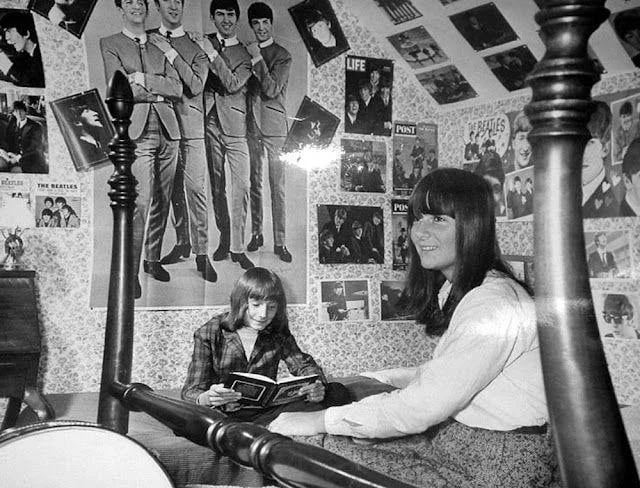
The Beatlemaniacs were a unique subculture, especially when first formed, as “one of the few examples of a youth scene or subculture that was instigated and dominated by girls,” (Feldman-Barrett 2022). The Beatles centered girls in their music and created a space where a female-led subculture could thrive. In their music, especially early on, the Beatles made a space where girls could identify with the band. As described by author Katie Kapurch, the Beatles’ music during Beatlemania participated in “girl-group discourse” in their approach to writing about romance and infusing their compositions with handclaps, doo wop vocals, and other elements of girl-group pop (Kapurch 203). This influence was made crystal clear by early covers of songs by the Shirelles and the Marvelettes. The Beatles used this influence to convey compassion and intimacy in their music in the same way the girl groups did, making themselves part of girls’ spaces and showing girls that it was okay to connect with their music. Their teenage female fans saw a group appealing to their desires, “sexy but tuned to a girl’s perspective” (Kapurch 213), and responded accordingly. The Beatlemaniac subculture was formed by young girls exploring their own sexual desires through a sensitive, androgynous band that was largely operating within the female gaze.
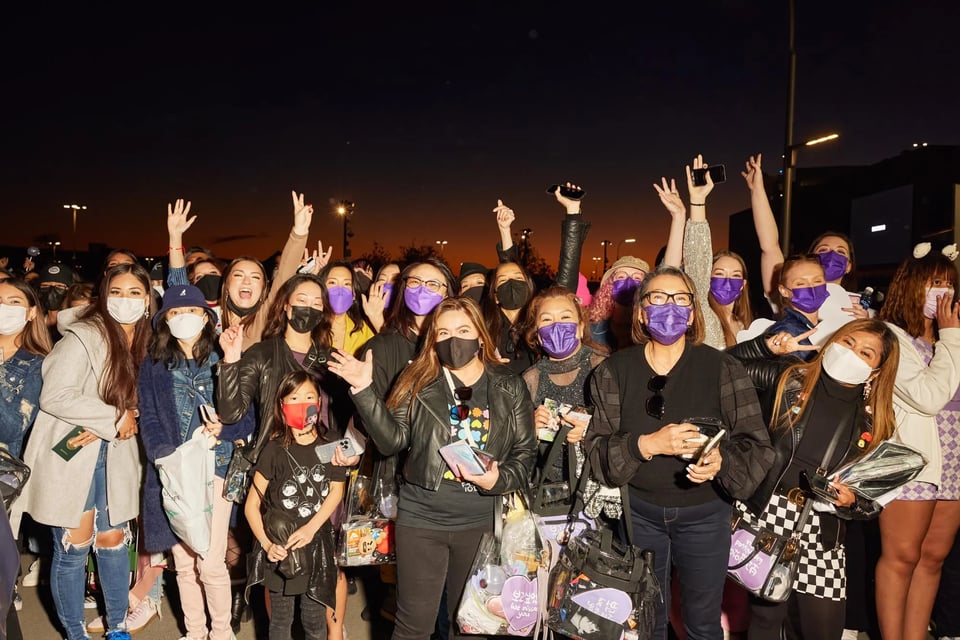
The influence of the Beatlemaniacs can be seen in the modern pop fandoms that dominate pop culture today. The female-centered subcultures surrounding this generation’s biggest artists have cemented their place in pop culture even further, building on the foundations placed by Beatle fans of 60 years ago. The modern day fandoms of singer-songwriter Taylor Swift and K-pop group BTS in particular have strong parallels to the Beatlemaniacs. “Swifties” have cultivated their own distinct subculture over the last 15 years, thanks to support from Swift herself, primarily through an emotional connection with her music and events where her fans can meet and bond (Berk 2023). Swift writes from a notably female perspective on navigating life and relationships as a woman, allowing her fans to deeply connect with her writing. BTS also connect with their fans similarly to the Beatles, with a fanbase built around the different personalities of the group members, as well as music and style operating within the female gaze. The allure of these subcultures to young people is as strong as it was in the 1960s, and with the internet, it’s become exponentially easier for these spaces to grow and cultivate an even stronger culture.
The women in these fandoms also have more agency than their Beatlemaniac counterparts, being able to resist characterization from dismissive adults and erasure from male historians, something Candy Leonard points out has occurred in historical study of the Beatles. In her essay “Why Are All The Beatle ‘Experts’ Male?” Leonard points out that “If you look at fan images from 50 years ago, 99% of them are female, but today, 99% of ‘experts’ are male,” (Leonard 2014). Female Beatle fans were caricatured as mindless, screaming fangirls with nothing intelligent to say about the band, and have only just been humanized by recent scholarly texts and within media like the Beatles ‘64 documentary, which explores the experiences of the teenagers who loved the Beatles in 1964 and their reflections on that experience 60 years later. Modern pop star subcultures have built on the Beatlemania template by having more of a voice within larger culture, being able to articulate their subcultures on their own terms and resisting dismissiveness from outside observers. Whether it be in social media threads or within academia (lecturer Judy Foxman helped explain Swift’s popularity in Nancy Berk’s Forbes article “Taylor Swift’s Multigenerational Fan Base Could Unleash Exponential Box Office Enthusiasm”), these female-led youth subcultures are finally being given a voice. Through these modern counterparts, it’s become clear that the Beatlemaniac subculture is one whose cultural impacts can still be felt today, and is a subculture that deserves to be taken seriously.
Work Cited
A Hard Day’s Night. Directed by Richard Lester, United Artists, 1964.
I Wanna Hold Your Hand. Directed by Robert Zemeckis, Universal Pictures, 1978.
Beatles ‘64. Directed by David Tedeschi. Sikelia Productions, 2024.
Barker, Chris and Emma A. Jane. “Youth, Style & Resistance.” Cultural Studies: Theory & Practice, 5th Edition. SAGE Publications, 2016, pp. 549-599.
Berk, Nancy. “Taylor Swift’s Multigenerational Fanbase Could Unleash Exponential Box Office Enthusiasm.” Forbes, September 7, 2023, https://www.forbes.com/sites/nancyberk/2023/09/07/taylor-swifts-multigenerational-fan-base-could-unleash-exponential-box-office-enthusiasm/?sh=6b94dfa734d1.
Feldman-Barrett, Christine. “The Rise of Beatlemania - Museum of Youth Culture.” Museum of Youth Culture, 19 Nov. 2022, www.museumofyouthculture.com/beatlemania/.
Kapurch, Katie. “Crying, Waiting, Hoping: The Beatles, Girl Culture, and the Melodramatic Mode.” New Critical Perspectives on the Beatles, edited by Katie Kapurch and Kenneth Womack, Palgrave MacMillan, 2016, https://www.researchgate.net/publication/303884168_Crying_Waiting_Hoping_The_Beatles_Girl_Culture_and_the_Melodramatic_Mode.
Leonard, Candy. “Why Are All The Beatle ‘Experts’ Male?” Feministing, February 18, 2014, https://feministing.com/2014/02/18/why-are-all-the-beatle-experts-male/.