That “Always On” Feeling Is a Design Flaw
Two-week, low-surveillance plan: less noise, more focus, kinder defaults.
Time & Attention Debt
That “always on” feeling isn’t resilience failure; it’s a design flaw.
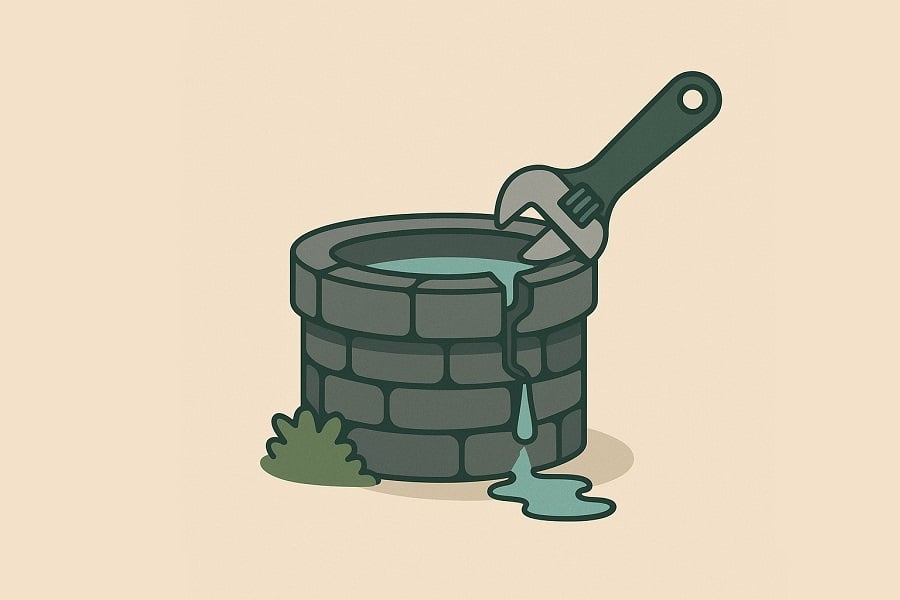
Every team starts the day with a finite well of attention. Each draw from it powers deep work, creative problem-solving, and (hopefully) good decisions.
And every day, we drain it with a thousand thimble-sized sips.
That constant chatter of notifications isn’t productivity; a calendar stacked with back-to-back meetings isn’t collaboration. They are thirsty little thieves, sipping at the well. When deep work finally needs a heavy draught, the well is dry.
This isn’t about “being tougher.” It’s a system problem: Time & Attention Debt.
As before, your neurodivergent colleagues pay the highest interest first.
The Attention Thieves: preventing death by a thousand sips
TL;DR (for Busy Humans)
A finite well of attention can’t feed deep work if everyone’s sipping from yours all day. Patch the leaks: route alerts to an owner, move status to one weekly written update, keep meetings for decisions. Protect the draw with core hours and blocked focus. Run it as a two-week experiment. Measure focus hours and decision latency. Better plumbing beats pep talks.
What is “Time & Attention Debt”?
It’s the compounding cost of systems that demand more attention than people can supply. Each interruption borrows against future focus; the interest shows up as slower decisions, rework, and burnout. The more you borrow, the drier the well becomes, until you fix the plumbing.
Attention Thieves in the Wild (you’ve seen these)
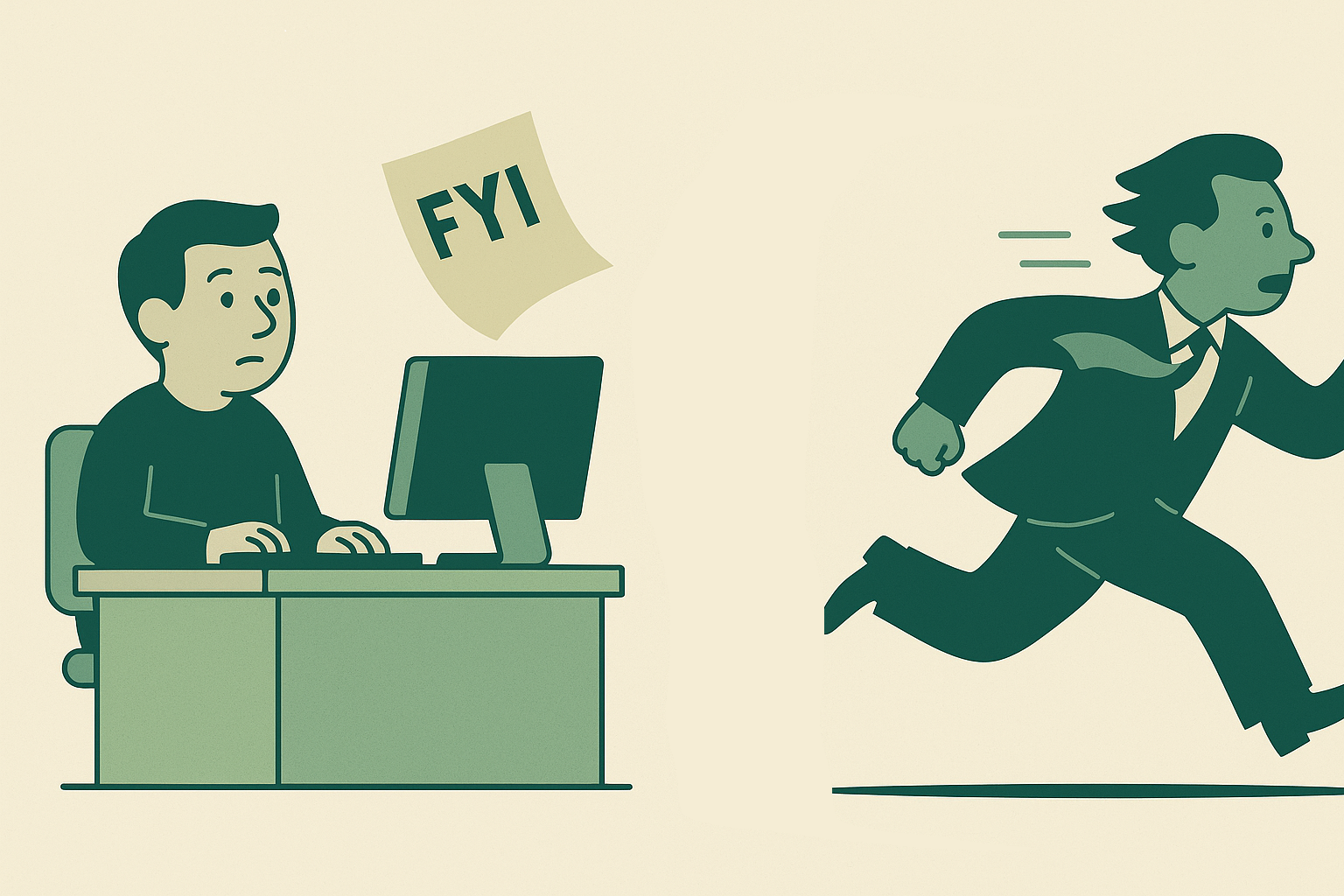
The FYI — “Just for your info” that quietly transfers accountability. No owner, no ask, just a liability dump. If something goes belly-up, well… you were informed!
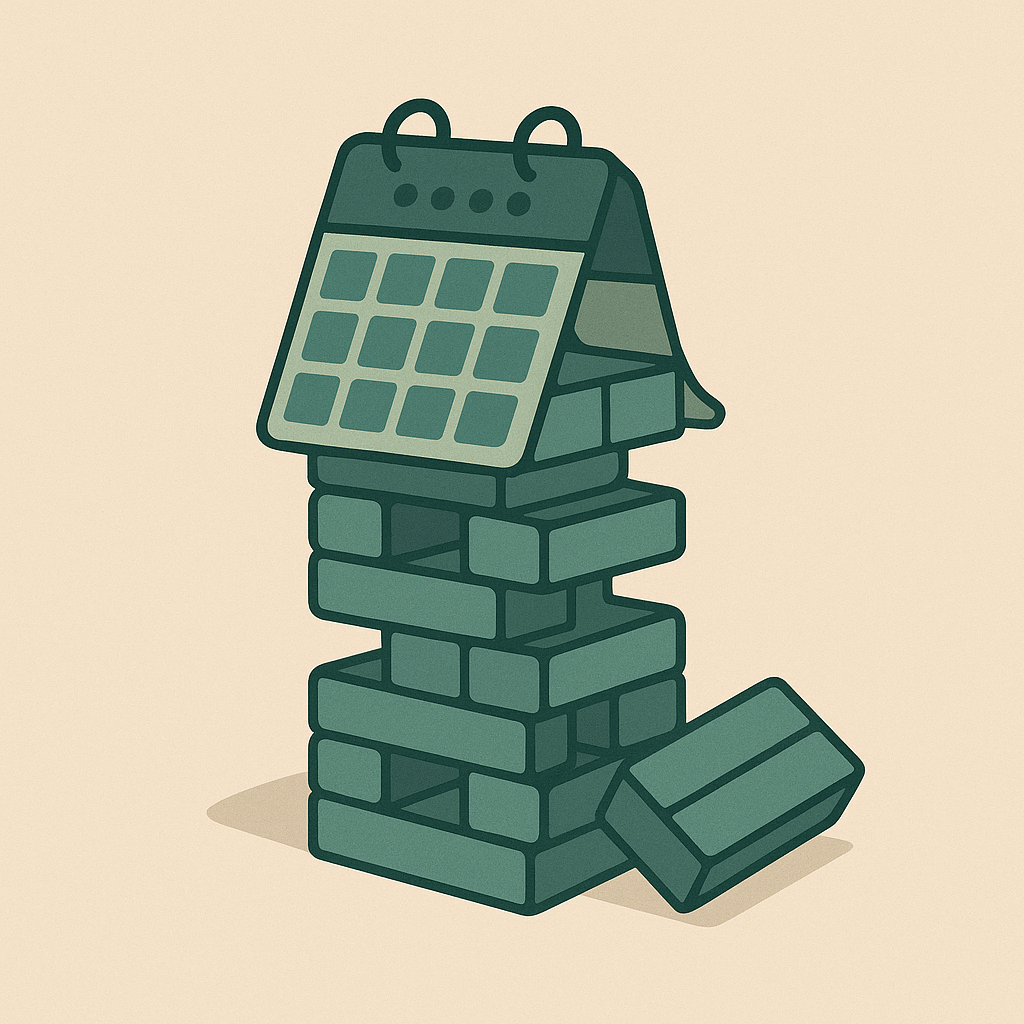
The Slot Filler — 30-minute meeting blocks everywhere; your calendar looks like the end of a Jenga game; nowhere for deep work without toppling the tower.
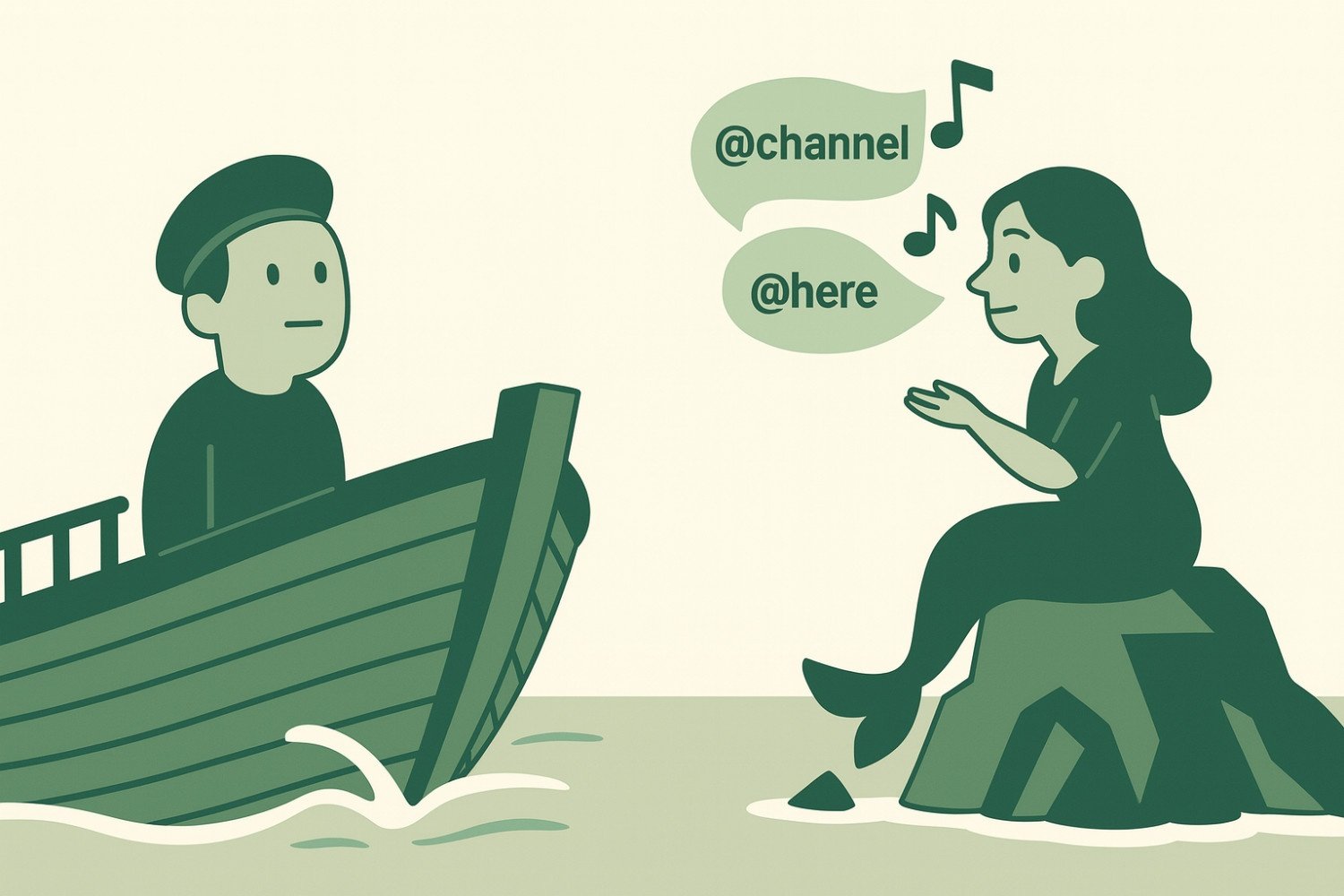
The Siren — @here/@channel pings with no named owner; everyone listens, nobody acts. Silently coasting toward the rocks.
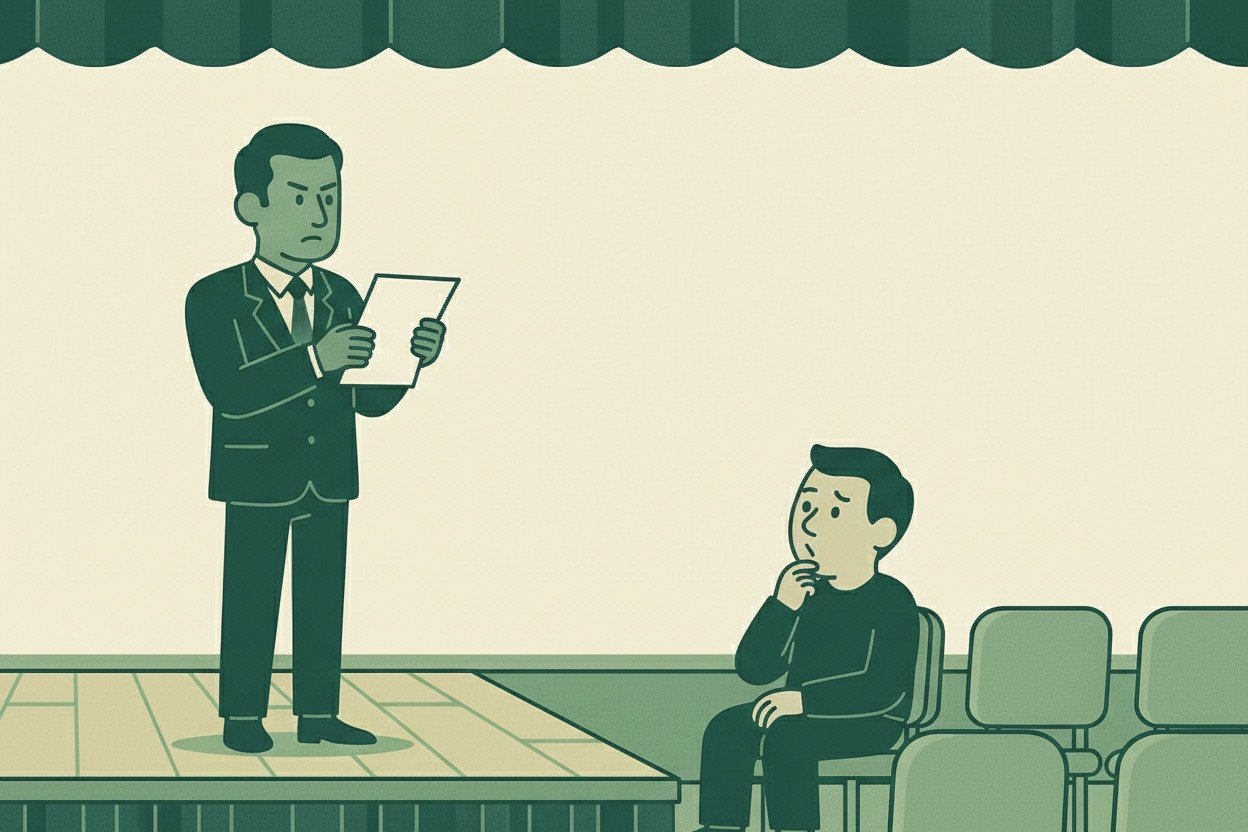
The Read-Aloud — live status read that should be a five-line weekly update. This isn’t a poetry slam.
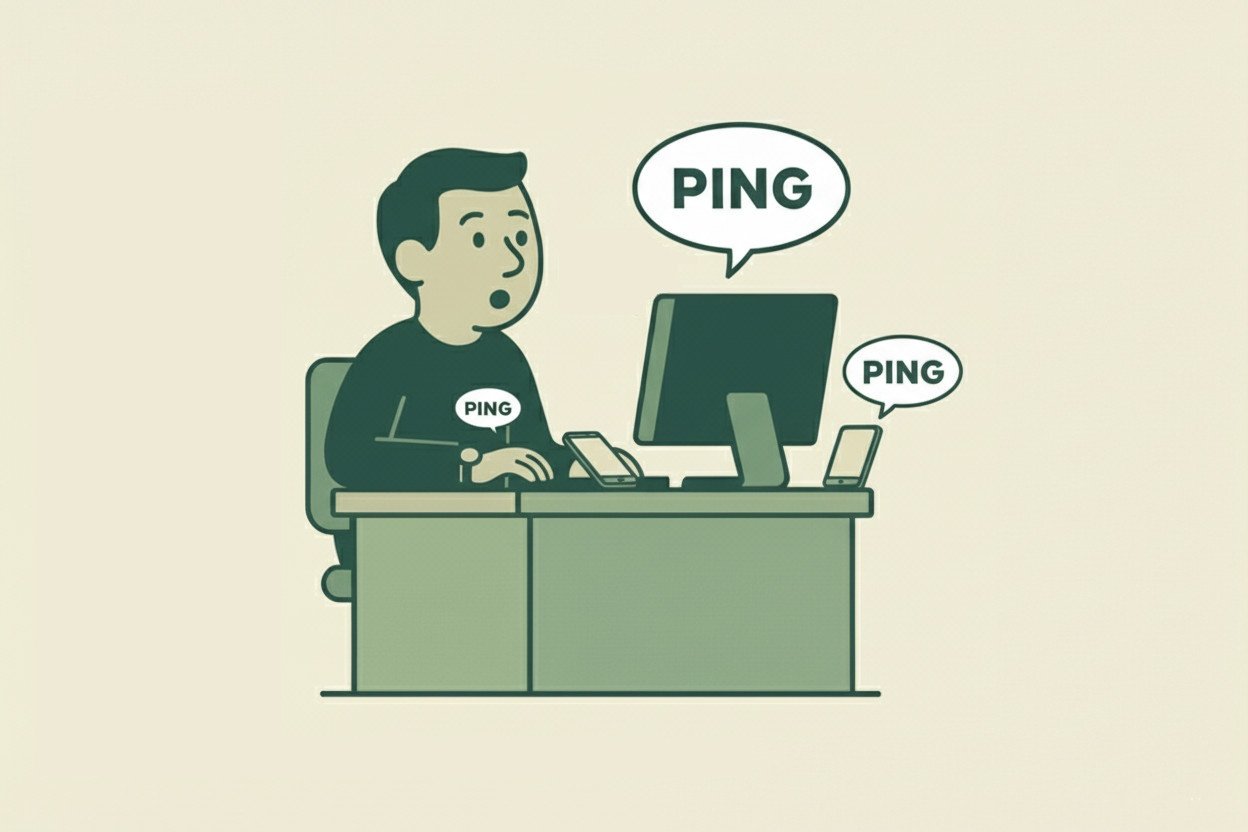
The Echo — one alert cloned across laptop, phone, and watch; three pings, zero new info. Like digital confetti.
Why this hits ND folks first
These thieves drain everyone’s well, but for neurodivergent brains they plunge deeper. The debt shows up in three places:
Context-switching tax — every interruption spills the bucket; rebuilding the mental model sends you trudging back to the well.
Ambiguity tax — the vague “Hey, got a sec?” forces extra processing and micro-decisions (is this for me? is it urgent?). That uncertainty lowers the waterline before any work happens.
Working-memory tax — holding a complex task in mind while batting away pings is like carrying a full bucket through a mosh pit; you’re not reaching the other side dry.
Same job, higher energy cost. That’s design debt, not a character flaw.
Five ways to pay down Time & Attention Debt
Fix 1 — Patch the leaks (notification hygiene)
Create action-only channels where notifications are on and chatter is off. Route pages to a named owner or on-call, not “everyone.” Use threads so main channels stay scannable.
Rule of thumb: if it isn’t for a specific person to do a specific thing, it’s a post, not a notification.
Fix 2 — Make deep work sacred (protect focus blocks)
Set core hours for collaboration (e.g., 10:00–14:00) with DMs/huddles/calls welcome. Outside that window, use not-live communication: written updates people can read and reply to when they have focus.
Everyone books “Deep Work — No meetings” blocks; treat them like real meetings. Don’t book over them without asking.
Fix 3 — Kill the status meeting
No agenda, no meeting. Routine updates move to a weekly written post in a shared channel; same time, same format, something you can scan in minutes.
Meetings are for decisions or debate. Cap total meeting time at ≤ 50% of core hours.
Fix 4 — Run a 30-minute Decision Review
Batch small decisions once a week. The proposer brings a one-sentence proposal. Flow: clarify → note objections → consent → log the decision. It’s an engine for clarity.
Fix #5 — Signal, don’t shout
Choose tools that respect time. If it can be an email, don’t ping. If it can be a doc comment, don’t email. Batch minor requests. Shift from performative responsiveness to clear, owned communication.
Bottom line: true responsiveness is being reliably clear, not constantly available.
Pilot policy (lite) — two weeks
Core hours: 10:00–14:00 local; live reach-outs OK.
Outside core: use written, not-live updates; reply by next core window unless urgent.
Deep Work: everyone books 1–2 blocks/day (60–120 min) titled “Deep Work — No meetings,” Show as Busy; don’t book over them without asking.
Status: one weekly written update (same time, same format, scan in minutes).
Escalation: live page outside core only for defined urgent criteria (customer impact, security incident, revenue at risk).
Full details in the Appendix: calendar setup, channel config, and urgent-criteria examples.

People first, ND friendly rollout (2 weeks)
a) Consent + co-design (15 min).
State the goal (protect focus, kinder pace). Agree what won’t be measured (no per-person counts, no DMs). Let people opt out. When you start to measure work, people get nervous. Head off the anxiety.
b) Define success together (5 min).
Ask: “In 2 weeks, we’ll know this worked if…?” Capture three signals (e.g., fewer “got a sec?” pings; more time to think; clearer decisions).
c) Pick two light metrics (team-level only). Choose from:
% meetings with agenda (yes/no; sampled, not audited)
Weekly written update posted (yes/no)
Decision log entries (count only)
Broadcast pings (@here/@channel) per team channel (count; no names)
Deep-work blocks held (team total; from shared calendars, not individuals)
One-question anonymous pulse (see below)
d) Run the pilot.
Apply the fixes (Patch the leaks; Deep Work blocks; Kill status; Decision Review; Signal, don’t shout).
e) Team debrief (30 min).
What worked, what didn’t, what we change next.
Remember, we’re reviewing the system, not grading people.
Trust & data boundaries (paste into your kickoff)
We won’t read or report on DMs.
We won’t track per-person message counts, response times, or “after-hours” activity.
We will look only at team-level signals we choose together.
Any metric can be vetoed by the team if it feels invasive.
One-question pulse (anonymous; weekly)
“Did you have enough uninterrupted time to do your best work this week?”
Options: Yes / Mostly / Rarely / No
Metrics that prove it’s working
% meetings with agenda → up (sampled)
Weekly written update posted → yes
Decision log entries → up (small decisions moved faster)
Broadcast pings → down (0–2/week)
Deep-work blocks held → up (team total)
Pulse “enough uninterrupted time?” → trend up
If trust is low, use this instead of metrics (rules of thumb)
“No agenda, no meeting” adherence >= 80% (self-reported in team debrief)
People can name their Deep Work block for tomorrow
Broadcast pings used only for defined urgent criteria
Kickoff script (paste-ready)
We’re running a two-week experiment to protect focus and preserve people’s energy, not squeeze more out of anyone. We won’t track individuals, read DMs, or time your replies. We’ll only look at a couple of team-level signals we choose together. Success means clearer decisions, fewer broadcasts, and more time to think. If a practice raises the waterline, we keep it; if it drains the well, we drop it.
Pocket responses to pushback
“We need to be responsive.”
You’ll be more responsive when signals are clear and owned. Constant partial attention is faux-responsive.
“We don’t have time to write.”
You don’t have time for repeated meetings either. Ten minutes writing beats 90 minutes meeting.
“Everyone should stay on top of all channels.”
That’s how you get burnout. Owners watch; others work. Summaries exist for a reason.
“We tried no-meeting days; it collapsed.”
You removed meetings but kept the pings. Do both: cap meetings and set notification rules.
Kind Mechanics Resources: Copy-ready templates
Weekly written update (ten minutes)
What changed this week (three bullets)
Risks or asks (two bullets, with owners)
Decisions made (link to log)
Next week’s one or two priorities
Blockers (if any)
One-sentence decision format
Proposal: [do X] for [Y time]. Success = [signal]. Owner: [name]. Risks: [top 1].
Decision log fields
Date | Decision | Owner | Revisit-by | Link
Starter blurb you can reuse internally
We’re paying down Time & Attention Debt. For two weeks, we’ll patch the leaks: route alerts to a single owner, move routine status to one weekly written update, protect Deep Work blocks, and hold one 30-minute Decision Review. The goal is fewer pings, faster decisions, more time to think. We’ll track focus hours and decision latency, not who replied at 20:07.
Closing note
Attention is the source your organisation’s work draws from. When the environment leaks and every thief takes a sip, you end up hauling buckets from a dry well. Patch the leaks, protect the draw, raise the waterline. Neurodivergent colleagues stop feeling the drain first, not because they toughened up, but because the system finally holds water.
— Brian McCallion, Founder, Kind Mechanics
About Kind Mechanics
Kind Mechanics helps organisations pay down design debt in how they work: fewer leaks, clearer signals, kinder defaults. I write about practical fixes that raise the waterline for everyone; especially neurodivergent folks.
Writing · Workshops · Culture campaigns
Clarity as the Standard. Kindness as the System. Usefulness as the Goal.
Human-readable by default.
Appendix
Full team policy for core hours, Deep Work blocks, and escalation
Paste-ready team policy (human-readable):
Core collaboration window: 10:00–14:00 (local team time). Live reach-outs are OK here.
Outside core: use written, not-live updates (channel post, doc comment, short memo). Replies are expected by the next core window unless marked urgent.
Deep Work blocks: Everyone books 1–2 blocks/day (60–120 min) titled “Deep Work — No meetings.” Show as Busy. Don’t book over them without asking.
Status updates: One weekly written update (same time, same format) replaces status meetings.
Escalation: Only page live outside core if it meets urgent criteria (customer impact, security incident, revenue at risk). Otherwise, write it down.
Calendar setup (quick)
Create a recurring event: “Deep Work — No meetings” (consistent colour).
Visibility: Show as Busy; description: “Heads-down work. Ping only if urgent criteria apply.”
Block at least one 90–120 min slot daily; two is better (AM + PM).
Managers: keep at least one Deep Work block yourself—it sets the norm.
Slack/Teams quick config
Core hours: Notifications allowed. Huddles/DMs fine—but try a written ask first.
Outside core: Set notifications to Mentions & DMs only. Post updates in channels, not DMs.
Channels: Create an action-only channel (notifications ON). Most other channels default to notifications OFF for most people.
Mentions: One alert → one owner. Avoid
@here/@channelunless urgent criteria apply.Status: “Deep Work — reply after 14:00” during your blocks.
Edge cases
Time zones: Pick a 4-hour overlap that’s fairest; outside that, use written by default.
On-call roles: Document who’s live-available outside core (if anyone). Everyone else = written.
Sales/Support: Keep core hours, but add a second short live window if needed.
What “good” looks like (pilot for 2 weeks)
Meeting hours <= 50% of core hours.
Focus hours +2/week (self-reported).
Decision latency down (proposal → decision).
Non-actionable pings down ~30%.
