Don't Heat the Room, Light the Path: Practical Fixes for Communication Debt
Charisma is not clarity. Vibes are not vision.
All Heat, No Light
Decisions Should Light The Path, Not Warm The Room
A field guide to cutting fog and vibe-based chaos so decisions get clearer, kinder, and more useful. Especially for neurodivergent folks.
TL;DR (for Busy Humans)
Charisma is not clarity. Vibes are not vision.
Sit in a meeting with a charismatic leader and you get heat. It feels good, you get the warm and fuzzies. People believe things are accounted for. That they're in motion.
But when everyone leaves the room and it's a week later, nobody has set asks, nothing is logged and nobody can see the way forward. There was heat but no light on the path.
Flip it: write first, give meetings clear roles, keep a decision log, and use simple feedback frames.
Run it for two weeks, measure the clarity not the vibes. Pay down that Communication Debt.
Better light beats more heat.
What is Communication Debt?
It’s the compounding cost of vague language, undocumented decisions and leadership by charisma alone.
Agendas are implied, ownership is hazy, and the record lives in someone’s head.
The debt shows up as churn, rework, and “didn’t we already decide that?” loops.
The murkier the path, the slower the travel.
Where it comes from
Implicit agendas and “quick syncs” with no prep
Status by meeting rather than by memo
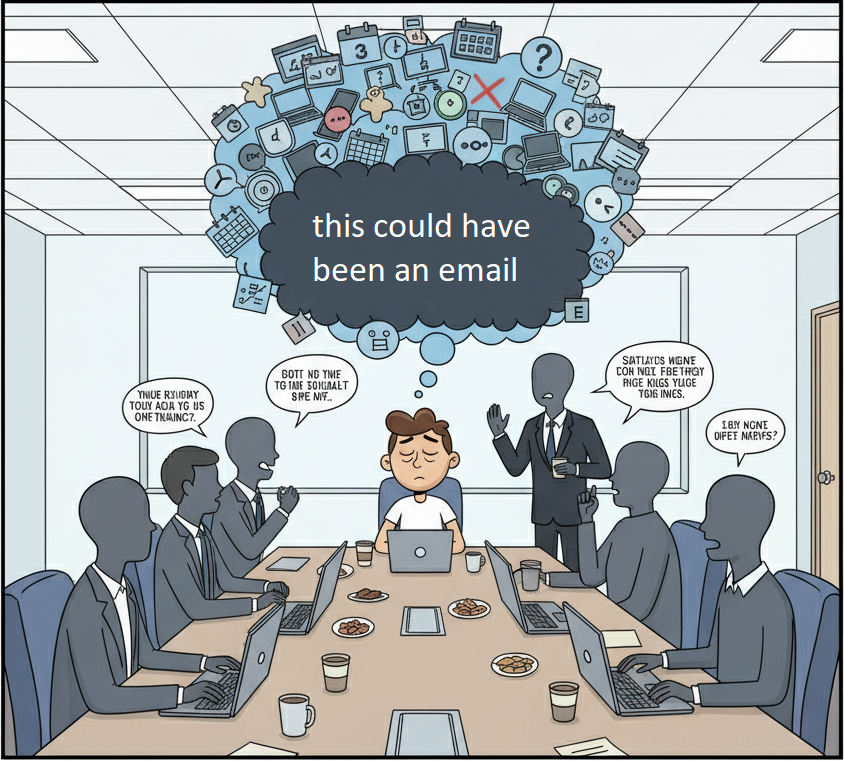
Loud voices outranking good ideas
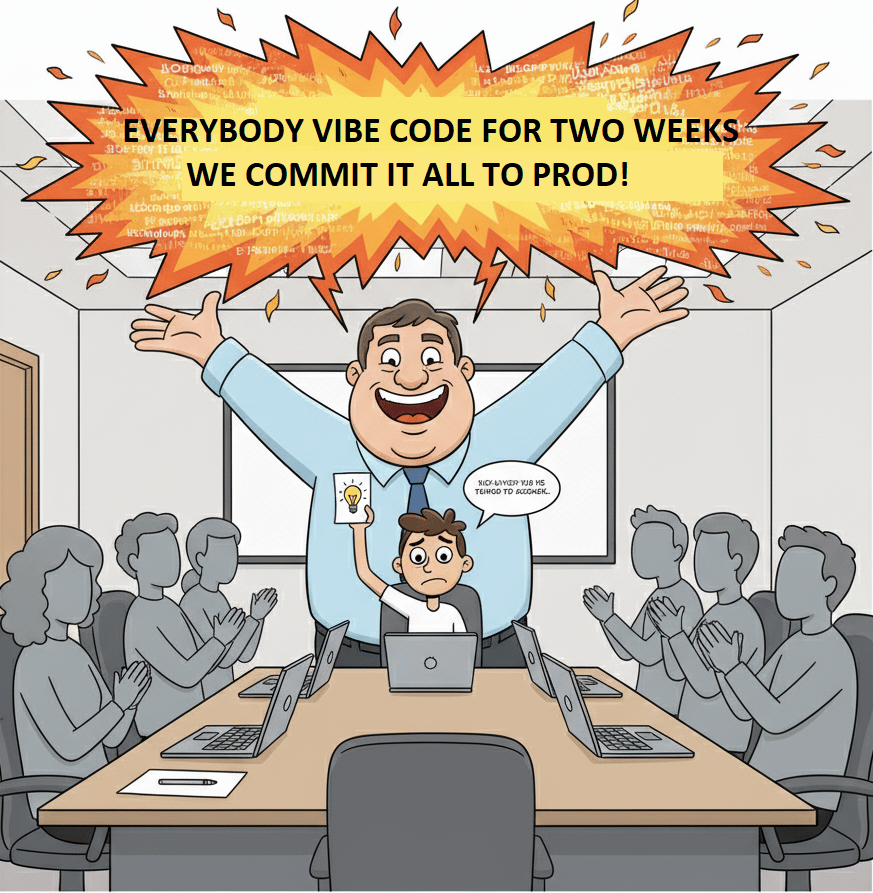
“Culture fit” standing in for competence
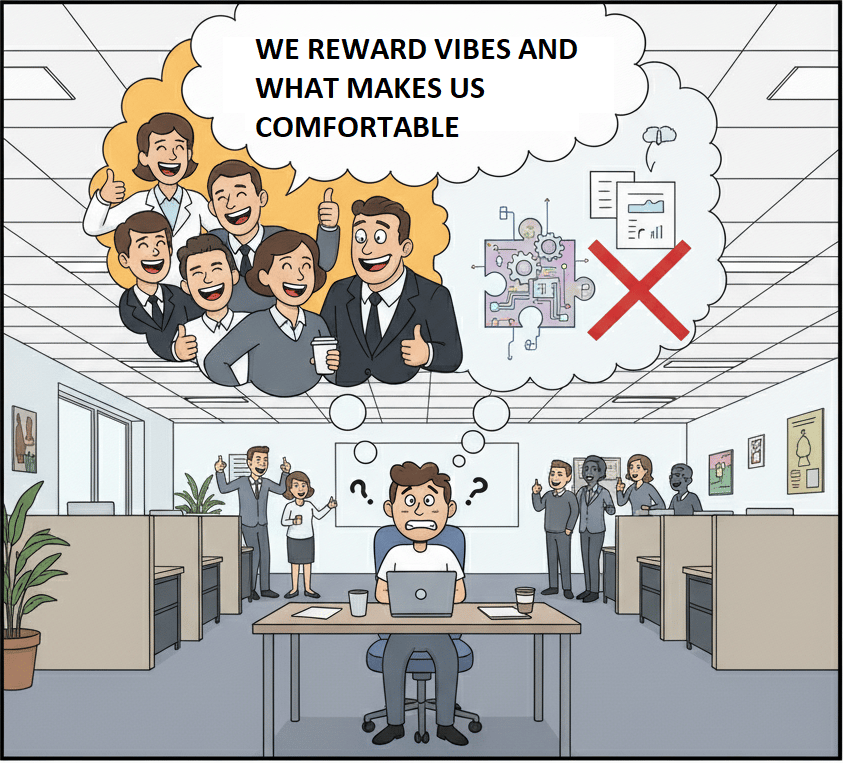
Decisions made on a vibe, reversed on a vibe
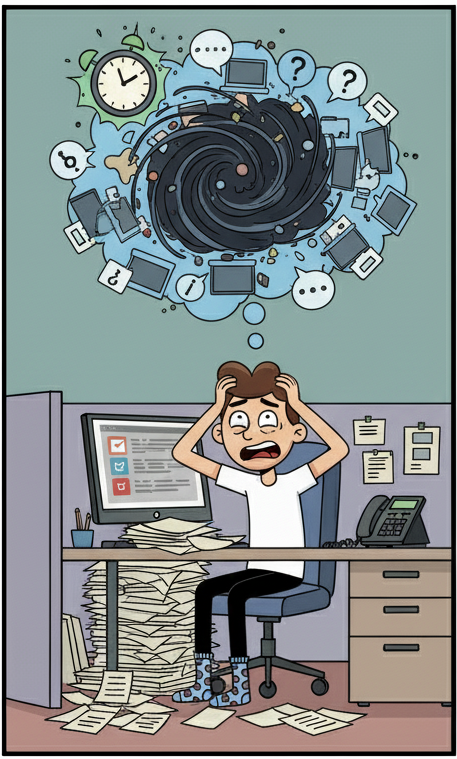
This muddles the entire office but neurodivergent folks get a double-whammy.
From the cognitive energy required to listen/map/extract what might be needed of them from vague language & inferred meaning, to the fuel-sapping trudging through the following fog-bound follow-up.
Neurodivergent folks are paying twice the tax on the same level of debt.
Communication Debt in the Wild (you’ve seen these):
The Mirage — “Jump on for five?” Shimmers as you approach. Looks like progress, but up close it’s just more sand. You've wasted more time, spent more precious energy yet nothing moves forward.
The Campfire — everyone leaves smoky-eyed and warm from a “great chat,” but there’s no map, no compass, no plan. Plans are a half-remembered haze the next day.
The Stage Magician — 20-slide deck, big gestures, plenty of spectacle. But it's all wiggling eyebrows, elaborate costume, smoke and mirrors. There's applause, but no real outcome.
The Whispering Fog — the real ask is buried three screens up in a thread. Ownership vanishes, everyone squints like a grandmother reading their phone, nobody sees the way.
The Echo — an idea is repeated but with volume. The loudest at the table reflects and amplifies the one with most charisma. Smaller voices dissipate in the cacophony. Volume masquerades as wisdom.
Charisma ≠ Clarity
A confident voice, a fast-twitch quip, or a room-commanding presence can feel like leadership, but by itself it doesn’t leave a trace others can follow.
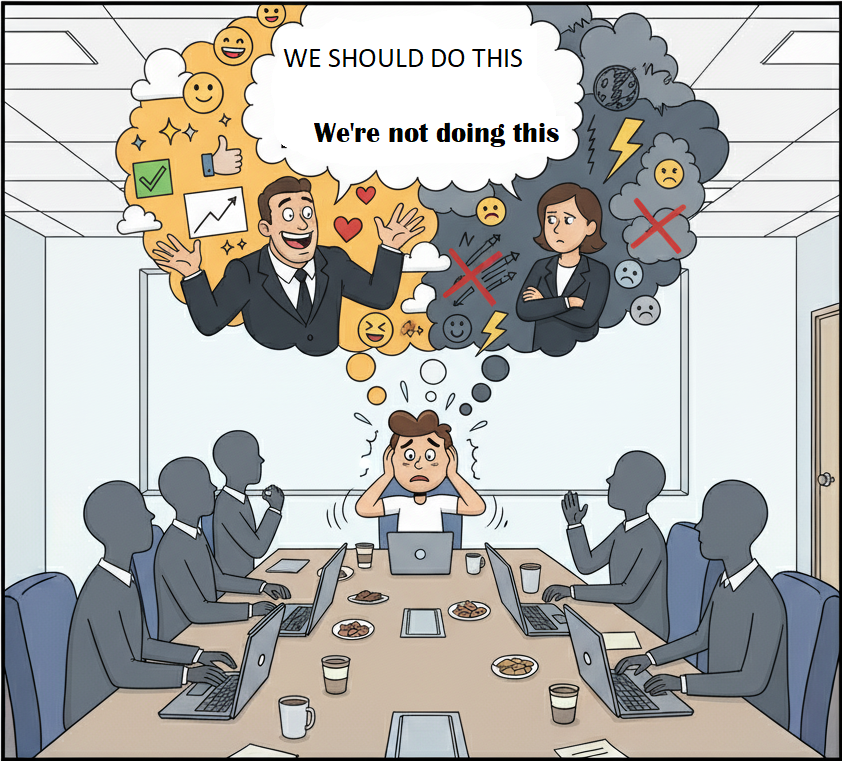
Teams confuse “the vibe in the room” with a decision. Everyone nods, nobody writes it down and a week later you’re back in the same meeting wondering what was agreed.
Charisma creates heat, but clarity creates light. One inspires the feeling of safety; the other lets people actually see the path.
Organisations that reward the performance of certainty (smooth talk, confident posture, “inspirational” tone) over the substance of clarity (explicit asks, clear owners, written decisions) rack up debt.
It looks fine in the moment. The meeting “felt good,” the leader “had presence”, but the interest on the debt shows up later: rework, churn, and quiet voices drowned out
Why this hits ND folks first
Ambiguity tax: unclear asks mean dozens of energy draining micro-decisions before any work starts.
Masking cost: fast-twitch, high-charisma spaces burn through ND mental energy to “seem fine.”
Working-memory load: context scattered across chat, decks, and hallway promises. Rebuilding requires constant energy.
As we've said in the previous two newsletters:
Same job, higher energy cost. That’s design debt, not a character flaw.
ND colleagues are your early warning radar for this debt. Help them settle it early and you help everyone avoid it entirely.

Five fixes for Communication Debt
1. Agenda or no meeting.
One sentence at the top: purpose and desired decision.
If it’s just status, make it written.
Cancel if the doc isn’t ready four hours ahead.
2. Write first, talk second.
A one-page memo does the heavy lifting.
Meet only if the memo sparks real questions or a decision.
Log the decision at the top for future you.
3. Roles in the room.
Decider. Proposer. Scribe. Timekeeper.
If there’s no Decider, it’s not a decision meeting.
If the Proposer is missing, reschedule.
4. Keep a decision log.
Date | Decision | Owner | Revisit-by | Link.
Share weekly. This slashes déjà-vu discussions.
5. Feedback with scaffolding.
Simple frame: what happened → impact → next step.
Separate the person from the behaviour.
Close the loop: “Got it, I’ll reply by 3pm.”
Two-Week Rollout Playbook
a) Baseline the fog. Skim one week of meetings. Count: with agenda, without, decisions recorded, owner named.
b) Pick one pod. Apply fixes 1–3. Enforce “agenda or no meeting” and “write first.”
c) Teach the formats. Share the one-sentence proposal, memo skeleton, feedback frame. Model them yourself (leaders lead best by example.)
d) Run a 30-min Decision Review. Batch 5–8 small decisions. Log outcomes.
e) Review at day 14. Keep what worked. Adjust what didn’t. Expand.
Remember at every stage:
We’re reviewing the system, not grading people.
Metrics that prove it’s working
% meetings with agenda ↑ (aim: 90%+)
Meeting hours per person ↓ (≤ 50% of core hours)
Decision latency ↓ (proposal → decision)
Rework within 14 days ↓
Memo adoption ↑ (decisions with a linked doc)
Pulse check: “Was the ask clear?” trend ↑
Pocket responses to pushback
“We’ll lose speed if we write.” → No, you’ll shed waste. A short memo saves three status calls.
“Docs are heavy.” → Heavy is re-explaining the same thing over and over. Docs are as light as you make them.
“Roles feel formal.” → They make ownership legible. Informal was slower and less fair. Especially for ND folks.
“We tried this once; it didn’t stick.” → Experiments need measures. Run it for two weeks, log outcomes, and check if decisions hold. Don’t mistake the loudest opinion for the whole team.
Copy-ready templates
One-sentence proposal
Proposal: [do X] for [Y time].
Success = [signal]. Owner = [name]. Risks = [top one].
Decision log fields
Date | Decision | Owner | Revisit-by | Link
Mini-memo skeleton
Context (1 paragraph)
Problem (1 paragraph)
Options (2–3 bullets with trade-offs)
Proposal (1 line)
Success (expected signal)
Risks & mitigations (bullets)
Decision needed by (date & decider)
Feedback frame
What happened → Impact → Next step
Example: “The handover doc missed restore steps. That slowed response. Let’s add them and test before Friday.”
Written weekly update
What changed this week
Risks or asks, with owners
Decisions made, with links
Next week’s 1–2 priorities
Blockers
Starter blurb (internal)
We’re shrinking Communication Debt. For two weeks we’ll require agendas, write first, assign clear roles in meetings, and log decisions. The goal: faster, kinder decisions with less rework. We’ll measure decision latency and meeting load, not who speaks the most or the loudest.
Closing note
All this isn't to say that charisma has no place. It's a vital and comforting aspect of leadership. Neurodivergent folks aren't any different to their neurotypical peers with in this respect, they seek clarity, direction and understanding. The same as anyone. A leader who has the ability to draw the team in and make them feel seen and make them feel connected is a massive positive. It gives energy, when combined with direction and focus.
Charisma itself brings heat, but clarity brings light. Foggy paths leave everyone stumbling when trying to forge ahead. Shine a light and you can see the path directly in front of you.
Combine the two in a leadership role and you remove the fog entirely.
Not everyone has this mix of skills, so in a pinch: move towards the light!
— Brian McCallion, Founder, Kind Mechanics
About Kind Mechanics
Kind Mechanics helps organisations pay down design debt in how they work: fewer leaks, clearer signals, kinder defaults. I write about practical fixes that light the path for everyone; especially neurodivergent folks.
Writing · Workshops · Culture campaigns
Clarity as the Standard. Kindness as the System. Usefulness as the Goal.
Human-readable by default.
