
#576 The Best Album of 2001, Round 4 Match #116: Björk vs. Fugazi

Hey folks!
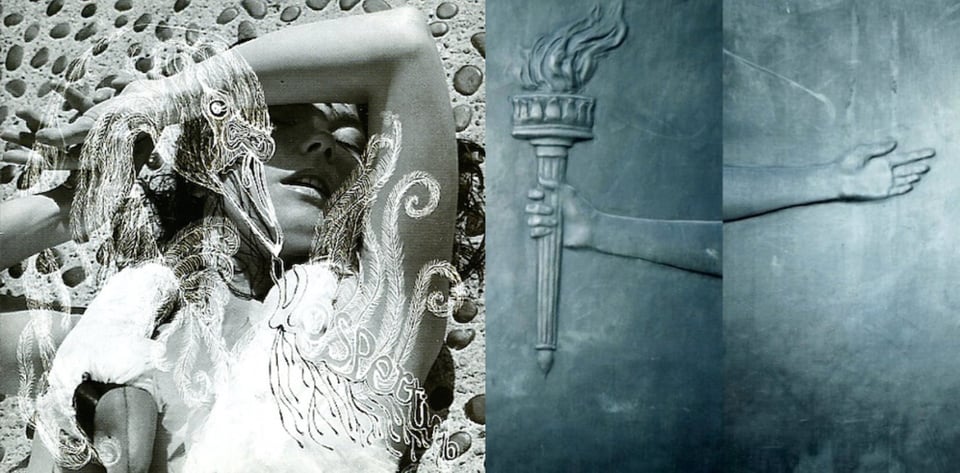
Today’s Best Album of 2001 match is:
#5 Björk, VESPERTINE
vs.
#12 Fugazi, THE ARGUMENT
To vote, follow this link to the Google Form. You will need a Google login to vote. If you can’t or won’t have one, let me know ASAP (either through this newsletter, my email [[email protected]] or on the Best Album Brackets Bluesky account) and I’ll see what I can do.
We have dueling Designated Cheerleaders today! First up, for VESPERTINE, it’s @wormsgreenrealm.bsky.social. Take it away, Rob!
Bjork’s music is so often about the embodiment in sound of things abstract or unknowable—part of why her sensibilities have proven too abrasive or strange for some—and with Vespertine she attempts, I believe successfully, to capture the sounds of love, a concept music has been intrinsically rooted in expressing for centuries and which she nonetheless gives a novel texture and feeling.
Let’s set aside the biographical detail at the heart of Vespertine (and at the unfortunate broken heart of its eventual companion album Vulnicura). It suffices to say Bjork fell madly in love with a very odd individual (someone who could match her freak, one might unsubtly describe). Vespertine is an account of the emotional, sensual and psychic security resulting from such a rapturous connection.
“Through the warmthest cord of care, your love was sent to me” she intones in the opening lines of “Hidden Place,” a song which perfectly sets the album’s sonic palette with its chirping, chopped, percussive synth sounds gradually blossoming into full-bodied orchestral and choral waves. The song finds Bjork describing a coyness at the heart of newfound affection—a small, fragile thing needing to be obscured and slowly cultivated. Love as a discrete space its participants share in solitude. A cocoon, one might say…
“Cocoon” continues the gentle chirps of the preceding track and builds on a vocal characteristic Bjork will employ throughout the album, an emphasis on breath as vocal instrument that here and occasionally elsewhere approaches the outright sensual or even orgasmic. “Who would have known…miraculous breath…to inhale a beard loaded with courage.” Intense inhalations placed emphatically and aggressively in the mix leave one with no misunderstanding as to the song’s erotic intent.
“It’s Not Up To You,” laced with cascading strings and bells, expresses the unknowability, unexpected nature, of new love; our inability to decide when and where and how one falls into the rapturous place she has just spent the opening tracks describing.
One of the album’s masterpieces, “Undo,” bridges the gap between Bjork’s synthesized avant-pop with her progenitor and eventual contemporary Kate Bush. “It’s not meant to be a strife…it’s not meant to be a struggle uphill,” she sings, alluding to and contrasting against Bush’s most iconic track. Fascinatingly, this is the song Phil Elverum will eventually interpolate and cite in his Mount Eerie song “Voice in Headphones,” a celebration of “Undo”’s power as mantra—to hear Bjork’s earnest, forceful vocal directly into your ears is to feel its physicality, her breaths, and to really internalize the words: to embrace softness, to unfold, to “be in a generous mode.” It is applicable across emotional tapestries but in context with Vespertine as a larger project it expresses the generosity required to embrace love in the face of the hardness and bitterness of heartbreak, and also the softer mode that can emerge in a hardened soul as a result of real affection.
“Pagan Poetry” is, for this listener, a strong contender for Bjork’s greatest song. Playful, intricate, percussive strings build and are joined with buzzing synths and echo-y background vocals as the lyrics recount the placeless beauty of emotional connection, and how that emotional connection is physically manifested—my favorite lyric, one I typeset and print on one of my anniversaries with my partner: “five fingers—they form a pattern, yet to be matched.” The simplicity of interlocked fingers, the simplest expression of affection, granted cosmic potency. But the greatest power, as I’ve not yet even described, is Bjork’s vocal prowess, moving fluidly from whispery nothings to eruptive belting during the song’s chorus.
This song and an interlude, “Frosti,” mark the halfway point of the hefty hourlong album, and its second half proves considerably more abstract and less overtly melodic. In structural conceit it reminds me of Hounds of Love’s Side B pivot toward collage over songsmithery; I find its successes primarily lie in its holistic ambience but I can’t deny the result is something less instantaneously impactful than the album’s first half.
The overall result of the album as an earthy, sense-first, brain-second project is true to Bjork’s overall sensibilities, which are not at their most pop-forward here but nonetheless make for a compelling listen that I think reveals its appeal with a meditative and ambient approach rather than a close-listening one. It expresses vulnerability, physical ecstasy, psychic looseness, generosity—and all at once a simultaneous loss of the self and total recognition of one’s physicality.
I wrote all of this totally off the dome with no reference to any contextual information about the album, and found upon looking at the Wikipedia page that work on the album coincided with Bjork’s work on Lars Von Trier’s Dancer in the Dark, a grim triumph that stands in stark contrast with the mundanely joyous work here yet shares a kind of workflow: where Vespertine centers domestic, bliss, cultivating a kind of operatic romanticism from simple foundations, her Dancer in the Dark music is rooted in literal ambient sounds—machinery, trains, tapping shoes—and erupts these sounds into full-on movie musical worthy bonanzas. Anyone curious about Bjork’s mindset in Vespertine (especially, maybe necessarily, if you like the album lol) would do well to explore it in relation to that film and resultant soundtrack album.
Because I’m no music expert and have a limited understanding and vocabulary with these things, I do hope Vespertine goes on in the competition and will get a defender who can speak more robustly on its musical aesthetics; for the time being, this probably super long defense from vibes alone will have to do.
Thank you, Rob!
Then, for THE ARGUMENT, it’s @alex-mitrani.bsky.social. Take it away, Alex!
The Argument was recorded January and February 2001 at Inner Ear with piano parts on The Kill and Strangelight recorded at Dischord House. It was released in October 2001, despite everything, together with the Furniture single which contained 3 songs recorded in the same sessions as the album but kept separate because there was too much material for an album but not enough for a double album. Six of the songs had been played live prior to being recorded, with live debuts going back as far as november 1998 (Oh). The other four songs - Full Disclosure, Life and Limb, The Kill, and Strangelight - were worked out during the recording process and introduced to live audiences afterwards. That makes The Argument the Fugazi album with most studio compositions, as the previous ones were almost entirely road-tested material with maybe one or two studio compositions.
The cover art is a photograph showing details of a bronze engraving that is part of the Heald Square Monument in Chicago, IL, USA (Taft 1941) - in particular it shows two hands of Lady Liberty pointing in opposite directions. The artwork opens out to the left and right from the vertical center line to reveal a photo of a memorial to Sandra Scheur, a victim of the 1970 shooting of students at Kent State by members of the Ohio National Guard - she is referenced in several songs by other artists including Ohio by Neil Young (Wikipedia Contributors 2026).
The untitled track at the beginning includes an extract from a field recording of a whole band near-death experience from 1995, made on a motorway in Scotland on the way to catch a ferry to Belfast when the driveshaft of the van disengaged and speared the asphalt. The story was told and some of the recording was played at the start of the Queens Hall, Belfast show on the 9th of May 1995 (Fugazi 1995).
Fugazi broadened and deepened their sound significantly on this album, adding a second drummer, backing vocals, cello, piano, whistling and hand claps. Jerry Busher played second drums on Epic Problem, Oh and Ex-Spectator, and also provided additional percussion on Cashout, The Kill, Strangelight, Nightshop and Argument. Brendan Canty mentioned in interviews that the addition of a second drummer was partly inspired by listening to drum & bass and jungle music at parties at the Pirate House (where Brendan and Guy were living at the time). Bridget Cross (Unrest) sang backing vocals on Life and Limb and Full Disclosure and was joined by Kathi Wilcox (Bikini Kill) who sang additional backing vocals on Full Disclosure. Amy Domingues (Garland of Hours) played cello on the untitled intro track, Cashout and Strangelight. The piano on The Kill and Strangelight was probably played by Ian MacKaye, who has said in interviews that he considers it to be his main instrument.
Its interesting to hear how the songs from the Argument are performed live without all the benefits of the recording studio. Allow me to recommend two shows which have particularly good live recordings and which between them cover all 10 songs from The Argument. FLS0998 was recorded at Sacred Heart Church in Washington DC and has 7 songs from The Argument including strangelight as well as a very rare live performance of hello morning from the Furniture EP (Fugazi 2001). Strangelight and The Kill are performed without the piano parts that can be heard in the studio versions. FLS1041 was recorded at the Metropolitan University in Leeds, England and has 8 songs from The Argument plus Number 5 and Furniture from the Furniture EP (Fugazi 2002). This show features Jerry Busher playing trumpet on Full Disclosure - the trumpet in the live performance replaces the backing vocals that can be heard on the studio album.
As with other Fugazi albums, all songs are credited to the band as a whole because while people would have brought in parts, all songs were put together in practice by the band working together. Lead vocals alternate, like in the live shows: Cashout (Ian) - Full Disclosure (Guy) - Epic Problem (Ian) - Life and Limb (Guy) - The Kill (Joe) - Strangelight (Guy) - Oh (Guy) - Ex-Spectator (Ian) - Nightshop (Guy) - Argument (Ian).
Every time I listen to this album I enjoy it again and notice things that I had not noticed previously. When I was listening to it today it gave me the tingles despite me having listened to it countless times before. It retains all the elements that I liked from the bands previous work and at the same time it is much more adventurous, sounds more interesting, has several significant shifts in mood and tempo, and plenty of nice surprises. On previous albums Fugazi made notable use of quiet / loud dynamics, unexpected pauses, and very prominent use of bass guitar where the bass becomes the protagonist and the guitars play rhythm. The Argument extends this playfulness in new ways with contrasting moods and rhythms, abrupt twists and turns, things going off in unexpected directions. Many of the songs sound tuneful, upbeat and - dare I say it - happy, while the lyrics comment on current issues including housing, corruption, the death penalty, the dot com bubble, corporate greed, activism, personal responsibility and war.
Most of the lyrics remain relevant and make sense over 25 years later, although not always in the way they were originally intended. In Oh the lines “pissing on your modems” and “shredding all the stocks” sound a bit dated, but the concept of a tech bubble seems as relevant as ever. Oh features a nice mondegreen - it was probably 20 years before I realised that Guy sings “color for your ceiling” and not “California sealion”. Oh is the only Fugazi song that features all 3 singers - Guy sings the lead vocals, Joe sings backing vocals on the choruses and Ian sings “Thank you sir, may I have another” at the end. That line is a direct quote from the film Animal House (Landis 1979) although until 2022 Ian had thought he was referring to “please sir, can I have some more” from Oliver! (Reed 1968) - check out the episode of the Alphabetical Fugazi with Ian and Guy where the true origin of the line was confirmed live on the air (MacKaye and Picciotto 2022).
Ian MacKaye described the album as an anti-war manifesto, which applies in particular to the title track, sadly as topical as ever - “It’s all about strikes now / So here’s whats striking me / That some punk could argue / Some moral ABC’s / When people are catching / What bombers release / I’m on a mission / To never agree”. It ends abruptly and far too soon.
Thank you, Alex!
Click here to see the current results for the entire tournament, and click here to see the current results for the prediction bracket contest.
Yesterday, #4 Daft Punk, DISCOVERY defeated #13 Rio Kiley, TAKE OFFS AND LANDINGS, 132-82-3.
Thanks,
Kent
Add a comment: