
#453 Designated Cheerleader: White Zombie, LA SEXORCISTO: DEVIL MUSIC VOL. 1

Hey folks!
On Bluesky, I’ve often alluded to my White Zombie Designated Cheerleader, written for the Best Album of 1992 tournament, that’s nearly 3500 words long. (While it was probably record-length at the time, it has been since surpassed by a number of Best Album Designated Cheerleader writers.) A number of you were not around for that tournament, and so missed the 14 individual jpgs required to post the whole thing. Well, if you like, you can now read it for yourself, in the comfort of your own living room. It has been lightly edited from the last time I published it, which itself was lightly edited from the time previous.
Enjoy! Look for the Tenacious D/Air match tomorrow at 9am Central.
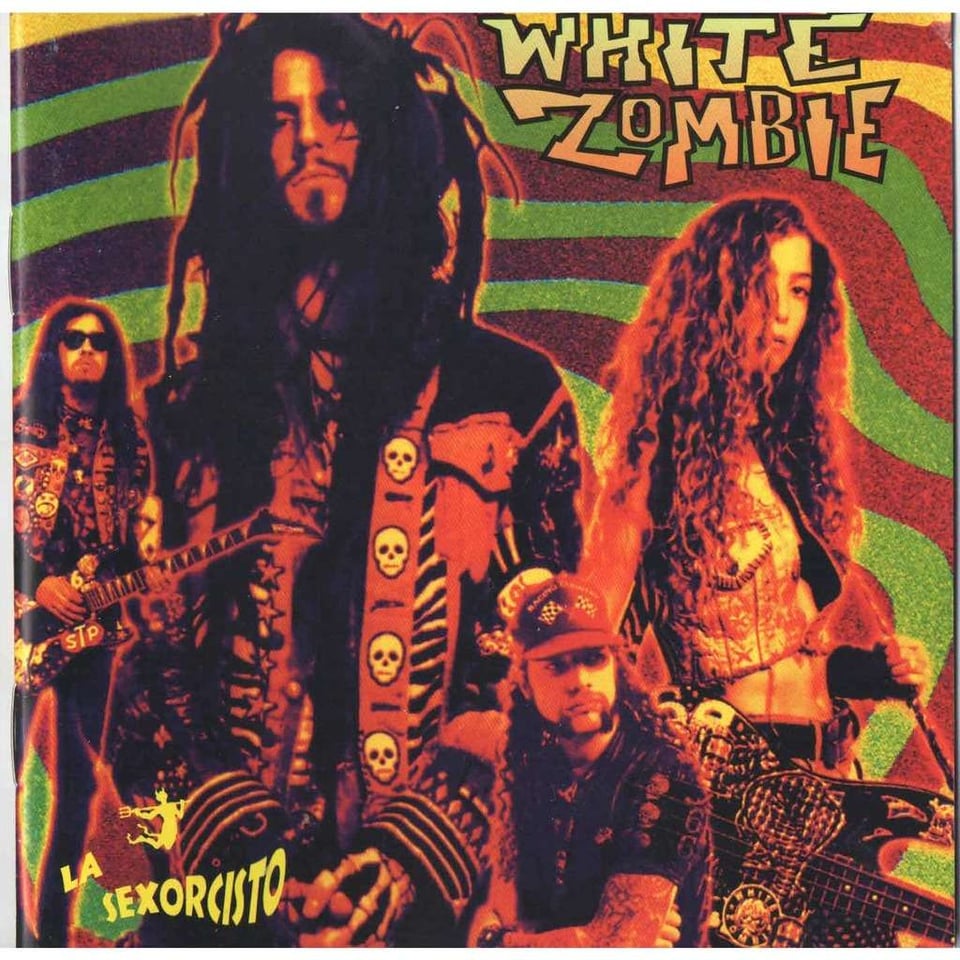
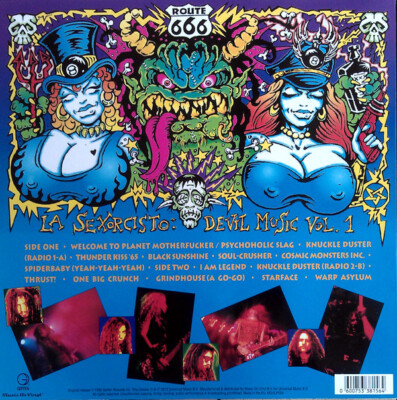
La Sexorcisto: Devil Music Vol. 1 is my favorite album of all time. Understand what I'm saying. I'm saying it's my number one. I'm saying it's my desert island disc. I'm saying that if I were forced to destroy every album in the universe, past or future, except one, I'd save La Sexorcisto. Understand what I'm not saying. I'm not saying White Zombie is my favorite band of all time. Far from it! In fact, prior to 1992, I think they were actively bad. Moreover, the band went through so many permutations in its short life (and even more if one counts Rob Zombie's solo career), that claiming White Zombie as your favorite artist requires further clarity. 1987 White Zombie? 1989 White Zombie? 1992? 1995? (Don't say all of them; I won't believe you.) I'm writing today to explain why La Sexorcisto is my favorite album of all time. A secondary goal is to persuade why you should vote for it in the Best Album of 1992 tournament instead of [overdubbed monotone voice: Uncle Tupelo, MARCH 16-20, 1992]. These are impossible tasks. The reasons for my love are likely too buried within my consciousness, too interlinked with variables such as my age when I first heard it, my life at the time, my life since then, my gender, and a million other things. My hope, then, is that if I can at least define the edges of the first, with as much concrete detail I can muster, I'll be able to accomplish the second. Let's see what happens.
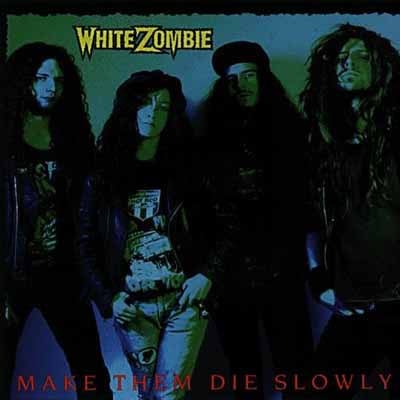
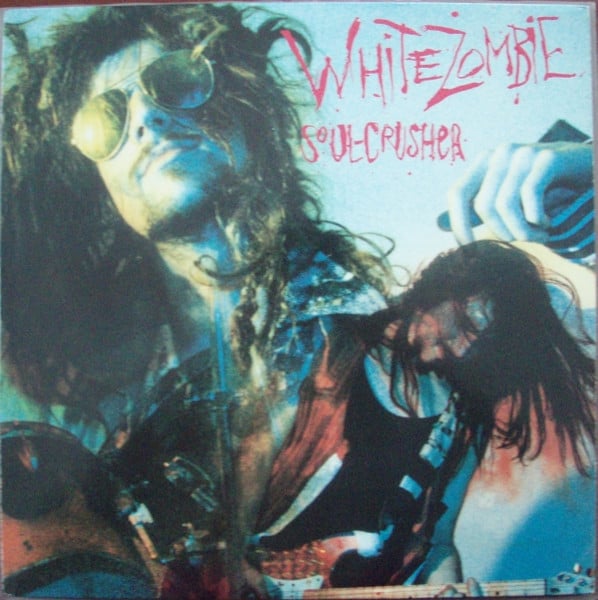
To get why I love this album so much, it must be placed in context with the rest of White Zombie's oeuvre. Between 1985 and 1989, the band released two full-lengths (Soul-Crusher and Make Them Die Slowly) and four EPs. They did this with two different drummers and five different guitarists throughout; the only constants were lead singer Rob Zombie and bassist Sean Yseult. They were labeled a "noise" band, although they themselves didn't associate with that scene. Not to sound uncharitable, but I suspect they were considered a noise band because they simply weren't very good. The guitars are harsh, but not in a fun, metal way, but in a grating, barely tuned way. Rob Zombie howls his impressionistic grab-bag lyrics in a high pitch, unlike his later deep growls, and attempts to extend words across measures that comes across as amateurish. Yseult's bass, in the one truly consistent part across the band's discography, appears occasionally but otherwise goes M.I.A. But what defines this period to my ears is that the band, like one of the poor enslaved creatures from their 1932 film namesake, lumbers. There's a rhythm, but it's an awkward one, always too slow, always a step behind the beat, more actively annoying than the outright noisy aspects of their music. The songs keep threatening to take off, then never do, like wind up robot forever grinding against a wall. The revolving door of guitarists didn't help the band, but had I not known better, I would've assumed they had five different drummers during this time as well. It's almost impossible to reconcile Ivan de Prume's drumming here with what he does on La Sexorcisto. Somehow this band, reportedly on the basis of excellent live shows, somehow they were able to land a deal with Geffen. This changed everything.
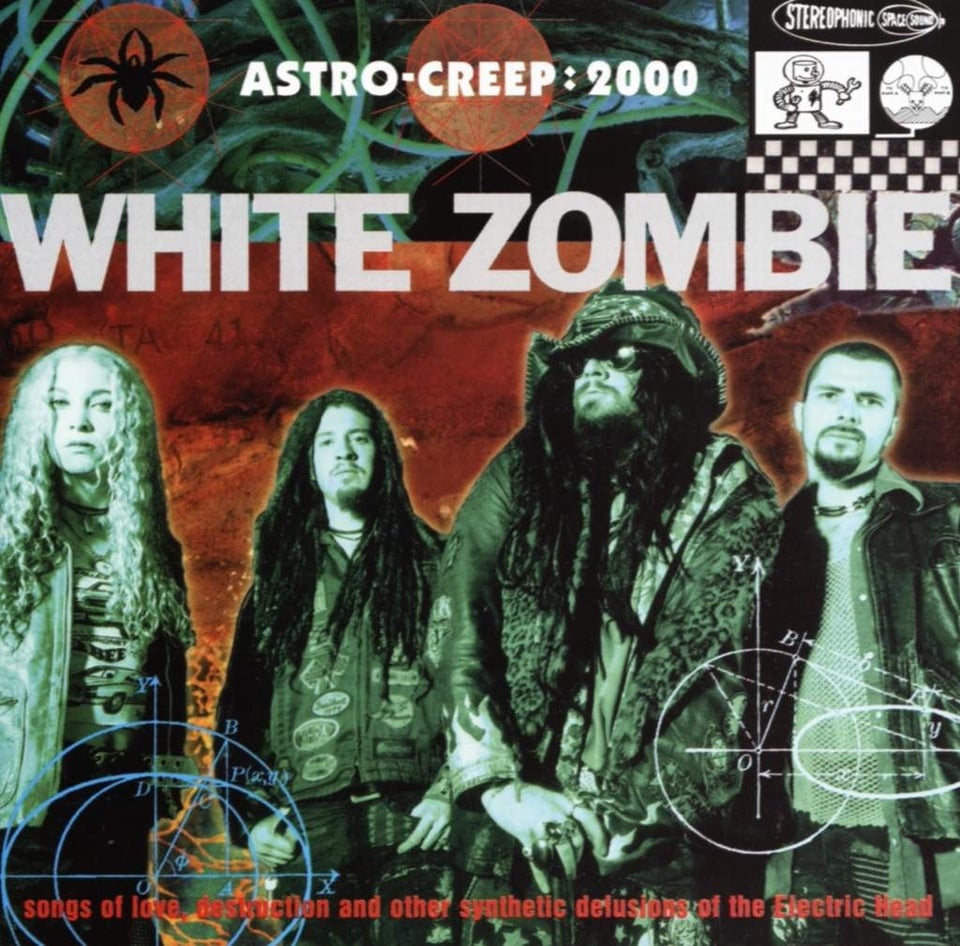
But now let's leap, Memento-style, from 1989 to 1995 and consider the band post-Sexorcisto. Rob Zombie appears to be exorcizor more control of the band. Drummer de Prume has left, or has been fired, in one case for reportedly asking, "When are we going to play my songs?" (I'm sure rock drummers have done a lot of clueless things over the history of music; asking this of Rob Zombie has to be in the top ten.) He has been replaced with John Tempesta, formerly of Testament, to provide ham-fisted, lead-footed accompaniment that is at least on-time. Charlie Clouser of Nine Inch Nails is brought in to provide keyboards and programming. On the surface, the songs on Astro-Creep: 2000 Songs of Love, Destruction and Other Synthetic Delusions of the Electric Head appear to be more like those on La Sexorcisto than on any previous album. But something's changed. The lyrics are shorter, more repetitive, more anthemic. The riffs, punchier. The drums, indistinguishable from from a drum machine. But before any music is played, the title(s) gave the game away. La Sexorcisto: sex, the body, the supernatural, analog. Astro-Creep: synthesizers, chrome, science-fiction, digital. I'm a cyborg now, says Rob Zombie, and that's okay.
This is why La Sexorcisto is special, not just to me, but in an objective sense. Make Them Die Slowly and the earlier albums were all plagued by shitty tin can production and lumbering rhythms; Astro-Creep was a sneak preview of Zombie's solo work. They had never made anything like La Sexorcisto before, and they, and Rob Zombie, would never make anything like it again.
So: what is this album?
Here's the part of the essay where I run through the songs in order. It's not the part that's most important to me; that will come later. But it's necessary, I think, to actually attempt to describe the album as an album.
La Sexorcisto starts with the sound of a needle on a vinyl record, a literal needle-drop (which was genuinely novel at the time), leading to a kind of cosmic bang that announces the first song, "Welcome to Planet Motherfucker/Psychoholic Slag." From the first notes, White Zombie (re)introduce themselves as a new band, one that with a steady, propulsive bass drumbeat of a heart and confident, Joe Cool-shades guitar riffs. And the samples! Putting a film sample at the start of a song, even then, was no big whoop. Incorporating samples in a way that effectively makes them part of the song? That was new. If you know the song, it's difficult to not think of Tura Satana's "Now let's move/let's take the backdoor" as part of the lyrics. And then there's Rob Zombie himself, ditching the screechy theatrics for a rhythmic avalanche of words and phrases. What's crashing down? What's overhead? Impossible to say. The only thing certain is this White Zombie no longer lurches; it runs. Following "Knuckle Duster (Radio 1-a)," a collection of random samples that plays the same structural role as a rap album skit, we get the first single: "Thunder Kiss '65." I don't have much to say about it, other than it's a great rock song that I feel the band was always capable of, but for some reason was only able to pull off here. One big change, though, is that while the earlier versions of the band were chorus averse, they began to welcome the repetition here, even if it's only two lines: "1965/Demon warp is coming alive in 1965." These tiny choruses will become a motif throughout.
"Black Sunshine" opens with holy shit, it's Sean Yseult's bass! It exists! This is a great rocker that, for some reason, has always been my least favorite song on the album. I don't object to Iggy Pop reading Rob Zombie's Ed Rothian poetry in theory, but why not do it himself? Not to mention, it feels like the simplest of the songs in the middle of an album that, in the context of their work, is a prog album, like a Ramones track in the middle of Jethro Tull. "Soul-Crusher" is the most out of place song here, as, per my understanding, it had already been written and performed before the recording of the album. (As it shares a title with their 1987 debut, it possibly dates to that year.) This is the missing link between the two White Zombie eras. It has the most lumbering beat on the album, but Ivan de Prume, somehow discovering his inner swing in the interim, keeps it moving. It also has no chorus, getting most of its charge in its bifurcated structure. It's easy to imagine a version of this song on Make Them Die Slowly; I'm forever thankful I don't have to.
Most albums have obvious highlights. Some albums are all highlights. But even great albums have the occasional track that exist primarily as, not filler, really, but glue. "Cosmic Monsters Inc." is such a track. I genuinely love it, I can't imagine the album without it (especially its wonderful opening 1966 Batman TV show sample), but it's not something that withstands too much attention, particularly the barely-there chorus ("High, I gotta oh yeah! Come on!/So high, I gotta oh yeah! Come on!"). Moving on.
"Spiderbaby. (Yeah-Yeah-Yeah)," to my mind, formally introduces Rob Zombie's contribution to the world of memes, his "Yeah!." Zombie had used "Yeah!" before and would use it many (many many many) times later, but here's, it's encoded into the title, so respect. I'll have something to say about "Yeah!" later on. As for the song, it has some of my favorite lyrics that demonstrate how far Zombie had come in his songwriting in just five years. But again, later.
"I Am Legend" is particularly important to me, in terms of what makes this album special. It opens with what is probably the most beautiful moment in the entire White/Rob Zombie discography, a delicate intro by guitarist Jay Yuenger. It's the kind of moment that exists because, for awhile, White Zombie was a band, and not merely an extension of Rob Zombie. It's the most melancholic track the band made (natch, as it's based on a story about the last man on Earth), and still a slow-smokin' scorcher. (I'm also convinced the intro was inspired by Slint’s “Washer,” from the previous year, but I can’t prove it.)
"Thrust!" is probably my favorite track, if only because, where before I was enticed, seduced, rocked, and throttled by the album, this is where I truly fell in love with it. This is also when I realized what Ivan de Prume was bringing to the songs, and why, when he left, part of the band died with him. He's the anti-John Stanier, as promiscuous with hitting the crash cymbals as Zombie is with the word "yeah" and leaving no space un(drum)filled. His playing reminds me of Steven Adler on Appetite for Destruction, full of swing and groove. (Adler is another drummer who elevated his band and was replaced with a total thud.) "Grindhouse (A Go-Go)" is basically "Thrust! Part Two!" with the added bonus of a hiphop-inspired "Go! Go! Go!" in the middle of it. Again, I adore it, but there's only so much I can say.
Finally, the album wraps up with the one-two punch of "Starface" and "Warp Asylum. " The former has, to my ears, a bit of a Southern rock thing going on, that I can't quite define. (Given that Zombie would later memorably use "Freebird" in one of his films, I'm going to assume I'm right.) The latter is a slow churn, even slower, I suspect, than "I Am Legend" and seems like the band's way of flashing the lights: you don't have to go home but you can't stay here. Everything winds down until we're kissed goodnight and left wondering what exactly we just heard and what exactly the point was. I might have an answer. Again, stay tuned.
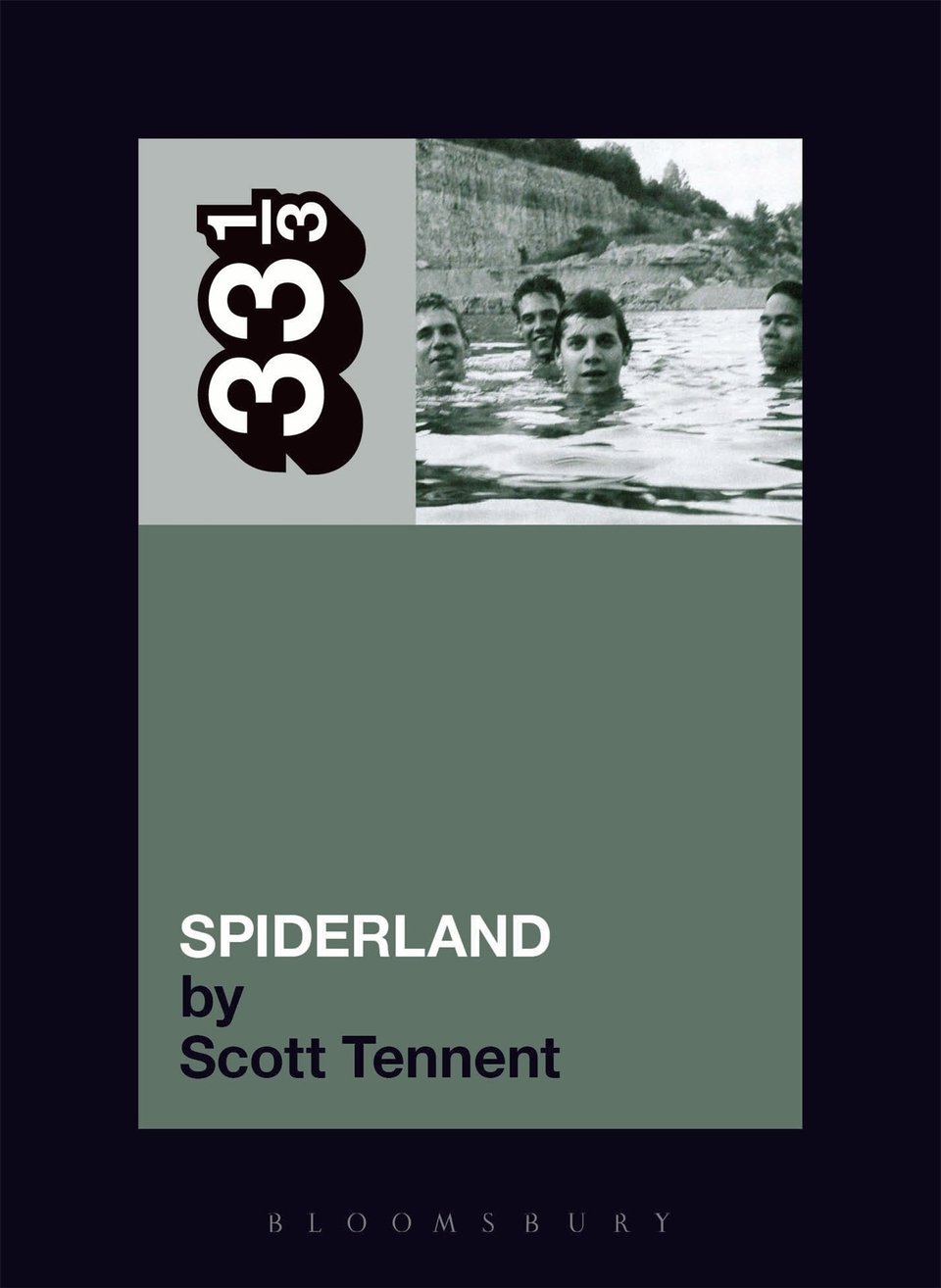
How much do I love La Sexorcisto? A few years back, the publisher of the 33 1/3 line of books — each book in the series is about a single album, in case you never heard of it — had an open call for pitches. For about 45 minutes, I seriously went about crafting a pitch for Sexorcisto, before realizing, Uh, no, that's not something I could actually pull off. If I did write a book though, the main question I would attempt to answer would be: what exactly happened to this band between 1989 and 1992? They made an evolutionary leap in their sound. How did they do it?
There are many possible answers. New (and final) guitarist Jay Yuenger. Major label money. Andy Wallace’s production, the cleanest and clearest the band ever sounded. Basic band practice. The most likely and simplest one is also the most complex: all of the above, all at the same time. But allow me a bit of... creative inference?... as I would like to introduce another answer: that, during this period, Rob Zombie learned something about words, poetry, and rhythm that had eluded him earlier. In short, sometime between 1989 and 1992, Rob Zombie learned how to rap.
I think it's obvious that there is a marked difference between Zombie lyrics and delivery pre- and post-Sexorcisto. On Soul-Crusher and the EPs, Zombie shouts his lyrics with little consideration about how they fit in with the rest of the music. Despite the (presumed) fact that these songs were written and rehearsed, they sound cobbled together, unstructured, unclear where they want to go or what they want to do. Part of that is the laborious rhythm section, but part of that is Zombie, too. All of this changes on Sexorcisto. Zombie's lyrics get longer. He begins to not only make rhymed couplets (basic, yes, but early WZ tended to avoid this), but also adding internal rhyme, getting his words jazzed with energy: Two of my favorite bits from “Spiderbaby (Yeah-Yeah-Yeah)”:
Yeah, I knew I hit the edge when I saw the spider
Jukebox paranoid insider
Blaze they gaze, amaze at the razor
Stranglehold L-O-V-E laser
and
Shadow make a move and it goes right through me
Gun stylin' planet do me
Sling the ring they sting on the outside
Chrome crank 'em 'til they're singing “Rawhide”
He also pays closer attention to which syllables are accented, and when to push that and when to push against that ("Cit TAY" instead of "CI-ty" for example.). Then there's the "Yeah!"s. Zombie's use of "Yeah!" (and other exclamations) is analogous to Mark E. Smith's way of appending "-uh" to the ends of words a rhythmic device, Bott's dots for a linguistic highway. (Sidebar: However, I think that Zombie and Smith use them for opposite ideological, if you will, reasons. Zombie's "Yeahs!" are all about affirmative momentum, papering over the bumps to get to the next dopamine hit. Smith's "-uhs" are about slowing things down, making the words strange, alienating them from their meaning.) This is all clear from the opening lines to "Welcome to Planet Motherfucker." I'm still not sure if Zombie is following de Prume's newly-found funk or if de Prume is matching up with Zombie's words, but, for the first time in the band's history, this is true: Rob Zombie is rapping. And I submit that Rob Zombie's flow is as recognizable as Rakim's, Q-Tip's, B-Real's, any rapper you care to name.
At the same time, it's impossible to separate how Zombie is rapping from what he is rapping about. And this finally, finally is the main entry point to my own fandom. Zombie's lyrics, as a whole, are meaningless. That sounds pejorative, and for anyone else it might be, but here, it's a feature, not a bug. Actually, it's not even a feature — the very lack of concrete meaning is what makes the whole thing work. Let me attempt to explain.
Zombie occasionally makes a song "about" something: "Black Sunshine" is about a car, "I Am Legend" is inspired by the Richard Matheson book as well as the two (at the time) film adaptations, there's a solo song — don't make me look it up — that is only about werewolves. More often than not, though, it's just a spew of funky nonsense. But: it's nonsense informed by Zombie's obvious psychotronic cinephilia.
What does "psychotronic" mean in this context? The word comes from Michael Weldon's Psychotronic Video magazine (and later, the book The Psychotronic Encyclopedia of Film), a publication about the celebration and critical investigation of films ignored by the mainstream; these were usually of the horror, science fiction, and exploitation genres. (I should note here that, for my own definition of psychotronic, these genres make up the bulk of such investigations, but are in no way limited to them.)
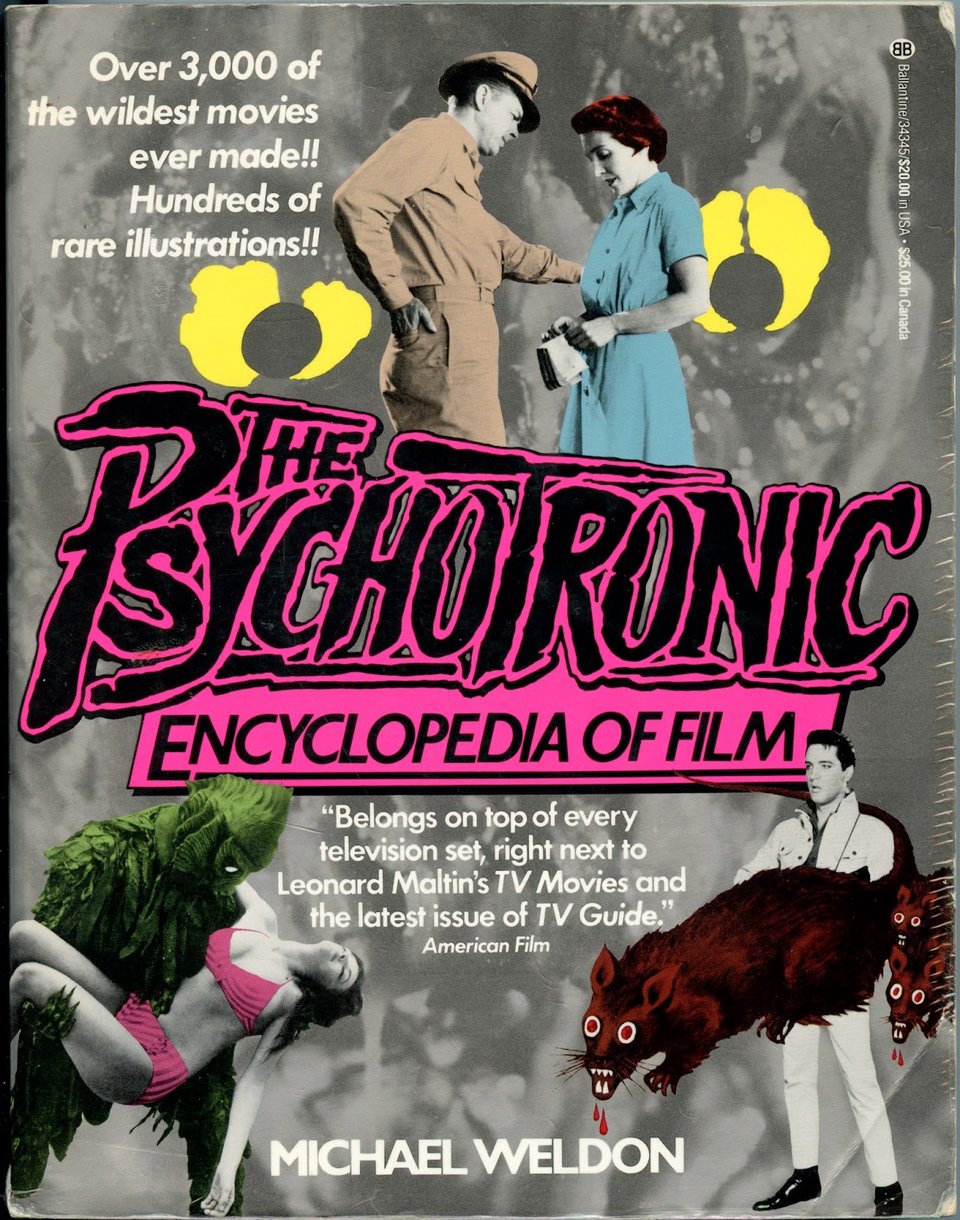
The psychotronic sensibility, to my mind, is about making a distinction between films/media that are good, and films/media that you like. (This may come as a surprise to some, but there are people who genuinely believe that if they like something, it must be "good," and therefore stuff they don't like is "bad." This is the basis for the phrase "guilty pleasure," which is basically form of cognitive dissonance.) For the psychotronic person, it is possible, and worthy, to find value in media that is demonstrably inferior. (This is not the same thing as liking something because it is bad. That is what I would call a camp sensibility. One can have both.) Put another way, to paraphrase Dril's tweet, for psychotronic cinephiliacs, there is zero difference between good and bad films. (You imbecile, you fucking moron.) (Addendum 4/26/26: for possibly a better explanation of this, here’s a blog post by former screenwriter Todd Alcott where he looks at Fiend Without a Face, Carnival of Souls, and The Tingler and discovers the psychotronic sensibility, in what feels like real time.) Zombie’s psychotronic cinephilia is most obvious in the way he name-drops films. An incomplete list of film titles used as lyrics in on La Sexorcisto: The House on Haunted Hill, The Omega Man, Meet Me in St. Louis, Play Misty for Me, Sugar Hill, Kiss Me, Deadly, Motorpsycho, Some Like It Hot, White Line Fever, Blast of Silence. The album title is likely a retitling of Ray Dennis Steckler's 1974 film The Sexorcist. Then there's the references: "Red, red kroovy" from the novel A Clockwork Orange, The Duke from Escape from New York, Z-Man from Beyond the Valley of the Dolls. (Those three are all from the same song.) And of course, there's the samples that dot the album's hour-long running time: Faster, Pussycat! Kill! Kill, High School Confidential, Night of the Living Dead, among plenty others. (Faster Pussycat is such an integral element of "Welcome to Planet Motherfucker" that it really should have "Feat. Tura Satana" appended to it.) Zombie's lyrics do more than just reference, more than just shout out. They embody psychotronicness itself.
Some lines from La Sexorcisto:
"A weather-beaten angel descending to embrace the cemetery"
"Rolling like a supersonic, another fool that gets down on it"
"Momentary damage into the high/Drift me to the circuit sky"
"A cool and crazy freak machine, she twanged off and out like I never seen"
"West of the moon, I got no reflection/Blood on the stone, I do not surrender/Waitin' for someone, I do not remember"
"Yeah, a vampire sharpshooter/Oh, I said, a messenger for the damned"
"Thrust in deep, there are no limitations/Wing-shaped constellations everywhere now"
"Pump the creature Daddy-O, spring loaded hangin"
"Careening through the neon side, a horizontal mind collide"
"New gods move, whippin' the shore and dash on the reef: surf city"
This is why I contend that meaninglessness is essential to Zombie's project. I don't really know what any of the above means. I don't think it actually means anything. But in toto, they create a world. It's a world of hot rods, hipster slang, vampires, monsters, beach blanket bingos, moonlight over graves, and sex sex sex. It's every disreputable movie, from the 50s to the 70s, all living under the same dome. To hyper focus on any one aspect — to approach it from the angle of meaning — is to do so at the expense of the others. In order to fully celebrate what the mainstream deems detritus, one must take it all in, all at the same time. Drink full and descend.
I, of course, am one of those psychotronic people. I will likely run through the entire Friday the 13th series for a second time before I finish Kieslowski's Three Colours trilogy. I will probably see all of Michael Winner's films before I see all of Abbas Kiarostami's. It's hard for me to believe what I'm reporting to you, but it does seem to be a fact. I don't say these things as a boast. Kieslowski and Kiarostami are fucking fantastic. My favorite director is Andrei Tarkovsky. But my favorite film is, and always will be, Jaws.
So when you're twenty years old, discovering your cinephilia, and realizing that the stuff that really makes sparks in your brain are the things that are generally regarded as trash, La Sexorcisto is a like a telepathic transmission from another dimension. Somebody else gets it. Somebody else sees it.
How could I not pledge my fealty for the remainder of my life?
Add a comment: