LGBTQ & Improv
Reflections on being a gay improviser
My experience as an LGBTQ person in improv
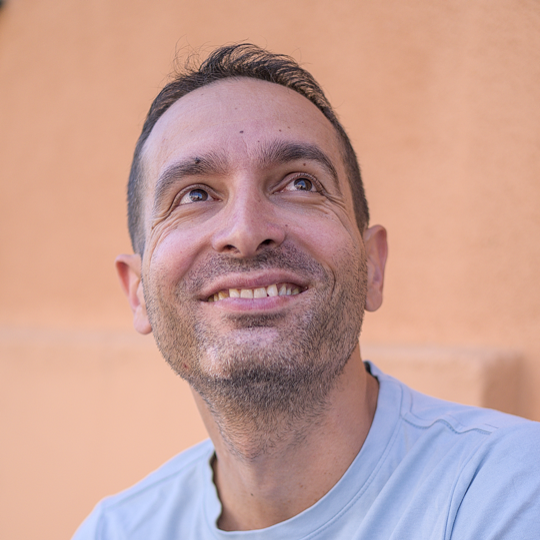
I’d like to share personal reflections and anecdotes about being a cis gay man in improv.
As a performer
I’ve been generally lucky to have scene partners open to playing different genres or not define genres when unnecessary, and assume we were our genders unless stated otherwise in the scene. I like this general rule of, “Let’s assume any character I play is my own genre unless I make it clear it’s not.” It gives you control of what you want to play, and is easier for your onstage partners — also they must listen carefully to your choices. They can still endow you, but not force a gender on you. Of course, there can be other pre-show agreements between performers, but this is for now my general rule of thumb.
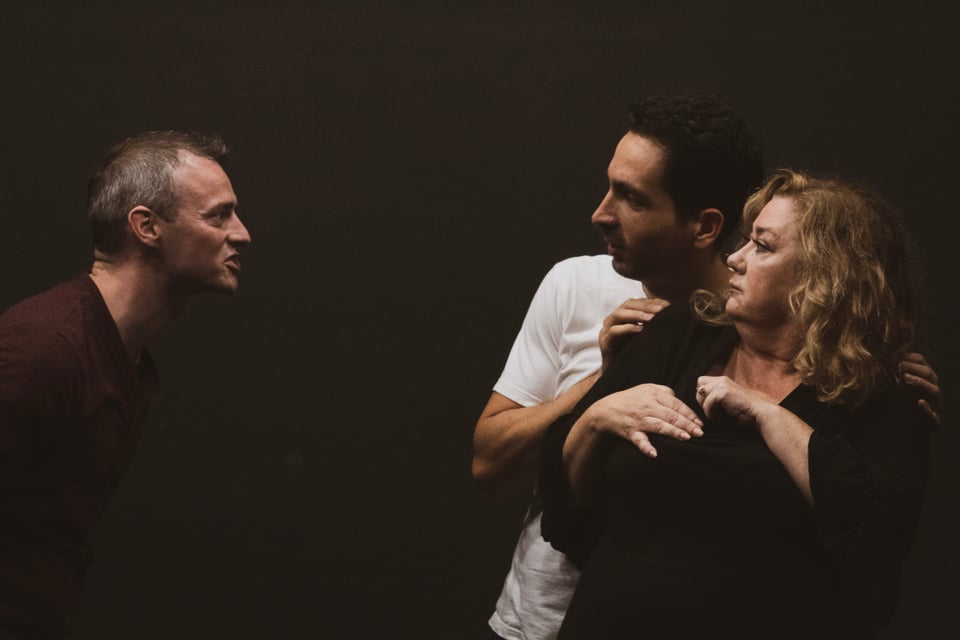
at the 2019 Belfast Improv Festival
(its first occurrence!)
I’ve been extra lucky to perform a long-standing improv duo with another man (cis straight man) who is also comfortable with playing gay couples, even kissing (light lip kiss), hugging, etc. It’s actually been a recurring conversation amongst us as to how to tackle playing a gender, and a gay couple. We’ve never played two cis women in a relationship, though. We’ve never played trans characters explicitly or implicitly. I don’t know we will ever. But I’d like to explore and workshop it with improvisers belonging to the LGBTQ community. Stephen Davidson (UK) has amazing ressources about these topics. Please check out his website and books, they have many exercises and more to start this journey.
When I started out in improv, it never occurred to me that my gender identity was of any importance in my acting. After all, one of the perks of performing improv is to be able to play any character we want. It’s for everyone to play any character, so who cared that I was LGBTQ? This simplistic view quickly crumbled for obvious reasons:
We only play from our own biased experiences, and reproduce systems in relationships — as a white person, as a man, and as a cis man I was riddled with extremely biased experiences of the world; and,
The stage is a representation of the world, and the social and political commentary it offers cannot be ignored; whether we like it or not, improv has a social impact in what it has to say about people, relationships, power dynamics, etc. Comedy often was found in clichés, stereotypes, accents, classes, gender roles, etc.
It took me a while to play other genders, and to play openly gay characters. The recurring question in my head was, “WHY, why does my character need to be gay? This has no impact on the story, etc.” Oh my, was I wrong.
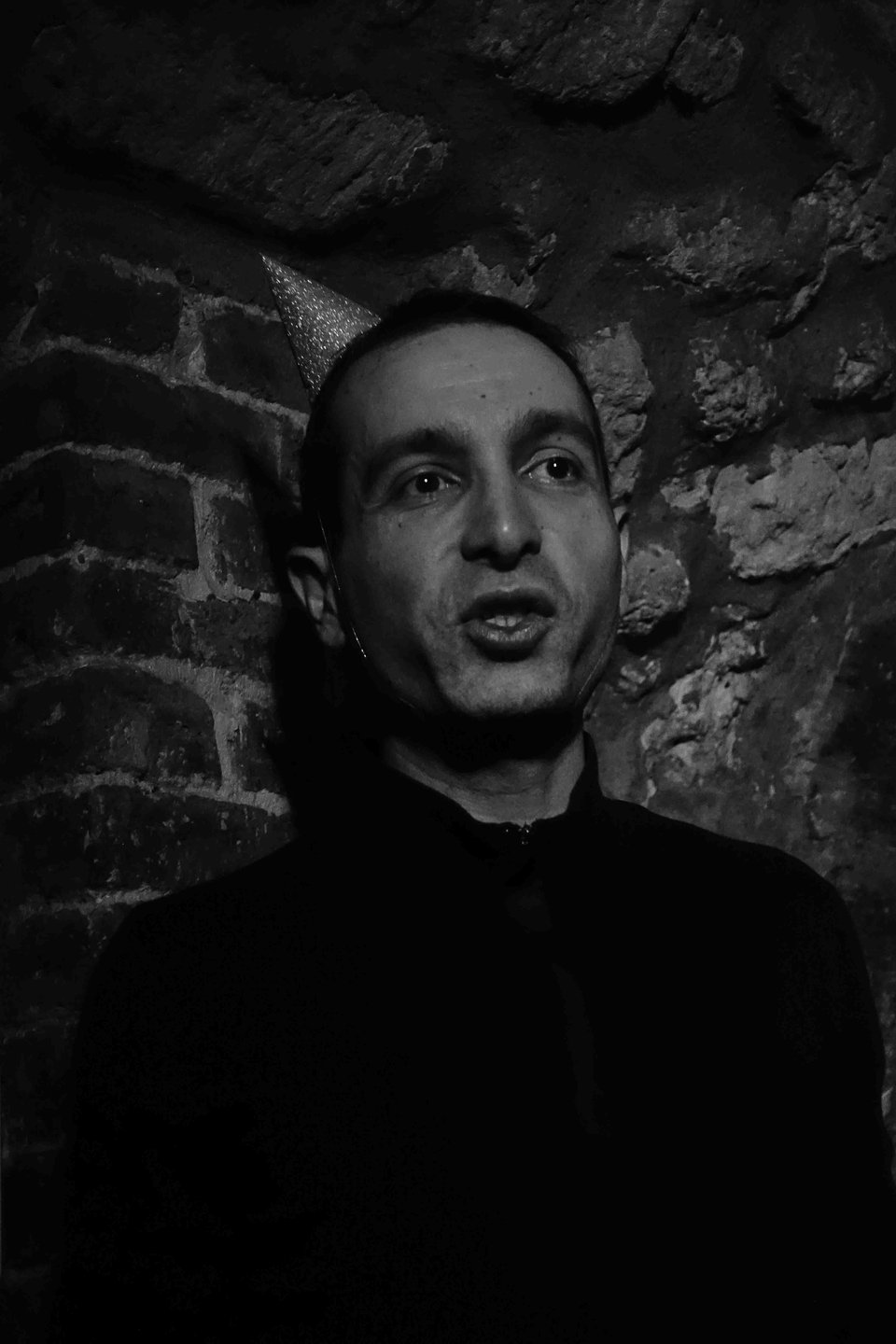
who later turned violent
(“Bad Trip” Improv show)
Playing gay characters then became obvious if my stage partner also identified as a man and we wanted to create a love story — in a way, I didn’t have to take the risk to play a woman. It was easier to me, even if scarier at first.
Playing gay characters also allowed me to show gay characters to an audience, which in turn allowed me to herald a couple of things:
Gay people are part of life, it’s fine, please carry on with your life.
Gay people will struggle as a minority and the story may reflect that if it is realistic.
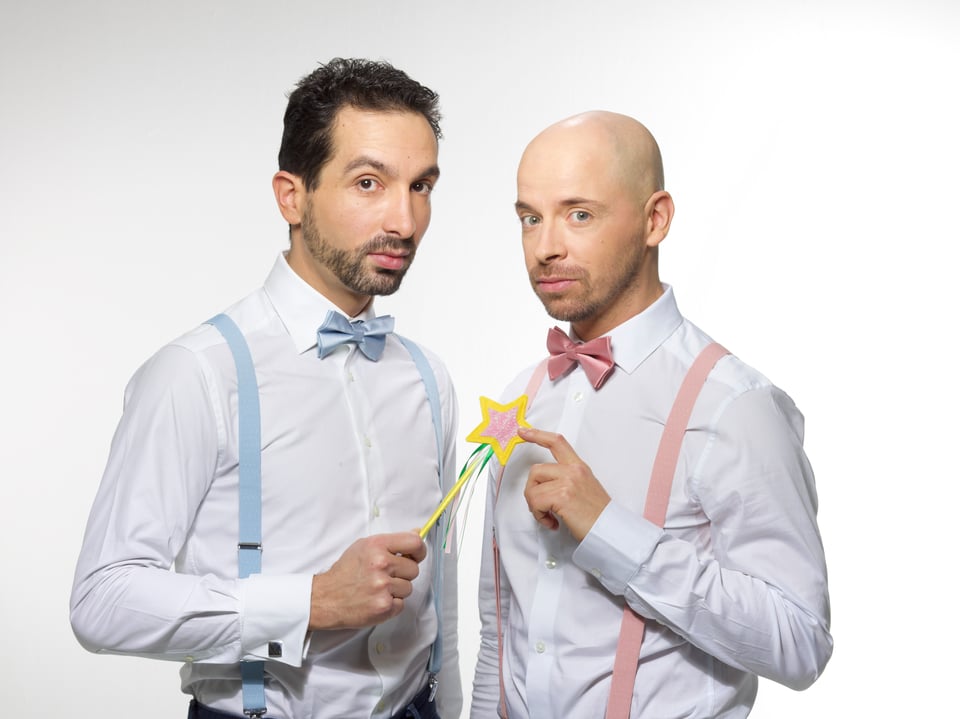
I guess I needed to become more an “artistic activist” to understand these simple ideas. In 2020, I co-wrote a show called FIERS (“PROUD”) in which my friend and I told our personal stories as gay men and intertwined historical events to highlight the long journey we (as two people / as a community) have gone through and what remains to be done.
For a couple of years, I was also part of a non-profit that offered workshops about discrimination, sexism and homophobia in middle and high schools in and around Paris.
These two projects were crucial to understanding how being gay was in itself a political statement.
B: Actually, by talking about being it [being gay], you transform a private conversation into a political act.
A: You show that you exist, well, that you have a right to exist, and that you own space in society.
B: You add weight to your community.
A: You refuse the prevailing norm.
B: And refusing the norm is a eminently political act.[…]
A: We know what you’re going to say, we can hear you from miles away.
B: “Well, on the one hand, we can’t ask you if you’re gay, but one the other hand, you need to shout it in public.”
A: That’s because it’s up to us to decide when and how to talk about it. This allows us to take the power back. By naming and describing ourselves, we prevent others from doing it in our stead.
— FIERS, by J. Bertrand and R. Viallet (my translation)
Recently, I’ve received a request by a queer improviser in Paris (my own approximate translation):
“I want to create an improv show with a 100% queer cast and talking about queer topics. Feel free to contact more improvisers on my behalf because so far, we have a majority of cis white people.”
Needless to say, I am extremely curious as to what can come out of it and I will make sure to let you know about the future developments. Note that it also touches on another topic, which is than even within minorities like the LGBTQ community, the visibility given is mostly to… white cis men. In Paris anyway (but by looking at improv posters from all around France, I guess it is true there, too), there is very little representation of other minorities in improv: Black, Arabic, Asian, etc. And of course, women are still a minority in improv despite growing numbers.
As an audience member
For most of my time in improv, I’ve been disappointed by the quality of LGBTQ representation in improv. The LGBTQ characters are often completely absent from shows — or if present, they have often been stereotyped (high-pitched voice, sassy, effeminate behaviour, emotional…), become the butt of a joke, or their differences have been the subject of the scene (not necessarily making an interesting point). As in movies, they have often been riddled with mental health issues, depressing character treatments, outcast-type subplots, etc.
I must say, though, that some improv groups are rising up to the challenge and strive to be socially relevant. There is one particular team of improvisers in Paris called ‘ISG’ (“Impro, Sexe et Genre”) that falls into the category of “spectacle engagé” (“socially/politically committed show”), in which they try to tackle social stereotypes, adding one onstage “meta character” (a sort of narrator or commentator) who live-searches statistics and facts about the chosen topic of the evening (picked by the audience who anonymously wrote about discrimination experiences, personal or witnessed, on bits of paper before the show). So far, as with such shows, I have not been convinced by the ‘improv treatment.’ These are tough topics to handle sometimes, and I feel the group I watched several times forgot to ask themselves, “what does the art of improv allow us to do to when dealing with such topics?” What I saw was just stories of what people have experienced, with different characters reacting differently, nothing that we didn’t know before. Maybe it was too mild or consensual. Maybe I expected more drama, more shock. Maybe they just wanted to show how ordinary discrimination is. But why not write such a show, then? What does the improv bit add to it? These are genuine questions to ask, in my opinion. Beyond the obvious appeal of the unknown, how can improv help us approach LGBTQ situations? And socially committed show as a whole?
As an improv coach
Recently, a gay adult student in one of my beginners’ groups has opened up about a concern of his — that he was channeling a lot of stereotypes himself onstage when representing gay male characters — being fickle, promiscuous, flirty, tactile with other men, punny with sexual innuendos, etc. It was part of a larger conversation I had with the group about consent, comfort, boundaries when learning and performing improv.
It’s not always easy to know where to stand as an improv coach, and being an LGBT improv coach has opened my eyes, over time, to lots of forms of discrimination / perpetuating clichés and systemic toxicity without realising it. Such issues are much broader than LGBTQ representation, but I offer here three approaches when coaching, a few questions you can ask the students:
Are you aware of the clichés being used? What do you think the scene is telling the audience? What do you want the scene to say? Use the other students who are watching. Make it non-judgmental and caring, the class is a space where things are tried, no need to castigate or expulse. Are the performers all aware and OK with the scene?
You have a choice to play the scene sincerely and call upon it, denounce the mechanism and the perpetrator character, help the victim character… We want justice for the bully and hope and care for the bullied. If the bully wins, we need to understand it is a strong, conscious choice of the whole team performing, that consent is shared about this choice.
Or… play it as absurd as you can, revealing the illogical thought process at stake. For example, a racist character makes derogatory remarks towards foreigners in his/her country, and towards him/herself when visiting a foreign country…
If a student plays a gay character and it’s clear it’s cliché-heavy, have a talk about the relevance of such characterisation, how it might be perceived, why it may hurt, etc.
Further Musings
What is the point of an all-queer cast for an improv show, and being advertised as such?
What are the best ways to start opening conversations about LGBT characters?
🔌 PLUGS
My twoprov “Digressions” performed at the Nancy Improv Festival and it was amazing. We added a third member to perform “Digressions+” and it has given us ideas about including a third (female) member more regularly. Come check out the original show. We also perform in English, should you want to invite us to your corner of the world.
I am the editor-in-chief of the first French and France-based improv magazine ever. Check out Improscope and you can sign up and download the first issue for free.
📣 SHOUT-OUTS
Speak French? Check out Impro, Sexe et Genre in Paris.
Websites for improv festivals around the world:
🏓 THE PING & THE PONG
THE PING : I taught two workshops and performed at the Nancy Improv Festival, arguably one of the best improv festivals ever. I had the best time.
THE PONG : I couldn’t stay for the 8 days, though, as I am still nursing a 10+ day long cold which doesn’t want to leave my skull.

Add a comment: