
Is Improv Dying?

What a clickbait title! But the question is honest.
[This is personal reflection.]
Recently, I’ve noticed a dip in the audience for most improv shows in Paris. Improvisers are still surfing the creative wave (or rather tsunami) of improv that took years to muster. But the need for improv, its sharpness, its resilience, is being tested by current events.
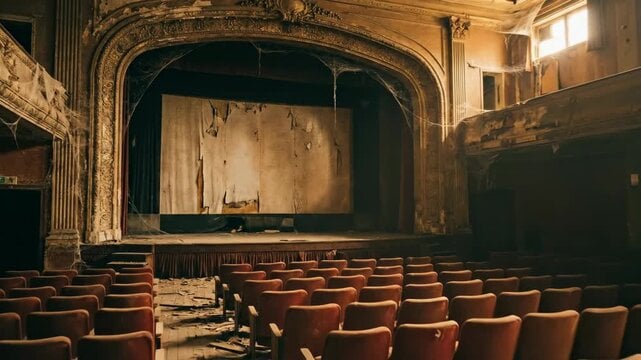
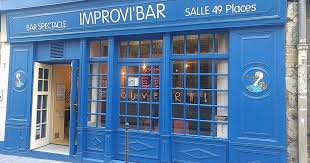
Back in 2019 when I set down my suitcase in Paris, the only improv-dedicated bar in Paris (the regretted Improvibar) was celebrating its first year of existence and the anniversary brought dozens and dozens of people all day long to the venue, located in the LGBTQ area of the now-gentrified Le Marais quarter. I auditioned for many troupes, all of which had been thoughtfully listed in a shared Excel doc, with what seemed like an endless supply of improv groups in and around Paris.
Paris Impro, the now biggest improv school for amateurs and professionals in Paris (and in France?), born in 2008, was reaping the benefits of eleven years of teaching, with many former students creating their own legal entities and gathering people in their newly-formed “associations” (non-profit organisations).
Theatres were starting to include improv shows in their regular programming, still relegated to second-choice slots or often thrown together as part of an “improv day”, with shows alternating and rotating to keep the interest going. A few theatres did offer groups a first-choice slot or decided to only host ONE improv show and push it. Today, it seems common for any theatre in Paris to have at least one improv show in their brochure. It usually is less cumbersome to host improvisers for them, and may require fewer accessories, set pieces, tech requirements, and logistical demands generally speaking. However, most of these shows are self-produced, are not promoted by the theatre, and die after a season or two. In France, theatres usually take no risk with the shows they put on, offering a slot to anyone willing to pay a “minimum garanti” (or “guaranteed minimum”) equivalent to a rental fee. Prices and conditions vary, but the ongoing deal is €150/show/50 seats. Ticket sales may also be split in different ways between the non-profit and the theatre. A quick calculation shows that, with tickets almost never costing more than €15/person, and often less, it is impossible to earn anything, or pay anyone any wages at all. This does not help any show survive, let alone improv shows.
I can only think of a few improv shows that have managed to live on for years with great success, but even when I asked their troupe members, I found out they were not paid fully at each show. It costs production around €200+/per performer to pay them the minimum artist wage. And some of these shows had proper theatre production companies backing them up. I estimate that 99% of improv shows do not have producers helping them… which means that people end up paying to perform, and not being paid to perform.
Financially speaking, the obsolescence of improv shows was thus programmed. The final blow came last September (2025) with Improvibar’s bankruptcy and closure, after many years of crazy shows every single night for seven years. The economic model of the bar also suffered dwindling attendance in spite of its owner’s efforts to make it viable: it was FREE to book a performance slot as long as you brought an audience which would buy drinks before walking down the stairs to the show space. Over the years, the many slots of each new 12-month calendar would fill up in a matter of days. More popular shows / performers / well-marketed groups would get the Friday and Saturday night slots, but it was a constant flow of crazy, hilarious, strange and new concepts. Every weekday, from 6pm to 12pm, every weekend days from 2pm to 1am, almost all year round, groups would perform 1-hour shows and leave 30 minutes for breaks. In seven years, Improvibar probably hosted around 7,000 improv shows, revealing talents, formats, testing and pushing the boundaries of improv, fusing it with other arts, failing, succeeding, and providing Parisians with a an endless succession of performances. I saw the worst and the best of improv there. I performed solo shows, rubbed shoulders with the most influential French performers, unknowns, did crazy shows, jammed, partied, ate too many saucisson bowls and drank too much cheap beer, and I loved it all. I called it an “improv lab” where experiments sometimes exploded, and often created something completely unexpected and beautiful.
The owner, facing more economic challenges (uptick in rent, less foot traffic, rising costs of everything with the war in Ukraine), and the desire to move on to other endeavours, tried to sell the concept but failed in finding anyone passionate enough to modernise the physical venue and the financial structure of the company. Paris is now left with bars and restaurants mildly interested in putting on improv shows on any scale remotely similar to that of the Improvibar, setting orphaned groups back years, to a time when improv “tried stuff” and people wandered in crummy spaces.
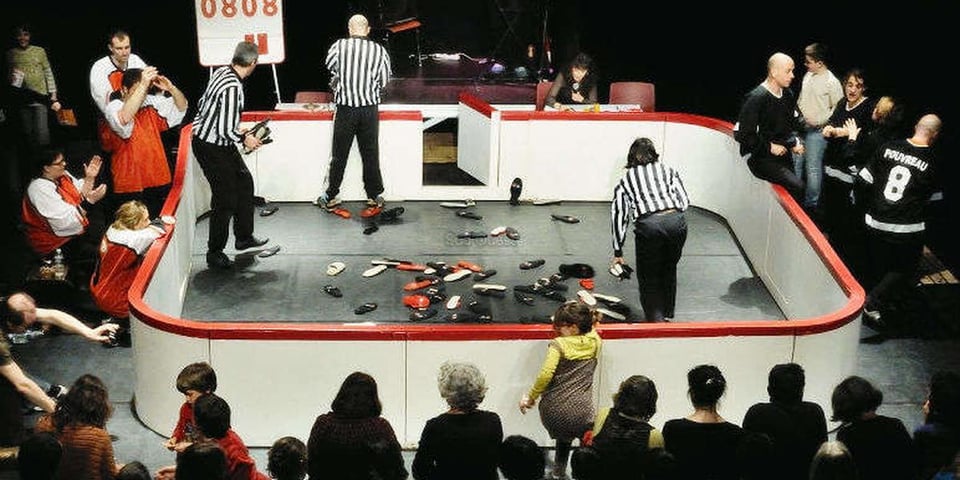
Any attempt to elevate improv into a mature art has been met with harsh economic conditions and skepticism; and those who gave it a go, did it timidly. I remember when I had to constantly explain how improv is NOT stand-up, and swear that everything is made up on the spot. It is undeniable, though, that improv is a lot better-known in France now than seven years ago. It is a testimony to the efforts of many who, since the 80s and 90s, have poured their hearts into this art, mainly as “theatersports”® — improv ‘matches’ have been hugely popular here, importing competitive formats directly from Canada way back when.
Another sign that improv has gained traction in France is the rise of the the number of corporate trainings based on improv skills, or “applied improvisation.” Again, these trainings are easy to set up, require comedians that are happy to earn corporate-level fees, and deliver strong transversal skills in the form of games valorising spontaneity, risk-taking, collaboration, listening, etc. — values that companies push for but rarely actually reward in real life. Even if one can argue that improv sessions in companies are just excuses for companies to deliver “fun and useful” compulsory trainings to their employees, they have often become a smoke mirror to promote the dubious idea that everyone should say ‘yes, and’ and be a ‘good teammate’ to support capitalist ideas.
Although the current political, geo-diplomatic situation in the world can explain a lot of it, the almost complete 180º turn companies are doing regarding these trainings is crazy. In the matter of months, contracts I had with organisations have been canceled or not renewed. My corporate income is now barely a third of what I used to earn at the end of 2025. Asking other freelancers during an online meeting of around 50 people last month, more than half were in my situation, and wondering what to do next. Has improv reached its limits in what it can offer the corporate world? Has the illusion come to the fore? Or can we expect more expert, science-based, and eye-opening workshops on how improv can change the world? (Dramatic, I know, but necessary, I believe.) Maybe I have not been around enough to consolidate a solid corporate gig flow.
Theatres also are struggling, generally, and with improv specifically. Fewer venues mean fewer opportunities to perform, resulting in less risk-taking, in turn forcing audiences to go for safe, run-of-the-mill shows that may be solid, but do not show the range of what good improv can be. The image that “improv is just a bunch of people playing nonsense” is still tough to shake off. It takes years of efforts to wow people regularly, and one mediocre performance to set us back decades. Without production support, without theatres offering Friday and Saturday slots and better financial conditions, improv has a long, dreary road ahead of itself.
Internally, improv has also a lot of self-reflecting to do. Like anything else, the world of improv has been contaminated with the evils of our times: sexism, homophobia, racism, toxic behaviour, sexual and psychological harassment, etc. Festivals have gone and died, performers and teachers have been questioned, but many an issue remains ignored or tackled awkwardly as we’re looking for new standards. On this particular topic, I encourage you to read this excellent article by Neil Curran, and Ferran Luengo’s newsletter (issue #13 ‘When the Emperor is naked’).
Can improv be resuscitated?
I want to think so.
Improv Festivals, in spite of internal problems, are doing ok. They must embrace new directions, new standards, and more financially stable models to be able to survive. It is still costly to be a traveling improviser, to go teach and/or perform and watch others in your own country, let alone in other countries. As the world’s oil supply hangs in the hands of a few crazy people, it might become even more difficult to meet like-minded people beyond our borders. Festivals organisers, please pay people to perform and teach, host them, feed them.
Improv schools seem to still attract students of all walks of life. I’ve had more students coming to my improv classes after they’ve seen shows, talked to their therapist, heard a friend ramble on about it, etc. These schools must also enforce modern approaches to teaching and learning a diverse crowd, check on their teachers, and offer more flexibility in courses.
Improv (and performing arts in general) will resist AI. Have you ever asked ChatGPT to be funny? Original? To think outside the box? To be quick-witted?
The current multi-crisis the world is facing seem scary. And never-ending. Yet, like anything else, it will pass. It may take time, but it will. What else to believe?
I still think improv can ‘save the world.’ (Hence my dramatic sentence further up). Not as a global cult (!) but rather on an individual basis. Like ant work, improv will change people’s hearts one by one, showing its magic one show after another, and hopefully, more and more people will be mesmerised by that one improv show, bow to the performers, clap standing up, and tell everyone in their friends’ circles to go see it. It’ll be so popular theatres will agree to just split the ticket sales 50-50, no ‘guaranteed minimum’ needed. Improv shows will also be more socially aware and committed. Improv will fuse even more with other arts: dancing, singing, puppets, clown, classics, etc.
+++++++++++++++++++++++++++++++++++++++++++++++
PLUGS
Are you in France? I can offer improv workshops to your group in French and English, on a wide range of topics. I have 15+ years of experience. Contact me directly.
I’m performing soon in Nancy as part of their week-long improv festival, and also teaching two sold-out workshops. Click here.
I’m co leading two weekend workshops about silly characters and Commedia dell’arte late June / early July. Click here for more info.
Bye for now!
Please forward to at least 1 friend.

Add a comment: