Yesterday Today Tomorrow Forever: September 2026

Hello Readers,
We are back and on Buttondown now! You’ll see this again in the footer I’ve set up (should I keep your attention that long), but I’ve added a pay what you want subscription option. If 20 subscribers pay at least $3 per month, YTTF will be sustainable for the foreseeable future. If we hit 40+ I'll start doing Paid Subscriber Only content...most likely interviews, but we'll see what shakes out. You can upgrade to a paid subscription here. I’ve also had someone very kindly offer to do some gift subscriptions. If that’s something your interested in, just let me know. OK, on to the good stuff!
Josh
P.S. I’m still always looking for more subscribers so whether you pay or not sharing this newsletter with your bookish friends helps a lot!
YESTERDAY
A Book That’s Over a Year Old
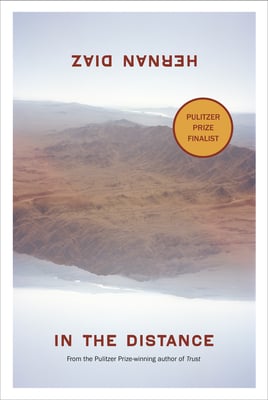
It’s not my favorite thing about In the Distance, but I do love that I can open handsells of it with the line, “It’s a Western where the character spends most of his time going East.” The line doesn’t remotely do the book justice, but I do think it captures at least a big part of what makes it such a special book.
It absolutely is a Western and it is in many ways a traditional, or at least, recognizable, American immigrant story, but its polarity is reversed. Or maybe muddled It doesn’t celebrate the individual, but it does grapple with loneliness and isolation. It isn’t about the conquest of nature, but there are times when the environment is essentially another character. It centers a classic tall tale (ha!) but the narrative we read is almost more like A People’s History of the Tallest Man in the West and less like a Mark Twainian yarn.
And then there’s the Don Quixote homage.
And the repeated paragraph.
And some amount of distance between when the narrative ends and where we know the character ends up.
It truly is a joyous fete of storytelling and I feel almost taunted that I haven’t started Ply yet.
Buy In the Distance from Porter Square Books
Buy In the Distance from Bookshop.org
TODAY
A Book Published in the Last Few Months
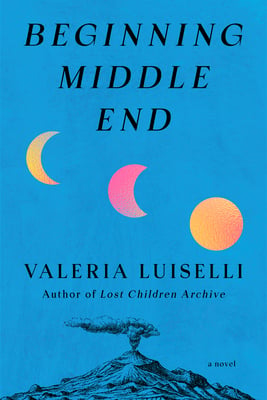
The fact that I am finally writing about the new Valeria Luiselli novel months after I’ve had the galley and weeks after it was released probably tells you all you need to know about how fucking stacked this year in publishing was for me personally. (You may note I haven’t written about the forthcoming Hernan Diaz, Rita Indiana, or any of the Dorothy titles yet!)
At first, Beginning Middle End felt like a very different Valeria Luiselli novel. Quieter. Slower. More contained. Less weird, even than Lost Children Archive. And, though all of those may bear out, there is an intensity to the novel whose source I can’t quite put my finger on. Perhaps it’s the short vignettes. Perhaps its the tangential seeming titles to the short vignettes. Perhaps its how tightly focused the book is on two(ish) characters, but there is just a sense, to me anyway, of some subterrean roiling. Is it because the narrator is both looking away from and looking at her recent divorce & it’s impact on her daughter?
Is the tension between the fact of love as a source of power and the fact that brains and bodies also want other things besides love? Is there something waiting for me, something that ties this book more closely to Greek & Roman myths than to postmodern literature.
It will be hard for Luiselli to displace The Story of My Teeth as her favorite work, but she is clearly exploring new-to-her ground in Beginning Middle End and I’m excited to see what she discovers, both in this book and in whatever she does next.
Buy Beginning Middle End from Porter Square Books
Buy Beginning Middle End from Bookshop.org
TOMORROW
A Forthcoming Book
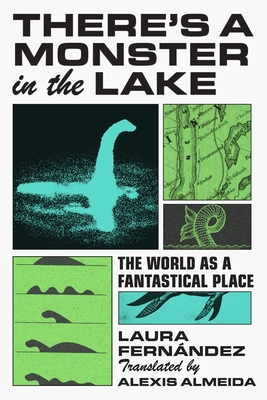
What if a sentient Victorian cabinet of curiosities narrated an essay about the Loch Ness monster for the social media era? What if said sentient Victorian cabinet of curiosities saw itself as the pinnacle of human creative endeavor and was more than happy to make that perspective apparent but in a way that also makes clear it is aware of “cringe” as a cultural concept and that it is already is and has always been too cool to care about being accused of being cringe? What if a sense of wonder at the whimsical of our world started to feel like it broke containment? What if belief in the fantastic was a radical assertion of agency? “A (NESSIE HUNTER) cancels out any idea of the world around them. In fact, they turn the world around them into mere background noise.” (p49 in the galley)
I actually don’t know if There’s a Monster in the Lake lands the trick. Or, rather, I’m not sure the trick Fernandez is trying is landable. There’s a kind of “entity rising from the lake” typography that feels distracting to me, as if it’s a misdirection rather than a layering. Perhaps that’s just me seeing through the wrong lens of skepticism or asking the wrong questions about the loch of the text. That’s one of the things about appreciating experimental books. They’re “experiments” because there’s a chance they can fail. And, even if you don’t like the specific results, you still have to respect the effort to explore.
Preorder There’s a Monster in the Lake from Porter Square Books
Preorder There’s a Monster in the Lake from Bookshop.org
FOREVER
A Book I Haven’t Finished Reading
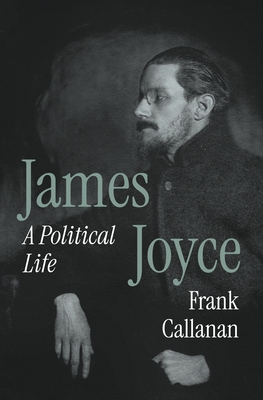
This isn’t the crowd where I have to make the case that all writing is political. Still it seems that at least some critical number of Joyce scholars interpreted his lack of direct political writing after a certain year as evidence of a fundamental withdrawing. The guy who wrote “History…is a nightmare from which I am trying to awake.” The guy who made his Odysseus a jew. The guy who gave a fairly liberated woman the last word in his most important work. The guy who constantly noticed and noted points of power in society. I don’t know man, some people just can’t seem to see politics unless it’s wearing a campaign button.
So I was almost embarrassingly excited to see the fact of a biography that sees Joyce’s life through the specific lens of the politics of his books. Well, turns out this isn’t quite that book. Rather, it asserts that the Parnell affair had a lifelong impact on Joyce and lead him to develop a nuanced understanding of Irish nationalism, one that accepted the need for independence while being wary of the many traps of nationalism. (I know, from the guy whose Cyclops was The Citizen!) This rejection of the boosterism version of Irish nationalism lead some to believe he had rejected Irish nationalism and perhaps even independence in favor of a kind of artist’s separation from the mundane world. As artsy fartsy as Joyce was, he never saw the artist as separate from the rest of the world, not even (I would argue) in Finnegans Wake.
If I were beholden to no man but myself, I would write two responses to this book. The first arguing that it is almost criminally reductive, an absurd bit of psychoanalysis that forever binds Joyce to a few childhood moments and another that argues Callanan identified a keystone of Joyce’s work one that both places his work in its appropriate historic mundane context while maintaining a range of timeless interpretive possibilities.
Millions of words have been written about Joyce. Maybe billions. There are good reasons to be disinterested, maybe even discouraged by one writer receiving so much attention. I could use a book like this to think about “the canon,” to think about the way our university systems reward certain types of scholarship and how that reinforces other cultural currents, about how eventually a writer like “James Joyce” becomes an entity almost wholly distinct from the human being who wrote the texts, but, today, I’m going to think about how amazing it is that that art and literature give us things that, together, we can write a billion more words about.
Buy James Joyce: A Political Life from Porter Square Books
Buy James Joyce: A Political Life from Bookshop.org
(And here’s that pitch about paid subscribers like I said.)

Add a comment: