Continuing the thread
Hi friends, how are you? Summer was full of seeing friends and getting outside when it wasn’t too hot or wildfire-y. I’ve been continuing a few “threads” I’ve been working on, both in the fibre and digital sense…
Mount Royal quilt
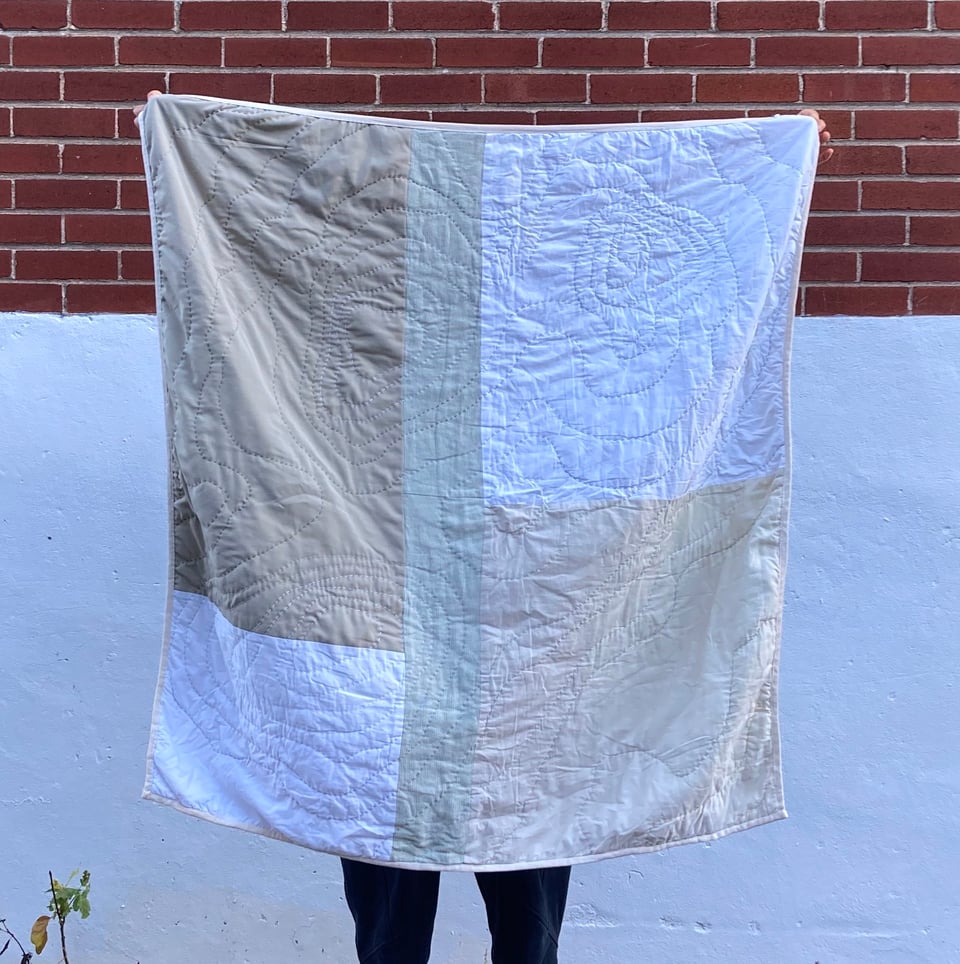
In the spring I started a large quilt using old blankets and scrap fabric lying around. I didn’t have a plan in mind, but knew I wanted to freehand most of it and hang it on our living room wall for a bit of soundproofing.
I’ve been saving some inspiration for organic, hand-sewn quilt designs. So I took some inspiration from the topography of Mount Royal for the design of my quilt. It hasn’t been hung on the wall yet.
Omi pants
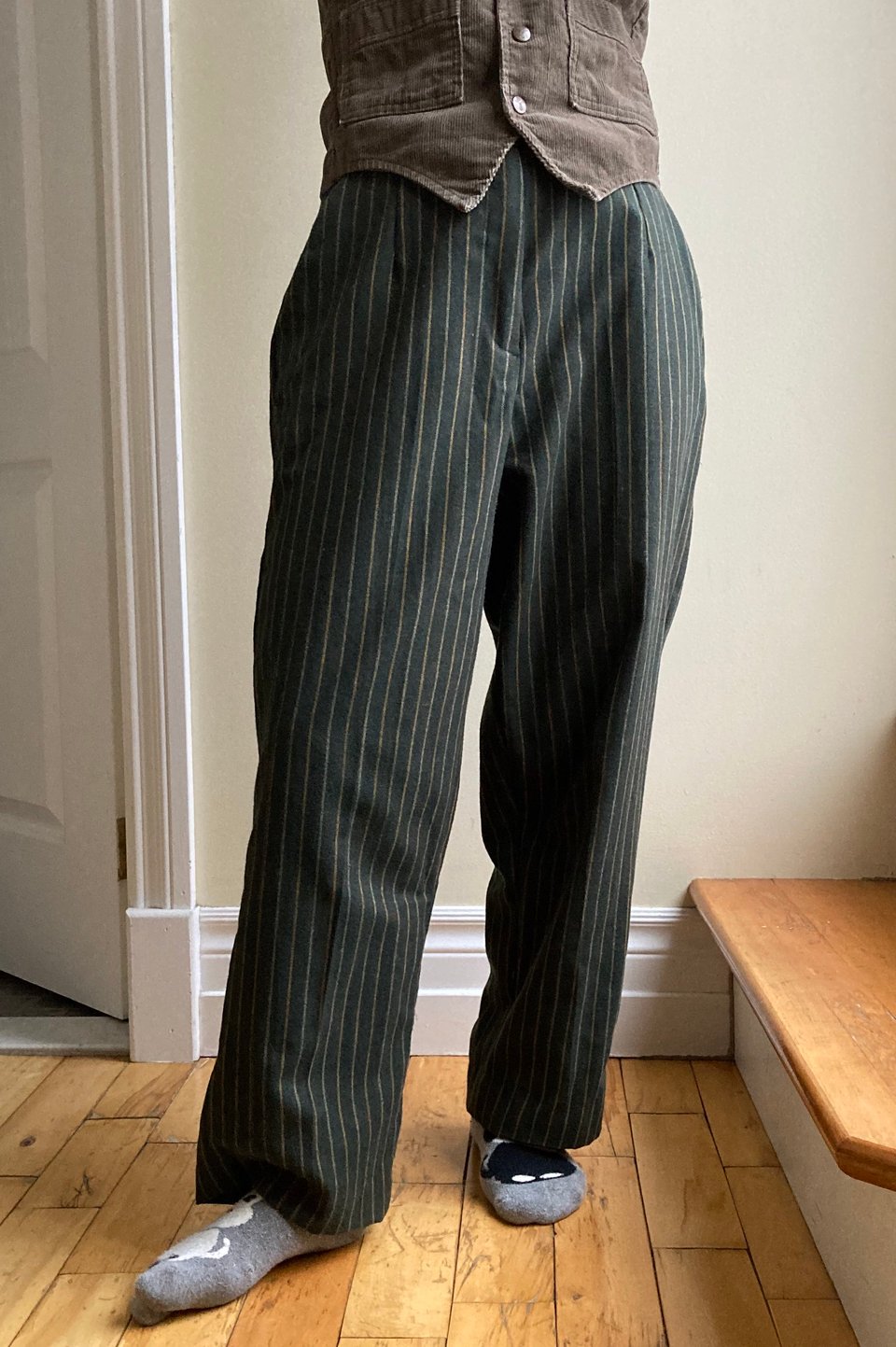
My friend Melissa helped her grandma, Omi, move this past summer. She had to go through Omi’s collections in her basement, including a treasure trove of vintage fabrics and sewing patterns (all pristinely kept). I sewed my first pair of pants using her fabric and sewing pattern, and hope that Omi is happy that her things are finding a new life.
Disappearing online art communities?
Since I started a full-time job, I didn’t renew my website subscription, which used to house my illustration and design work. I’m thinking about making a website again now that I’m doing a bit more writing and drawing and wanting to share, but super hesitant to post anything online now. Where do I post it? Which big tech company do I feel the least icky about? Will they use my work to train their AI models?
I picked up a volume of Needlebound at the Montreal art book fair in October. This was a cool online-meets-IRL moment because I recognized Hayley, the founder of this compilation, from social media @dazy_chains. (sidenote: I didn’t even know her real name, just her handle. Do you ever approach people IRL and name them by their socials?).
Needlebound is a printed book comprised of art and writing all about fibre. In an editor’s note, Hayley says “For many fibre artists, social media has served as more than just a platform – it has been an archive, a gathering place, a space where traditional crafts and experimental processes exist side by side. It has made textile work more visible, connecting makers across distances, and preserved knowledge outside institutional gatekeeping. But as these spaces become increasingly unstable, we are left with urgent questions: What happens when the platforms we rely on disappear? Where does that knowledge go?”
I’ve been thinking about this a lot, from this time last year. It’s a constant balancing act between “reach”, ethics, community, validation… For now, this newsletters serves as a thread for me to document my creative practice. I think I’ll look for more in-person, analog ways to share my work in the new year.