
Pleasuremaxx: Hits And Misses (28/02/26)
As I mentioned in my review of Berlin party PDA last year (here), Benny aka DJ Subaru who runs the Pleasuremaxx party in Leeds, UK, is a bit of a Hits And Misses fan. So it would be remiss of me not to do an H&M about Pleasuremaxx, which I played at a couple of weekends ago. But first a bit of context.
I met Benny when playing after them at Love Muscle at Wharf Chambers back in May 2023 (I wrote about that here). They impressed me with a smart selection of slow italo and boogie and got me in a really good mood for my set. Then they saw me play at that PDA pride party last July, and off the back of that decided to invite me to play all night at Pleasuremaxx. The party has been running for four years or so, mostly at the venue Hope House but also at other places, and sometimes with live music alongside DJs.
For me it was a true privilege to be asked to play all night. As I told Benny, I usually only get to do that for bar gigs in Lisbon, which was kind of my ‘proper DJing’ training ground back when I moved from London. I like to think I know how to do an all-nighter, and especially how to take advantage, musically speaking, of the extra time and space. For Benny it was also a bit of a luxury not having to play at the party and just being able to relax and enjoy. The event has a regular, devoted crowd and seems to always sell out in advance, so basically all the conditions were there for it to be a banger.
I’ll let the Hits and Misses do the rest of the telling.
HIT: Hope House
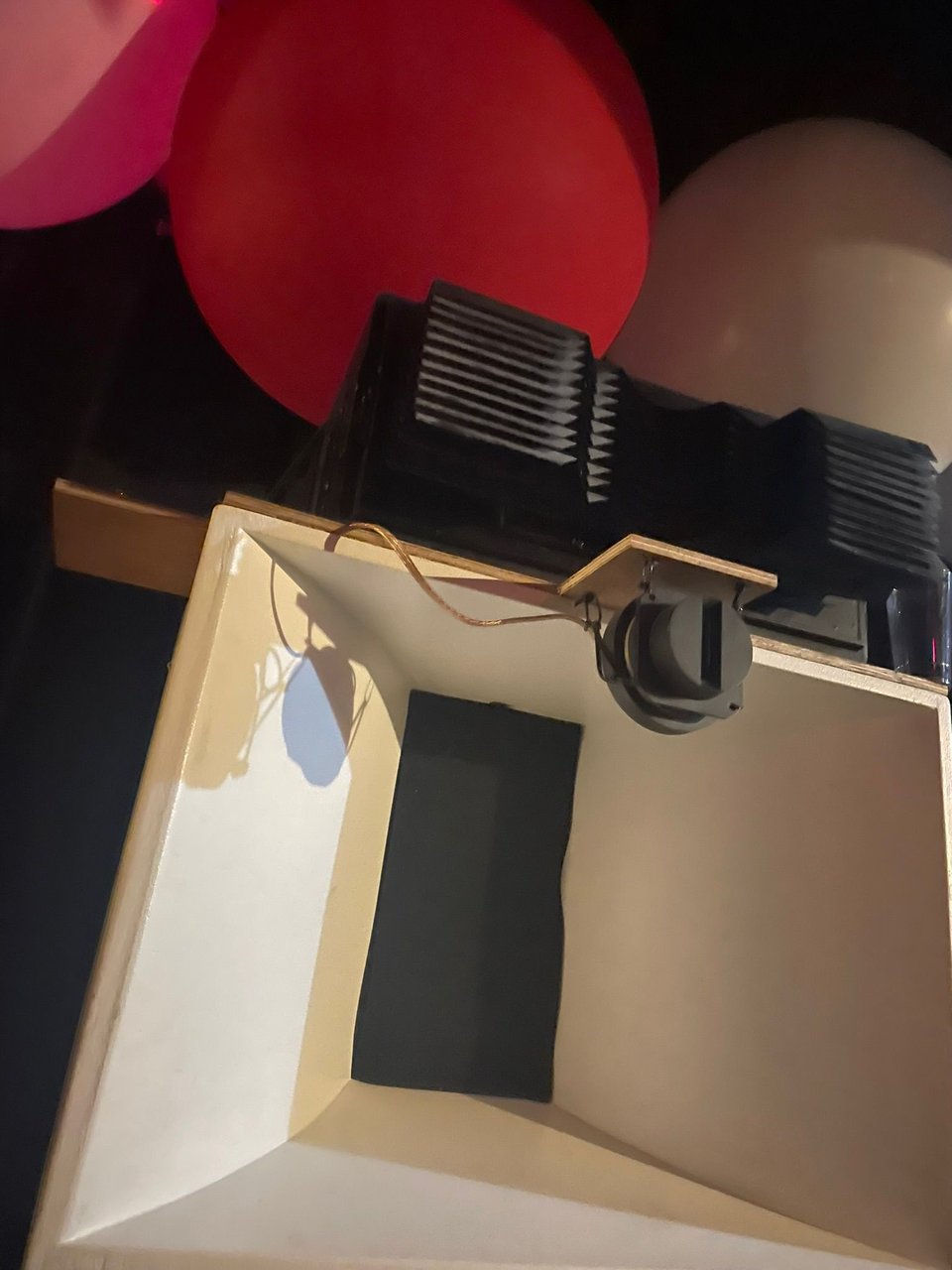
I couldn’t put anything else first. This venue comes with a fabled reputation thanks to the long-running Cosmic Slop parties, which you can read about in this article from 2017. I knew it had an incredible custom soundsystem, I knew the main drift of the entire project was to provide alternative education to kids who can’t access mainstream schooling (through MAP Charity), and I knew that the music policy was anything-goes. I also knew that, given the pedigree of the soundsystem, I should bring records. What I didn’t know was how cosy the place was, how spot on the lighting would be, how there’d be ample spaces to rest, a proliferation of toilets, uniformly friendly staff, space to dance even though the party was sold out. This latter feature was connected to the fact that the sound was very evenly distributed around the room: you could dance pretty much anywhere within the limits demarcated by the speakers and get the same enveloping experience.
HIT: Listening
Indeed, I spent the first section of the night putting on a tune and going out to the floor to listen to it. It’s not that the sound wasn’t good where I was in the booth at the front. It was. But the sound out on the floor was miraculous and I wanted to hear it. Records like Biz Markie’s ‘Nobody Beats The Biz’ and Ms Thing’s ‘Hot’ slapped, hard; the synths of Bryan Ferry’s ‘Nocturne’ and Ban’s ‘Irreal Surreal’ washed over me; the tricksy drum fills of Madame X’s ‘Just That Type Of Girl’ poked us in all the right places. One early dancer joined me in amusement at Madame X’s opening monologue, an ode to her favourite pursuit: shopping. This was a part of the night where the noise of people arriving and catching up was still quiet enough to allow the music to come through and I luxuriated in it. I had a queer punky moment with Marianne Faithfull’s ‘Why D’Ya Do It?’ (scandalous lyrics by Heathcote Williams here) and, one of Benny’s all-time favourites that I’d heard them play at Love Muscle three years before, Gina X’s ‘No. G.D.M. (Dedicated To Quentin Crisp)’. Attitude’s ‘Love Me Tonight’, a go-to since I heard it in Prosumer’s life-changing Electric Elephant recording, sounded astonishing.
MISS: Overplanning.
The tunes I mention above, and the other ones I played in the first couple of hours, were basically all-nighter staples of mine. Boogie, new wave, synth pop — I’d brought what I figured were the best-sounding exemplars from my collection so that I could listen to them on that soundsystem. And records by legendary producers like Steve Harvey (‘Something Special’), Rob Gordon (Galaxy’s ‘Love Street’) and Larry Levan himself (NYC Peech Boys’ ‘Dance Sister (Biofeedback)’) all delivered the sound system experience I was hoping for. But I didn’t lug a whole record bag to Leeds just to play good sounding records, I also wanted to do some DJing. And in this opening section I had the sense, which may not have been apparent to anyone listening, that I wasn’t doing much DJing: I was going through the motions, no matter how pristine those motions happened to sound through those speakers.
I had also practiced this opening section quite a lot at home, by which I mean picking out these slower records and marshalling them into some kind of rational order based on bpm. This was of course unnecessary, as I wasn’t even mixing a lot of them, but I wanted to give myself a sense of reassurance that the first hour or so of music would go smoothly. So what I played was pretty much what I’d been trying out at home and, while it worked as far as reassurance goes, it took out some of the simple joy of letting things unfurl on the night.
HIT: Branching out.
Finally I decided to get stuck in and try stuff out, and the tool I used to achieve that was Duckett’s ever-faithful ‘Flex’. Now Duckett has produced many of my favourite tunes of the past ten years, but this has to be the one I’ve played the most, simply for how it can take you in literally any direction. Show me a more hybrid tune! It’s a rhythm track so you can speed it up or down as much as you want without it sounding off. The drums are as loose as you like, kind of rocky, jazzy, disco-y and techno-y all at once. The vocal cut-ups are legible enough to sound like lyrics without actually meaning anything, the churning bass noise is like funky Autechre. The only other DJ I’ve seen drop this tune is Saoirse in her fabric mix, and she sticks it on first as a kind of palate cleanser. Fair dos, but I think it works best as a pivot point. And that’s how I used it at Pleasuremaxx: to tell the crowd that it wasn’t all going to be boogie bops and singalongs, that something more interesting was coming down the pipeline.
Of course I then mixed it into one of the biggest boogie bop singalongs I own — the Dance mix of Broken Glass’s ‘Style Of The Street’ — but that’s completely beside the point. Soon after I had fun blending I.M.S.’s ‘Bonus Single’ into Floating Points’s ‘Vacuum Boogie’, which was not only a tribute to the man who’s had such a strong connection to Hope House over the years (read more about that in this article), but also my personal test of the sound system. I’ve only once heard the bassline on that tune reproduced properly, and that was when Pépé Bradock played it in fabric room one back in 2010. The HH system did pretty well all things considered, though I still felt like the final, lowest notes of the bassline got lost a bit. In fabric room one they resounded like thunder.
As ‘Vacuum Boogie’ reached its mid-track peak, I decided to take a risk and see how Bruce Forest’s spectacular dub/acappella of Whitney’s ‘Thinking About You’, produced by Kashif, would hold up over the outro. (I’ve previously written about Bruce here and Kashif here.) Well, I can now inform you that Whitney wasn’t quite in the right key, but she was close enough not to be too offputting. And as FP’s tune subsided into a simple kick, finally giving way to Whitney’s raw vocal, marimba and finger clicks, I felt a shiver down my spine at her voice and the sparse yet epic arrangement coming through the system. When the beat of the dub finally kicked in it hit like a truck.
Unfortunately, it was around this time that one thing became patently clear…
MISS: Chatting.
It’s a story as old as time. A beautiful room with a beautiful sound system, and everyone just stands there chatting. Now, at Hope House it wasn’t quite as pronounced as at Public Records in Brooklyn, where an eye-wateringly expensive (and gorgeous sounding) system is routinely ignored by the fancy Manhattanites who flock there every weekend. But it did start to grate a bit. Benny had warned me that during the early part of the night most people would be catching up and having a chinwag, and I wasn’t bothered by it until the two hour mark. But by that juncture I’d expected the chinwags to be dealt with, or at least be moving to the bar room outside. Yet there I was, cleverly if not very expertly blending Theo Parrish’s ‘Dusty Cabinets’ into the track it samples, Nancy Martin’s ‘Can’t Believe’, the mutant bassline from the former subverting the original bassline from the latter, and less than one metre in front of me were two people putting the world to rights. At least many of the other loud people were dancing at the same time; this pair were literally leaning on the barrier in front of the booth to have a chat.
It has to be said this was more bothersome to me than to the dancefloor. In any other club it would be a focus of attention for everyone, but in this room, thanks to the even distribution of the sound, people were spread out and even a bit more likely to go to the back than to the front to dance. Even so, I just think it’s a crying shame that with such a focus on sound quality and comfort, people would waste it on conversation and interrupt other people’s enjoyment in the process. It also started to disrupt my own sense of flow and relaxation, which you can hear in the recording: my mixing becomes more tentative, the tunes more brash. Basically, I got a bit flustered.
MISS: Caring about the crowd.
This started out manifesting itself as a need for the crowd to shut the fuck up. I didn’t know how to go about it, but at a certain point I cracked and decided to basically kill the music and see what happened. I had moved into a housey section, dropping one of the best sounding records I own, Homero G.’s ‘Satisfaction’, to hear how its insane bassline would come through on the speakers. It’s a spacious tune, more about the vibrations between the sounds than the sounds themselves, and if I’d thought about it I’d realise it would be swamped by people’s voices. And so it was. In a fit of pique, I got on the isolator and cut pretty much everything out of the track. A couple of people seemed to notice and there were a few desultory “woos” in anticipation of some kind of drop, but the general litany continued unabated. Out of ideas, I brought the track back in and battled on.
This frustration actually prompted another insecurity, that of where my friends were on the dancefloor. One moment your friends are there apparently having a whale of a time, the next they’re nowhere to be seen. Didn’t they like the tune? Of course they might just be somewhere elsewhere on the dancefloor or taking a well-earned break, but that kind of rational explanation doesn’t hold any weight when you’re pranging out. I thought I’d left those days long behind me, but with all the distraction of the crowd talking and losing my way a bit with the rotary, I genuinely started getting anxious when I couldn’t see my mates anymore during tunes I thought they’d be into. I spent a good proportion of the middle of the set thinking I’d put them off, and it was only afterwards, when they gave me good feedback (and not the meaningless “great set” you usually get), that I understood they’d really enjoyed themselves.
HIT: Fighting through.
Well, I’m old enough now to know how to ride these things out. It’s best to just forget the crowd and do something for yourself to cheer yourself up, so that’s what I did. When I’d been pulling records beforehand I’d reached for this One Tribe instrumental called ‘Is This All’, mainly, again, for its enormous bassline. I thought it might be a bit too downbeat for peaktime, so on a whim I checked the other side, which I think I’d previously dismissed, only to discover this fabulous bleepy beatdown track called ‘Inimitable Attitude’. The sound design is super in-your-face, especially the reversed Detroit bassline stab section. The crowd noise is a little too much at home, but I knew it wouldn’t be so overpowering in the club, and then there’s that striking break with the “together we’ve got power!” vocal sample and naive piano. As a bit of a message to the chatters I decided to stick it on: perhaps with the dramatic drop-out of the music and the entreaty of the voice people would stop their individual chats and come together to dance? Well, I’m not sure they did, but I felt a lot better for it. Of course I then proceeded to utterly trainwreck it into the next tune, an early Armand Van Helden production called ‘Watch It Now Star’ that I’m not even sure I like. But I’d given myself a bit of a boost and proceeded to have an immense amount of fun for the remainder of the night.
HIT: Playing these records
‘Drum Track’ into ‘Analogue Bubblebath’
‘The Journey’ into ‘Mood’
‘Get Up’ into ‘Don’t Let Me Be Misunderstood’
‘E=MC2’ into ‘Through The Clouds’
MISS: Playing these records
‘Rewind’
HIT: The pump knob
OK I probably shouldn’t call it that. But of the many bells and whistles attached to the Bozak rotary mixer in Hope House, the one I used the most was this special standalone unit to the right hand side, which was described to me as a “subharmonic synthesizer”. Apparently it was a disco-era innovation for adding extra pump to disco records that, due to the vagaries of mastering for vinyl, were often missing key sub-bass frequencies. To summarise:
To overcome the lack of sub-bass frequencies on 1970s disco records (sub-bass frequencies below 60 Hz were removed during mastering), [Richard] Long added a DBX 100 "Boom Box" subharmonic synthesizer into his system [at the Paradise Garage]… This "recreates this lost portion of the audio spectrum by seizing information in the 50-100 Hz range, creating a signal one octave lower (25-50 Hz) and mixing this new signal back into the program.
Now as I say over and over again, and as I said to Benny and Billy after they’d explained all this to me, I’m a very hands-off DJ. I wait for the right moment and mix one record into another, with very little intervention. Give me a high-end rotary mixer modded with a three-band EQ and isolator, and it’s very likely I will just use the two gain knobs and leave it at that. Part of that comes from a wish for simplicity, but part of it also comes from a general purism about music, about leaving things as they were made, which I apply not just to my DJing but my attitude to edits, rips and so on. I have a deep fear of ‘overdoing’ it when it comes to any kind of effects, manipulations, or supposed ‘improvements’ in music that, in my opinion, sounds how it sounds for historical, cultural or just random reasons. It was born that way.
Yet I could see how much pride the team took in explaining these add-ons to the mixer, and they also told me that Michael Upson of Love Muscle was a huge fan of the subharmonic synthesizer. In fact what they told me was that, after a few drinks, Michael was known to jump on said synthesizer regardless of who happened to be playing that night, to add that extra pump. Given Michael’s superlative taste and exacting standards when it comes to sound, and the reputation of the soundsystem in general, I figured I should at least try it.
Well, it’s amazing. With any record, if you start searching with the dial up through the range, you will reach a certain frequency where suddenly the music gains an extra dimension in the bass that you not only hear but also feel pumping through the room. Obviously with contemporary, digitally produced and mastered music, this isn’t necessary. Evil C & The Hustler sounded absolutely incredible without any assistance. But with certain older records, like the Santa Esmeralda epic I mixed EC&TH into, the difference was palpable. Given this was my first time, I was probably still over-conservative with the pump knob, but by the second half of my set I was trying it out on almost every tune. During one particular stretch of classic disco — Rainbow Brown aka Patrick Adams’ ‘Till You Surrender’ into Black Ivory’s ‘Mainline’ — I felt the room actually pulsating with the vibrations of the bass and the joyous orchestration of the music. That was a peak moment.
HIT: Billy on the disco lights
Billy was in and out of the booth during the night, helping me out with the sound and offering me shots of tequila. But most importantly, every time I would put on a disco tune, within ten seconds he would pop up out of nowhere and turn on the disco lights.
HIT: Bringing a whole bag of records
The last time I took a full bag of records to a gig outside Lisbon was Waking Life in 2024, and that was still in Portugal. For overseas you’d have to go back another couple of years, to a multi-city trip I did the UK in February 2022, when, on a train connection in York with snow and rain falling, trying to drag my record bag through the slush, I swore never again. Well, I made the effort for this gig and it was worth it. If I hadn’t taken records I wouldn’t have played any of that disco (I don’t really play disco on CDJs). I wouldn’t have tried out some of those more daring transitions. And I wouldn’t have had so much fun. I brought 63 records and played 52 of them, and I wish I’d played the 11 that I didn’t too (biggest regrets: ‘Blind’, ‘Otaku’, ‘Inspiration’, ‘Rage Hard (+)’ — guess I’ll just have to bring them next time).
MISS: Bringing a full bag of records
The one thing I told myself about taking the full record bag this time was that I would be careful about carrying it. I’d take the lift instead of the stairs wherever possible. I’d take my rucksack off before putting the record bag into the overhead locker. Anything and everything to spare my back. Just before leaving the house in Lisbon I had a bit of a meltdown because I suddenly decided to try and split the records between the bag and my rucksack, only to realise it was impossible and I’d have to just go with the full 15kg weight on the trolley.
I was really careful, all the way to Manchester, then on the train to Leeds, no mistakes. And then, just as I left the house to go to dinner with Benny on Saturday evening, I had a moment of madness and decided to run for a bus with the record bag in tow. Of COURSE it tipped over on the pavement, but so fixated was I on catching the damn bus that instead of stopping and righting it sensibly, I just yanked it with all my might. That is exactly what you should never do with a record bag, but I did it. And about halfway through my set — after 2.5 hours of standing up, dancing, leaning — the receipts game through, just inside my left shoulder blade. By the end of my set I could barely tilt my head to the left without shooting pain.
I know most vinyl DJs will probably be asking why the hell I was running for a bus rather than calling a cab. And you’re right. But even putting that to one side, I feel like I need to go to the gym for another year or two before travelling with a full record bag again. It’s just too punishing.
HIT: The singalong finale
The final hour of the night was pure bliss for me because I got to hear my absolute favourite records on that sound system and sing along at the same time. The aforementioned disco section, Gino Soccio’s ‘Dream On’, the acappella of Midway’s ‘Set It Out’, Ann-Margret’s ‘Everybody Needs Somebody Sometimes’, Chez’s classic mix of Naomi Daniel ‘Feel The Fire’, the extended dub of Patrick Cowley’s ‘Goin’ Home’ and, an unexpected encore (cos obviously ‘Goin’ Home’ was meant to be the last tune), Chris & Cosey’s remix of Erasure’s ‘S.O.S.’. I was singing my heart out to every single one and it felt amazing.
Really, that was me DJing 8 shots deep in a Lisbon bar at 3.30am on a Thursday night circa 2016, and it was so good to do it again in such a special place as Hope House. Next time I want to come back just to dance. I heard Red Greg lives in town now, so an all-nighter from him would be more than worth the pilgrimage…
Thank you again to Benny, Billy, Michael and everyone who came along!

Add a comment: