
I wish it was time for Cheers
Hey Last Piners,
Art is about understanding. About communicating ideas, experiences, perspectives, across time and space, over borders, collapsing impossible distances to the span between synapses.
The best art, by my estimation, communicates something that is otherwise inarticulatable, conveying bone-deep understanding of concepts that cannot otherwise be described, that defy didactic explanation, like the transfer of muscle memory from one organism to another. Experiential knowledge.
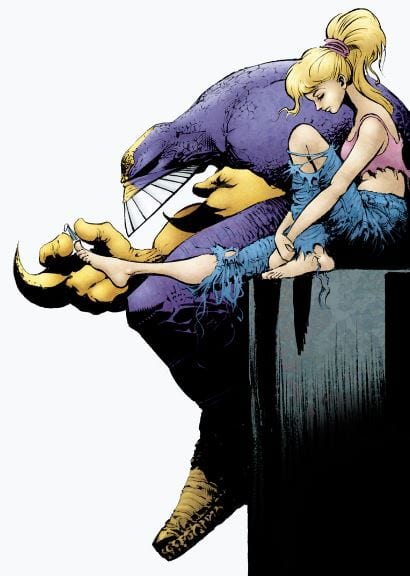
It is not hyperbole to say that there may be no single artist more responsible for the type of weird I’ve turned out to be than Sam Kieth. Certainly there have been many other important illustrators, writers, musicians, poets, artists of all varieties—many!—that have left their indelible marks on me, and to attempt to categorize them or rank them in hierarchies from most to least formative would be worse than an exercise in futility. But the work of Sam Kieth hit me at such an important moment, and has stayed with me for so long.
When I was ten, a comic book store opened in my hometown. My mom was a florist and owned a flower shop right on the main drag, and the comic book store was only a few blocks away. (Later, it even moved into the same building.) The owner was this guy Pat who in my memory was probably anywhere between 25 and 60, and he was kind and patient, suffering my younger brother and I as we hung out in his shop often for hours and hours at a time. Once I watched the entirety of Robo-Cop there, which was so incredibly violent that it gave me nightmares. Now it’s one of my favorites, but at ten? It was a lot.
Prior to Pat’s place opening up (and I wish I could remember the name!), the nearest comic shop was a couple towns over. I’d been reading comics for a while, growing out of my love for the reruns of the 1966 Batman series I watched obsessively. Wal-Mart (or maybe K-Mart) used to sell these big variety packs of comics and I would read anything I could get my hands on. This is how I found out about the X-Men, the first comic that challenged DC Comics’ dominance in my mind, and from there it was X-Force and Spider-Man and the Avengers. But it was Pat that turned me on to Image Comics.
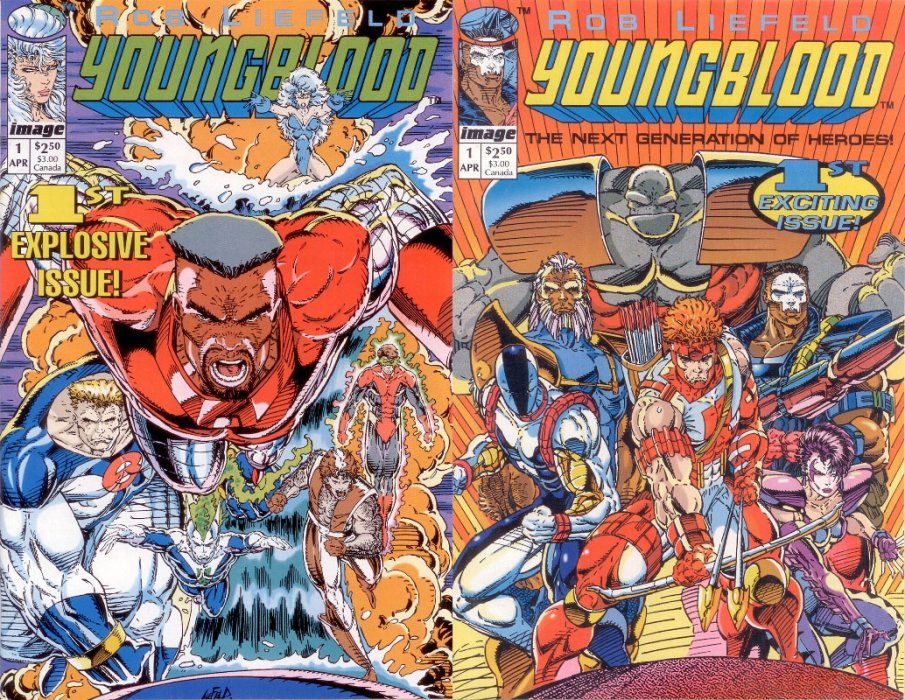
I was ten years old, and artists that I’d started following at Marvel had all left to do their own thing. “Damn the man!” I imagined them saying, and could relate to the urge to stick it to the system and refuse to listen to the authorities telling you what to do. I was anything but a rebellious kid at that point — that would come a few years later — but I’d always felt different. Lost in my own head, making up stories constantly, desperate to be in some world other than the one I resided in.
I won’t lie; I fucking LOVED Youngblood when Pat let me read the first few issues. I mean, of course I did. I was ten, and I really think Rob Liefeld’s specific brand of edginess appealed specifically to the 10-13 raised-as-boys crowd. I loved Spawn as well, maybe even more, and dabbled in WildC.A.T.S, Shadowhawk, and even The Savage Dragon which I never had more than a random issue or two of.
But by the next year, I was consistently reading a very good percentage of what Image had on offer, and the entirety of my allowance was going toward my pull list. Even if I didn’t like everything Image put out, I was willing to give anything with their logo on the cover a chance. And in March of 1993, with Darker Image #1, I was introduced to The Maxx.
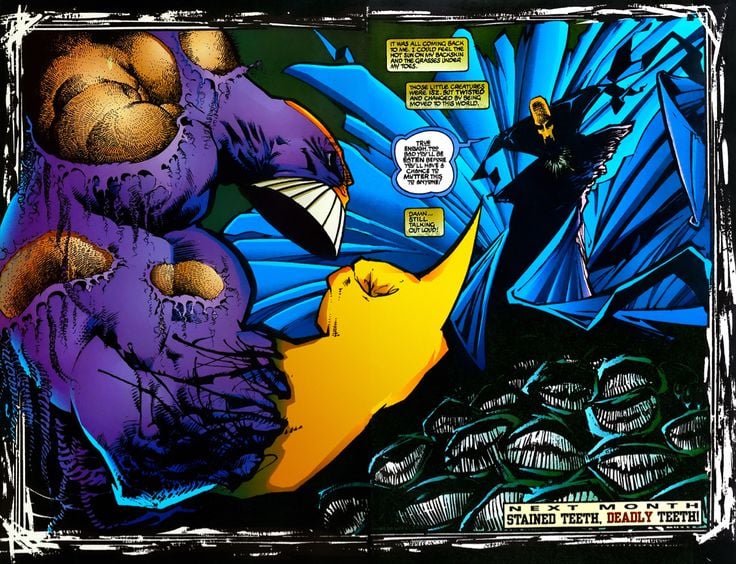
It’s hard to say now what I liked so much about The Maxx then. The art was strange, at times incredibly cartoony, and at other times a grotesque caricature of the Liefeldian musculature that was all the rage in the early 90s (and sometimes both and everything in between all at once). It was dark but funny and weird and had a hero who would regularly dissociate into a fantasy world where his life had meaning and purpose. The characters all felt real to me. Julie had the heart of an idealist buried deep behind iron walls of cynicism, and it was her Outback where Maxx was a fierce protector. The villain of the story, Mr. Gone was truly terrifying, a man capable of the absolute worst kind of violence while justifying it coldly and philosophically. Then there was Mr. Gone’s daughter, Sarah: a depressed teenager of the kind I would come to relate to very much over time — not so far off from Angela Chase, Daria, or, later, Lindsey Weir1 — but darker and thus, to my pre-teen mind, more real2. As Sarah struggles to make sense of her situation, she’s sent to Julie for therapy, and becomes an increasingly part of the story.
The Maxx was ultimately a story (or a set of interrelated stories) about fucked up people trying to make sense of their lives after their understanding of the world and the other people who inhabit it was turned upside down and inside out by trauma. I didn’t really get that at eleven years old, but I would definitely get it later. In reality, I was surrounded by those people. My dad wasn’t, thank the gods, a serial rapist and murderer, but he was an alcoholic Vietnam vet who yelled so much that my nervous system has been permanently rewired, and my mom was clearly trying to find her own way in the world and make meaning. During my shifts helping out at the flower shop (or, let’s be honest, more often just hanging out and reading comics) I’d come to learn a lot about her own story, including things I probably shouldn’t have been told at the time. And as for myself, I could never explain exactly why I felt something was broken inside me, but it was a feeling that would grow and grow and ultimately swallow me whole.
In 1996, the story changes. It’s ten years later, and Sara (no longer using the “H” at the end of her name) has become the protagonist. She has her own Outback and her own Maxx, and the story gets even weirder, as Sara makes peace with her father and reality starts warping around them.
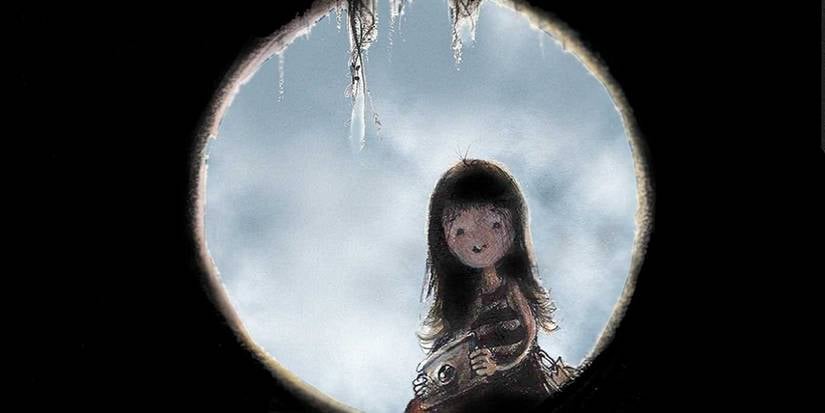
I don’t need to get into all the details, but it’s not a stretch to say that it’s a story that isn’t afraid of showing how messy the work of healing from interpersonal trauma can be. It’s a deeply humanistic, compassionate, and nuanced portrayal of healing that I’ve returned to again and again over the years. And into my adulthood, as I explored Kieth’s other non-work-for-hire material — Zero Girl, Four Women, My Inner Bimbo, Ojo — all of it challenging at times but rewarding, uneven, surreal, messy, beautiful.
I don’t talk about this a ton these days, but when I was young I wanted to be a comic book artist. It was my dream, until a high school art teacher made it his personal mission to destroy my confidence and, with it, my love of drawing. Maybe it’s just convenient to blame him, when really I never had the discipline or resolve to pursue it. Maybe I actually should thank him, because I’ve never had the kind of hustle it takes to make it in that world and I probably would have been miserable. And eventually I sorta made my dream come true, anyway. But I think that part of why I feel so fucked up about Sam Kieth passing is — well, it’s a lot of things, but part of it is that it’s bringing to the surface my grief about a dream I never pursued — a dream very much informed by and indebted to his work.
But even if I gave up on that dream, there’s still so much I learned from the way Kieth told stories that informs the work I make: the importance of making people feel human, letting life and all the resulting emotions be messy and hard, showing that healing is not a linear process and that different wounds all mend in their own way. The importance of embracing, rather than rejecting, complexity. I know that doesn’t come only from the work of Sam Kieth, or only from the poets and authors and musicians and artists I’ve loved. It was also the adults in my life who did give a shit about me, who didn’t try to grind me down because my version of what art is meant to do conflicted with theirs3. And the friends and collaborators and weirdos and, well, years of therapy.
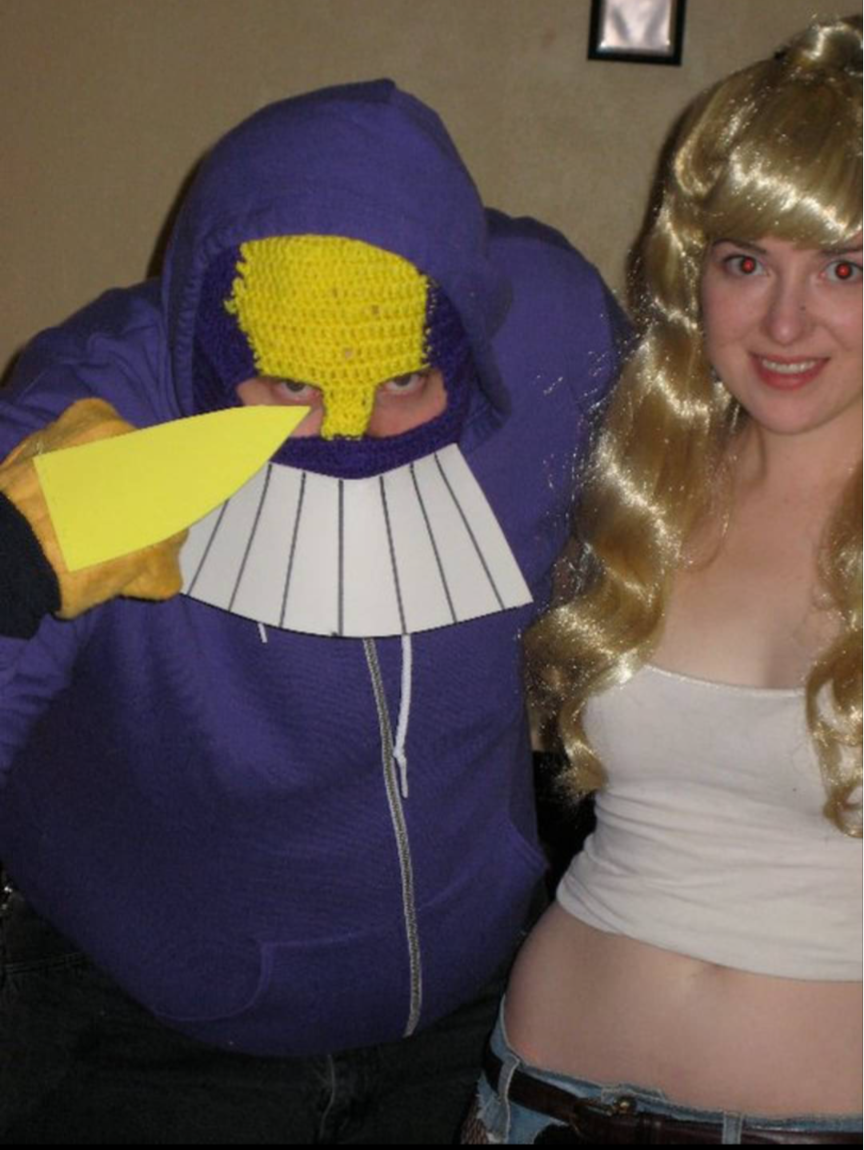
But I would be a liar if I didn’t take time to highlight how important Kieth’s work was to me. It pushed the limits of what comics can be: what they are allowed to look like, the kinds of stories they can tell, the way they can tackle difficult but important topics. The mark Sam Kieth’s work left on me is undeniable. It not only shaped how I understand what art can be, but also informed how I think about feminism and gender and violence and trauma.
I didn’t know that he’d been suffering from Lewy Body Dementia, and I can only imagine the impacts that had on his life and his loved ones. I naively held out hope that we might see another comic from him some day. Now, I just hope that his suffering has come to an end and that his loved ones — and all those out there who, like me, were shaped by his work — find comfort and peace.
Subscribe to the Last Pine HarbingerThis was a long one, so thank you if you made it all the way to the end. I have some ideas for future newsletters, so hopefully it’s not long before you hear from me again, though I’ve learned better than to make promises. I still haven’t drawn Chapter 4 of that comic, after all …
If it’s within your means, please join me in donating to the Lewy Body Dementia Association in honor of Sam Kieth. The LBDA provides education and support, funds research, and advocates for those living with Lewy Body Dementia.
Until next time,
jex
Huh so strange how the characters I related to the most throughout my adolescent were misunderstood girls how weird I wonder what that’s about idk who can say ↩
In issue four, Sarah reveals that her father went insane and became a serial killer before killing himself. Later in that issue, she holds her father’s gun to her temple and threatens to kill herself because nothing makes any sense. I don’t know that I understood why I related to that when I first read it, and it probably wouldn’t have been useful for me to interrogate it then, but looking back … damn. ↩
Or because they had a grudge against my mom, who they taught in their first year of teaching high school, decades previous, and with whom they did not get along. God what a miserable little prick that guy was. ↩

