Eat This Newsletter 311: Scrambled
Hello
It remains too hot to think, and quite by coincidence, for sure, as far as food news goes, I have had very little to think about this past week.
Cyclospora Drips On
Handing over to Marion Nestle this week, who says “I am outraged by the Cyclospora outbreak”. And, as she demonstrates in her round-up she has every right to be. Truly, an appalling state of affairs at all levels of (in)competence.
No wonder 30% of people polled in the USA have no confidence in their government’s oversight of food safety. The current outbreak may have tipped some of them into that category, but as Helen Bottemiller Evich explains, trust has been flowing out of the body politic for a long time.
Medieval Food Influences
You’ve probably come across bits and pieces about the medieval diet and how some of those beliefs continue to hold sway today. Prosciutto and melon or figs, for example, balances hot and dry ham with cold, moist fruit. Or it may always have been simply delicious.
That’s why I’m ambivalent about articles like Fish Bad, Sugar Good… And Other Medieval Ideas About Food, an extract from historian Katherine Harvey’s new book The Medieval Guide to Healthy Living. It’s fascinating and interesting to have so many examples of what and why people ate what they did, but wouldn’t it be good to know whether there was any truth to even a few of those beliefs? Of course I’m asking for the moon. Modern nutrition can barely agree on anything, but there are some intriguing ideas to be explored. Are the foods of one’s youth generally easier to digest? The aperitivo and the digestivo live on, but might they improve appetite and digestion?
Iran’s Rainmaker
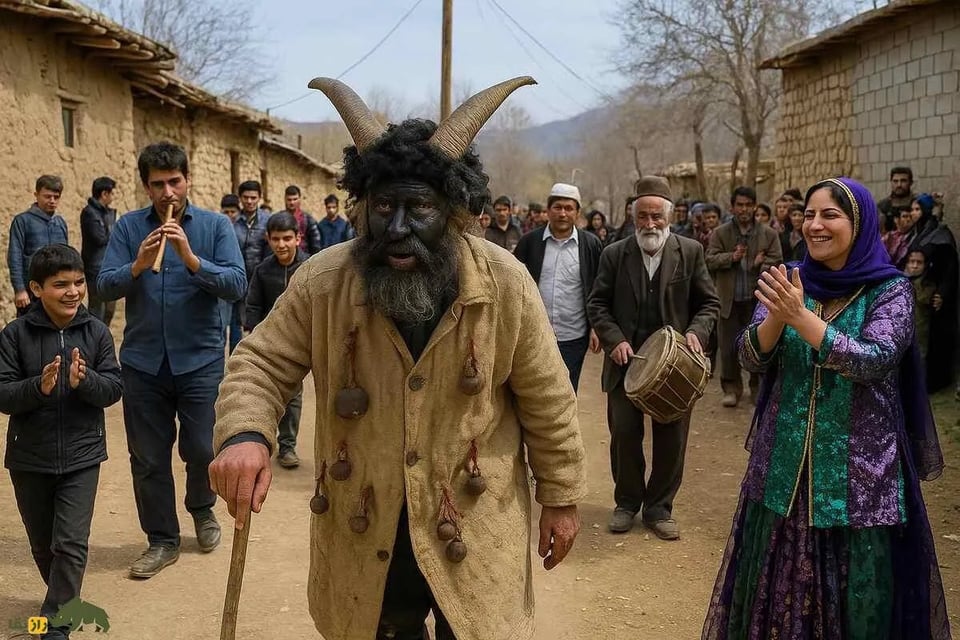
It has been a while since I linked to one of Old European Culture’s always fascinating expositions. This one is a beaut, and topical, a ritual that deals with Iran, drought and goats.
The ritual is common to the Bakhtiari people of southwestern Iran. A man, wearing goat horns, his face blackened, his coat adorned with bells, embodies the Kuseh, the drought devil. In the Kuseh Gardani, the Kuseh Ritual, he moves from house to house in the settlement, collecting a bit of flour from each, and at the end of the ceremony the flour gathered by the Kuseh is baked into a large loaf that is shared among the community.
As usual, The Old European links today's ritual back to the distant past to show both how mythologies get established and how modern rituals reflect that history. In this case, mating ibex goats signal the start of the rainy season, become a rain-bringing god and eventually, with Islam, the god of rain becomes its opposite, the devil of drought, “The one who (still) brings rain (and bread) if he is asked politely...”.
The photograph intrigued me enough to go deeper, and with the help of online translation (so don’t blame me) I discovered a bit more. There’s singing and traditional poetry. Some householders sprinkle the Kuseh with water, symbolising rain, and the Kuseh and his retinue may also get gifts of money and wheat. And when the communal loaf is made, a single red bead is placed in the dough.
The bread that is baked is distributed among the attendees, and whoever finds the red bead in their piece of bread is playfully “punished” by the others. This part creates a joyful atmosphere among the Bakhtiari tribes.
Echoes of Christmas Pud and King Cake and probably lots more rituals as well.
Take care

p.s. I wonder whether The Old European might now be tempted to account for a more recent story, The strange use of a donkey skull in Kerman, Kashmar, Qa’in, and Sabzvar to ward off evil spirits and bring rain.


Add a comment: