Eat This Newsletter 300: Seriously? 300?
Eat This Newsletter 300: Seriously? 300?
Hello
See below.
About This Newsletter
300 issues of Eat This Newsletter is something to celebrate. What started on 19 April 2015 as something to entertain and amuse “while you wait” for the next podcast episode quickly morphed into its own thing, though I still use just the one mailing list because nobody has ever expressed an interest in having the newsletter and episode announcements available separately.
For about the first five years I also shared a bullet-pointed version of each newsletter on the website, which is just as well because the originals vanished in 2019 when I moved from Mailchimp to Buttondown to manage the actual business of sending them out. All episodes since then have been archived. (I do own eatthisnewsletter.com, which points to that archive; maybe I should do more with it.) I also have almost all the links I have shared over the years. Sometimes I’m tempted to go back and see what happened to all 2200 of them, but then I lie down until the urge passes.
Do you have any ideas about what I should do with this newsletter? Or should I just carry on? As always, I am happy to hear from you.
Morel Morsels
Good news from the Himalayan foothills: Scientists in Kashmir successfully cultivate world’s costliest Gucchi mushroom.
I confess, my interest was first piqued by the potential for a quip about fashionable fungi, but when I looked at the article I saw that the mushroom in question was a morel. These are very popular because they are very delicious. Cultivation has so far been elusive, so their growing esteem has fuelled overexploitation, especially in India and Pakistan. The new cultivation methods, if they can be scaled up and are widely adopted, could help to preserve morels in their native habitat.
“Achieving Healthy, Sustainable, and Equitable Diets”
I heartily applaud scientists who take the trouble to create a more accessible version of their research results, and not only because it saves me the effort. I’m very happy, then, to refer you to two versions from two of the authors of Strategies for achieving healthy, sustainable, and equitable dietary transitions, recently published in Science.
The paper “connects the behaviors of consumers, producers, and the midstream actors who influence both supply and demand. It then proposes solutions based on syntheses of evidence across major intervention domains”.
Jess Fanzo and Marc Bellemare — both no stranger to the podcast — have made it easier for the rest of us to understand the complexities and difficulties involved.
Real Men Make Quiche
With spring break approaching, Ian MacAllen found himself “looking to use up things that would spoil in the refrigerator while we were gone, including the milk, eggs, and the opened package of bacon.” Naturally, in my opinion, his thoughts turned to quiche. But instead of just making, baking and sharing his recipe, with a newsletter to feed he also treats us to a history of quiche in America.
Whole Grains, Whole Truth?
The Atlantic magazine offers a deep dive into the idea that whole grains are always a good thing. The root of the problem is that nobody can agree exactly what “whole grain” means. (We’ve been here before.)
The latest food guidelines in the US say that a whole-grain food must contain the three major components of grain — bran, endosperm and germ — but they need not come from the same actual grains. The vast bulk of whole grain flour, for example, is made by recombining the three components after they had been separated to make refined flour, quite possibly sourced from separate mills.
The Atlantic catalogues several of the difficulties that this creates for anyone wishing to study the effects of whole-grain foods on health and, indeed, anyone who wishes to avail themselves of those benefits by choosing whole-grain foods. For example, “foods bearing the Whole Grain Council stamp contain more calories and added sugar on average than products without it”.
There are speculations about the basis of the different reactions to different versions of whole-grain, and some advice on how to choose whole-grain foods that might actually be better for you.
Bottom line:
None of this means that people should abandon whole grains in favor of meat and whole milk. What it suggests, rather, is that the benefits scientists have been measuring may be only a fraction of what minimally processed whole grains can actually do.
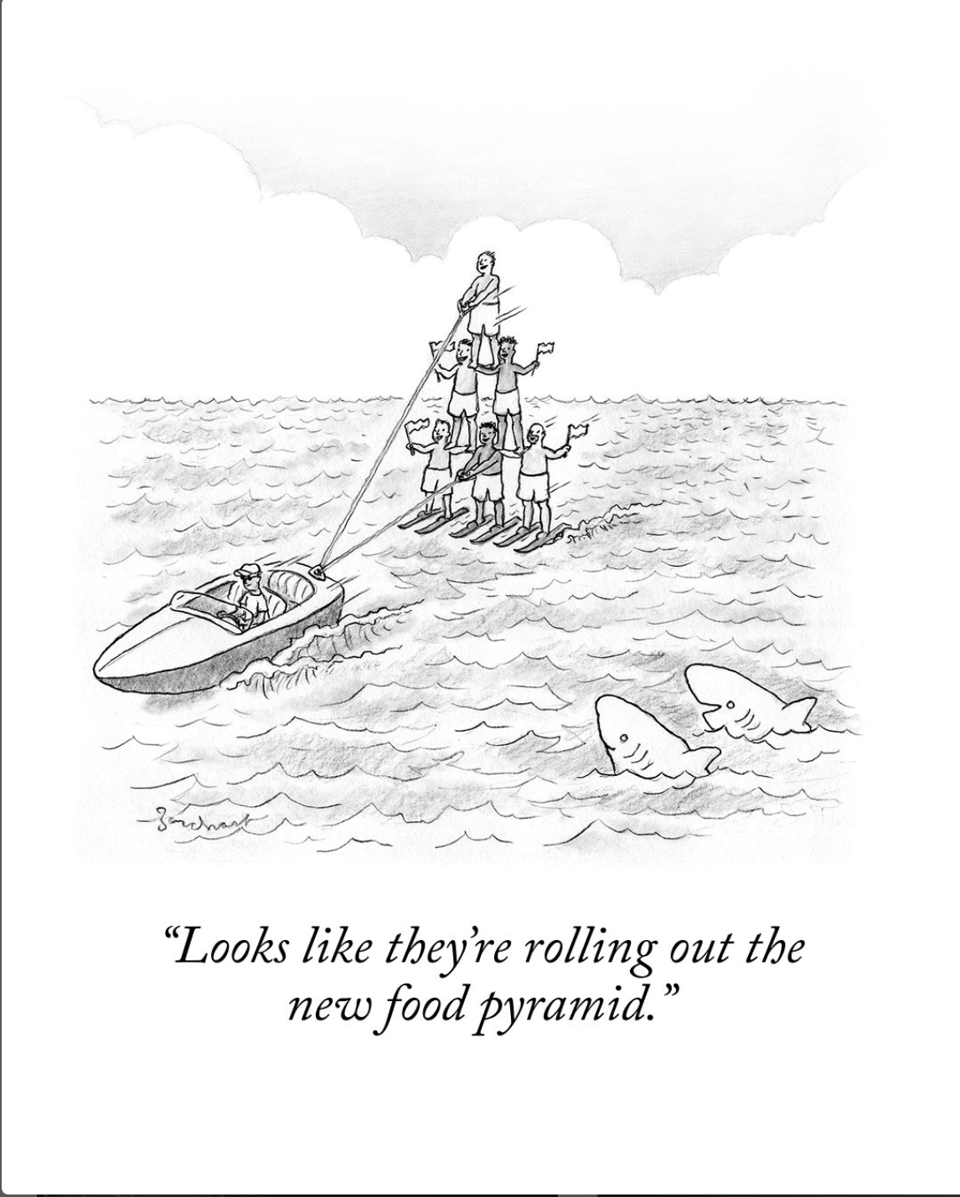
And that, of course, calls for a celebratory cartoon from The New Yorker
Take care, and thanks for being a subscriber. Here's to the next 300!


Add a comment: