Eat This Newsletter 299: No Doom
Eat This Newsletter 299: No Doom
Hello
Funny thing, but I have not been able to find all that many interesting food stories over the past couple of weeks. There is, of course, the big one, the impact of the war on food supplies in the coming months, but I have nothing useful to add to the tens of thousands of words already dedicated to that topic and I have no desire to amplify the doom.
Cool
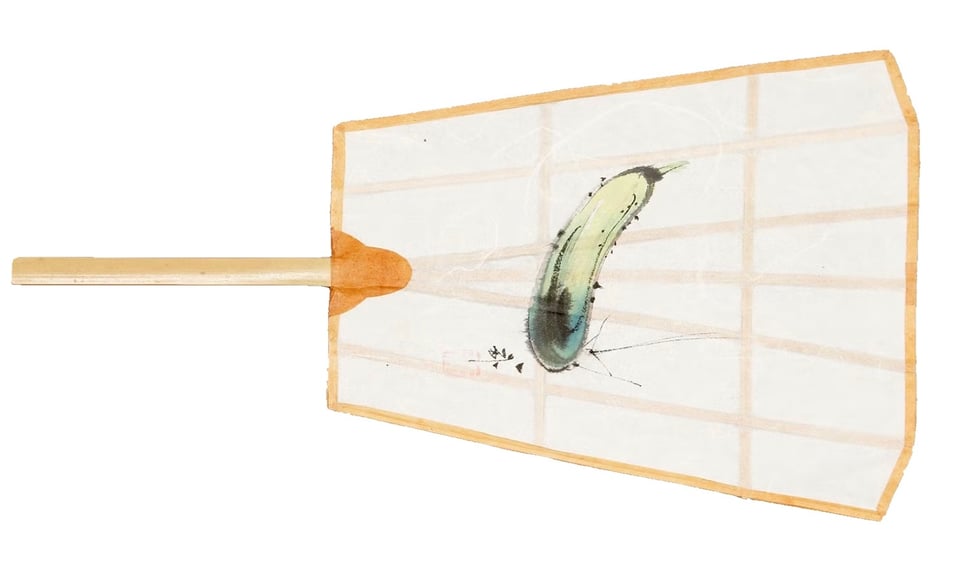
Plant of the Month from JSTOR is the cucumber. As usual for this series, there’s a ton of fascinating information and links, from the compilation of cats confronted by cucumbers to their inspiration of one of Charles Darwin’s lesser-known books.
Why, though, cool as a cucumber? In some sense it seems obvious that the cucumber is simply well-flavoured wateriness most available during summer’s heat. Could it, really, have prevented sweating? And while people swear by the beneficial effects of a good, thick slice on the eyes as a rejuvenator, reducer of puffiness, etc., etc., there doesn’t seem to be any good evidence that a cucumber is better than, say, a used tea bag or wet cotton wool. JSTOR doesn’t even mention the practice.
Allow me, please, a quibble. JSTOR’s caption for its first image (not the one here) is “Two dill cucumbers. Watercolour painting by a Chinese artist”. Fair enough, that is how it is labelled at its source. But surely a cucumber on the vine cannot be a dill cucumber until it has been brined and fermented, with dill.
And if that’s not confusing enough, try a deep dive into cucurbit names, an episode from 2016.
Meaty
James Talarico won the Democratic Party’s nomination to compete for the US Senate in Texas. He was apparently doing pretty well, scaring all the right people, until some of those people dug up an obscure speech “to a small animal rights group called the Texas Humane Legislation Network. In it, Talarico told his audience that reducing meat consumption for animal welfare and climate reasons was ‘the right thing to do’ and explained that his campaign was a ‘non-meat campaign … only buying vegan products from our local vegan businesses’.”
The quote is from an article by Jan Dutkiewicz in The New Republic: What the James Talarico Vegan Story Reveals About U.S. Politics. What it reveals is that to be even slightly against meat is to be anti-American and completely untrustworthy. Dutkiewicz is sad because Talarico disavowed his previous vegan sentiments and said that his campaign “practically runs on barbecue these days”. Dutkiewicz writes:
This isn’t Talarico’s fault. He’s making a rational decision about electoral strategy. But we should be very worried about what that decision represents: right-wing culture warriors’ successful poisoning of the public sphere, to the point that rational discussion about science and ethics is seen as politically disqualifying.
Surely it doesn’t have to be one or the other. A campaign doesn’t have to be entirely vegan. It could “run on barbecue” once a month, say, leading by example and modelling the change it wants to see. The polarisation in politics over there is sometimes very hard to understand over here.
While on the subject of reduced meat, a Guardian story on how an Iowa industrial hog operation turned itself into an industrial fungus operation is an interesting read. Cute too is the name of the group that helped them do it: The Transfarmation Project.
The article doesn’t offer any details about the actual business of commercial mushrooms, like where the substrate and spores come from and how are the products are distributed, but it has to be more sustainable and less damaging that the 8000 pigs it replaced.
Anchovies United
My thanks to friend of the podcast Peter Rukavina for sending along a link to The best anchovies on the internet from a newsletter he likes. There may be a bit of hyperbole in that headline, though who am I to judge? Certainly they pleased the author, who also shared an excellent recipe from Rachel Roddy, another friend of the podcast.
My feeling, though, is that if there is to be a competition, then there ought to be at least two categories. There are anchovies as an essential contribution to some other dish which, even if it as simple as Rachel Roddy’s, requires the other ingredients to be of equal quality. And then there are anchovies as the star, on a piece of buttered crusty bread, or with a burrata, or as a pintxo. I’m available as an untrained but enthusiastic judge.
Yet more olive oil
I know I promised at the end of last week’s episode that there would be no more olive oil for a little while, but obviously that doesn’t apply to this newsletter. The Olive Oil Times has thoughtfully provided an extended summary in English of the findings of the Second Report on Olive Oil Tourism in Italy.
Summary of the summary: olive oil tourism is growing and people from America are willing to pay more for an experience than people from other countries surveyed. Also, there remains plenty of ignorance about olives and oil, even among Italians. I love the decision by Morettini oil in Tuscany to build an interactive exhibit at its mill in San Gimignano. Come for the medieval skyscrapers, stay for the “museum-style installations, interactive tours, and educational experiences”.
Take care


Add a comment: