Eat This Newsletter 294: All wet
Hello
Drink doesn’t feature all that often here, but Christy Spackman’s episode on The Taste of Water was one of the most popular of 2024, which makes me even more sensitive to stories about water. Stay informed. And hydrated.
“Most waters don’t really have a taste but a haptic sensation instead”
I loved Thirteen Waters: Tasting Notes from a Sommelier by Amalia Ulman in The Paris Review. A blend of tasting notes and a travelogue, it manages to offer tastes of the waters of the title, life as a water sommelier, and those arcane, highly-specialized conferences that one sometimes trips over in out-of-the-way hotels.
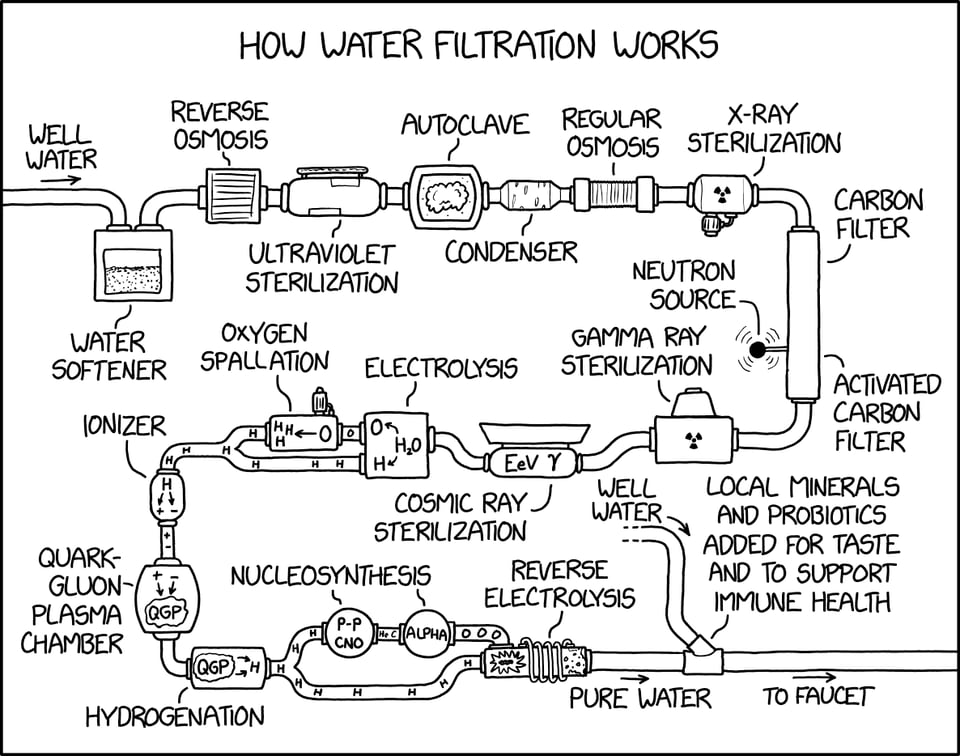
“Localities were forced to do things”
Amalia Ulman mentioned “the United States’ obsession with cleanliness and hygiene” in her story. From Works in Progress, a full accounting of The gold plating of American water by Judge Glock. There’s a good summary of the history of clean water and the benefits it delivered, and then an extended analysis of what looks distinctly like regulatory over-reach; federal mandates mean that the benefits delivered by new technological fixes are seldom worth more than the cost of those fixes. The result is that while food prices have doubled since 1998, the amount the average household pays for water has almost tripled, and increased much faster than food over the past five years. You don’t hear much about that.
The ripples of regulation, as discussed in the article, spread far and wide, affecting everything from house prices to municipal bankruptcies. The most astonishing statistic is that less than 15% of the water used in the United States is reserved for public drinking water. Much more goes to thermo-electric power and irrigation, and the proportion used for irrigation in the arid west is higher still. Which suggests action …
… “To curtail additional water use”
The latest effort to stop Saudi Arabia importing US water — in the form of alfalfa hay — was announced by Arizona governor Katie Hobbs a couple of weeks ago. She designated land around the Saudi-owned hay farm an “active management area”. That doesn’t actually stop the farm continuing to pump groundwater, although it could block any expansion and stop new farms setting up shop.
As Mother Jones reports, this follows moves to withdraw state land leases from other Saudi-backed companies that were “recklessly pumping [Arizona] groundwater to boost their corporate profits”.
There is a much more detailed story in the LA Times, though it doesn’t include the designation of the active management area.
Mother Jones did not report another of the governor’s ideas: “Make data centers pay their fair share for the water they use”. That’s kinda rich, given that she had originally voted for an exemption that offered data centres a $38 million tax handout. Homeowners pay 1 US cent for every US gallon of water they use. I wonder, though, doesn’t the water used by data centres just flow back into the normal cycle, and couldn’t it be used to supply households and other industries? Wouldn’t it make more sense to make all farmers pay their fair share for the water they use? And, if the article from Judge Glock is to be believed, dealing with the diffuse water pollution caused by agriculture would also make it cheaper to clean up what water there is. Win-win?
Take care

Illustration by the inimitable xkcd

Add a comment: