Microfiction #13 (Part 2): But prey creatures have developed
But prey creatures have developed methods of defense. They hide; they mimic; they evade; they escape.
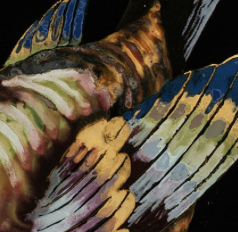
The comet moth, Argema mittrei, absorbs ultrasound waves to dampen the signals, cloaking itself in sonic invisibility. What bats can’t find, bats can’t eat.
Escape, noun; from Colloquial Latin, excappāre, “to free oneself from one’s cape.” Fables often employ this as a plot device: an enemy tries to ensnare the hero but only grasps a sleeve; the hero slips away. Insects, too, shed limbs to protect the more-precious self.
Perhaps the father intuits that the vibrating phone may not be a true friend. He turns off the phone and holds his son tighter. Bats whir.
Which part of the self is most precious, worth protecting? Here is the father, sitting with his son. Tenderly, softly, with quiet patience, he lets the child’s fears settle into awe. No record will be made of this moment, no data point to map upon.
Hear this fable, heed its lesson: the parts worth protecting are those we give away freely in the dark.