a tortoiseshell irruption + new essay
Happy June!
As usual, it’s been a while since I last wrote. Below this little digression, you’ll find some updates, including a new essay on Longreads and an op-ed I wrote on the film No Other Choice.
I’ve just returned from the Santa Cruz mountains, where I was doing a bit of research for the repair book, and thought I would share something unexpected that I saw there. One day, while I was hiking along a trail bordered by ceanothus (a fire-following plant you’ll see everywhere in areas that burned in the 2020 CZU fire), I was convinced I had come upon a new plant, something bare and willowy. But it turned out to be ceanothus that was completely defoliated, as far as the eye could see, by thousands of tiny black caterpillars. Some of them were still inching along the ground (“you’re late!!” I told them), but most had already turned into chrysalises that were hanging from the bare branches:
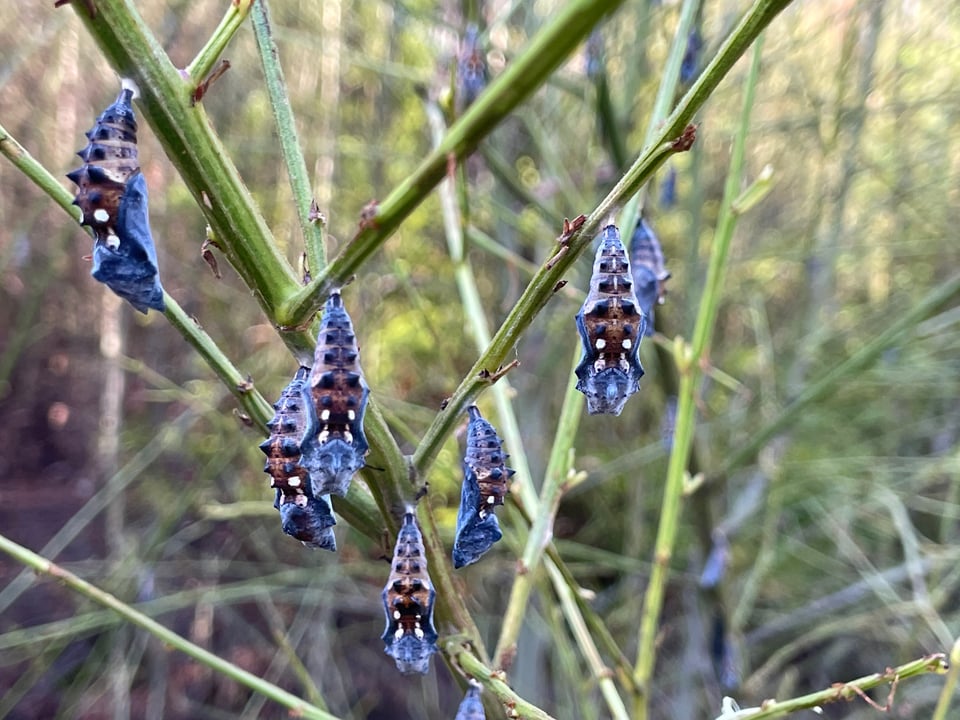
Some of them were wiggling violently, so much so that purely from a materials science point of view, I couldn’t understand how they weren’t flying off into oblivion. I also misinterpreted this wiggling as meaning that whatever was inside was going to emerge soon (in fact, they do this in response to vibration), so I came back early the next morning. The ranger at the kiosk told me that they were tortoiseshell butterflies.
I couldn’t stay away from that spot on the trail, which meant that I had a lot of time to wonder about what was going on in all those chrysalises. In their transition into butterflies, caterpillars sort of dissolve into a goop, which seems like a real discontinuity — although studies have shown that moths remember what they learned as caterpillar. Inside those little packets, which to my eye didn’t seem to be changing that much, a lot was happening: imaginal discs, clusters of cells that remain dormant in the caterpillar, were now giving rise to the creation of recognizable butterfly structures like wings.
Finally, about a week later, the tortoiseshells started to emerge. Here is a still-floppy one hanging onto its old chrysalis:
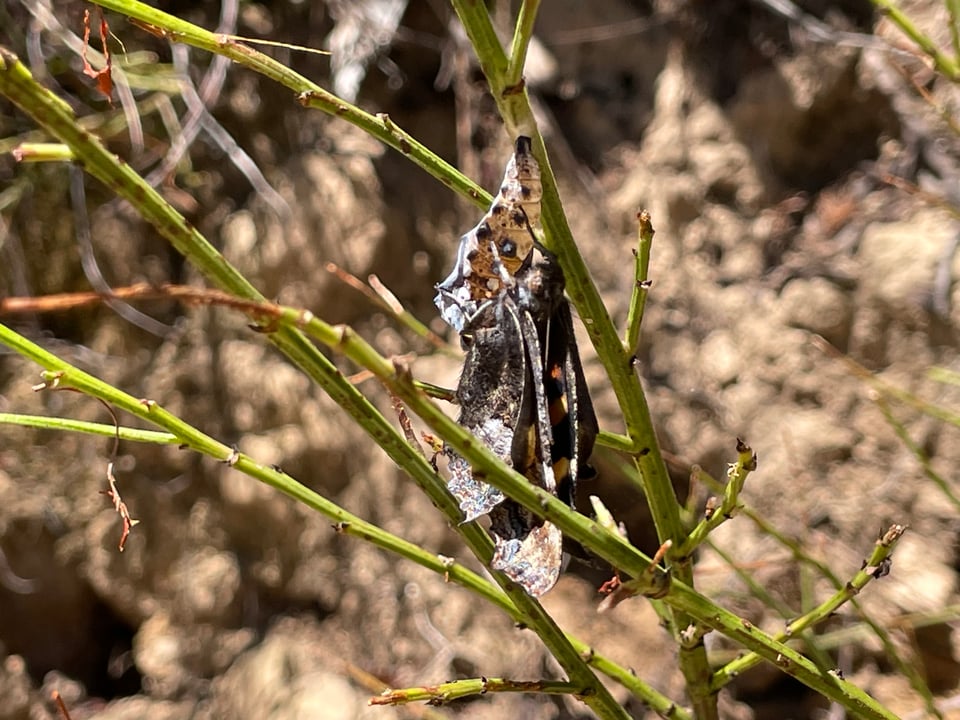
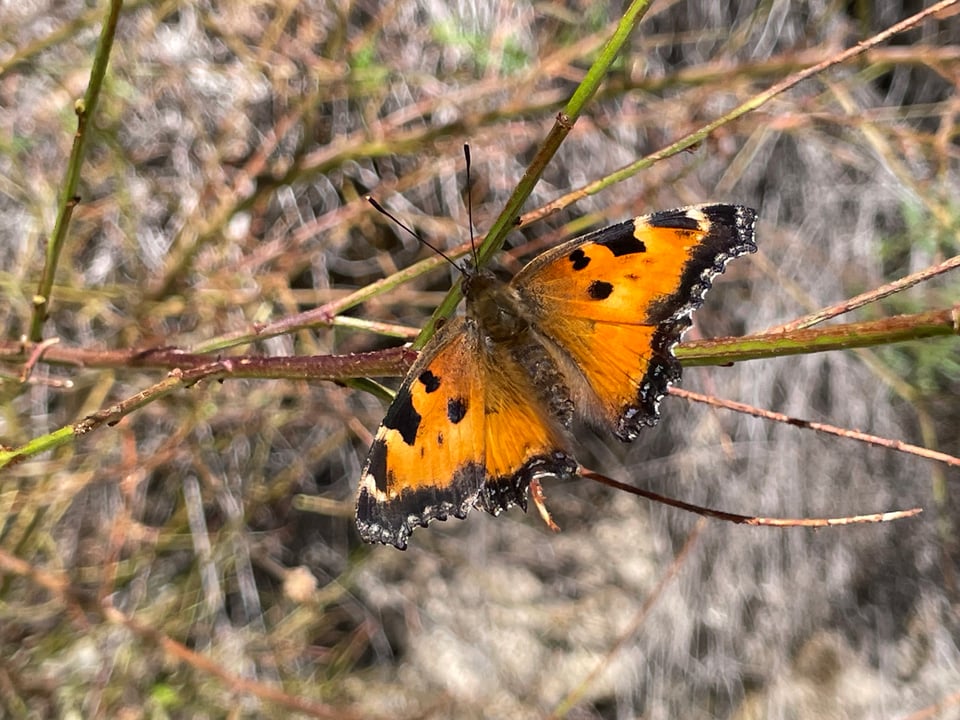
I could almost feel how tired they were, barely able to flap their wings and trying to pump blood into them. Eventually, they’d fly off, resting on the sunny sandstone and lifting up in little clouds whenever I approached.
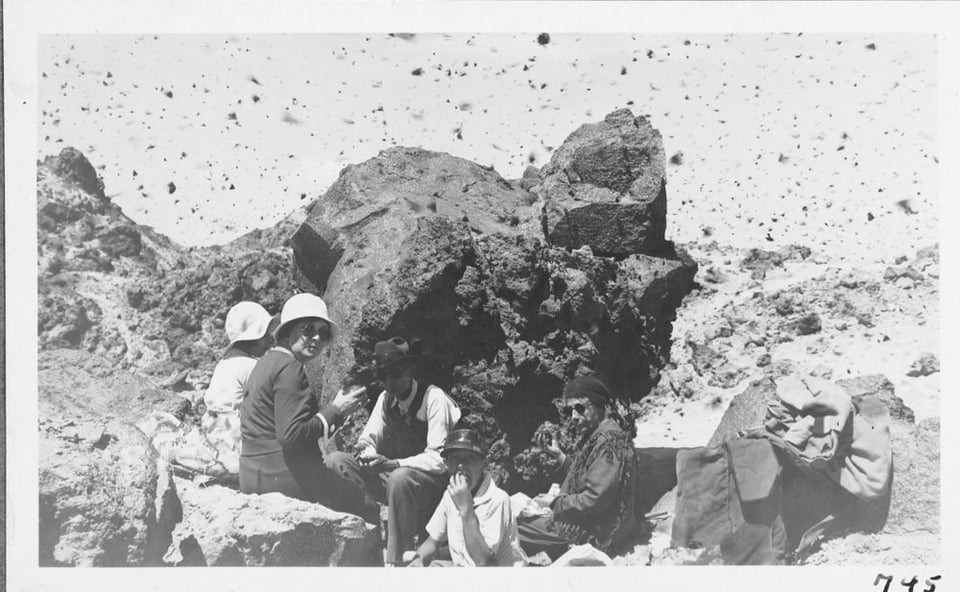
Tortoiseshells are known for unpredictable population irruptions, being everywhere one year and nowhere the next. At times, they’ve even shut down roads. On the National Parks website, I found this old photo of a group surrounded by an irruption in Lassen National Park:
The first week that I was back from the mountains, I was hurrying up my street in Oakland toward an appointment when I was surprised by a familiar sight:
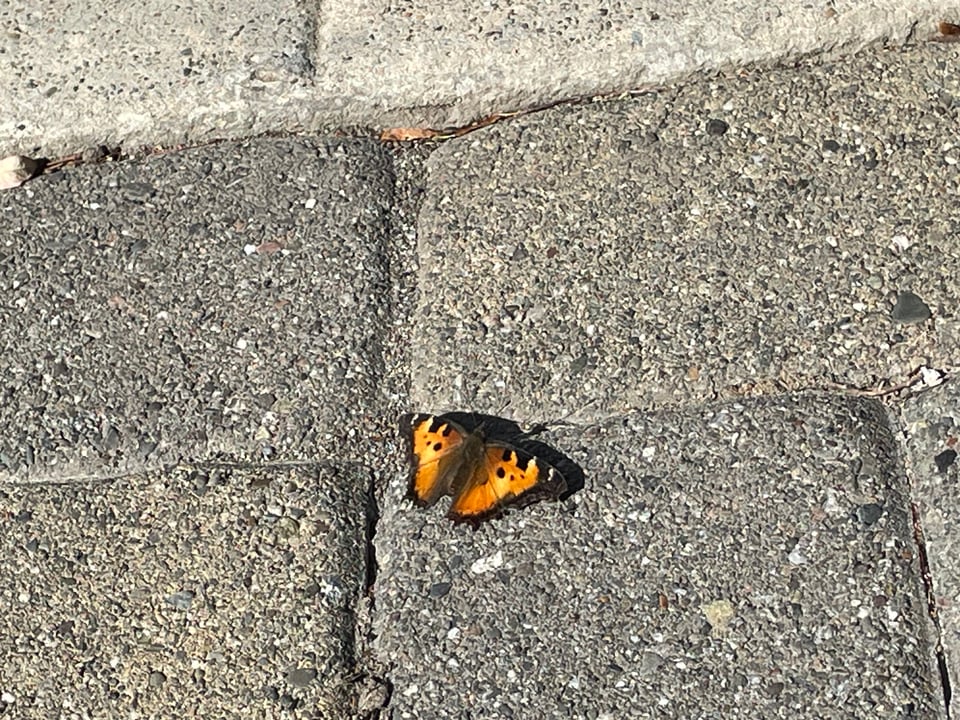
I emailed Ken-ichi Ueda, one of the co-founders of iNaturalist, to ask whether he thought this individual could have come all the way from the Santa Cruz Mountains. He very kindly put me in touch with Christopher Grinter, an entomologist at the California Academy of Sciences. Christopher said it was possible, but that tortoiseshells can actually travel hundreds of miles in their lifetimes. It could indeed have come from the Santa Cruz Mountains, but it also could have come from somewhere even further — or, he noted, from a ceanothus shrub 20 feet away. So, to my Californian subscribers: keep your eye out for tortoiseshells.

updates:
• Published today on Longreads is an adapted version of an Earth Day lecture I gave at the College of Idaho, called “Living in an Alive World.” It covers the concept of “soft eyes,” ways of perceiving otherness in the natural world, and perhaps most importantly, James Cameron’s 1989 film, The Abyss. I’m grateful to Longreads for including so many images and videos, which preserves the feeling of the talk and its slides.
• Last December, I wrote a New York Times op-ed on Park Chan-Wook’s latest film, No Other Choice, in which a man takes it upon himself to kill his competition for a job at a paper company. This op-ed came about after an exchange with an editor in which I revealed that my favorite type of movie is a “sicko movie.” (Once I get it up to date, I’ll share my Letterboxd profile here for any movie-heads.)
• Around the same time, for The Believer’s sports issue, I interviewed four writers about sports: Markus Burke on basketball, R.O. Kwon on powerlifting, Alexis Madrigal on running, and Daniel Alarcón on soccer. Bonus: you get to find out why I was forced to take P.E. Bowling in high school.
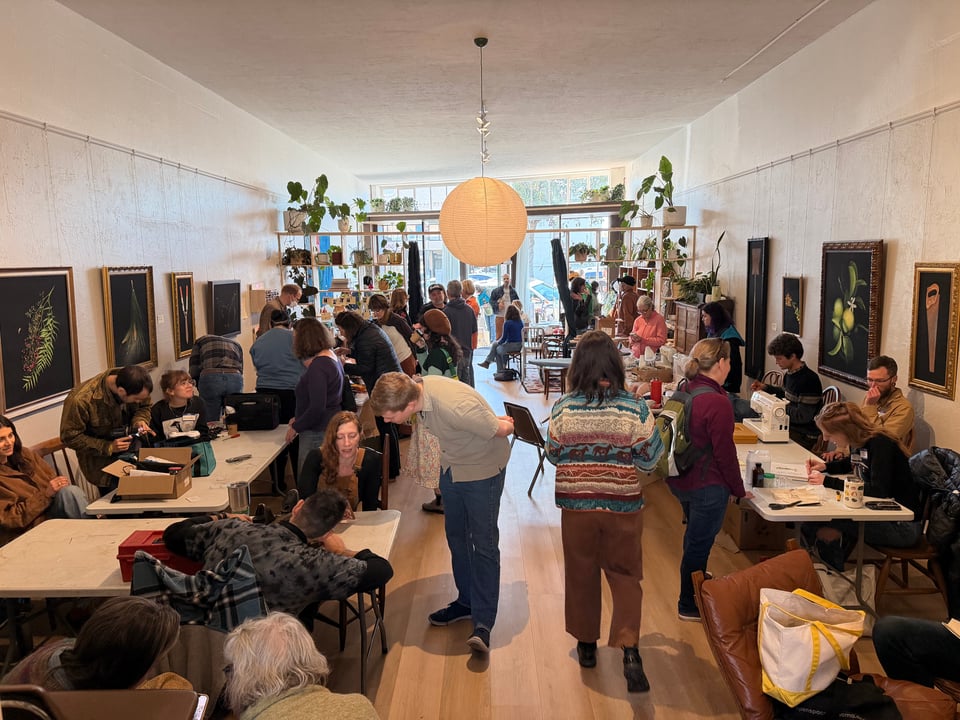
• Last November, I held a repair event at Local Economy in Oakland, where people were invited to bring broken electronic appliances, clothes, and bikes that volunteers would take a look at. Many thanks to the subscribers who helped out in various capacities! I’d only been planning to do one, but it was such a success that it will probably not be the last (in which case I will be sure to announce the details here). In the meantime, if you’d like to attend something similar, look for Fixit Clinics in the East Bay or Repair Cafes in San Francisco / South Bay, both of which inspired my event.
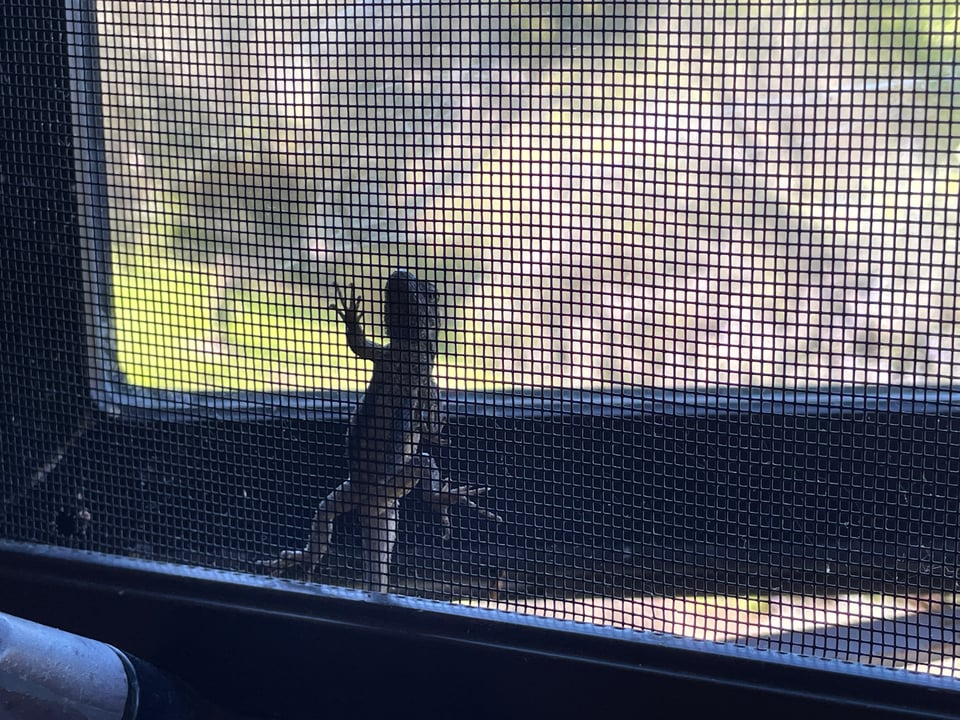
• In March, I did a residency at the lovely Mesa Refuge, where I started and finished Chapter 1 and became extremely bonded to my sisterly cohort: Marisa Ortega-Welch, host of the podcast How Wild, and Emily Polk, who is working on a book on animal grief. When my book comes out, it will surely reflect their influences, as well as that of Hamilton the lizard (you will have to read my book to find out why he’s named that):
That’s all from me for now. As always, keep breathing, try to get outside some, and adjust your eyes and heart to the big and the small.
Yours,
Jenny