
Jender Theory - The Running Man
The latest in Jender Theory:
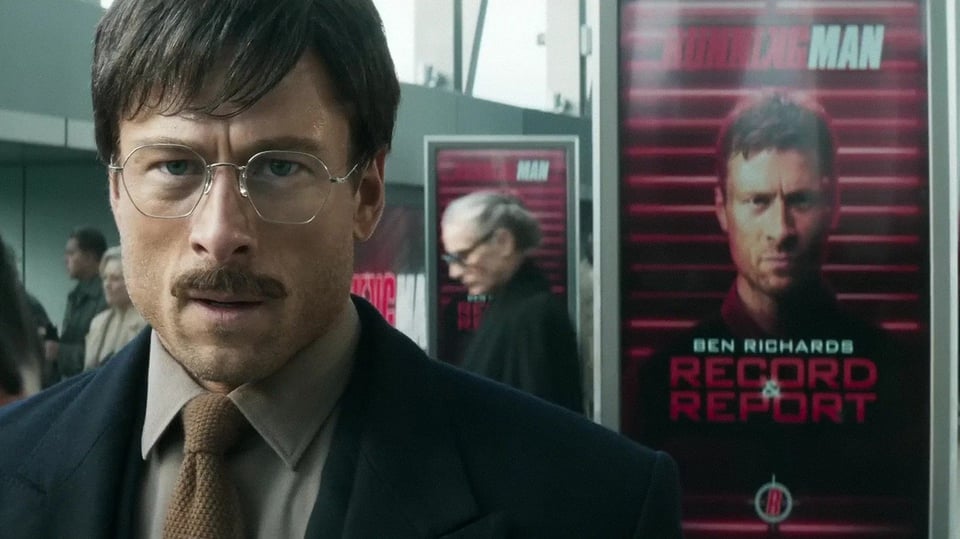
At first glance The Running Man should be a return to form for Edgar Wright, the god of the dorm room DVD player whose frequent skewering of genre movie formulas made him a favorite for guys who like to point at the screen when they realize they get the joke. His penchant for visual comedy, wisecracking dialogue and absurd action scenes made him seemingly a perfect fit for a remake of The Running Man, Stephen King’s angry and silly portrayal of total economic collapse leading to gladiatorial feats being tubed into the living rooms of the populus. Wright’s attempt at revamping the novel for 2025 took very little stretching of the book’s material, with the unique psychosis of the AI reality providing the narrative’s more absurd moments more sensibility than they do in the novel.
Throughout the film Ben Richards is forcefully thrust into the role of vox populi, first by the network as a mascot of classist propaganda that denigrates the effort of the underprivileged to survive in a collapsing capitalist structure, then as a voice of a bubbling revolution against the Network, a media conglomerate that has become a corporate oligarch running the country. In between scenes of bombastic action and strange tonal dressings Wright’s film is quite concerned with the minutiae of the language of both propaganda and revolution: with negotiation behind closed doors, video messages doctored by the Network, and even video essays being used to convey the film’s portrayal of a collapsed system of communication.
All interesting stuff that sadly doesn’t add up to much, as Wright’s film lacks the commitment to absurdity that made films like Shaun of the Dead so memorable. With Baby Driver Wright took his tongue out of his cheek, shooting for a fully sincere action-romance-musical that stuns on both a craft and narrative level. Last Night in Soho was similarly ambitious but often uneven, and The Running Man feels like the first time Wright has gone full director for hire. There are inklings of that old hyperactivity that made even the mundane bits of plot in his films feel driven by a larger theatricality, but those are largely gone once the game officially begins. Richards wears funny costumes as he roams from town to town to hide from the hunters, which should give the film time to go for some comedic beats that would show off Powell’s range, a la Hit Man, but these disguises rarely last long before another action scene must begin or another character sympathetic to Richards’s plight helps him get set up for said action scene. Michael Cera’s performance is particularly funny and pays off in an extended trap-fest that feels like Wright playing with some of his old tricks again, but it’s largely too little too late.
The zig-zagging nature of the final few minutes, which contain not one but two surprise rug-pulls in form, suggests some ironic studio interference that likely kept Wright from fully committing to the bravado of the novel’s ending that makes his film feel disastrously limp in its messaging. A film all about one guy who realizes he can do something to inspire the people around him is reduced to a crank’s messiah and a fulfilled personal vendetta, not much more.
