The Grid Held. Your State Now Decides Who Gets Cut First.
For four days this week, the mid-Atlantic grid had federal permission to push data centers onto their own generators. The harder call, who loses power first in a real shortage, just landed with state regulators.
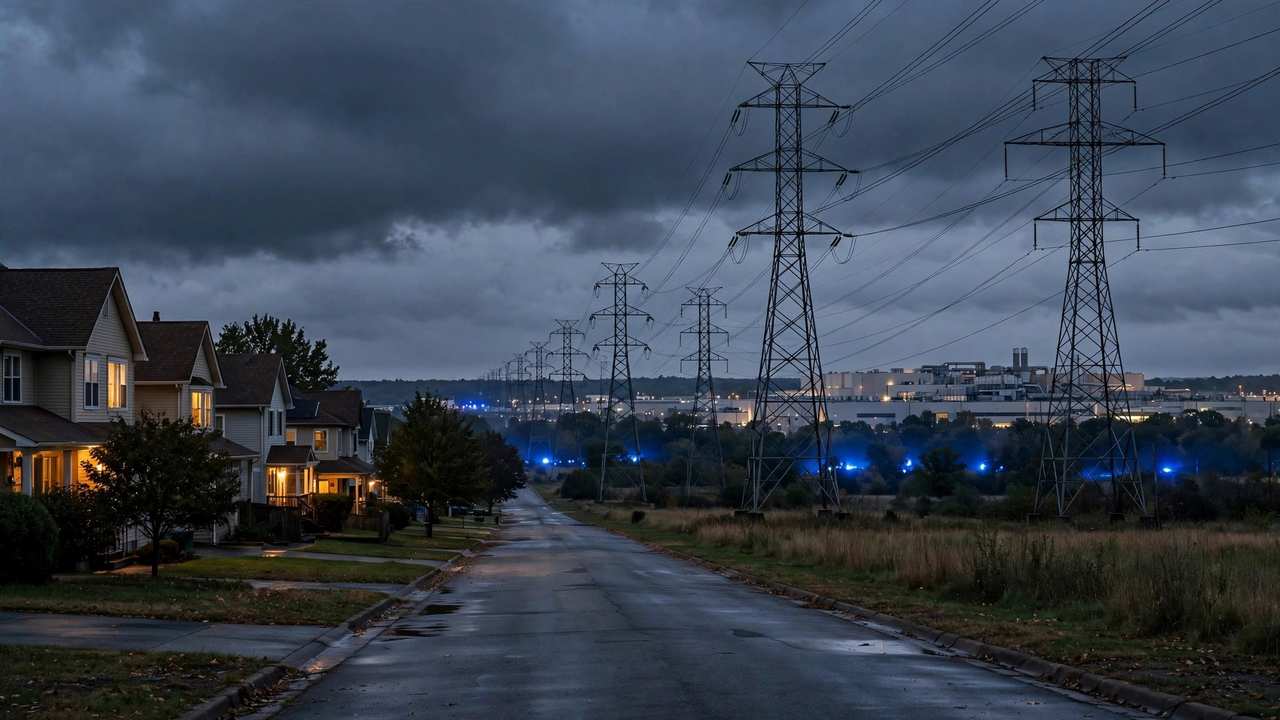
The Short Version
On Monday, Energy Secretary Chris Wright signed an emergency order for PJM, the operator of the power grid that serves 13 states and Washington, D.C., from New Jersey to Virginia and west into the Midwest. October heat had arrived while about 61,000 megawatts of power plants were down for fall maintenance. PJM expected to come within 900 megawatts of its safety cushion on Wednesday. The order, in force through Friday, lets PJM send data centers and other big users onto their backup generators as a last resort before rolling blackouts. On Tuesday and Wednesday, PJM paid businesses to cut their use instead, and as of Wednesday afternoon it hadn't needed a single data center generator. That part went well. The rest is still open. Three days before the order, federal regulators rejected PJM's plan to cut new data centers first in a shortage. They told the states to decide who goes dark first. Meanwhile, a typical household in Washington pays about $30 a month more for electricity supply than it did in 2024.
A Fall Week That Behaved Like a Summer Peak
Fall is when grid operators take plants offline for repairs, because demand is supposed to be low. This October ran hot. Temperatures sat 10 to 20 degrees above normal across PJM's territory, a Dominion Energy spokesperson told Axios, and PJM forecast demand above 113,000 megawatts for Wednesday. The tightest spots were the Baltimore, Washington and Dominion service areas, the same corridor that holds Northern Virginia's Data Center Alley.
PJM worked through its playbook in order. It told plant owners to put off routine maintenance, then recalled every active generation maintenance outage in its region as of noon Wednesday. It called on demand response both days, the programs that pay factories, stores and office buildings in advance to cut use when told. It also held back power it would normally sell to neighboring grids. "Unseasonable weather patterns are providing fewer days to perform important maintenance or construction," said Mike Bryson, who runs system operations at PJM.
The federal order sat behind all of that. Section 202(c) of the Federal Power Act lets the Energy Department set aside normal rules during a grid emergency. Order No. 202-26-50 let PJM run listed plants past their permit limits and kept the extra hours and emissions out of the running totals those permits track. As a last resort, before or during the highest level of grid emergency, PJM could also order backup generators at data centers and other large sites to start. Hospitals, 911 centers and water plants were carved out.
What "Last Resort" Means on the Ground
That last clause carries the most weight. Large data centers sit on rows of backup generators sized to keep servers running through an outage. The Energy Department estimates 35 gigawatts of backup capacity sits idle nationwide. Switching a data center to its own generators takes its load off the grid without turning off anyone's lights. That's why regulators keep reaching for it.
They've reached for it often. A PJM presentation cited by the Southern Maryland Chronicle lists at least 13 other emergency orders for PJM's region since January, including backup-generation orders in February, June and July. Another order ran Sept. 2 to 8, during a late heat wave. PJM said this week it hasn't had to use data center backup power at any point this year. Dominion said none of its data center customers switched over under the new order.
My read is that an emergency tool used in nearly every season of a single year has started to work like a standing plan. A plan that depends on private generators starting on command, at sites the grid operator doesn't own, deserves more public attention than a four-day order usually gets. The order does require PJM to send the Energy Department a daily list of every unit that used its allowances. Those lists would show how close each emergency came to the generators, and they're worth asking for.
The Demand Behind the Squeeze
PJM officials called this week's conditions "the new reality that grid operators are facing." The money trail behind that phrase leads to data centers. PJM's independent market monitor found that existing and forecast data center load added $29.4 billion to its last four capacity auctions, Utility Dive reported in August. Capacity payments are the fee every customer pays so that enough plants exist to cover the peak. The monitor said that total "will continue to grow" until the problems of adding large data center loads are addressed.
The tie to AI runs through those buildings. PJM has forecast about 70 gigawatts of new large loads by 2038. When PJM floated rules this summer to curtail new data centers first, Network World covered them as possible power cuts for AI data centers. One analyst it quoted described "the growing gap between AI-driven power demand and the pace of new generation and transmission." The National reported this week that the Energy Department has pushed for new nuclear reactors to meet AI's energy needs.
Households feel this through bills long before any blackout. A Pepco spokesperson told Axios that demand from data centers, electric vehicles and other sources is adding pressure as older plants retire. A typical Pepco customer in Washington now pays about $30 a month more for electricity supply than in 2024, and a Maryland customer about $17 more. Pepco says this week's emergency didn't cause those increases, though the same supply pressures did.
Who Gets Cut First Is Now a State Question
On Oct. 9, three days before Wright signed his order, the Federal Energy Regulatory Commission ruled on PJM's answer to the data center rush. FERC approved PJM's definition of a large load, 50 megawatts or more, and a registry that tracks where each one sits and how fast it ramps up. It rejected the centerpiece. That service would have let new data centers connect before enough new generation existed, if they agreed to be cut off first in an emergency. FERC found that plan reached into retail rates and into decisions about which retail customers lose power, which belong to the states. "States have a crucial role to play in this challenge by designating which retail customers must be curtailed," the commission said.
Commissioner David Rosner went further in a separate statement. He wrote that noncritical data centers should be curtailed before homes, hospitals and schools, and only after voluntary demand response has been used up. Then he handed the job back: "We need state regulators to establish clear rules for which customers should be curtailed first." PJM says it's reviewing how to meet FERC's requirements.
Some states have started on the money side of the problem. Pennsylvania's utility commission adopted a model tariff in May for customers above 50 megawatts. It relies on collateral, minimum contract terms and published connection queues so data centers carry their own hookup costs. It's guidance for utilities rather than a binding rule, and the commission's announcement says nothing about curtailment order. Analysts at Jefferies told Utility Dive that Ohio and Pennsylvania are the states to watch, and that FERC's ruling could mean higher capacity prices for longer. That's good for power plant owners and a cost for everyone else on the bill.
A Plant Manager's Week
Picture Denise, plant manager at a hypothetical 80-person food processor in Prince George's County, Maryland, inside Pepco's territory. Her company signed up for demand response two years ago because the payments offset part of a rising bill. On Tuesday afternoon her provider relayed PJM's call. She moved the packaging line's second shift and let the warehouse run a few degrees warmer through the evening peak.
The decision in front of her is bigger than one afternoon. Before her contract renews, she needs a baseline: the plant's normal load by hour. Then every curtailment payment can be checked against what she gave up in output and overtime. She should know what her backup generator covers and how many hours of fuel it holds. She also needs one named person with authority to switch over, or to refuse a call that would spoil product. A bounded pilot would commit only the packaging line for one season, with accepted results counted as payments received minus lost production. The failure point is easy to name, because a cooler that runs warm for two hours can cost more than a season of payments. When Maryland's regulators start writing curtailment priorities, she'll want her trade association in the hearing room. A rule that protects homes and hospitals first puts businesses like hers closer to the front of the line.
What You Can Do With This
If you pay a home electric bill in the PJM region
Find the supply charge on your latest bill and compare it with the same month in 2024. Then look up your state utility commission's dockets on large-load tariffs. Most accept public comments, and the curtailment rules FERC just sent to the states will be written there.
If you run a business with a real electric load
Ask your utility or demand response provider where your account would fall in a curtailment order, and get the answer in writing. If you have a backup generator, test it on a schedule and confirm your fuel contract. The next emergency order may arrive during a heat wave that lasts longer than three days.
If you work in or around data centers
Expect FERC's new registry to make your site's load and ramp-up schedule visible to the grid operator. Sites that can show they'll step down cleanly in an emergency, on documented generators with clear permits, will have an easier time in front of state regulators.
If you sit on a local board or council
When a data center proposal comes before you, ask how its backup generators would run under a federal emergency order. Ask which air permit limits could be waived, and how many such orders the region has seen this year.
The Bigger Picture
This week the grid worked the way the playbook says it should. Paid demand response carried the peak, and the generators at data centers stayed off. The playbook, though, keeps leaning on emergency powers. An order meant for rare crises has been issued over and over in one region in a single year. The permanent rules that should replace it are split between a federal registry and state commissions that haven't written their part. The cost is already showing up in capacity payments and supply charges, well before anyone loses power. The place where AI's appetite for electricity gets priced and rationed is a state utility hearing room, and FERC has just handed those rooms the hardest question. A ratepayer who shows up there will have more say over the next emergency than one who reads about it afterward.
References
U.S. Department of Energy, "Order No. 202-26-50" to PJM Interconnection, October 12, 2026 PJM Inside Lines, "Operations Update: PJM Extends Maximum Generation Alert to Oct. 14, Calls on Demand Response," October 13, updated October 14, 2026 PJM Inside Lines, "PJM Reviews September Hot Weather Operations," October 12, 2026 WRNJ Radio, "PJM extends electricity grid alerts through Wednesday amid unusually warm weather," October 14, 2026 Axios Washington D.C., "D.C.-area power grid emergency: What it means for residents," October 14, 2026 Southern Maryland Chronicle, "Feds Put Backup Power on Standby for Maryland's Grid," October 15, 2026 Utility Dive, "FERC rejects most of PJM's large load interconnection plan," October 12, 2026 T&D World, "Largest US Grid Operator PJM Triggers 'Maximum Gen Alert' as DOE Issues Emergency Order to Maintain Reliability," October 13, 2026 Utility Dive, data center load and PJM wholesale costs (market monitor findings), August 27, 2026 Network World, "AI data centers in the US may face power cuts under PJM reliability proposal," July 29, 2026 The National, "Emergency order by US to 'prevent blackouts' could affect data centres," October 13, updated October 14, 2026 Pennsylvania Public Utility Commission, final order on large load model tariff framework, May 13, 2026
---
Read on the web: https://theainextwave.com/editions/2026-10-15/