The Australian Comics Community
Back in the blogging saddle, this time diving deep into the flourishing Australian comics community!
Welcome to my free newsletter. Stay up to date with all my latest writings and ramblings. Wherever curiosity takes me.
I meant to resume blogging towards the end of January but that didn’t work out. Life got in the way and it was a particularly messy and shitty start of the year (both for personal and health reasons) but, I hope all that is behind me now and I can get back to a more stable routine. I hope everyone else has had a better start of the year.
So… I’m back. Whether it will be every Sunday I cannot tell. But I’m back.
THE AUSTRALIAN COMICS COMMUNITY
I think everyone who knows me, even just a tiny bit, knows I love comics. I’ve loved them forever. Since my dad read them to me before I learned to read. Since I learned to read, just so I could read Mafalda and Asterix (my only motivation to learn to read).
Since I came to understand that there’s no other storytelling medium like it. In making comics, artists draw art from their mind, their hands, but that art is still somewhat abstract, its an approximation to reality, but not a realistic image. That artist’s vision is then enriched and added to by the reader who completes the image in their mind. It’s a highly unique and personal relationship between the artist, their art and the reader.
But even more so, because the reader is in total control of the reading in ways that no other storytelling form can compare to. Books have been written about this but in brief, in comics the reader fills in the moments between each panel, bringing the story to life, filling in the gaps. The reader is also able to control the reading and decoding focusing on single panels one after the other, or looking at various panels at the same time, or jumping forward or back to other panels and focusing back on the current one. That is to say, the reader controls the pace of decoding and reading, but also can be reading more than one panel (and time and space) at the same time.
Add to all this the realisation, when I was teaching at secondary school that comics are the perfect multimodal text. The perfect way to explore and develop multiliteracies, which is not only an important part of the curriculum these days but, also, an essential skill considering we live in a media saturated society and most of that media is multimodal.
But above all, I love them because comics feel personal, intimate, creative, different. Comics are the young rebel of literature and art, the young punk rock sibling that established institutions look down upon with prejudice or totally misunderstand.
So, despite my many interests and skills, when I started working in libraries I very quickly became the comics librarian. Whenever there’s a question about comics, or someone is after comics recommendations, or a parent is worried because their kids are only reading comics and they think this could be melting their kids brains down to rot (comics have lots of superpowers but that’s definitely not one of them), my colleagues usually reach out to me.
I co-founded the ALIA Graphic Novels and Comics group because I believed that:
1) libraries could be doing better at raising the profile and awareness of the importance of comics, graphic novels and manga and
2) Australian libraries should do better at paying attention to and raising the profile of Australian comics creators and titles.
Six years after the group was formed, I’m really happy with everything the committee has achieved. There’s always work to do, there’s always more that could’ve been done but I’m so proud of everything we have achieved and the committee continues to do.
In this context, I was absolutely honoured to participate (in a very small tiny part) in Folio: Stories of Australian Comics, contributing to the roundtable of librarians discussing comics in libraries. This project lead by researchers from Melbourne University, RMIT University and the University of Technology in Sydney, has explored the Australian comics community through object-based oral histories from graphic artists immersed in the comics community from the 1980s until now.
The research focuses predominantly on Australian comics creators but it also features essays and interviews with comics festivals, publishers and librarians. The website, a sort of live folio of the Australian comics community, was launched just a few days ago and its the culmination of years of research, work and conversations. They have published about half of their research with more information and stories to be published in the next few months.
Everyone involved in this project, leading the research, supporting the research and in the steering committee should be congratulated. What an amazing achievement! And I’m so glad to see such a large study and resource on Australian comics, creators and the community at large.
And I guess, that libraries, librarians and ALIA Graphic are part of the Australian comics community in a small way. It’s great that we have been included in the folio and I hope that awareness of Australian comics and creators in libraries continues to grow.
We buy lots of comics and we’re aware that their popularity is rising. They have become, without a doubt, one of the best performing collections in our libraries. We facilitate, recommend, and guide readers in reading and literacy development, which includes comics. And we should ensure that Australian comics creators benefit from the increasing number of their comics and graphic novels being added to our collections through the public lending rights and through increased visibility and readership.
Comics librarianship is a growing field in North America as seen by the development and growth of the American Library Association’s Graphic Novels and Comics Roundtable (who have achieved incredible things), the development of programs within the San Diego Comic Con, the New York Comic Con and the Toronto Comics Art Festival dedicated to educator and librarians, and the growth of Graphic Medicine as an academic field and community of practice.
There’s a lot more of an industry in North America. I have learned that in Australia, we should be talking about a comics community, not an industry. But here too, things are changing. New publishers have emerged who are dedicating their resources to Australian graphic novels and creators. Hardie Grants for example has created a publishing imprint dedicated to children’s graphic novels that publishes Australian creators and titles. Their publications in 2025 were excellent and publishing Sally Rippin’s adaptation of Billie B. Brown’s Secret Mystery Club in graphic novel form will be a game changer. This is definitely taking a leaf out of the success of Scholastic and the Babysitters Club graphic novels.
Scribe, an independent publisher especialising on non-fiction books has published several graphic novels for adults in the last few years. Focusing on graphic novels for adults is a riskier proposition and I can’t applaud them enough. It’s great to see a publishers not only taking chances but, best of all, publishing some outstanding titles like:
Follow Your Gut a science heavy non-fiction graphic novel about the microbiomes in our gut
The Brownout Murders, a non-fiction graphic novel exploring the murders that occurred in Melbourne in 1942
I Ate the Whole World to Find You, Rachel Ang’s short, evocative and thoughtful graphic narratives and
The Islands Where We Left Our Ancestors, Joshua Santospirito’s journey back to the Aeolian Islands in Italy where his ancestors migrated from.
They are not the only ones stepping up. But I wanted to highlight those two as prime examples of the talent diverse talent that we have in Australia and how things are changing.
There’s a lot to celebrate in the Australian comics community and I hope that libraries and librarians in general are paying attention. The timing of the release of the Folio project is perfect, it has an incredible wealth of information and resources and I, for one, look forward to doing a deep dive. I feel like I’ve only scratched the surface.
KICKING AROUND THE NET
The National Literacy Trust in the UK has done a great job in commissioning reports on comics and supporting comics reading. Their latest report, Unlocking the Power of Comics: why the multimodal format is a dynamic and vital part of literacy is a must read. It covers great ground around the appeal of comics, the powerful reading experience of comics, the social aspect of reading comics, what the research shows and the value of comics in education and the curriculum.
Misinformation is ripe right now and we must always use our critical thinking but misinformation has always been present. It’s not new so here are 5 lessons about misinformation from ancient Greek and Roman scientists.
What do teenagers think of AI? I imagine there are all sorts of opinions but I’ve found it really interesting and encouraging that most of the teenagers I’ve talked with have been very scathing of the push for AI. Mihini, a 17 year old, published a great piece on WhyNot that’s worth a read.
The latest episode of the excellent On the Media podcast explores social media addiction and habits. The difference between habits and addiction, a landmark trial in California where the big platforms are being accused of deliberate design to create addiction and approaches to protect people from doomscrolling and the harms of social media. Australia’s teen social media ban and an Australian large case study on social media harms also get discussed.
Brandon Sanderson is an incredibly prolific and successful writer. He’s also a very successful businessman while retaining his own independence and that makes him an interesting case. He has really announced an unprecedented deal with Apple TV for adaptations of two of his book series while retaining final decision making. Again, unprecedented. This article on The Conversation Cassie Brummitt explores Sanderson’s career and how he’s been able to achieve this. A very interesting study case.
PHOTO OF THE DAY
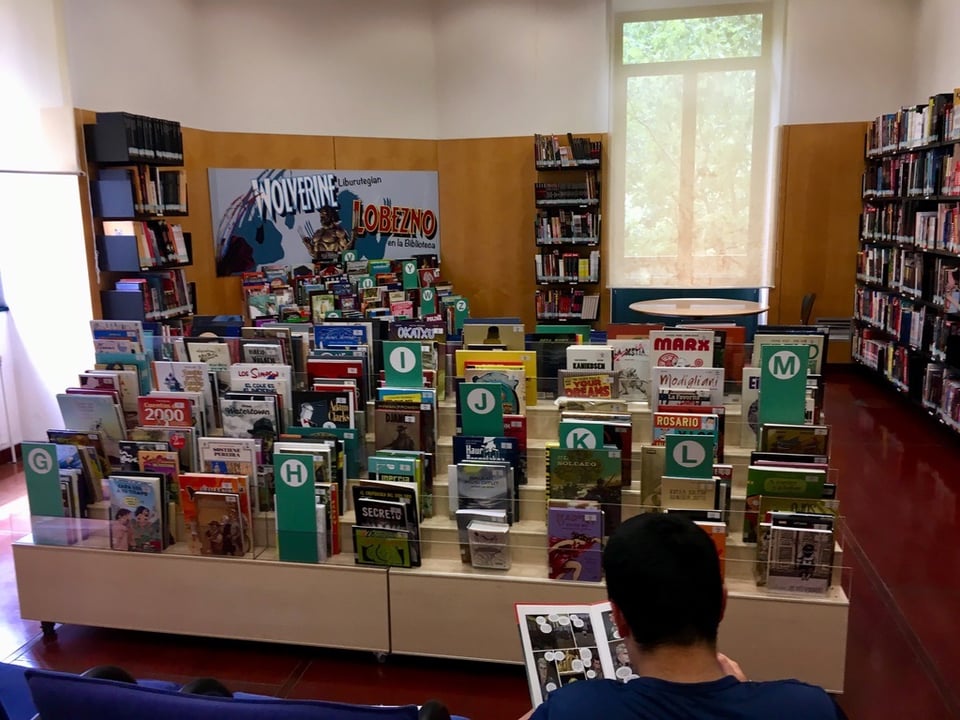
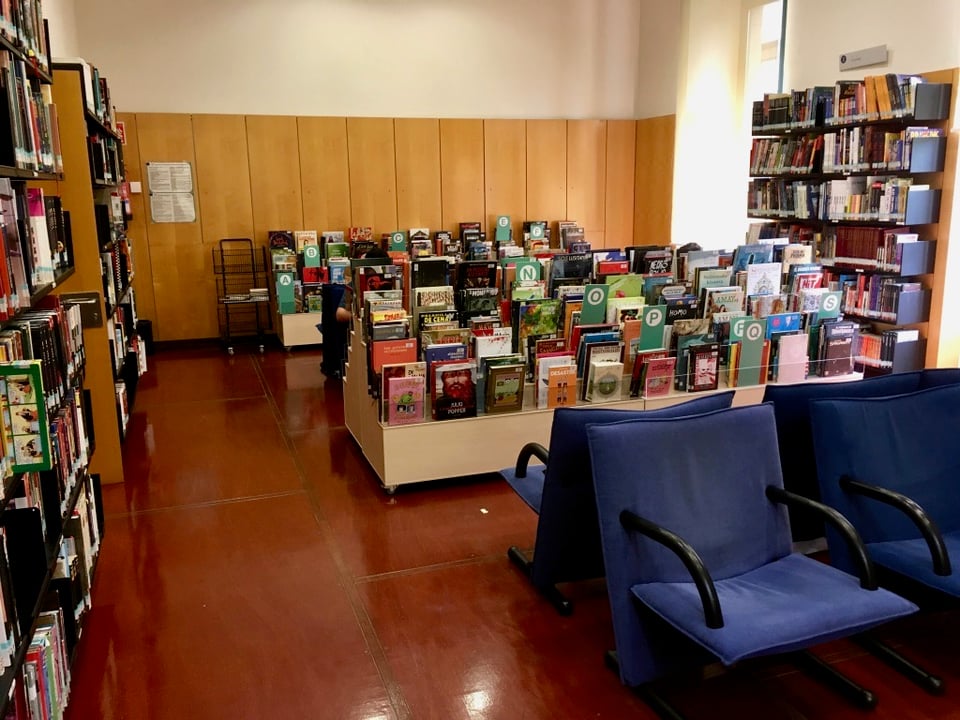
Since it’s Library Lovers’ Month and I’ve been talking about comics today, I thought I’d do something a bit different and post a couple of photos of a library that I absolutely love and I used to visit all the time, spending an inordinate amount of hours there in their room dedicated to comics.
The collection in this room is extraordinary encompassing European comics, which make the bulk of the collection, though American comics and manga also have a great presence. The walls all around the room, contain large collections of classics
(including many now out of print), while the bins in the middle tend to have newer comics and graphic novels and titles that are ever popular and circulating.
This extraordinary room and collection is part of the Koldo Mitxelena Library in Donostia (San Sebastian for Spanish and international visitors 🙄). My pictures don’t do the collection justice, the collection along the walls is far bigger than what is seen in my pictures. Follow the link to the library’s official website for a better picture.
That’s it from me for now. Hopefully you found something interesting. Feel free to share with whoever you like. This newsletter is free and will always be free. It’s shared with a Creative Commons BY ND licence which enables reusers to distribute, remix, adapt, and build upon the material in any medium or format for noncommercial purposes only, and only so long as attribution is given to the creator.

