
The Intertidal Update - December 2025
If you’ve been with our newsletter for a while you’ll know that we like to do some extra reflection at this time of year, when our part of the globe tips away from the sun and the extra darkness beckons us to consider how we should spend our time once the days start getting longer again. We like a personal/professional journey map and some strategy worksheets. We like whiteboards and stickies and being in person together with tea and snacks because not only are we looking back on 2025 but we’re also celebrating Intertidal’s third year. 🎉
Yep, it was three years ago that we hired our first employee and set out on our mission to unlock ocean data. Thank you to all our partners and clients who’ve brought us in to help build your data governance. Thanks to those of you who’ve participated in one of our Future of Ocean Data roundtables, filled out our project feedback forms, and used our online resources. And thanks for reading our newsletter.[1] Grab a mug of your beverage of choice and settle in.
The National Academy of Science, Engineering & Medicine (NASEM) held a two day workshop Dec 2-3 on the Future of Earth Observations and Data Stewardship and I was one of the 200 people who got to attend in person, at the lovely LEED-certified AGU conference center in DC.[2] We’ll see white papers from staff in the spring, but here are my top takeaways. If you watched online or were also there, hit reply and share yours.
Reliable, trusted information comes from people who know and understand the data lifecycle and can provide context
This is a paraphrase from someone whose business runs on crunching public data for commercial uses. The importance of people at the heart of data usability, reliability, and impact and came up over and over, and I am here for it. Was there some AI hype? Of course, it’s 2025. But there were also thoughtful discussions around how we get to the standardization needed for data to be machine readable or ‘AI-ready,’ which, as it turns out, is a lot of the same work you need to do to make your data reusable by other researchers. Context isn’t an afterthought here - it’s an essential contribution from data collectors and stewards. Context needs to travel with data from start to finish. Maybe that’s with extended documentation like Candid Core. Maybe that’s through detailed licensing. However it is documented and shared, context adds value and trust to the data lifecycle.
The future is multimodal & interoperable
On the second day of the meeting, a friend who was also there sent me a newsletter called “Nobody Cares About Your Satellite.” [3] There was a strong contingent of satellite people in attendance, and the occasional vibe that satellite images are The One True Form of Earth Observation. This is why I’m usually not at events titled “earth observing” because the value of satellite images is pretty limited for the ocean. Even when we’re talking specifically about ocean observing tech (submarines, gliders, Niskin bottles and CTD arrays) it can be a record scratch to bring in data tied to actual management (marine protected area monitoring, fisheries population assessments, diver coral surveys).
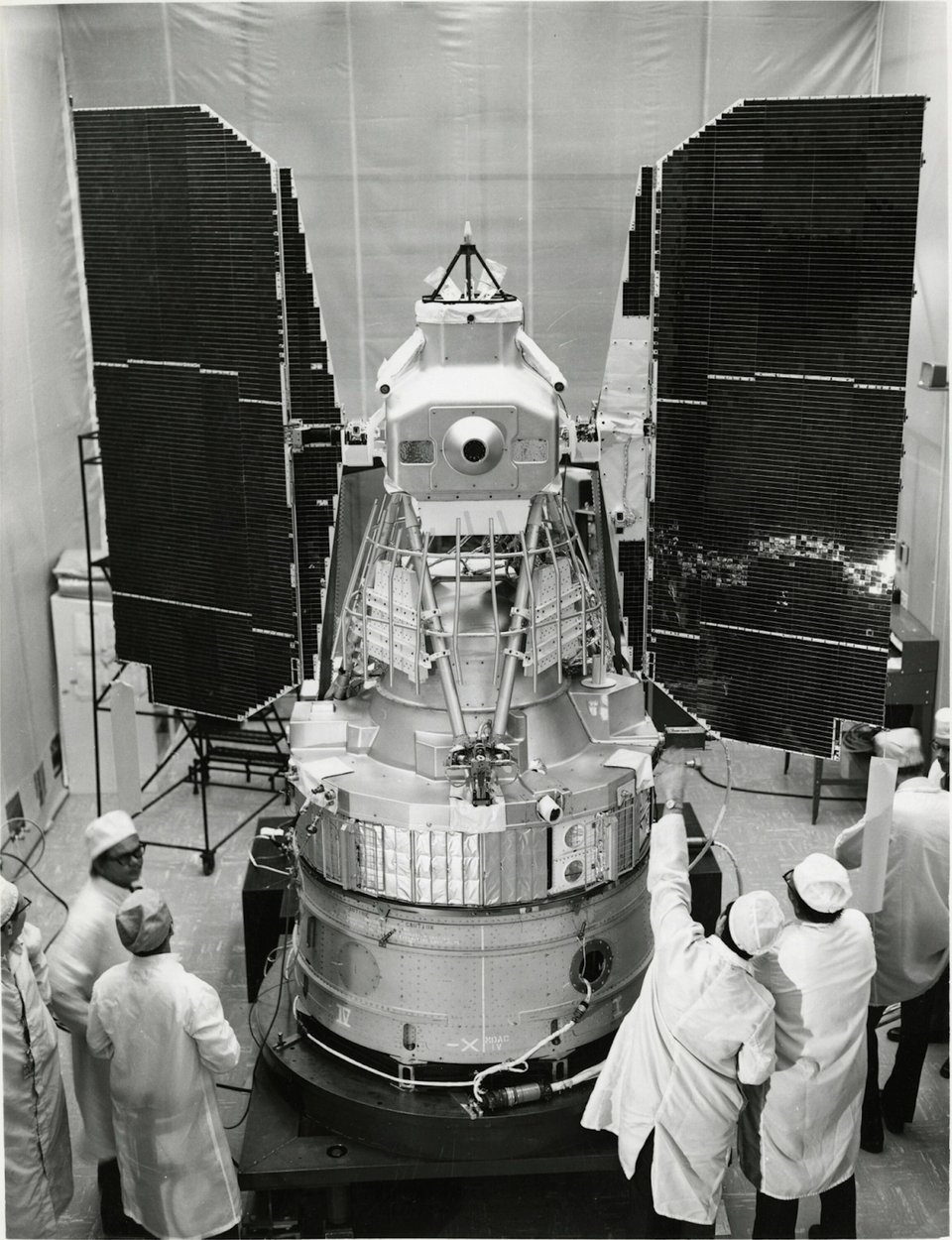
The divisions between observational and compliance data have been around since the launch of the Landsat program and the passage of the National Environmental Policy Act in the early 1970s. The splits are cultural, philanthropic, institutional, and written into U.S. law; seafloor mapping done for a fiber optic cable project is treated differently than mapping for bathymetric charts, even if it’s done using the same equipment by the same consultant. If we really want to measure, understand, and forecast the state of the planet we need to be able to reuse and integrate data across sources, methods, and original purpose. There are risks in making data more widely interoperable (see the previous comment about context) but ocean data is too valuable to be used only once. I’m glad there are people caring for the satellites and I was glad to hear other participants speak up for a future data system that stretches from deep sea to the upper atmosphere, across methods, tools, and communities. Maybe the next generation of data stewards are like composers and conductors, helping weave data players together into a symphony.
We are the ones we’ve been waiting for
I’ve never been involved in a National Academy event before, but I was pleased that I didn’t seem to be the youngest person in the room because I am basically Landsat years old.
An Academy veteran lamented to me that we were rehashing old conversations and problems we should have already solved. And we probably were. Every group effort has to agree on principles, prioritize specific questions, and scale up to generalizable solutions to develop something repeatable, scaleable, and impactful. It is the hard and messy people side of any project, data or otherwise. What I saw were people excited to dig in, people so frustrated by the current system that they were ready to change, creative solutions looking for new testbeds, digital natives and senior professionals saying “it’s time, I’m in, where do I start.” 2026, let’s go.
That’s it for observations on observations and Intertidal’s 2025 newsletters. We are gearing up for the launch of our first Ocean Data Stewardship training cohort in the spring of 2026, and we’re thrilled that Mollie Celnick has joined us to help run the program. Stay tuned for the official recruitment announcement. We’ll also be in Glasgow for the Ocean Sciences Meeting, so if you’re attending too let us know and we can check out some of the winners of the Curry Oscars together.
— Kate and the Intertidal Team
[1] Really, I get so much delight when people come up to me at events and say they’re newsletter readers. 💙
[2] Fellow meeting hosts: this space has a good set-up for hybrid, check it out. If you’re an AGU member, you can use the co-working area for free.
[3] The sender works with satellite data on the regular, the site is from a person who does marketing for satellite companies, and this post is specifically about the epistemology of science, so if you are a satellite don't take this title personally.