જ⁀➴
Back in October, I participated in two events co-presented by the San Francisco literary festival Litquake. Both events’ other co-presenter was Books Not Bans, one of many organizations created in response to the past decade’s escalating right-wing campaign against public and particularly, children’s access to books that address such controversial and inappropriate topics as puberty, abuse, racism, homophobia, transphobia, and sexuality not in the service of heterosexual procreation.
My selfish perspective on the state of the union is, it’s a bad time to be an author writing challenging work for young people.1 If I could do it all over again…I would probably still have wanted to sell my first novel as a young adult novel, though I think about the decision often, as one tends to do about decisions that can’t be undone. But between the explicit censorship—diminishing opportunities for school visits and library events—a general flattening of the book market, which along with the rest of pop culture has tilted headfirst into a reactionary and boring aesthetic that prioritizes doubling down on “what’s proven to work”—well, I love Mad Men, but I didn’t get into fiction writing to become a marketer. And YA is, at its core, in the foundation of its history, a marketer’s market.2

But I can, and do, feel gratitude about many of the spaces I’ve been invited into as a result of those immutable decisions. The second LQ/BNB event I participated in was called “Read the Room: A Celebration of Books.”3 Danielle, the person organizing the “local authors live reading” portion of the event, who’d been very friendly to me during an intro mixer for last year’s LQ and was in fact the sole reason I booked both LQ/BNB events this year, sent an email a couple of weeks before the “Read the Room” event. In it, she suggested that the reading should be:
an opportunity to reflect on a meaningful book encounter,
the spaces created at the collision of books and
the gathering of people, a potent moment of being perceived, etc.
And in that moment, I thought of this piece—originally written as an op-ed for Authors Against Book Bans, another org that’s mobilizing against…it’s in the name. Unlike most of the other orgs working in this space, AABB represents the laborers (myself included!) affected, directly and indirectly, by book challenges and bans. Last fall, as part of a big publicity push, AABB asks its members to write op-eds about book bans, the harm they do, the insidious promise they offer parents and communities frightened by an overwhelming and confusing world: Ban these books, and your child will never be a stranger to you. Ban these books, and you can preserve your version of your mandate of heaven, on earth and beyond it.
I sent this essay to one of AABB’s publicists, who submitted it for publication consideration to ??? I don’t know what her list was. The piece didn’t get picked up because I am a fingerling in a very crowded and flashy shoal, but the moment I read Danielle’s suggestion, I thought, Hey, I should read That Piece.
My partner C attends a lot of my events because he’s supportive and proud of me ദ്ദി(˵•̀ᴗ-˵)✧ but after this particular reading, he said, “I hadn’t thought of it like that before,”4 in a tone of voice that suggested he’d learned something new about how I see the world and the stakes of my work, which I’ve been neglecting since the release of my second book for reasons that are too tedious to get into for an audience, but which I’d summarize as, What’s the point?
Fueled by the new Oneohtrix Point Never album5 and a tender day (I started drafting this on the night of 12/10, after driving my cat Onion to and from dental surgery that morning), I wrote over a thousand words in one go for the first time in a long time. Okay. Anyway, here’s
Childhood’s End
I have something to confess: I was once a child. Even worse, I was once a child who read things that were inappropriate for them at an impressionable age. To Kill a Mockingbird at eleven, checked out from behind the door marked ADULT on the upstairs floor of Mary Jacobs Library. Shogun at twelve, from a paperback passed around my friend group like a dog-eared hot potato. Stephen King throughout my preteen years, It tucked under my desk during French class until my teacher caught me—and then said and did nothing.
Why didn’t she punish me? Ignoring conjugations of aller because I was engrossed in a book that, since its publication in 1986, has been in and out of controversy for, where does one begin, gratuitous murder, psychological horror, sex involving adults, sex involving children? A hit parade of inappropriateness, by the standards espoused by not only groups like Moms for Liberty and their crusading ilk, but also well-meaning adults concerned by the increasingly poorly moderated, misinformation-steeped digital-reality vortex that devours more and more of our children’s attention.
As a child, the first question was the one that preoccupied me. And Ms. Van Houten’s response branded itself so deeply in my memory that, over two decades after the fact, I still remember her shock of dyed red hair and what she told me after class: “I was glad that you were reading a real book.” It didn’t occur to me, to her, that the actual content of my reading could be questionable.
Now, content is everything. Specifically, the preoccupation over appropriateness, as defined by people who claim to be adults. Adults who would have punished her, or any of the other teachers, librarians, and youth advocates who let kids defile their innocent young minds with “age-inappropriate material.”
There are plenty of better books than King’s oeuvre out there in the world. Many of them are being banned and challenged in schools and libraries across the country in unprecedentedly broad sweeps of blanket censorship. This new wave is different from the discussions I grew up with, the back-and-forths on Lolita and The Bluest Eye, part of the long running debate about the merits of art-as-cultural artifact versus art-as-avowal of values.
The new gasoline on the old fire is the blunt object censorship of books, especially those published within the past decade, that treat race, gender, and sexuality as living concepts worthy of experimental discussion and nuanced expression. But the slighter, slyer censorship, the engine behind not just our reactionary moment but every one that’s come before, which extends way beyond children’s literature, targets the suggestion that childhood does, in fact, end.
So many arguments in favor of these new bans and challenges hinge on the idea of protection. To protect children from, of course, predatory adults—these omnipresent bad actors who funnily enough never seem to have any overlap with those who call themselves protectors—and the world of inappropriate ideas. The particular scope of inappropriate is intentionally a vague impression of an ideology, like a pop song built entirely out of samples. To repurpose Judith Butler, inappropriate children’s books are a phantasm, a spectral enemy designation expansive enough to include not just Maia Kobabe’s exceptionally gentle graphic novel Gender Queer but also Taro Gomi’s incendiary treatise Everybody Poops.
There’s a kneejerk instinct to joke about some of the books that have been banned or challenged, like, “Really?” Jokes aside, it’s also easy to misread the issue of banned books with a sense of moral superiority, best summarized by the statement, “I wish I was an author whose books were banned!”6 This retort dangerously defangs the material crisis for newer authors, those of us who have only just been let into the world (and money) of traditional publishing and who are facing an immediate loss of income and opportunities. And, it introduces a line in the sand between “good” and “bad” books, which elides the heart of this censorship pushback, which has an agenda that’s less about any book itself and more about the act of reading.
Despite our many innovations and expansions into digitally-expanded alternate worlds, people of all ages are facing an imagination crisis. Instead of wondering what life might be like for someone living halfway around the planet, you can watch a vlog that takes you through their days. The connection itself is a neutral interaction, but, like the modern tendency to interpret POV as a front-facing video, it neuters the interior ask of imagining yourself in someone else’s voice. This, more than anything else, is the power of reading: it engenders empathy not necessarily for the author’s characters, or for the author, but for yourself, a perpetual novice7 trying to make sense of what you’re engaged with on the newly turned or loaded page.
As a tool for understanding the world, reading remains one of the most immersive extensions of interior imagination. Even non-fiction asks you to flex your imagination, to take the description of a hospital ward, a drought-blighted field, a jungle laced with landmines, and step into the captured story with little to no external sensory aid. Even this piece, in my reading of it, hopefully ricocheted you into your past self, who remembers what it felt like to read something you weren’t supposed to.

Maybe you were, like I was, given a bye. Or maybe you were told no, this isn’t for you, and had something plucked out of your hands. What does the “no” tell you? From the perspective of the person doing the censoring, that this story’s version of the world has no truth to it. But if a story came from a person, it came from this world and captured something true about it, even if its substance is far from truth.
There are people who have been trained to organize these competing and conflicting truths. Their job has been distorted yet librarians, at their core, are stewards of information. And information, like the world, is in a constant state of flux. New ideas—new words—emerge and change and in doing so, frighten people who’d rather language, and life, stay fixed and static. Sometimes their tactic is as quietly violent as banning Pride programming. Sometimes it’s as crudely rendered as a city council mandate banning library cards for anyone under the age of eighteen. Every time, the goal behind the goal is to prevent kids from imagining other ways of being.
In his 1975 novel Turtle Diary, Russell Hoban (of the Frances the Badger books) wrote:
People write books for children and other people write about the books written for children but I don’t think it’s for the children at all. I think that all the people who worry so much about the children are really worrying about themselves, about keeping their world together and getting the children to help them do it, getting the children to agree that it is indeed a world. Each new generation of children has to be told: ‘This is a world, this is what one does, one lives like this.’ Maybe our constant fear is that a generation of children will come along and say: 'This is not a world, this is nothing, there’s no way to live at all.’
This is the true distinction between banned and challenged books, and those that aren’t: some stories imagine new futures arising out of their present, and some stories stay suspended in our idyllic and sanitized past. The former don’t so much shake the table as they do create entirely new tables. This scares people who want to control who gets to sit at a table at all. Under the rallying cry of protecting the children, opponents of accessible reading equate complexity—of identity, of society—with obscenity. To them, drag queens and picture book authors must be equal opportunity targets because they’re both groups of people who dare to suggest that there might be different and yet still fulfilling ways to live.
In the name of childhood, these proactively protective “adults” are training—one could even say “grooming”—the children in their care to turn away from anything that ever challenges a narrow view of life that only they, these noble and selfless shepherds, have carefully prepared for them, like lifetime-sized dollhouses. Behind those preparations is the fear that their children won’t get to have innocent, uncomplicated childhoods. Never mind that innocence is inherently out of reach for so many children, or that since time immemorial kids, those same adults back then, even, have actively, gleefully sought to lose their innocence on their own. At school, after school; while praying, while playing; online and off.
Or even in the library, where they might find a book that makes them question what they’ve been told is fact. When in fact, most stated constants in life end up being temporary fiction. Because this is the recursive loop of not just reading, but all interactions with new ideas: the more you encounter how other people think and are, the more you understand about and define for yourself how you think and are. By another name, this loop is called learning. By yet another name, it’s called growing up.
I have something else to confess: I don’t remember when I began to think of myself as an adult. But it happened, anyway. And more so than any movie or TV show or song, books are where I remember having my greatest experiences of disgust, envy, fear, and confusion as a child—but also my greatest experiences of joy, wonder, discovery, and catharsis. Those experiences changed me. Sometimes I purposefully willed those changes, and sometimes they happened so subtly that I’m only just now realizing the impact of a certain character, a certain line.
More than anything, reading forced me to imagine, against all kinds of trials and tribulations, discomforts and cruelties, how I’d grow up. That I’d grow up. Now, I’m a much better adult than I ever was a child. And shouldn’t that be every adult’s dream? To witness the end of childhood for these children, yours or otherwise. To watch them live through it, as you once did, and come out into a world they’d only imagined, as a person they’d only imagined, which you once did, too.
Back when you were a child, and what you knew of adulthood was just a story. A figment of imagination. When all you could promise yourself was that you’d make it there, some day. And you couldn’t wait for innocence to end, and for the life you’d imagined to finally begin.
Thanks for "listening." Stay tuned...!
♬ xoxo Lio
⋆。゚☁︎。⋆𓂃 ོ☼𓂃
@}}>-----8
I have very specific reasons for choosing the word “challenging,” but the only one I care to share is: Within the “young adult” literary space, there are authors who write for young people, and authors who in every aspect of their lives save for the actual number of years since their birth, position themselves as and act with the emotional intelligence of a particular characterization of “young person.” ↩
Though one could say that no cultural field, no artistic practice, can expect to be exempt from being or becoming a marketer’s market…I can’t get into it in full right now but suffice it to say it’s especially egregious in the world of children’s literature for reasons that I hope are obvious. ↩
Here’s the original Eventbrite link; afterward, a reporter for the Japanese newspaper The Asahi Shimbun told us readers that she was working on a story about books bans in America, and did she have our permission to print our names, along with our ages and some other kind of identifying information that Japanese publications insist on? I don’t think the piece ever got published, but I remember being floored at the time like, Damn, we’re getting the “backwards country inspirational civic disobedience treatment”…brutal. ↩
The next day, I was attending a friend’s event and a rando (!) recognized me in the crowd and said, “Hey, what you read was really cool and brave.” (Okay maybe the adjectives used were slightly different but the vibes were the same, and, that was the first time a stranger has ever complimented me on my non-fiction writing in person, so let me have this!!! ↩
I’d written off new OPN until I read this interview in which Mr. Lopatin said, in response to the question “What’s one thing you love about yourself?”:
I’m really good at making breakfast sandwiches. I’m excellent at breakfast anything. I make scrambled eggs at restaurant quality—I cut the heat, it’s searing hot, I throw the eggs on there, they’re very well seasoned, I swirl them around, they ribbon beautifully. I’m very happy when I present it to my girlfriend or to whoever’s around. I’m really proud of my newfound abilities in the kitchen, and I’m hoping to improve on that over time.
And well…I was charmed because I’m also proud of my ability to cook. His soft scrambled answer got me to listen to Tranquilizer, which I’ve found is the perfect album to bike to in early evening winter darkness, as I’ve been doing regularly every Wednesday night on my way home from calligraphy class. ↩
Adib Khorram, an AABB national leader and one of the few true buds I’ve made in the biz :’) legendarily ethered this argument at a panel we shared a couple of years ago. My writing here is a paraphrase of what he said then, which has since become a major AABB talking point. ↩
Back in the city
I’m just another girl in a sweater
Perpetual novice
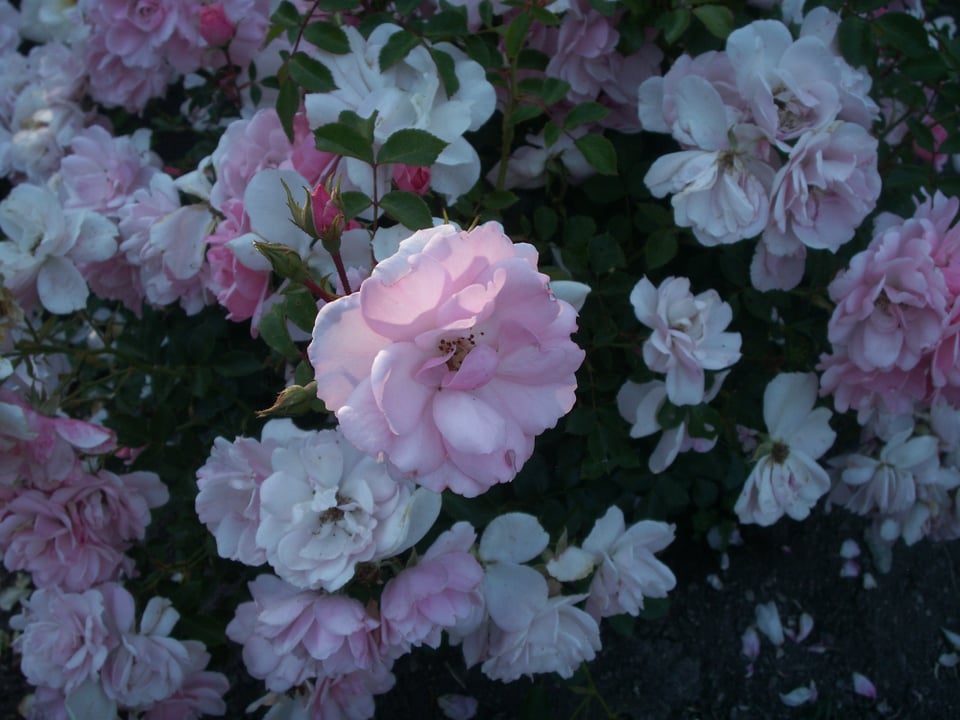
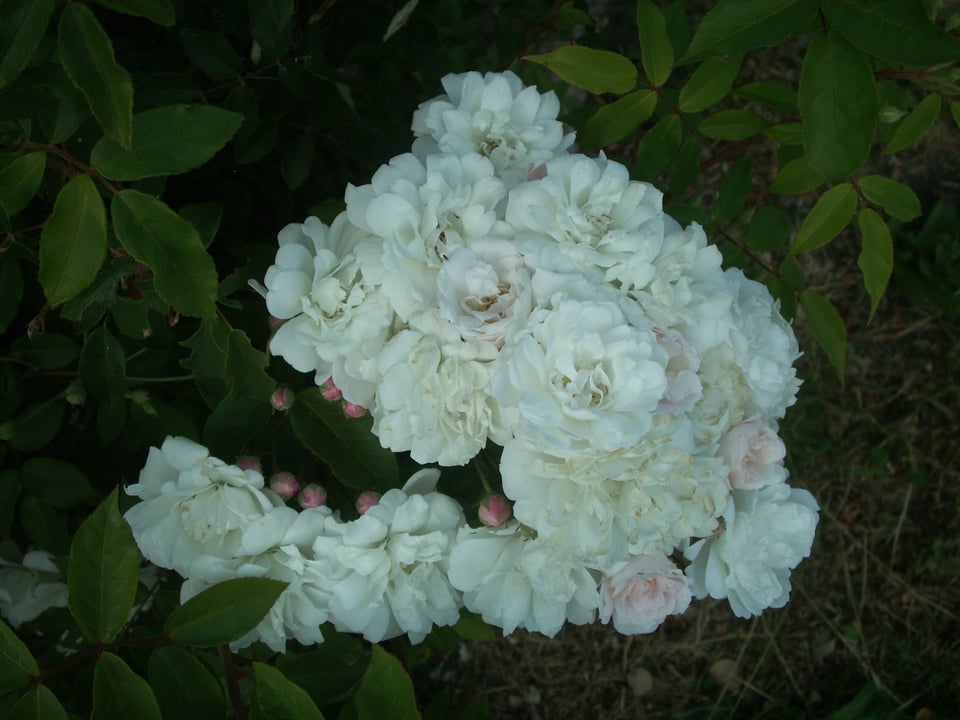
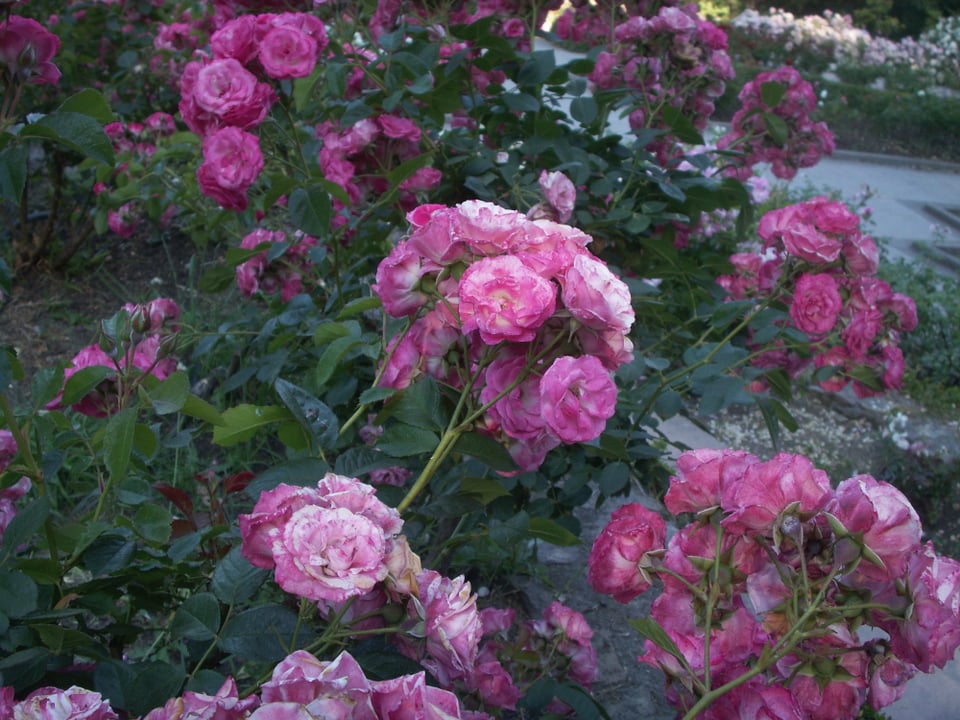
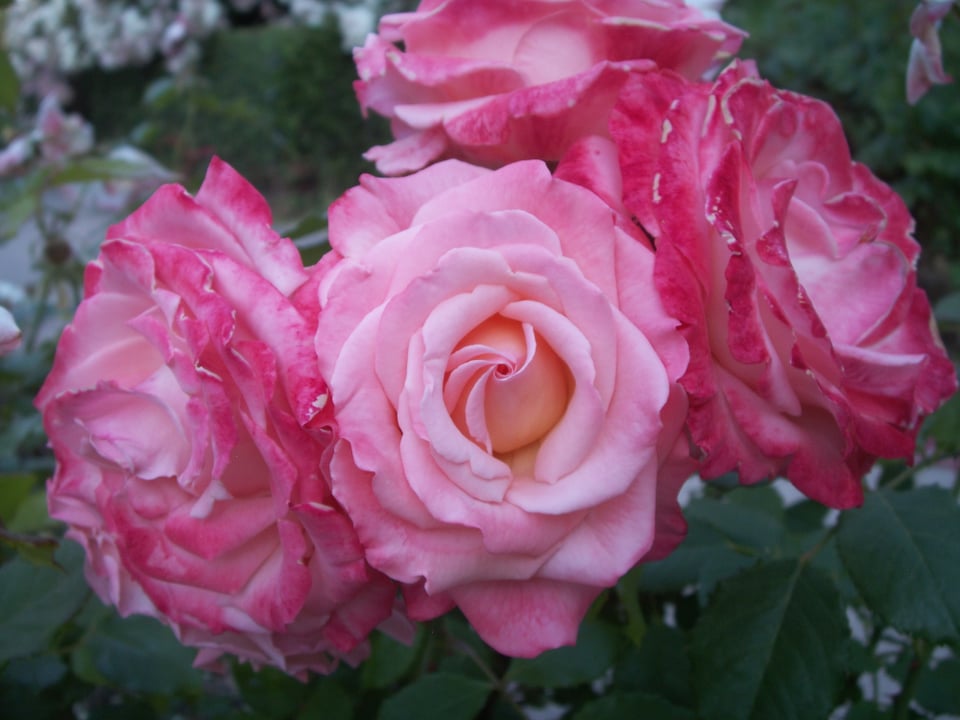
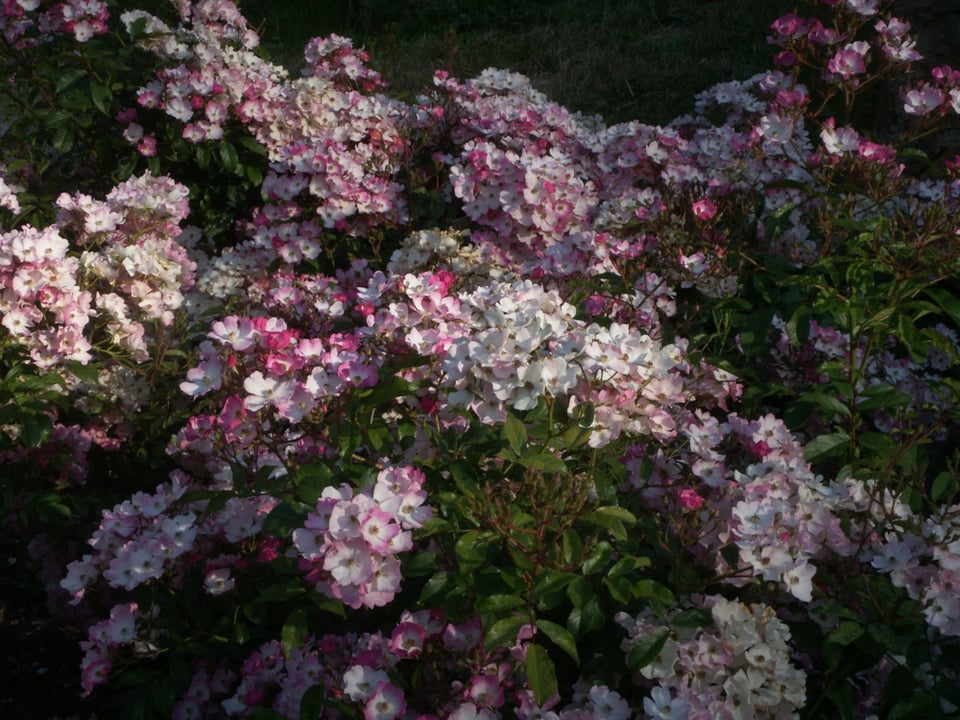
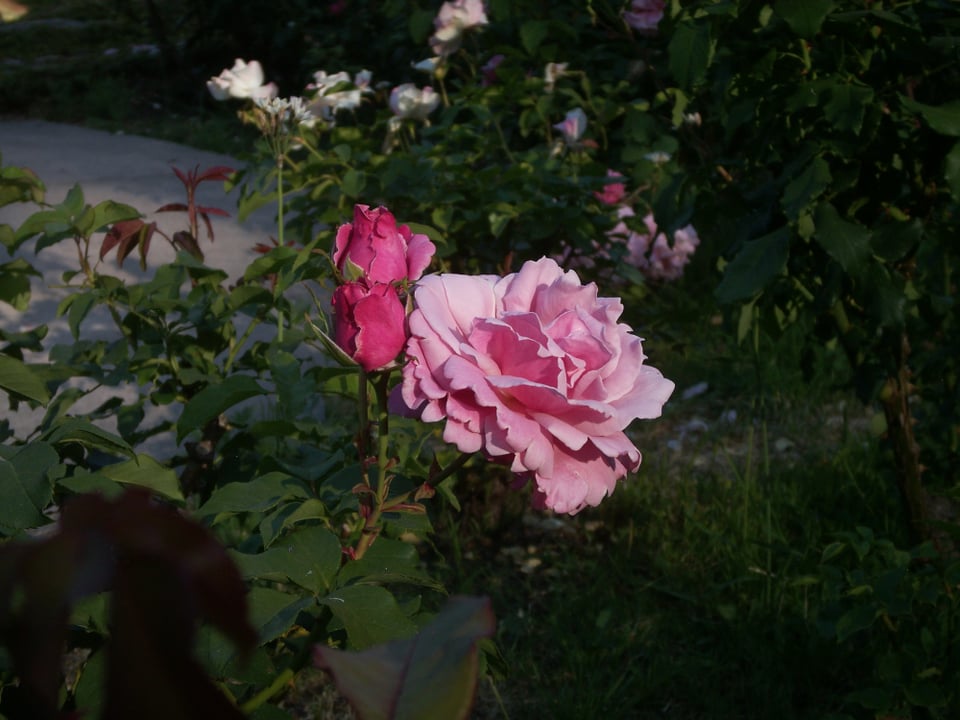
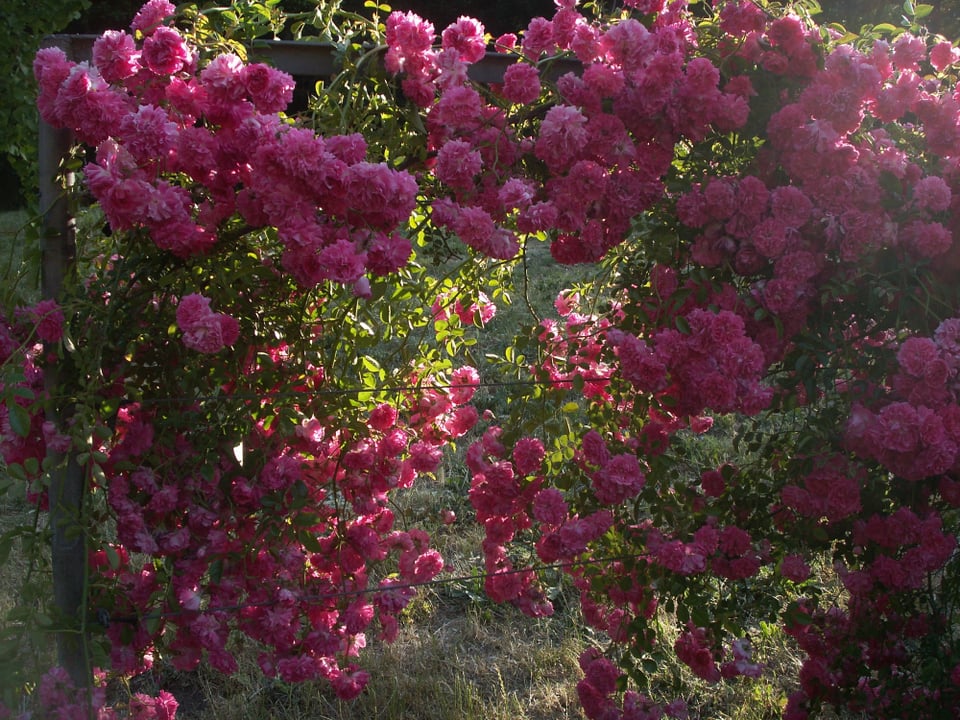
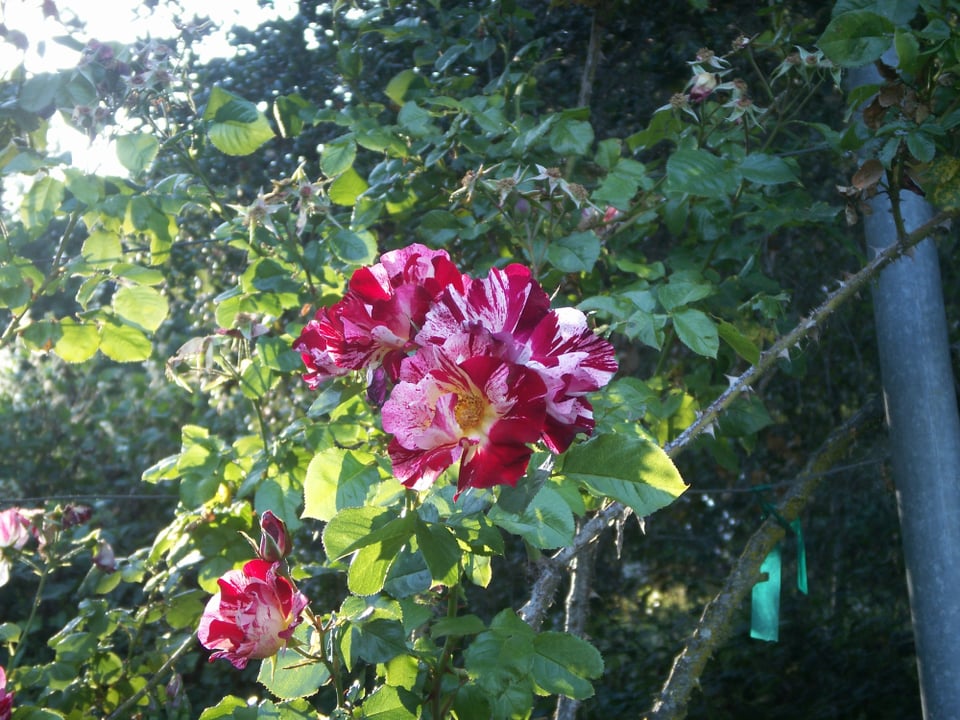
Signature on a check made out to you ↩All of the rose photographs in this post were taken by me on a Konica Minolta Dimage X1 digital camera, in June 2025, at the Morcom Rose Garden in Oakland, California. In early November, thieves ripped out 51 of the garden’s roses, an incident that comes less than two years after a similar desecration at Lake Merritt’s Bonsai Garden. I don’t know if any of the roses pictured in these photographs are among those that were uprooted carelessly and doomed to die. I hope not, but it shouldn’t be a matter of hope.
The Friends of the Morcom Rose Garden are accepting donations here. ↩
You just read issue #35 of How I'm Feeling Now. You can also browse the full archives of this newsletter.