
Three Genius Ideas from MacArthur Fellow Hahrie Han
This year, a political scientist won a genius grant for studying something that might surprise you: not political theory or public policy but the human stuff of how people connect with each other, why they show up, and what keeps them coming back.
Hahrie Han’s research focuses on emotion, relationship, and belonging - the building blocks of political life. As we close out 2025 - a year that was full of political twists and turns - her foundational insights feel more important than ever.
Here are three lessons from her work that I keep coming back to.
Structure collective action for interdependence. “Click-tivism” may have its uses, but it can’t sustain social change. Han insists that real relationships fuel the most persistent and successful movements. “People’s ability to enact change [is] often most potent within trusted social networks,” Han explains.
“People’s ability to enact change [is] often most potent within trusted social networks.” — Hahrie Han
In her book, How Organizations Develop Activists, Han asserts that trust-full organizations invite volunteers into work that “brings them into contact with each other, gives them some strategic autonomy, and shows them how their work fits into a larger whole.” What might this look like in practice? Organizing postcard parties rather than relying on individualized email advocacy, asking a small group to brainstorm a solution and then report back with ideas - anything that draws people together in creative and productive ways.
Transformational change requires emotional safety. Han’s recent book, Undivided: The Quest for Racial Solidarity in an American Church, chronicles a Midwestern megachurch’s movement toward racial reconciliation and racial justice. Undivided connects social science with close observation.
Han details how good organizers create conditions of emotional safety. There is vulnerability at the heart of social change work. When there is safety, vulnerability can generate trust rather than shame.
How does this show up in practice? Han describes how a core team tasked with planning advocacy campaigns always began meetings sharing what was on their mind or in their heart. Everyone on the team came to know what the work meant them and to each other. They were poised to trust one another even when they disagreed on tactics or timing.
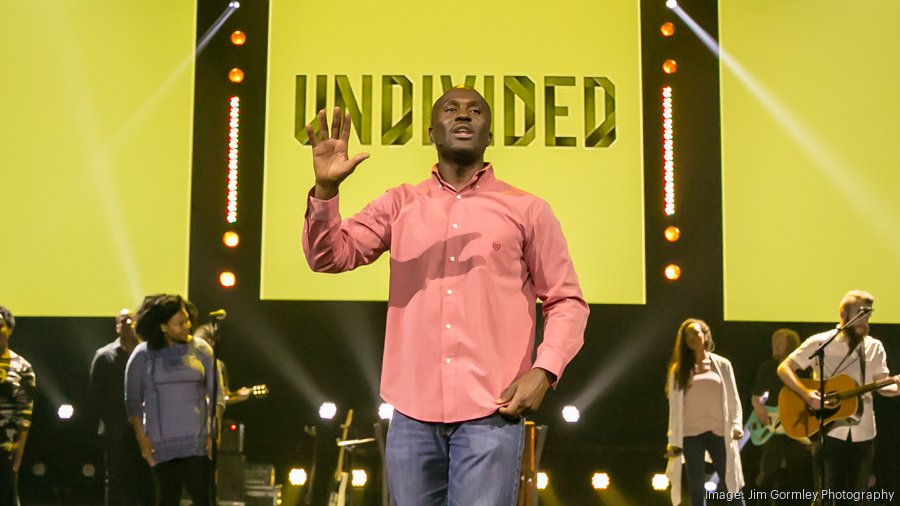
Pastor Chuck Mingo, founder of Undivided at Crossroads Church.
Photo credit: Cincinnati Business Journal
Social movements can draw lessons from faith without platforming toxic religion. Han takes religion seriously as a feature of American life. The megachurch she studied for Undivided - a congregation organized into small groups that meet regularly for Bible study and social support - resembles thousands of other American churches. She noticed that this structure offers people opportunities to grow as leaders, to operate with interdependence, and to build trust.
The church’s principle: “Belonging comes before belief,” brought diverse people into a common fold. Those who care about building successful social movements can draw lessons from this model.
To learn more, check out the work of Living Undivided.
Recent Events
In October, I presented to early childhood advocates at Groundwork Ohio’s Movement Building Institute. We discussed the “religious attention gap” and the importance of self-awareness, patience, and a commitment to showing up fully in our efforts to bridge social divides.
At the November, Alliance for Early Success CONNECT gathering, I moderated a panel on social media influencers and early childhood advocacy. I loved learning from an amazing panel of women who use communication for good. CONNECT also provided an amazing opportunity to learn from the veteran organizer, Loretta Ross, whose advice that we “call one another in” resonated deeply.
—---
Thank you for reading Hope& Practice this year. I am so grateful to each of you for the work you do to create health and peace in your communities.
With hope for this year and the next,
Rachel