Reading Short Books
Hello there!
Today:
choosing what to read
short books
some things I’ve enjoyed lately
CHOOSING WHAT TO READ
In 2024 I read a load of debut novels and had an exhausting but really enjoyable reading year. In 2025 I just read whatever I felt like, and I had, honestly, a slightly disappointing reading year. So this year, I’ve decided to go back to having some artificial constraints to help me choose what to read. And I'm using the Books Peckham reading calendar to do it:
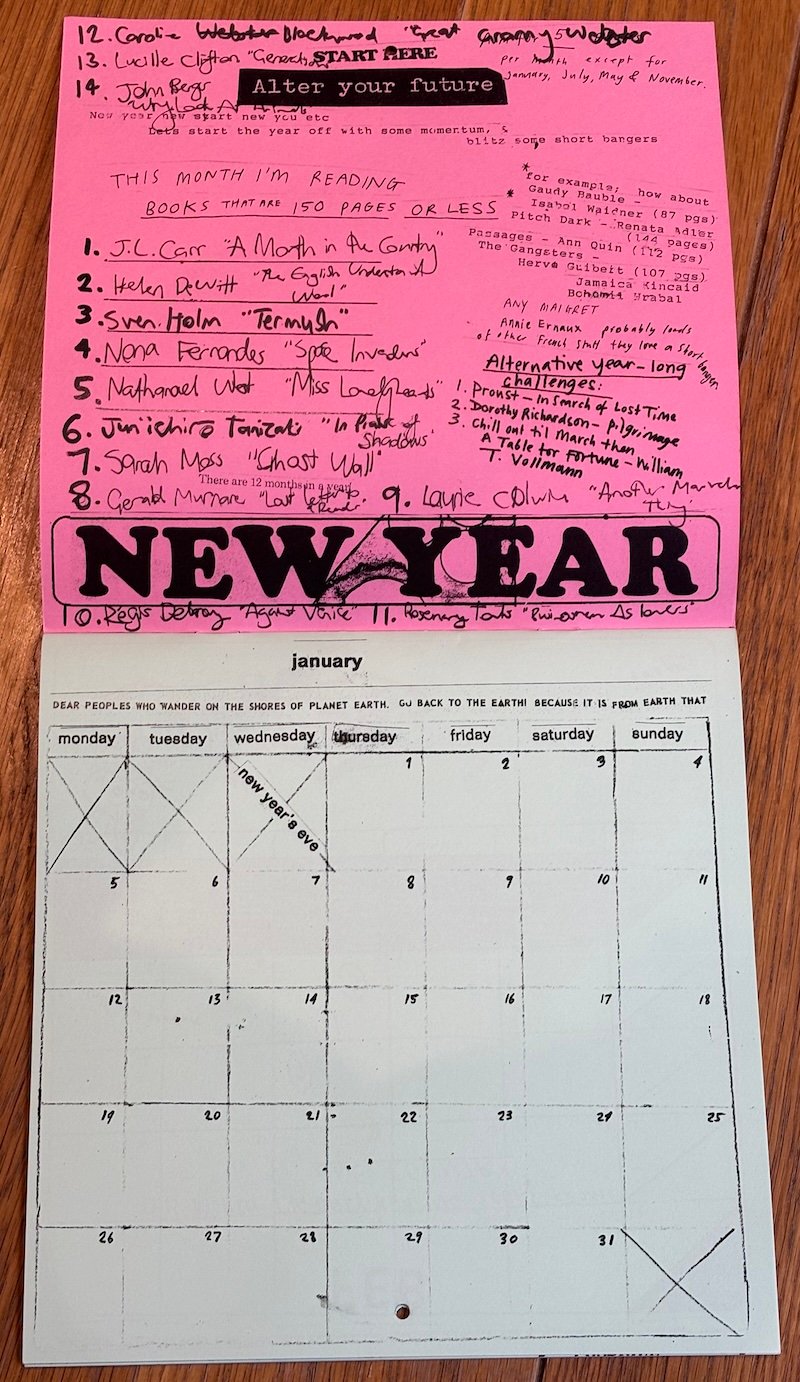
The calendar provides a series of monthly reading prompts. Each month, you fill in the books you choose as you read them. It's like one those Instagram reading charts but instead of being designed in Canva by a former life coach who quit to run a yarn shop by the sea (“a book set in your favourite season”, “neurodivergent x neurotypical romance rep <3 <3”, “animal on the cover”), it was designed — as you can see — on the back of some unpaid electricity bills by a projectionist at an unlicensed cinema who has stumbled into our world through a time tunnel from a 1992 warehouse commune (“five books featuring crimes you intend to commit this year”, “book from a small press NOT founded by someone with rich parents”). If all readers are at heart one of these two archetypes, I am, I guess, a yarn coach who secretly yearns for the approval of the time tunnel projectionists. So obviously I was drawn to “photocopied hand-drawn calendar that’s only available if you go to a particular shop that’s not even near a tube station”.
In either aesthetic form, the idea of reading prompts is the same: to nudge people into less automatic reading habits. Maybe towards reading more broadly; maybe just towards being more considered. I like it as a concept! I particularly liked the idea of using prompts to get myself to read a bunch of books that I own but haven’t read.
READING SHORT BOOKS
January in the Books Peckham calendar was “short bangers”: books under 150 pages. So I gathered up all the unread sub-150-pagers I could find in the house, and put them in a pile, and read the ones I was in the mood for.
It went pretty well. I loved a lot of the books I ended up reading. That said: god, short books are exhausting, aren’t they? Part of it is having to constantly get to know a new situation and voice and set of characters. Part of it is the fact that I was picking from books I already owned: there are straightforwardly fun short books, but I think when I buy a fun, light, plotty 140-pager I probably just read it straight away. Whereas if I buy eg a slender but searing deconstruction of generational trauma or a dizzying meditation on the new misogyny, then even if it’s quite short it may not find its way immediately to my bedside table.
Some of it is also just the nature of short books. Like a short cocktail, right? Usually quite intense and focused and perhaps a little overpowering. When I snuck in a forbidden medium-length book, ah, it was such a relief. There was space to breathe! Diversions and jokes and weird bits that didn’t quite fit the main narrative! Ahhhh! A book’s worth of stuff, plus a little messing around.
Anyway, here are notes on the short books that I have anything to say about:
J.L. Carr: A Month in the Country. A young man spends a summer restoring an old church mural, just after the first world war. This is so good! Expansive and gentle and summery and just rammed with different ways to feel about the past.
Lucille Clifton: Generations: a Memoir. Clifton is mostly a poet; this is very rich and moves kind-of sidelong. Clifton following stories of her family and its history: who said what about who, names that repeat, the impact of slavery sometimes glancingly and sometimes very very directly, the intensity of surviving and carrying on, jokes, joy, touching on the same stories at different angles.
Helen DeWitt: The English Understand Wool. A precocious young woman discovers some upsetting things and deals with them with great aplomb; obviously DeWitt is an incredible writer and this felt really light and spacious despite the brevity.
Nona Fernández: Space Invaders. Set during and just after the Pinochet dictatorship in Chile, a kind-of dreamy strange unmoored book about the memories that a group of young people summon up about a classmate of theirs who died young. To read it does feel weirdly like remembering something.
Gerald Murnane: Last Letter to a Reader. I didn't love this but I did find it interesting; a short essay from Murnane on each of his published books. It’s neat to see his sense of the shape of his career, and it's very funny when he gets into a kind-of "MY long sentences are very structurally complex but THOMAS PYNCHON'S long sentences are merely long" thing.
Nathanael West: Miss Lonelyhearts. Yeah okay I did not enjoy this exactly, it is such an unpleasant little book, but certainly it's good.
Also read and enjoyed: John Berger’s Why Look at Animals?, Caroline Blackwood’s Great Granny Webster, Laurie Colwin’s Another Marvelous Thing, Régis Debray’s Against Venice, Sven Holm’s Termush, Jun’ichirō Tanizaki’s In Praise of Shadows, Rosemary Tonks’ Businessmen as Lovers. And Sarah Moss’s Ghost Wall but I talked about that last newsletter.
And now Short Books January is over! February’s prompt is “books from one country”. I’ve picked Australia which is obviously a bit of a cheat — I’m from there, I have read a whole lot of Australian books already, it’s not exactly going to expand my understanding of world literature. But also I am going to be in Australia for most of February, so it feels appropriate. Plus I really want to read the new Madeleine Gray.
SOME THINGS I’VE ENJOYED LATELY
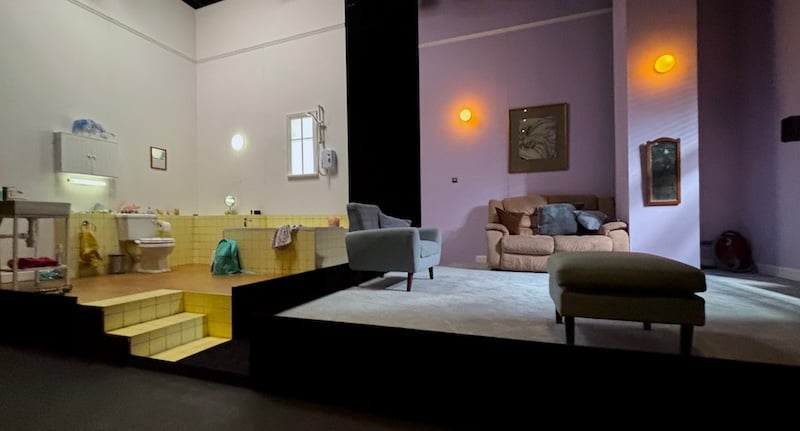
Theatre: Miriam Battye's The Virgins at Soho Theatre is excellent. Six teenagers hanging out in a house, planning their night out, being mean and anxious and vulnerable and bold and weird. Slightly horrifying at times of course. Very funny. And what a gorgeous set. Go see the play to find out if the toilet really flushes.
Game: The game KOLYDR by Adam Saltsman (free, play in browser). Little action game about exploding things and not getting exploded. Ah it’s lovely, neat and simple but with space for you to grow to understand it better and figure out slightly more complex strategies for not getting exploded. I also liked this piece about it on very good new games publication Jank.
Nieces: I’ve got one now! Recommended. Mine is wonderful. Very long baby. I tell people that and they go “oh yeah?” and then I show them a photo that they prepare to look at politely but then they blink and go “oh, wow, she is long”.
Speak soon,
Holly

