History.Workshoppin’: Issue 11 (May 2026)
New projects, new research, and old and new disco
It’s been a while since I last wrote you all! I had a great time leading my Ray Carney’s Harlem tour and its sequel at Jane’s Walk NYC (and was honored to serve among four outstanding folks on the steering committee for the largest festival in MAS’s history). It’s been a busy time for me juggling different projects, which is why this is later than normal. So let’s talk about it!
Coming Up Next
Just a couple of independent tours (bookable on Fareharbor) as part of my summer schedule, which is otherwise booked with programming in partnership with Brooklyn Brainery, Untapped New York, Doubleday Books, and (in very exciting news) the Center for Brooklyn History, as part of their Battle of Brooklyn: Fought and Remembered exhibition.
June 2026
June 17, 6:30 pm: The Olympics that Weren't: NYC's Bid for the 2012 Games (class at Brooklyn Brainery)
June 21, 10 am: Green-Wood, Sunset Park, and LGBTQS Lives
July 2026
No tours this month, as I’m booked and busy with day-job stuff, but I’ll be co-presenting a session at the Teaching Black History Conference at SUNY Buffalo 7/24 and 7/25
August 2026
August 2, 10:30 am: “The Perfect Square Has No Corners”: The Harlem Trilogy Heads Downtown (in partnership with Doubleday Books, exclusive to Untapped New York Insiders)
August 8, 1 pm: The Battle of Brooklyn: Fought and Remembered exhibition tour (at the Center for Brooklyn History)
August 15, 1 pm: The Battle of Brooklyn at CBH
August 22, 1 pm: The Battle of Brooklyn at CBH
August 29, 1 pm: The Battle of Brooklyn at CBH
Looking to book a private tour? Email me.
Something from the Archives
A chunk of my new Olympics class covers the antecedents to the NYC2012 bid. Part of this is the bid’s direct predecessor for 2008 (which got rolled over when the USOC decided not to challenge Beijing), and part is a series of world-class sporting events, from the tennis US Open to the golf US Open to the Millrose Games (which is not a US Open at all). But an intriguing folder presented itself when looking through the Municipal Archives’s files: “New York Summer Olympics 1984.”
Yes, the city had a bid in 1977 for the ‘84 summer games, amid “Ford to City: Drop Dead” and the Son of Sam. (In spite of the city being broke, hollowed out, and with enough crime for the city to make those Fear City pamphlets, sixteen and a half million people visited the city, the largest tourist draw anywhere in the world.) Ultimately Los Angeles won the USOC’s endorsement, and the IOC’s unanimous support, with the city being a big, bad, broke-ass nightmare being the primary factor.
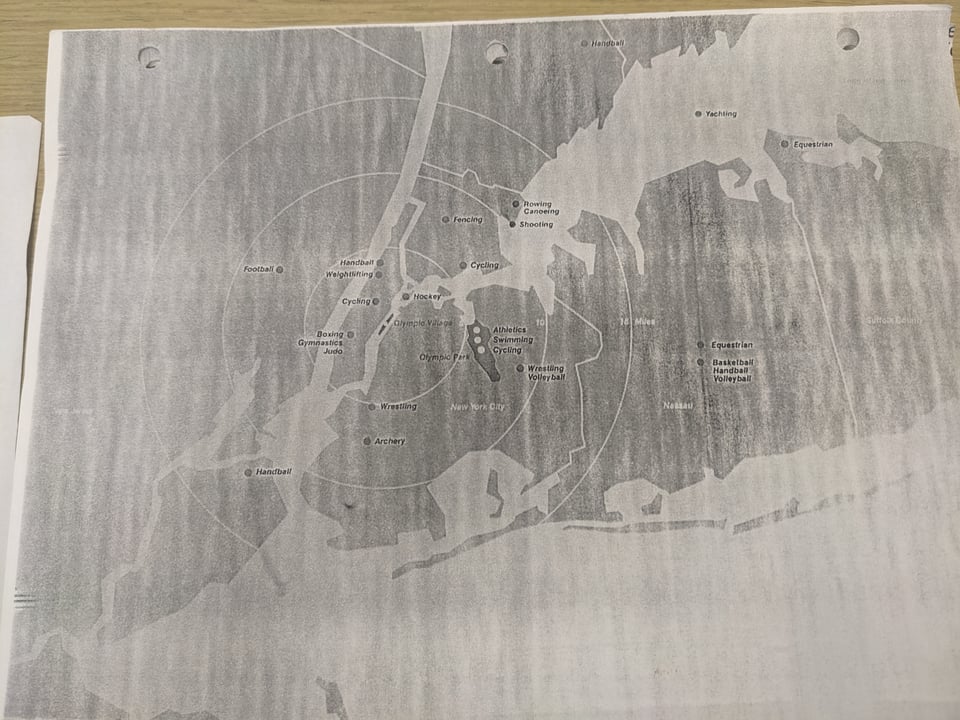
The bid—directed by Richard Ravitch, as much a latter-day power broker in the city and state as Daniel Doctoroff would be in the Bloomberg years—matched these urban anxieties. Much of the Games were on the periphery: basketball, handball, and volleyball at the Nassau Coliseum; equestrian at Caumsett State Park and Roosevelt Raceway, also in Nassau County; soccer at the Meadowlands; and the campuses of Columbia, CCNY, Fordham, Pratt, St. John’s, and what’s now the College of Staten Island for everything from fencing to wrestling. The only proposed venues in Manhattan below 110th were the triathlon at Central Park and Madison Square Garden and its adjoining theater (then the Felt Forum) for boxing and gymnastics, plus field hockey if you count Randall’s Island’s own Downing Stadium. Brooklyn was represented solely with archery at the Parade Grounds.
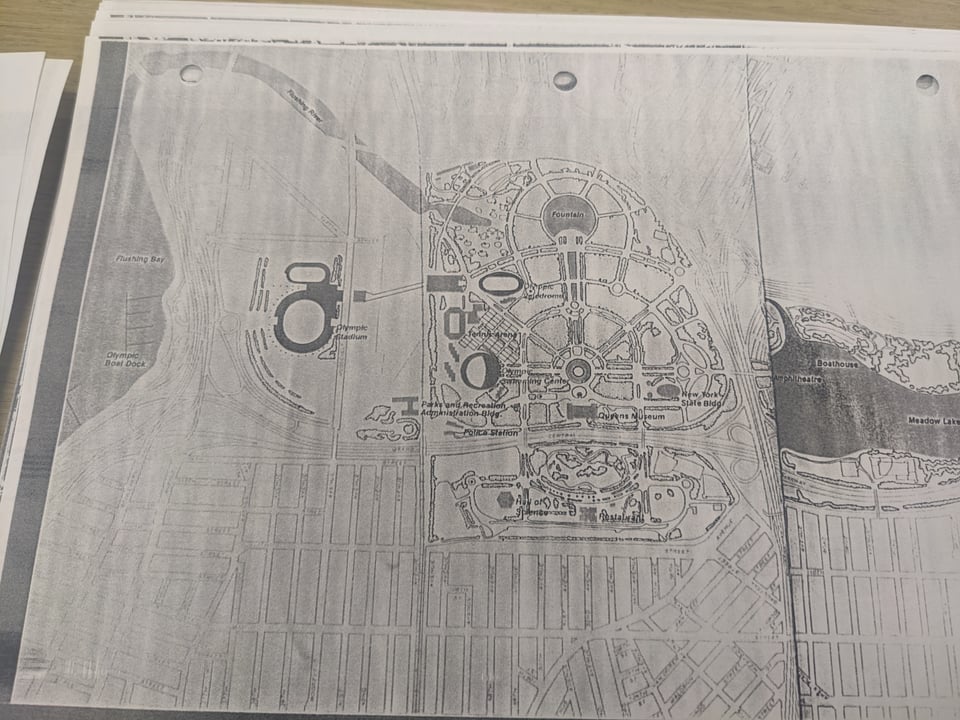
The centerpiece of the Games was a familiar site for big international events: a complex at Flushing Meadows, with a new velodrome and pool and a renovated and expanded Shea Stadium for athletics and the opening and closing ceremonies. (Donald Grant was essentially the James Dolan of the bid, sabotaging the Olympic Stadium by threatening to move or sell the Mets if they had to move out of Shea even temporarily.) Yet even here, unlike the World’s Fairs, the impact on the park and the city was to be minimal, and in the case of Shea, essentially short-lived save for another 15,000 permanent seats. The bid was less an opportunity to remake the city, but to endure it.
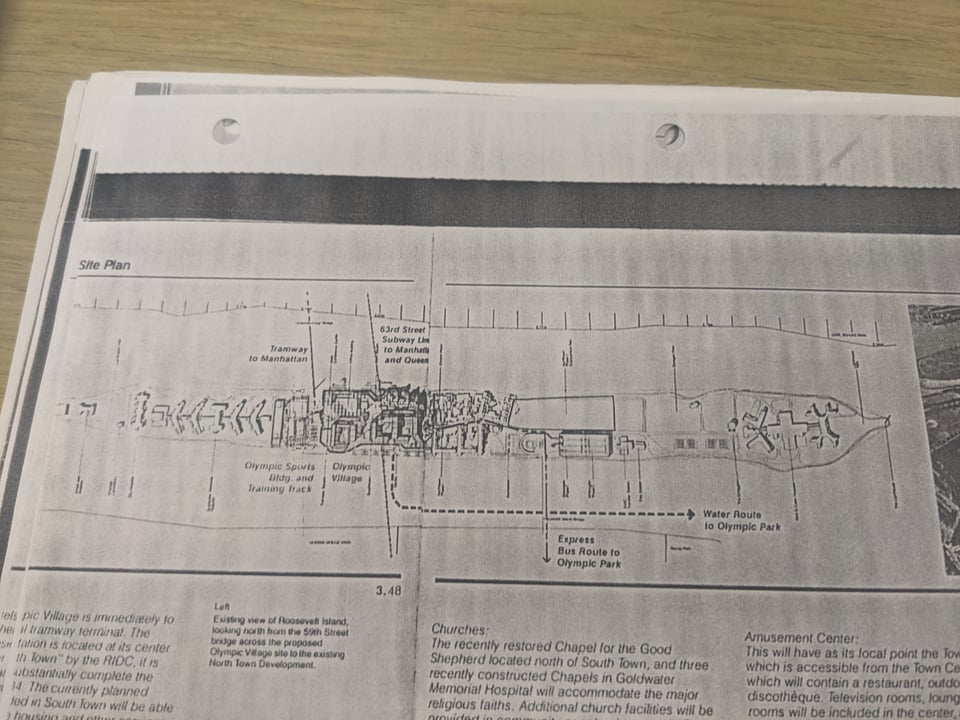
The one exception, and the piece of the bid that got the highest marks from the USOC, was the Olympic Village, to be built at Southpoint on Roosevelt Island. The state’s urban Development Corporation (now part of Empire State Development) had received a 99-year master lease on the island from the city; the Olympic Village would be the catalyst for the southern stretch of new housing on the slender strip. The new 63rd Street Tunnel was touted for direct subway service into Midtown and Queens for the Olympic Family, though it wouldn’t actually get done for subway service until 1989, with the Tramway built as an ersatz transit solution amid the delays. (Even once opened, eastbound subway service just went one stop east to Queensbridge.) And in what would end up a critical part of the NYC2012 bid, ferry service was proposed, in this case from the east bank of Roosevelt Island (essentially at the site of the NYC Ferry landing today) to the World’s Fair Marina.
The 2008/2012 bids, borne out of New York essentially emerging from its ‘70s nadir, leaned into these foundational shifts in the built environment, from remaking new neighborhoods to harnessing the waterfront. About a half-dozen sites were nodes for activity as part of the bid, with even more considered. Yet the legacy of the ‘84 Games, both elements of New York’s bid — Flushing Meadows in particular, of course — and the legacies of Los Angeles, loomed large.
(And, as it turns out, while the city didn’t get the Olympics in 1984, Long Island got the Paralympics. But to hear more about that, class is in session on June 17.)
Some Sensory Stimuli
We’re on the cusp of summertime, and for the past few months I’ve been pining for some hot, sweaty dancing. But this sensory stimuli actually draws from the Winter Games in Milano-Cortina. Alysa Liu’s free skate to take gold was awesome in its leave-it-all-on-the-ice-and-have-fun-out-there energy. (“Now that’s what I’m fucking talking about,” indeed.) But it was also notable to me for the music selection. I don’t know how she decided to use Donna Summer’s version of “Macarthur Park,” but it reminded me of how I used to listen, and dance my own routines, to Summer’s “On the Radio” and “Last Dance” as a kid, a throwback to my mom’s days at Studio 54, a few years removed from its Warhol-era heyday. (My favorite CDs in my mom’s collection were Summer’s greatest hits box set and the original Broadway soundtrack of Les Miz. I didn’t know I was queer then, but there were big flashing signs.) And after the Games wrapped up in Milan, and Jessie Ware dropped the second single from her new album, it was clear: Disco Never Died. So I made a playlist of my favorites to honor that very fact. I’ve been bopping around to it for the months since, and I hope this gets you dancing — or even skating! — too.
A Cat
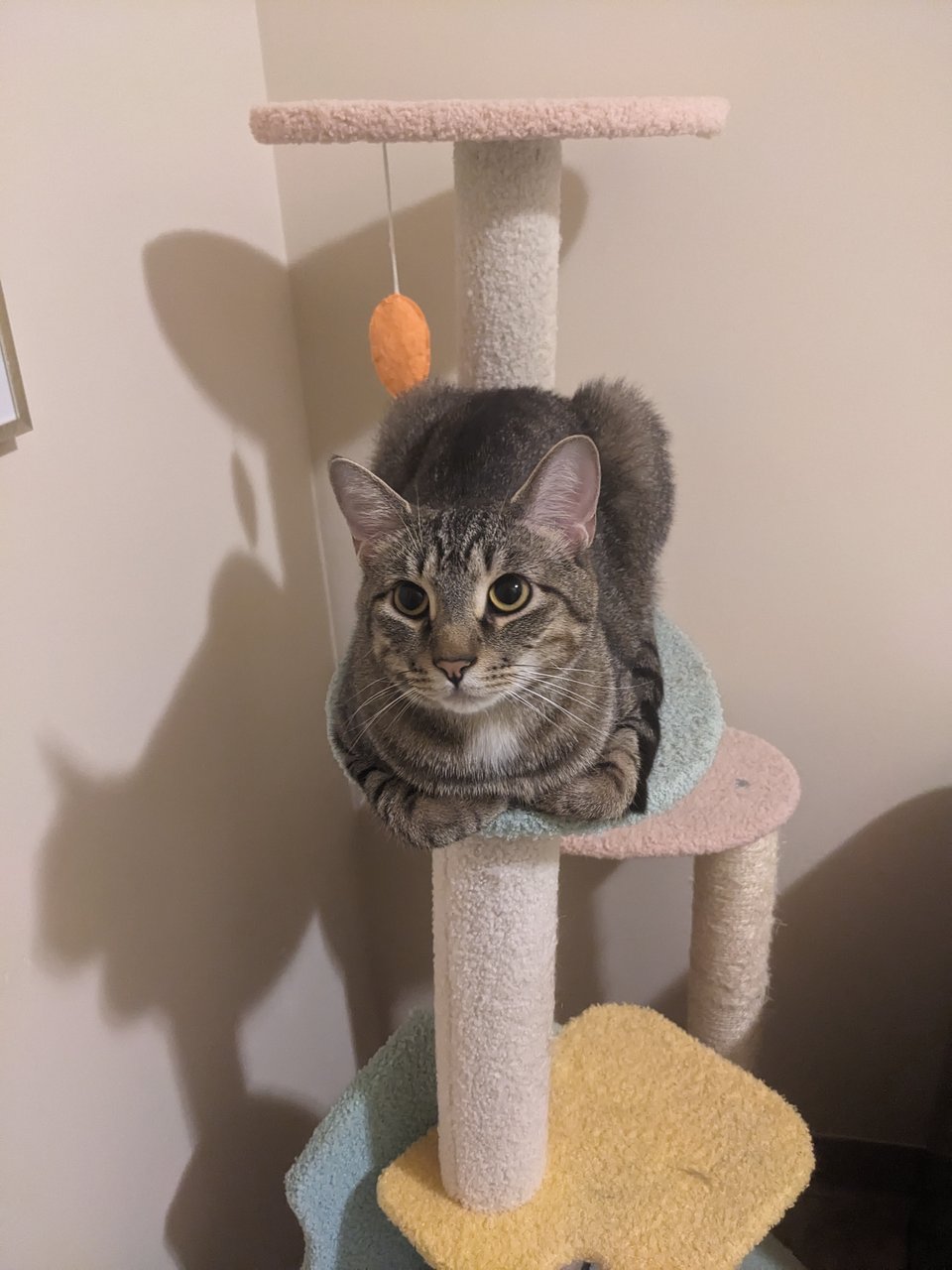
Oh, Vic. After a couple months in our care, his strictly limited engagement with us is coming to a close. He’ll either be in another foster home or in the café, but in either case he’s still up for adoption and looking for a forever home!
Hope to see you in the streets soon! I’ll be back in touch in late July. Until then, consider forwarding this newsletter to a friend, and stay safe out there.
Did someone forward you this message?If so, subscribe now