
In 2025 I played twenty-nine role-playing games

The year is almost over,
and I didn't do a lot of blogging here, regrettably. Turns out I can't really juggle a day job, a crowdfunding campaign, and a regular newsletter.1 Luckily—for me—the campaign was a success and I’m still employed, so I'm two for three. I hope to get back to writing my newsletter more regularly in 2026—I still have plenty of thoughts to share.
That said, I wasn't about to let 2025 go by without the mini review bonanza of every game I played this year, although I almost bit off more than I could chew there too. I might need to switch to a different format. If I manage to collect a little more information next year (hours played, with whom, over how many sessions) I might be able to make a charmingly data-driven post about my gaming habits. Of course, I would still write a few words on the games that impacted me the most.
I already have a couple of games on my calendar. I've set up some parallel journaling for Koriko, a monthly open table of Under Hollow Hills, and an honest-to-God evening-filling larp. Anyway, without further ado, here are all the twenty-nine games I played this year. First up, oneshots. Then, campaigns.
Oneshots
1. Ten Candles (again)
Ten Candles—the game in which the eponymous number of candles go out one after another until you're in the dark and your characters have met their end—is rightly acclaimed. I've played it a couple of times now, and I've gotten a better experience each time. I can play towards the game's end more intentionally. The excitement at the novelty of the ritual has been exchanged for a more conscious engagement with it. It hasn't lost its magic yet, and I don't think it will anytime soon.
2. Last Train to Bremen
One of this year's stand-out games (that brought forth a compelling, fresh example of what actual play can look like). The train-car story frame, the four musicians on the run from the devil, the twist-inducing secrets—they all point towards very specific narratives. The catch? The content of your scenes is partly determined by a game of liar's dice. I liked my playthrough a lot, but there's two things I would do differently next time: one, I'd metagame my lies and challenges to influence the nature of my scenes more, and two, I'd play the game, liar’s dice and all, as a table larp, dragging up bad memories in character.
3. Outgunned Adventure
Someone brought the quickstart for Outgunned’s adventure fiction game to the meetup, so I got to try it out there. We picked some characters—I was the protagonist-coded Daredevil—and set off to look for Eric the Red’s icy tomb in Greenland. Getting past obstacles involved a dicepool with a nice push-your-luck mechanic, but an adventure game primarily needs quality modules. Looking over the quickstart now, I think the information isn’t clearly presented, but the contents are as fun as I remember them being.
4. Two-Hand Path (again)
My brother and I like to come back to this Yahtzee-a-like, or, as creator Mikey Hamm likes to call it: this ‘paper videogame’. If you’re unfamiliar, in Two-Hand Path you play a wizard trying to survive after the biblical apocalypse, raiding supermarkets and investigating ruined churches. Any upgrades, scars or tattoos you gain while you work your way through these ‘dungeons’ becomes a doodle on your character sheet: a picture of two hands. 2026 might bring a successor, though. Michael Elliott’s cyberpunk hacking in Card Drives could get us to doodle on playing cards instead.
5. Trophy Gold (again)
Last year, I thought my bastard of a treasure hunter would finally bite it during their next incursion. They had accrued near maximum Ruin, the damage-fate amalgam Trophy has you keep track of. Not only did the bastard survive their trek into the mountains, they managed to find the rumored gold, and could pay to get healed afterwards. It's an unbelievable result, made all the more poignant because this character was truly close to disappearing into darkness. Trophy Gold, man. It's solid. I want to play it again-again.
6. Our Lady
This was a gift I finally got to table. It needs exactly three players, so when two people from my regular group were unavailable, I pounced. Our Lady is Descended from the Queen, which means it's a game where you draw cards, answer questions, and slowly build up a story. In this one, the questions are about the appearance of a divine spirit. You play as one of three children who witness it and bear the consequences of that visitation. Do people believe you? How does this event change the fate of the town? How does it change you? It was a great way to spend an evening feeling things about religion.
7. Mouth Brood
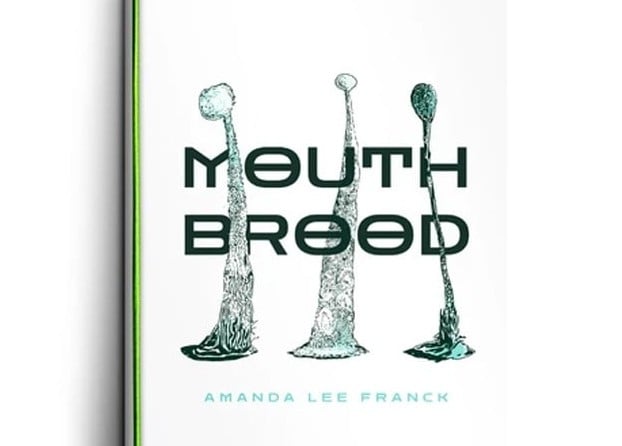
Together, the OSR Onion and Mouth Brood are responsible for the new level of understanding I reached about old school role-play. Actually, in the case of Mouth Brood—an adventure module about a strange structure that houses an alien ecosystem—it had more to do with how my friend ran it. Namely: without much of a rule set to speak of. Some character descriptions and a couple of tools were enough to support our investigation of this dangerously interesting place. As the OSR Onion puts it, 'the adventure is the central concern of the OSR.' Damn straight it is.
8. Cthulu Dark
Cthulu Dark is a tiny game of investigative horror—I wrote about its great little dice mechanic in April. Here's the skinny. You, a relatively ordinary person and your equally ordinary friends, will get swept up in a mystery that will threaten to swallow y'alls whole. Reviewing my year like this, it's become clear to me that I'm actually itching to play more Cthulu Dark. I think I've been saving myself for the eventual release of Cosmic Dark, its space horror sister, but I should really try to get into another tragic horror mystery next year (too).
9. Daggerheart
Of course I was curious about the big D of this year. I only played through half of the introductory scenario, but I found it pretty compelling. The old 5th edition of Dungeons & Dragons tired me out pretty significantly, but Darrington's take on heroic fantasy is, in many ways, what I wanted to be playing all along. There are still fiddly bits here, but they're, like, the good kind? And I'm professionally curious about the powers and class abilities on cards. Imagine expanding on a ttrpg by literally releasing booster packs.
10. Butter Princess
I’m starting to think I prefer Trophy Gold over Dark. Both are games about doomed treasure hunters, but where Gold takes a more conventional approach to its scenarios, Dark is a straight road to doom through a series of rings, each more desperate than the last. Butter Princess is based on Trophy Dark and places a bust carved out of 90 pounds of butter in the middle of consecutive rings of midwestern madness. Play amounts to moving through a series of set pieces—delightfully thematic, but also slightly repetitive. A top notch spectacle, but I felt somewhat tired and overstimulated as the credits rolled.
11. Slugblaster (again)
Ran a birthday oneshot of these hoverboarding teenagers for a friend. I plopped down the kids in Prismatia, the ‘plane of light’ and micro planets, in search of the raddest spot for a party—ever. Once it gets going, this game is magic, but I didn’t cut to the action quite fast enough this time. Maybe next time I’ll take a note from Sunset Kills—described below—and start with an action scene to get everyone’s energy up before moving into some more meandering material and character scenes.
12. Escape from Dino Island (again)
I like Escape from Dino Island a lot. I've written about the smart way it balances action and downtime, and, well, the game hasn't stopped doing that. In this oneshot I played a veteran who accompanied a young heir. I had fun being both a hardened soldier and a reluctant carer for an, honestly, insufferable boy. Plus, I got to save the day by opening fire on a couple of dinos at exactly the right time. Our GM also managed to bend one the game's relatively silly mystery options towards a body horror-ish reveal, so this was a success, again.
13. Spindlejack
Spindlejack is, I believe, Gareth Damian Martin's first foray into paper videogames. In it, you play a cyberpunked version of a bike courier in the world of Martin's great game Citizen Sleeper 2. As both a person who wrote a poem about their bike this year and a person who cries every time they play the eponymous sleeper, I couldn't stay away. Spindlejack provided me with a fine afternoon of rolling and writing about jumping over space trucks and making my deliveries on time.
14. Mausritter
I wrote a zungeon this year, which is, unincidentally, the year of the zungeon. Inspired by a meme—I'm not too big to admit it—I wrote about a sack of potatoes so old it practically came to life. A perfect scenario for a couple of adventurous mice, I thought. I gave the pamphlet a couple of tests, made some adjustments, did a bit of collage, et voila: The Blighted Sack. It was a great experience that, one, helped me understand all the better why I had had such a good time with Mouth Brood earlier that year, and two, got me interested in bigger dungeons (pray for me).
15. Shut Up, Kiss Me
A friend of mine distilled his experiences with Hearts of Wulin and Pasión de las Pasiones into a melodramatic Lasers & Feelings hack. Shut Up, Kiss Me proves that the key to a great oneshot is the setup. In this case: dramatic triangles and a starting incident that makes the biggest impact on the most comfortable character. I ran this at the rpg meetup and got to wrangle a soap opera out of a couple of naughty nuns and monks. The players started out ready to write a cozy (and quite horny) fanfic but were transformed into a scheming emotional mess soon enough.
16. Sunset Kills
Sunset Kills—which I was inspired to pick up after Mint's review—is a pared down monster hunting game, Powered by the Apocalypse. I took some notes on demonic Christmas elves and brought it to the holiday-themed edition of my rpg meetup, where it did great. Like Shut Up, Kiss Me, it shows the importance of a good premise and a great setup. The best part of this game is this single piece of advice: 'For your first scene, open in the middle of the action. Give the hunters a monster to fight different than the main monster of the session, and let the players feel out their character.'
Campaigns
17. Yazeba's Bed & Breakfast
I had Yazeba's on my list for this year, so I'm very glad I got to play three sessions throughout 2025. I was thoroughly charmed by its wistful, Saturday morning cartoon vibe, each episode featuring a host of different characters finding themselves at the fantastical B&B. I got to delve into the basement, go fishing, write a song, and keep an eye on my trick-or-treating friends. Each time I returned to the b&b, characters had seen the hands of other players, taking them in new directions. If my Concierge will have me, I hope to play a more serious chapter next year, and fight in the pancake war.
18. Our Time On Earth
I asked one of my old university friends to play a letter-writing game with me and he chose this one. Our Time On Earth is about extraterrestrials doing some sort of research on earth. You'll write each other letters about the things you see around you, the things you experience in your everyday life, but you'll try to perceive them through the eyes of your character, who's seeing them for the very first time. I surprised myself by how easy I found writing letters in character—I've tried to play games in which you keep a fictional journal and I've yet to finish one—and I got to see the world anew. You should give this a try.
19. Blades in the Dark: Deep Cuts
I have far too little experience with Blades in the Dark to be a true evangelist for the alternative rules John Harper shared in Deep Cuts, but I can't really imagine playing the game a different way. They're just so interesting and thematic. This campaign was one of the longest of my year. I think good games lower the bar on facilitation, but that doesn't mean you can't still excel at running such a game, which is what my GM did. And, for the first time, I saw just how much Blades is about selling your future to succeed now. That's why they call it success at a cost.
20. The Last Caravan
In one of the more ambitious blogs I did put out this year, I wrote about the reasons The Last Caravan didn't quite work for me. I connected with its subject matter: a dangerous road trip through a United States ravaged by an alien invasion. I also think there's a great Forged in the Dark hidden inside of its covers . And my group did have some poignant and interesting moments, they were just interspersed with scenes and sessions where me and my group felt both restrained and lost at the same time. There's a supplement on the horizon, though, and it promises to unearth the game I might be looking for.
21. We Three Shall Meet Again
We Three Shall Meet Again is about three witches that become cursed to share the same one body. It's a journaling, play-by-post hybrid: you write a diary entry about the day you get to control the body and send a prompt to the next witch to introduce them to the mess they'll wake up to on their day. The only way you three can communicate is by thirteen word notes on a bulletin board. And you'll really have to communicate if you want to stand a chance to break this curse. Listen, this game is weird and special. It's about a lot of things at once and you should play it. It was one of the highlights of my year.
22. Realis
I played through the hottest new indie in three sessions of metafictional madness. On a moon, a city appeared out of nowhere. An expedition was sent in to investigate, but only I returned: incorporeal and an amnesiac. That was where we started. In the end, I think someone killed reality? Truth be told: I was primarily playing to experience Realis' system of sentences. Briefly summarized: statements about the world are measured against each other and change in the aftermath. I concluded that the system hinges on a certain amount of GM prep, but not everyone agrees! Either way, it's very interesting.
23. Night Witches
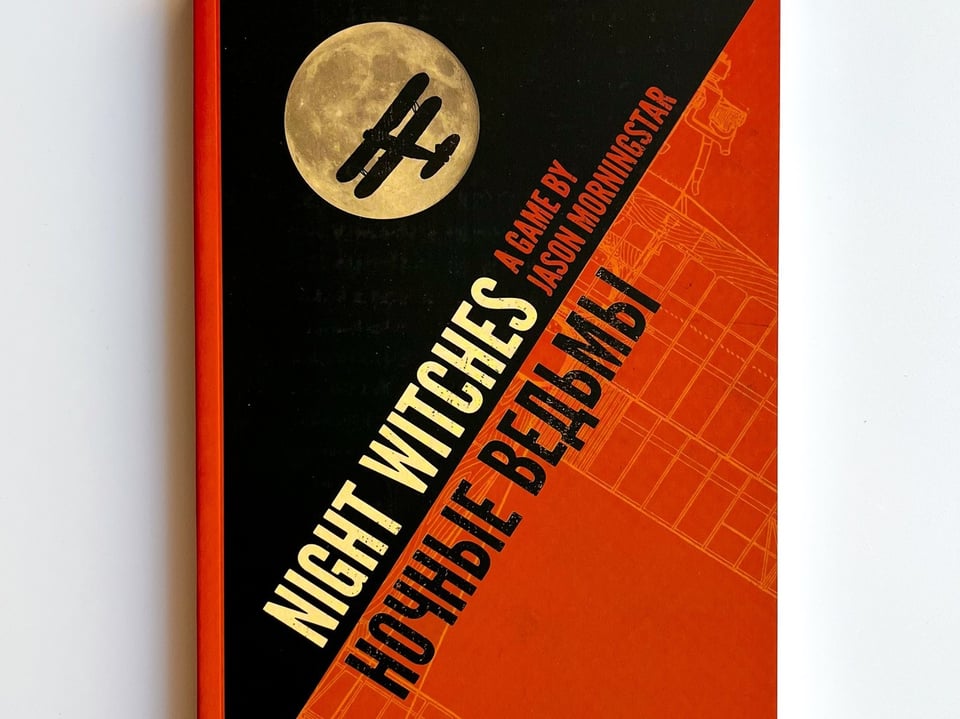
Night Witches—the game about soviet airwomen dropping bombs during World War II—has been my north star in design for almost two years now. At the start of 2025, adamant to play a longer campaign of it with a rotating GM, I looked for sickos among the crowd of the local meetup. The group of sickos I found got together for eleven sessions. I think I've never experienced the fruitful void more clearly than during this campaign. The nightly sorties, the daily drama, it all worked to open up this space for relationships, fate, mourning, care and frail humanity. I will cherish the experience forever.
24. Deathmatch Island
You wake up in a boat that's speeding towards an island. You're not alone: there are two or three other people wiping the sleep from their eyes and you're all wearing matching overalls. You can't remember how you got here, but the document inside your pocket says you've been selected for some kind of game: a battle royale called Deathmatch Island. This is a PARAGON game—based on John Harper’s Greek epic AGON—and I really like running those. Deathmatch Island adds a tasty prison dilemma to the mix and helped me to successfully introduce a green player to the wonderful world of tabletop role-playing.
25. Fight With Spirit (again)
I don't know if I've ever played a second season of a story, but it made a lot of sense for sports anime rpg Fight With Spirit. After winning the summer tournament on a technicality, the Dockside Demons were back to claim the honors (and scholarships) for real this time. I like the way the drama system is tied into to the match phase: any trouble you accept becomes a resource you can expend to better your chances at fencing, volleyball, or, in our case: windjamming. Having gained some systems mastery through our first season, we now knew what to do: push the melodrama so we could win those match-ups.
26. Family Meal
I managed to piece together an ashcan of a game that’s been sloshing around in my brain for a while now: a modern day kitchen drama in the vein of FX’s The Bear. Its current iteration is built on Night Witches’ framework of daily drama and nightly flights, or in this case: nightly service. I had a great time testing its bones, which seem to hold weight well enough. The big challenge, going forward, is to figure out a way to support players who love food and food-based drama, but need help with the specifics of cooking said food. I have some ideas but I’ve also become distracted by others (as is to be expected).
27. Harvest
This game takes place on a small British island during the start of the industrial revolution. Here, it is still believed that omens will foretell the necessity of a human sacrifice to satisfy the island and keep on living in prosperity. As Thomas Manuel aptly put it, in Harvest you play to find out ‘if you are ready to kill for the island or die for it’. Fuck! What an interesting game! Each player takes control of a member of this story’s tragic cast and manipulates their fate through a smart adaptation of Dream Askew’s token mechanics. This time, common pools of tokens double as a clock that counts down each act of the game—I loved it.
28. Working Stiffs
I spent two autumn nights helping playtest this work in progress from Not Writing Games. It's a corporate horror science fiction game that really emphasizes the way Weyland Yutani fucks over their employees in the Alien franchise. The narrative arcs that structure the game, for example, are called 'work sprints'. I shuddered every time Elliot reiterated our 'progress' at the top of the session. My beer-bellied ex-botanist techie had a tough time; the guy thought he had to do everything himself. I can't really think of a more perfect trait for getting yourself xenomorphed.
29. The Slow Knife (again)
When a Frontier Scum oneshot didn't make it through scheduling hell, me and a friend decided to set up a western-themed run of The Slow Knife. This prompt-based game of revenge, inspired by The Count of Monte Cristo, comes with a couple of playsets but also lets you set up your own scenario through a well-written prelude. Within an hour we had imagined a despicable frontier town where religion, money and good-old gun violence keep everyone in line. The heiress our villains chased out of town for—ostensibly—trying to sell back its lands to our Kumeyaay neighbors will probably never return, so they're pretty much set for life.
That's it for now,
Hendrik ten Napel
I wrote thirteen newsletters in 2024 and ten in 2025. So, in a way, I didn't do half-bad. It's just that I started this project in the second half of that year. Maybe, in 2026, I could try to spread out those ten-ish publications a little more evenly throughout the year, instead of burning through them in six months and then bombing you with this megapost out of nowhere. ↩

