
Like many people, I spent a long time staring at this photo of Earth taken by Artemis astronaut Reid Wiseman on April 2:
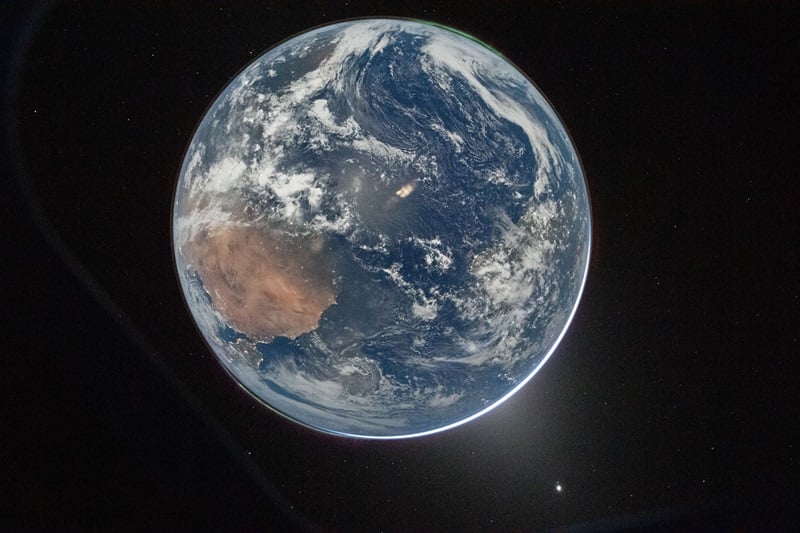
The thin line of atmosphere, with the aurora australis at the top right and the aurora borealis at the bottom left — wow wow wow. Amazing stuff. We may have thought we were used to photos of Earth, but this one, with its perspective so unlike most maps (South America is at 4 o’clock and North Africa is the red-brown land at 8 o’clock), and its amazing details and play of light, resurrected my sense of wonder.
At one point, I put my index finger to my computer screen, without thinking about it, and traced a curving line from Gibraltar down toward the bottom of the globe (which is, in this case, the Atlantic). I was thinking of a journey that plays a key role in the plot of my upcoming novel Mercutio, the real historical journey undertaken by the Vivaldi brothers and their companions. In 1291, two galleys left Genoa, went through the Strait of Gibraltar and disappeared. Their destination was the far east by way of what was then called the Ocean Sea; this probably means they were trying to go around Africa, but it’s also very possible that they were trying to reach India by heading due west from Europe, as that distance was the subject of a lot of debate in the 13th century, and there were some who thought it was a feasible journey. (And yes, they knew the world was round.) Whichever of the two routes they planned to take, it was an incredibly dangerous and ambitious undertaking.
Looking at this photo taken by 21st century explorers put me in mind of those 13th century explorers, who also saw the world with wonder and curiosity, and who also brought all their science to bear in an attempt to understand it. One of the things that linked the two, in my mind, is the fact that Gibraltar was the first landmark I found on Wiseman’s photo, which is often the point I look for to get my bearings on medieval maps of the world.
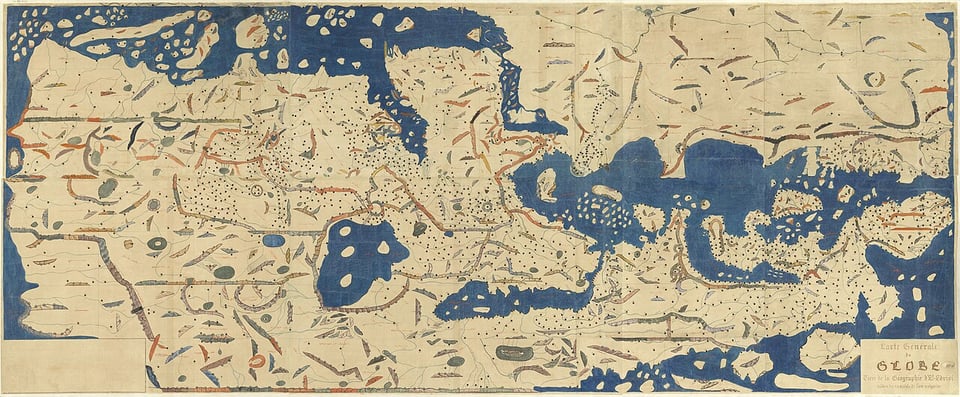
Above, for example, is one of the maps created by Muhammad al-Idrisi in 1154. In this one, south is at the top, and Gibraltar is on the far right.
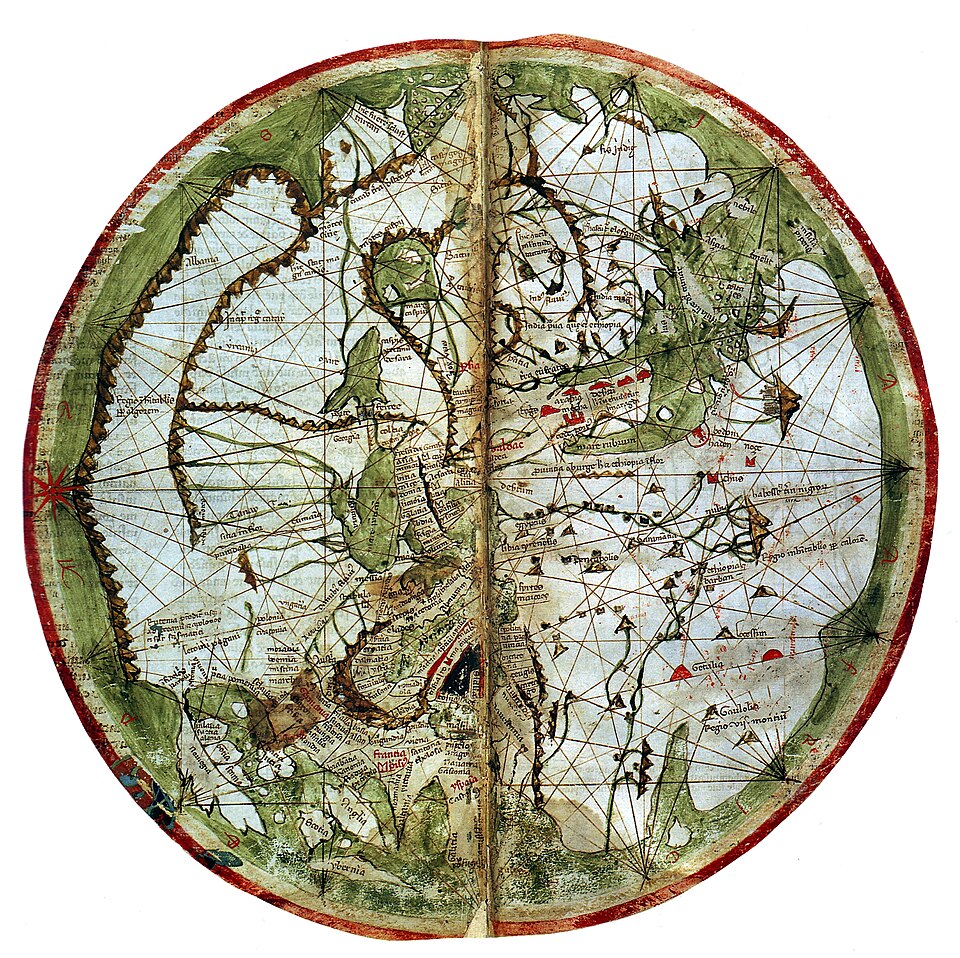
Or in this 1321 map by Pietro Visconte (which reminds me of a walnut), in which east is at the top, Gibraltar is at the bottom near the centre fold; you can see the islands marked Anglia, Scotia and Hibernia at the bottom just to the left. (Visconte was a child in Genoa when the Vivaldi brothers sailed.)
If you poke your finger at the right margin in al-Idrisi’s map, or at the bottom margin in Visconte’s, you’re at the point where the Vivaldi brothers went off the map.
Sometimes people ask me why I’m drawn to write about the European Middle Ages, and in particular the late Middle Ages. I’ve written two unpublished novels set in the 12th century. Of my published novels, Mercutio is set in the 1290s, and The Chatelaine in the 1320s. There’s an 11th century subplot running through The Tapestry of Time. I’ve also published one long piece of interactive fiction about Chaucer and his age, The Road to Canterbury.
What I am drawn to in that period is the curiosity, the ingenuity, the invention, the cross-communication of many cultures and traditions. Every age has had curiosity and ingenuity in it, of course, but I just find the inventiveness of the medieval imagination so deeply weird and wonderful — and in some ways, so familiar.
When I watched this video of astronomer Michelle Thaller talking about how time and space exist as perceptions or concepts, my mind kept going to the medieval scholastics such as William of Ockham and Peter Abelard (the latter gets a bit of a drive-by insult in Mercutio, I’m sorry to say, but for reasons that have nothing to do with his philosophy.)
Trying to understand the universe is not a new pursuit. Cosmologies, in particular the geocentric model that forms part of the worldbuilding (so to speak) in Dante’s Divine Comedy, are also plot points in Mercutio.
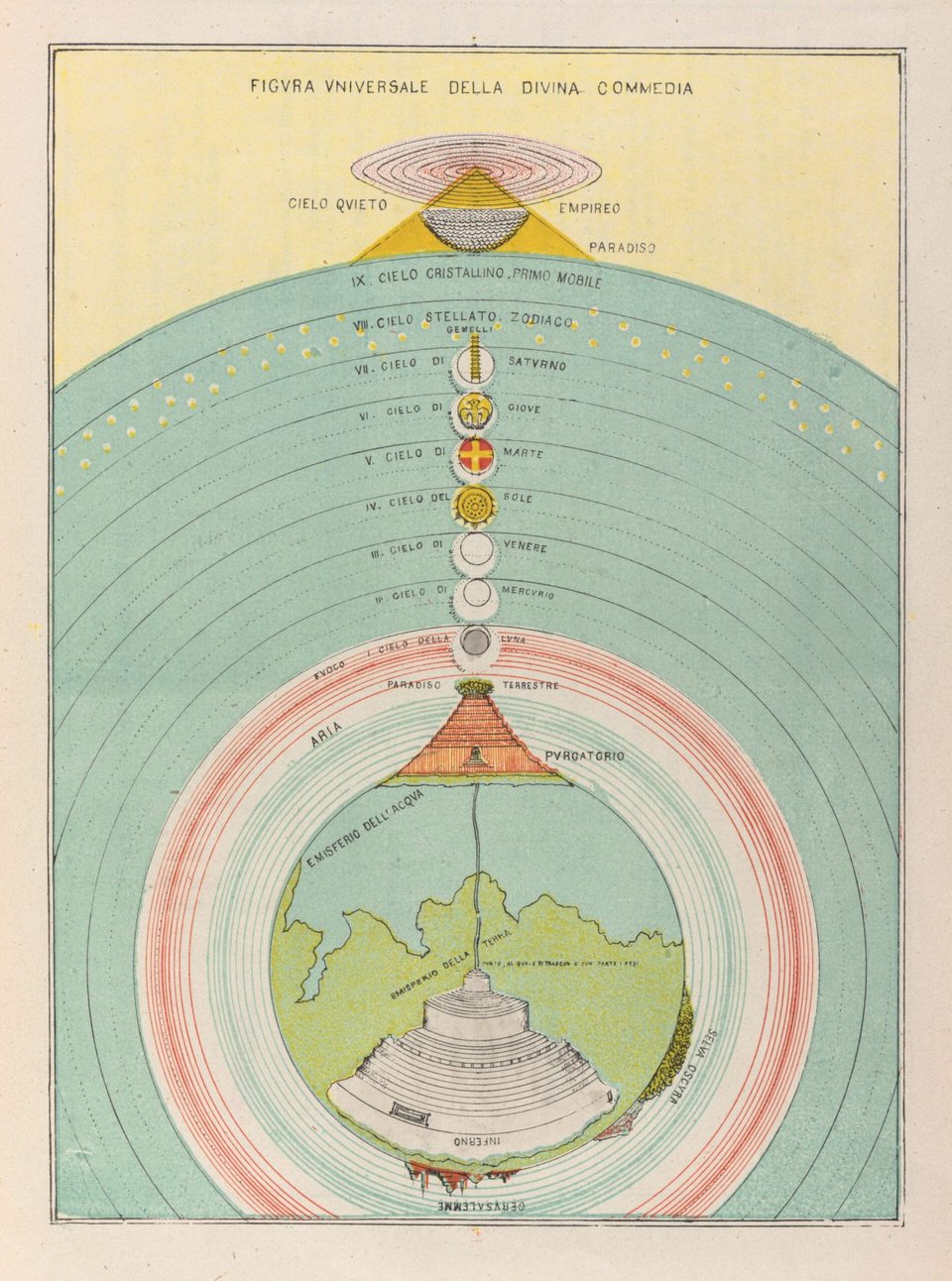
Above is Michelango Caetani’s 1865 diagram of the Divine Comedy, showing the heavenly spheres. One of the things that I find most astonishing about the geocentric models is that (thanks to the accretion of many side-theories and tweaks) they worked remarkably well to explain most of what people observed in the night sky — which is one reason they held sway for so long. It wasn’t that medieval people weren’t curious about the truth, or that they didn’t argue about it. They did! They loved nothing better!
Curiosity and wonder are among the qualities that appealed to me about the character of Mercutio. It’s also the chief quality of Friar Lawrence, another character in Romero and Juliet, and that’s one reason I wanted to give Friar Lawrence a role in my novel. There’s a scene in the play that often gets cut, showing the friar gathering plants, discussing their properties and nerding out about how cool nature is. I think it goes a long way to explain the choices he makes.
For the last few months, I’ve been building a hurdy-gurdy. I’ve wanted one for years, and the most affordable way to get one is by building your own from a kit supplied by Nerdy Gurdy, a very cool company in the Netherlands. I’m at the stage now of adjusting the strings to get them all to sound good and in tune (getting closer!). It’s been a lot of fun. Building something with my hands — especially something I am content to do slowly and have no ambitions to be good at — has been a real godsend for my mental health.
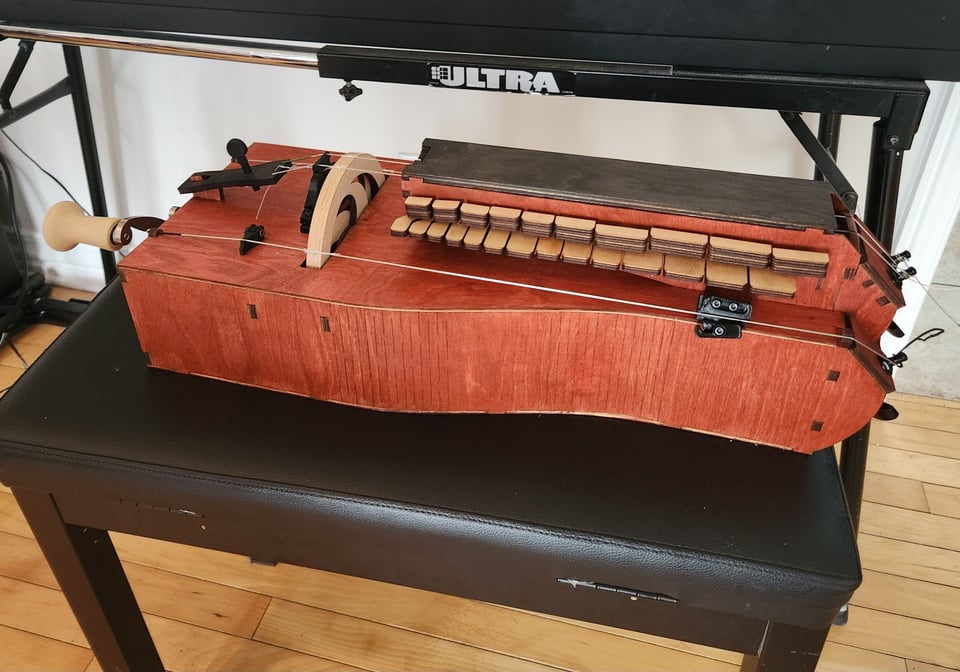
It’s also renewed my admiration for the medievals yet again. I think of the generations that created this instrument sometime around the 13th century, figuring out how to improve on the earlier organistrum, learning from each other and asking new questions. I just think it’s neat.
A few upcoming bits of news to tell you about:
On April 18, I’ll be on a panel called “Sex, Gender, & Society in Historical Queer SpecFic” at Virtual Can*Con, a one-day entirely online version of my favourite convention. Still time to get tickets!
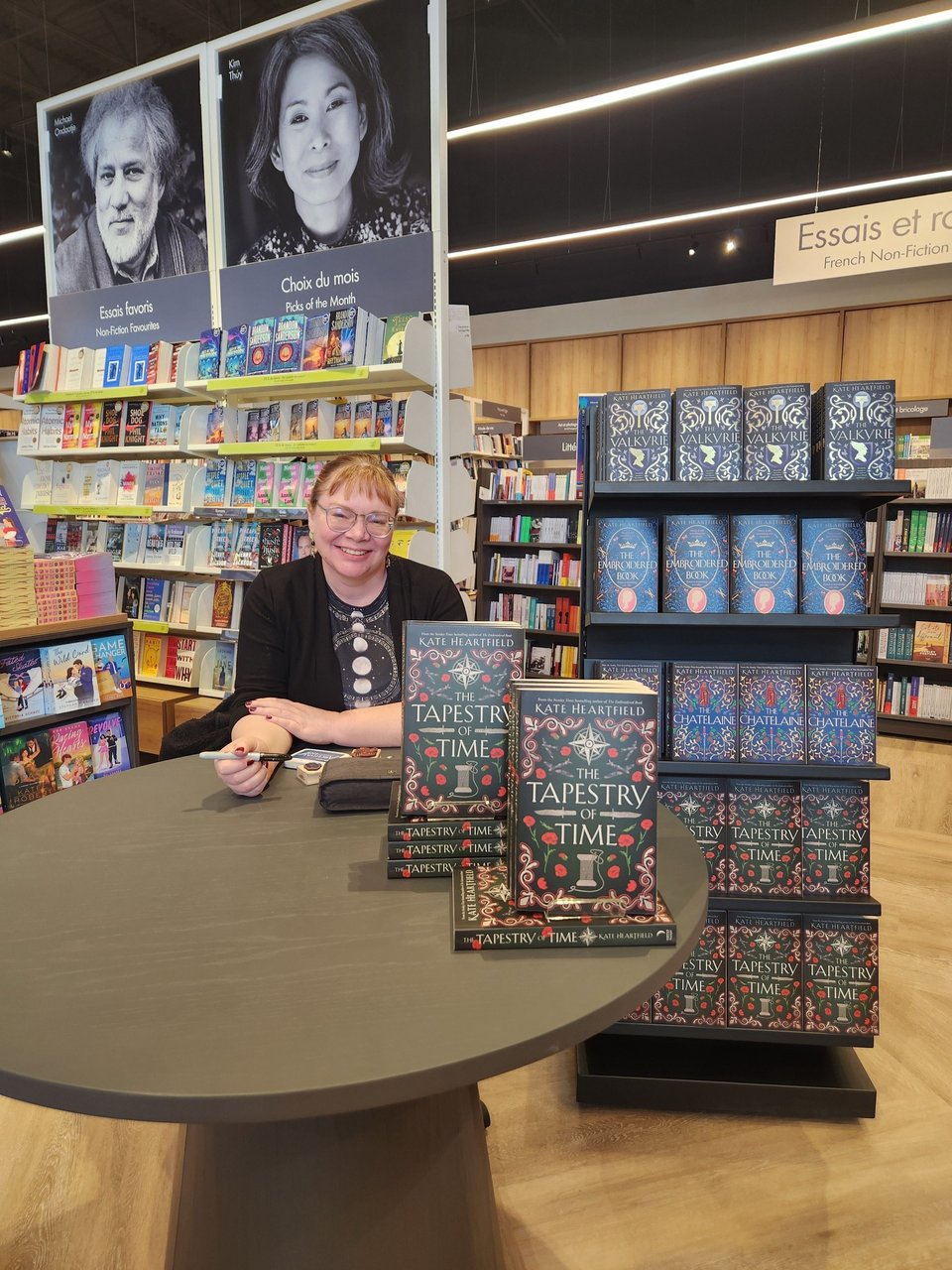
On April 26, I’ll be signing books at Books on Beechwood here in Ottawa for the indie bookstore crawl to mark Canadian Independent Bookstore Day — stay tuned for details!
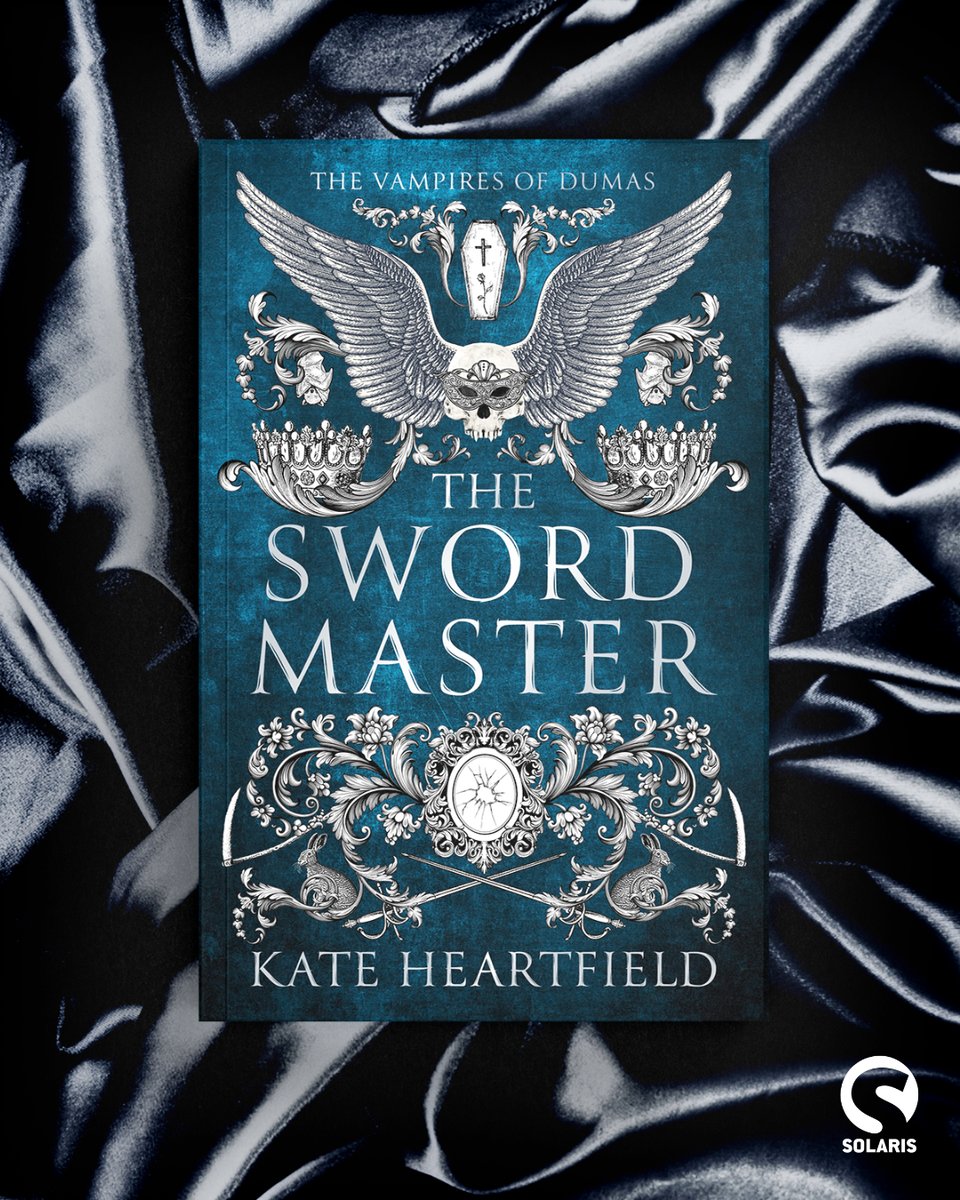
This week, Solaris and Fantasy Hive revealed the very cool cover for my Vampires of Dumas novel, The Swordmaster. The design is by Sam Gretton and I love it. It’s out this September, and pre-orders are available now!
You just read issue #58 of Kate Heartfield's Newsletter. You can also browse the full archives of this newsletter.