
I started reading The Westing Game, because I’d heard good things and because I’m studying mystery structures these days. I know many people love it, but, well, we can’t all love the same things, alas. Ordinarily, when I don’t wish to finish a book, I keep that to myself. But Ellen Raskin has been dead for 42 years, so there’s not much harm I can do to a fellow writer by grumbling (and she won a Newbery medal for this book, so it’s not as if my opinion matters anyway).
If The Westing Game is a favourite of yours, please know I respect that — I’ve read essays about how brilliant its construction is, and I’m sure that’s true.
Trying to figure out precisely why I wasn’t engaged with The Westing Game helped me understand some things about myself as a reader, and perhaps also as a writer. I share in that forensic spirit, and not to dump on this beloved book. It allows me to talk about patterns that also appear in more recent books, which I’m not as eager to pick apart publicly. Also, a benefit of examining an old book is that the question of how being surrounded by AI online is affecting our writing doesn’t come into it; we can just look at prose choices without leaping into that exhausting topic.
Increasingly over the last several years, I’ve found my thoughts slipping and sliding when I read. It’s definitely an attention span problem (who among us these days) but, surprisingly, it tends to happen to me with fast-paced books written in clear, simple prose — the kind that one might think would hold a reader’s attention more easily. Perhaps, I thought, it’s just that “easy” prose doesn’t interest me. But it’s not quite that. Every so often, I’ll pick up a fast-paced book with very simple sentence structure that does grab me. Why one such book and not another? It’s frustratingly unpredictable.
The problem gets worse when I’ve just had a run of reading for an awards jury or blurbing or setting a reading list for a workshop — any time I’ve had to read a pile of books very quickly. (This is my condition right now.) For months or even years afterward, my brain can’t hook on to some (often very popular and acclaimed!) books. Reading a certain kind of prose feels like trying to eat jello with my hands.
I’ve known for years that it has something to do with the sentences; I can tell by reading any random paragraph in a book whether I’ll want to read the rest. There’s a needle in my head that will immediately jump to the For Me or the Not For Me side, and it has nothing to do with the characters, setting, plot or tropes. (The marketing emphasis on tropes in fiction baffles me. Who cares? If the sentences are good food, I’ll eat.) But what quality is it that I’m looking for? What makes a sentence “good”, to me? It’s clearly not a universal standard, because I’ve read many reviews that gush about prose that reads like jello to me.
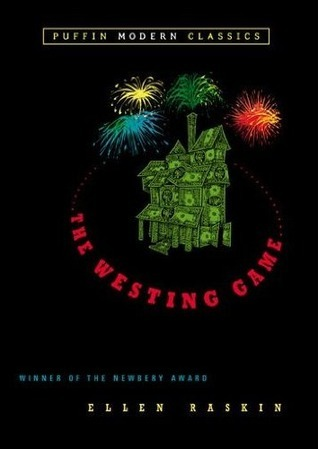
I wanted to love The Westing Game, but every time I read a paragraph or two, my mind would wander, and I’d start over, a little more irritated every time.
So I took a closer look at the prose style, finding quite a few sentences that didn’t add much to the sentence before (in my opinion, anyway.) It’s hard to avoid unfair cherry-picking, but this was just one example of many that struck me:
She looked severe. Rigid, in fact. Rigid and righteously severe.
The third sentence is low-calorie. We have just read both its adjectives; it’s only adding one adverb. I love repetition for poetry’s sake (I love it a little too much, a mentor once told me), but I don’t find this arrangement particularly poetic. You can argue that it’s following the consciousness of the point-of-view character, but if a character is having boring thoughts, why would the author borrow them? This isn’t defining one character’s voice; all the prose that I read, in all the many POVs, reads like this. It doesn’t tell us anything about the characterization that I can see. It just reads like a first draft, like “writing your way to coherence”, as one of my j-school profs used to say.
Several reviews and essays describe the prose in The Westing Game as “spare”, but I don’t find this spare at all; spare prose has to make full use of every word. The passage above is plain but bloated. It’s frictionless; it never makes me pause to think. This is why it feels like jello to me: it takes up volume without being satisfying, and it’s too slippery for my mind to engage with.
In fairness, I know that The Westing Game is supposed to contain clues at a sentence level, so it’s possible some of the sentences I found redundant or empty are serving some purpose that becomes clear at the end of the book. But I don’t want to slog through to find out. If the experience of reading a book’s prose is unpleasant for me, I don’t care how clever the plot is. My brain learns that every second or third sentence has little value, so it starts to skim.
His estate is estimated to be worth over two hundred million dollars.
Turtle read that again: two hundred million dollars. Wow!
I sympathize. Many an editor has left me a note like “show the character’s reaction here.” It can be tricky to do, but surely there is a more interesting way to do it than repeating the information and adding “Wow!” Reading this passage felt like watching TV produced as a second screen, which assumes the audience isn’t paying attention. But I don’t read a book as a second screen. So what happens with sentences I find boring is that, between one sentence and the next, my mind becomes the second screen, and I start thinking about more interesting things, and the book becomes an annoying distraction from those more interesting things. I want every sentence to give me something in exchange for my time and energy, and to ask something from me: to offer me something to connect or interpret.
Some stared at the afflicted child with morbid fascination, but most turned away. They didn’t want to see.
I find it irritating to be handheld, to have a sentence glossed or unpacked by the sentence after it. Why were people turning away from the afflicted child? Because they didn’t want to see! I never would have guessed!
(Examining my tastes as a reader is clarifying some of my struggles as a writer. Everything I publish now is overexplained by my own standards, just to make it publishable, but I still get a lot of complaints that my books are confusing. So, clearly from some perspectives, the problem is me.)
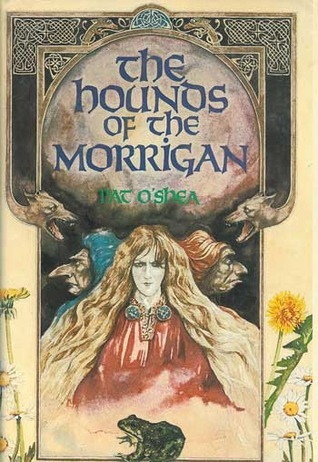
The Westing Game was marketed to young readers in 1978, so to give it a fair shake, I opened up one of my favourite books also marketed to young readers of roughly the same generation: The Hounds of the Morrigan by Pat O’Shea. Maybe I’d find that the prose was just as lacking in substance, and I hadn’t noticed because my first reading was at a young age.
Nope! On this reading, as on every reading, I loved the prose in Hounds so much that it made me cry from sheer wonder. It is clear and unfussy, but nothing is careless or boring. No word is wasted. And unlike the chapters I read of The Westing Game, it is full of metaphors and images, suggestions that the author begins and the reader completes.
[The women] held their wrists up close to their mouths and began to lick the metal. Their tongues became as rasps directly and the glasshouse was filled with the noise of scratchy filing — exactly the sound that cinders munched by horses would make.
That’s the kind of prose I like. It’s not convoluted or difficult; it’s just interesting. It treats the reader’s time and attention with respect. Every sentence gives you something that the sentence before it could not — ideally, something that no sentence ever has. God knows I’ve written some clunkers in my time, and too much of my prose has been written with an exhausted brain, but I’m always aiming for that kind of sentence.
Anyway, there’s no right answer in matters of taste, but it’s useful sometimes, as readers and thinkers, to analyse what holds our attention and why. And it’s useful to try to stretch our abilities to pay attention and to be open to different styles, so I will try to give books a fair shake even when I don’t find anything to interest me in the first few random sentences I check. To a point, anyway!
I’ll be back in a couple of weeks with a list of dates for book events coming up in Ontario to celebrate the release of Mercutio in Canada.
You just read issue #66 of Kate Heartfield's Newsletter. You can also browse the full archives of this newsletter.