
Hello, friends! Last newsletter I wrote that I had finally handed the draft of The Realm Invisible in to my editor at HarperVoyager UK, and this newsletter, I can report that I’m just about to hand in my edits for The Swordmaster to my editor at Solaris. So we’re ticking things off the to-do list over here!
Meanwhile, we’re ramping up for the UK release of Mercutio in May (eek). If you’re in the UK yourself, and a blogger or reviewer, it is available now to request on Netgalley, and I would really appreciate some word of mouth for this one as I am very proud of it and I’d love it to find its readers.
It turns out the Olympic Games have been perfect for recovery from drafting burnout. I’ve been glued to the curling, hockey and figure skating while I work on line edits, emails and other distractible tasks.
I’ve also been reading, and I have a long pile on my to-read list, including a couple of exciting forthcoming books from other authors to blurb, and some research for my next project.
But in the interim, as I try to take a very deep spiritual breath, I’ve been reading two books that I’ll recommend to you.
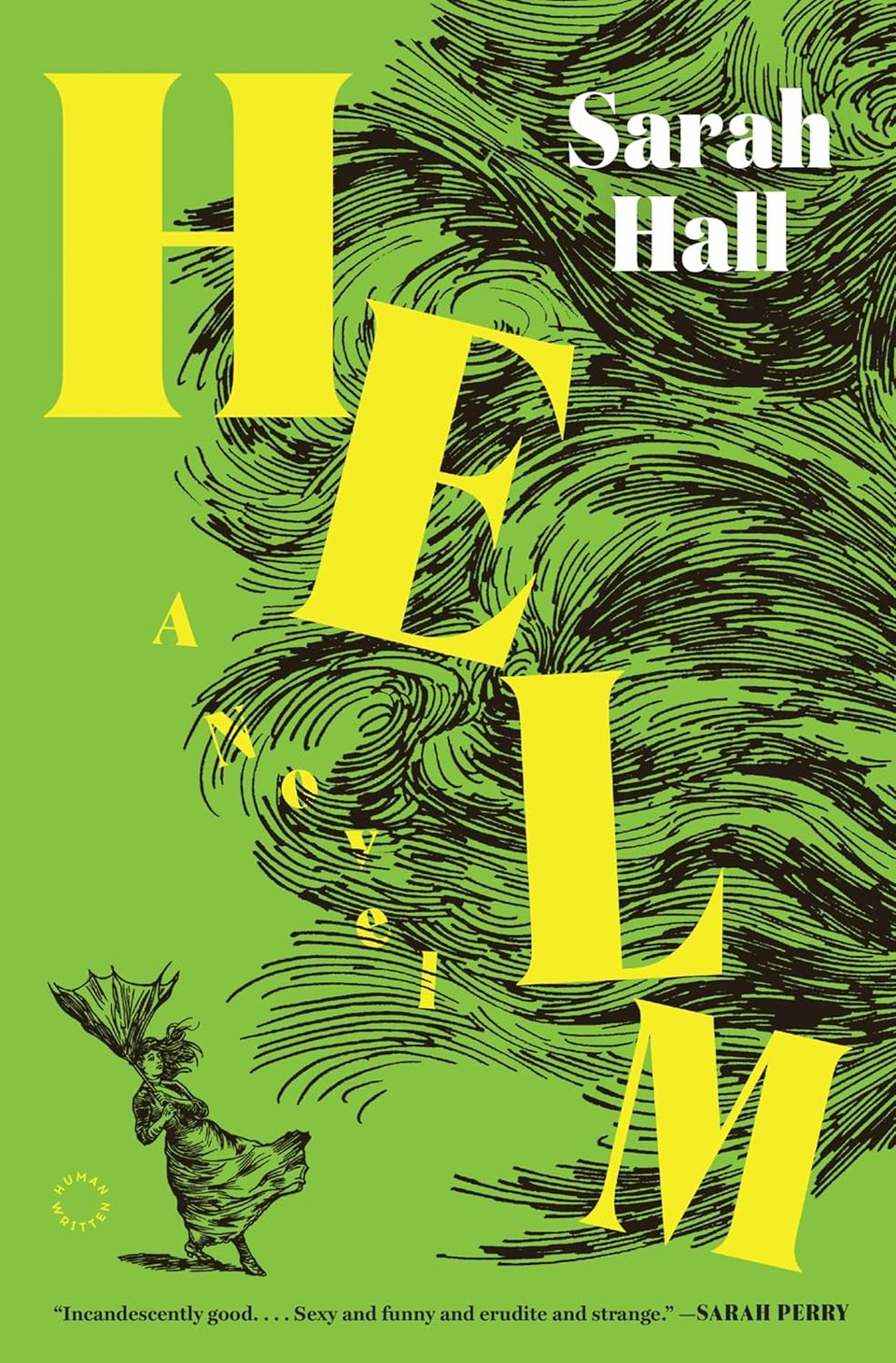
The first is Helm, by Sarah Hall. I heard about this book on the Coode Street Podcast (a longtime favourite of mine) and was intrigued. It’s the story of a wind, over centuries. The voice is really fascinating — how does one choose the voice for writing the story of a wind, anyway? Here’s a little snippet from the opening chapter:
Still no witnesses, though, which is a shame. Also, the Helm-show is transitory. Only when Helm manifests does Helm really exist, and afterwards Helm isn’t anymore. The dumb, lumbering beasts don’t care: they fold their ridiculous necks, shelter behind each other’s armoured rumps, and the airborne ones fly away, alighting in the dense canopy, drawing creepy, bloodless lids over their eyes. Helm’s a little envious – these beasts are a bit duh, but at least they’re always embodied, able to kill and eat and rut each other until they die.
“Timeless” is not quite the word I want for this — that implies a voice out of time, while this is a voice of several overlapping times. Layered like a wind. It’s rich and surprising, full of motion and sudden stops, conversational and formal at once. It reminds me a lot of John Gardner’s Grendel, and if you like that, you will probably like Helm.
The other book I’m reading is the audiobook (narrated wonderfully by Colm Feore) of Solomon Gursky Was Here, by Mordecai Richler. I’ve read it a few times, but never before in audiobook. I’ve been a Richler fan since I was a teenager, and one of the first first editions I ever bought was an edition of Cocksure (not his best work) at the Ottawa Antiquarian Book Fair in, hmm, probably 1999 or so.
Solomon Gursky is his best work. It’s also the book of his (at least among his books for adults) that feels the most, to me, like a fantasy novel. Part of my inclination to read-in fantasy is probably just that we genre writers always feel a bit tweaked by how our work “transcends the genre” when it’s good but nobody ever says that about litfic, even though litfic absolutely does raid fantasy’s closet too. To be clear, there’s nothing overtly speculative (in the sense of fantastical) in Solomon Gursky, but it’s a novel ringed about with tall tales and its driving force is a kind of ghost or figment (and this is also true of St Urbain’s Horseman, which also feels a bit like a fantasy novel to me). It’s a novel that makes space for the impossible, and it has that spark that fantasy has. Solomon Gursky, Richler said himself, was about “a man who was dissatisfied with the limitations of one life, and was enough of a magician to concoct other lives for himself.”
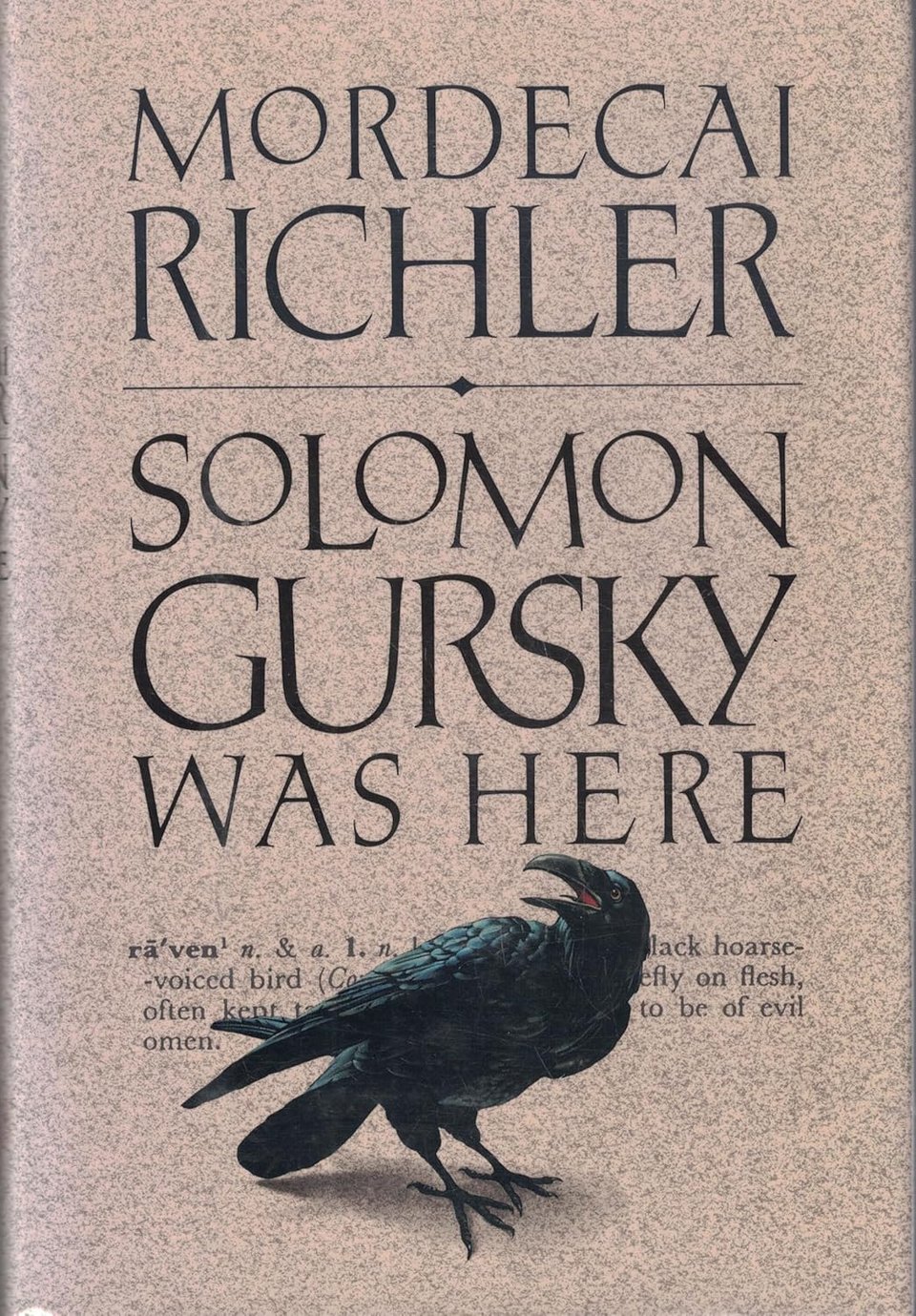
In any case, it’s one of the books that was most formative for me as a budding writer of historical fantasy novels — my constant goal of shifting the lens on history as if it were a kaleidoscope, so that the viewer comes away a little shaken up, came as much from Richler as it did from writers like Jo Walton or Tim Powers.
In trying to find the source of the magician quote, I came across these lines in another interview, and I thought I’d quote them here, as we need every reminder of this we can get in these days:
What you should look for in a novel is a window nobody else is looking out of, that nobody else can look through. What you look for is a voice.
That is what I look for as a reader, which explains why I’ve been so delighted by Helm, and it’s what I strive for as a writer too.
You just read issue #54 of Kate Heartfield's Newsletter. You can also browse the full archives of this newsletter.