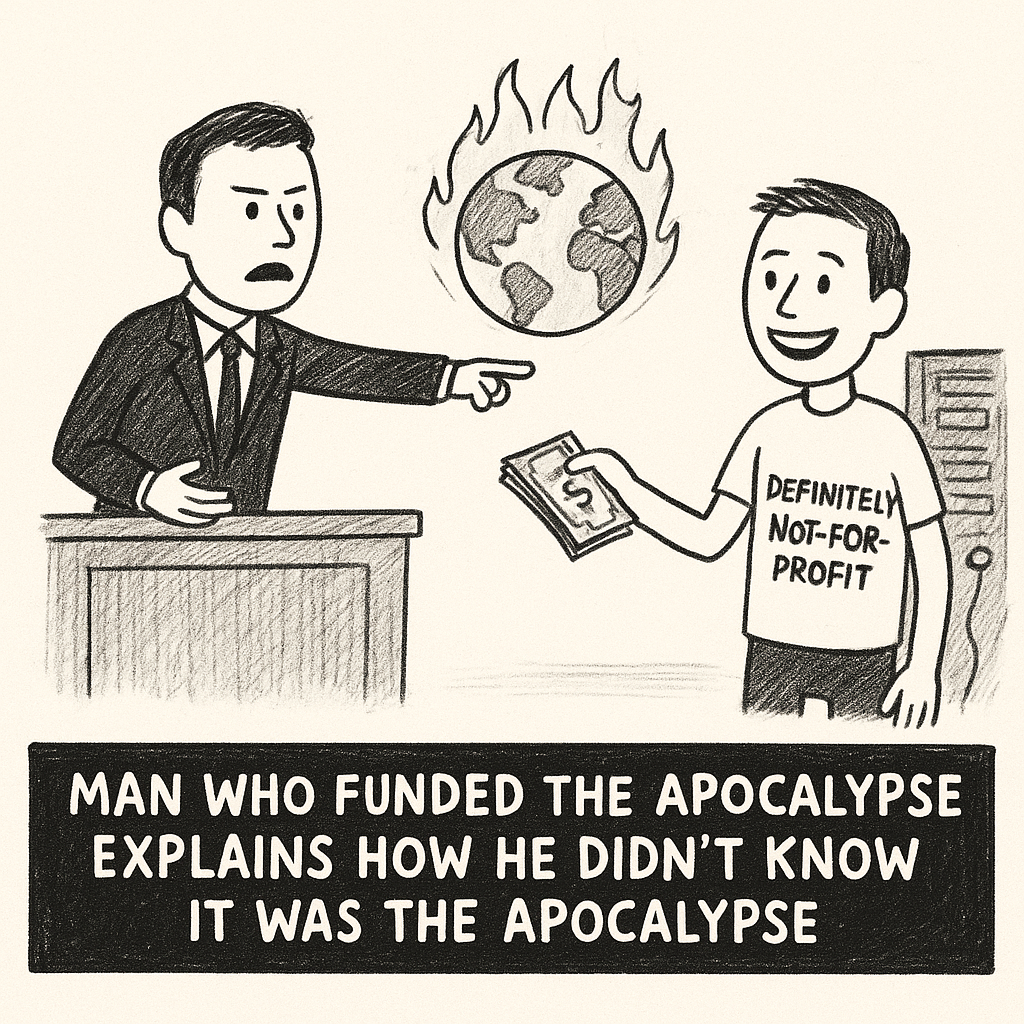
Today's Hallucination HQThe Trial of the Century (Or at Least the Most Dramatic One This Week)Week one of Musk v. Altman landed like a soap opera written by someone with a philosophy degree. Musk took the stand — crisp black suit, practiced glower — claiming Sam Altman and Greg Brockman deceived him into funding OpenAI, which he now believes could destroy humanity. He also quietly admitted xAI trains on OpenAI's models. So to summarise: the company is a fraud, its technology is existentially dangerous, and he's been copying its homework. Source: MIT Technology Review
Meta Would Like a Robot, PleaseQuietly, between metaverse post-mortems and Ray-Ban glasses announcements, Meta has acquired Assured Autonomy — a humanoid robotics startup — to improve AI models that control physical robots. The company that spent years teaching avatars to have legs is now teaching actual machines to use them. No purchase price was disclosed, which in Silicon Valley typically means either "embarrassingly small" or "embarrassingly large." Source: TechCrunch
The Pentagon's Guest List Has One Conspicuous GapThe US Defense Department has signed classified AI agreements with OpenAI, Google, Microsoft, Amazon, Nvidia, and xAI — essentially the entire industry Christmas card list — with one notable exception: Anthropic, the safety-focused lab that built its entire brand around responsible AI. The company most publicly committed to not building dangerous things has been left off the defence contract. Make of that what you will, and you probably will. Source: The Verge
Half a Billion Dollars to Teach a Computer What a Cell IsMark and Priscilla Zuckerberg have committed $500 million to the Chan Zuckerberg Biohub's Virtual Biology Initiative — an open-data effort to build AI models that can predict how human cells behave. The goal is essentially a working simulation of human biology, which sounds either like the most important scientific project of the decade or the premise of a film where things go badly wrong around the forty-minute mark. For now, optimism seems reasonable. Source: Biohub.org
The Soldier Who Doesn't Need LunchUkraine's battlefield has become an unexpected proving ground for autonomous weapons. Remote-controlled drones have been commonplace for some time, but AI systems capable of making targeting decisions without human input are now being tested in live conflict. The ethical and legal frameworks for this don't quite exist yet — international law being, historically, somewhat behind the pace of people inventing new ways to use it. What happens when a machine decides, and nobody signed the form, is a question the world is only beginning to ask. Source: Al Jazeera English
|