2025-X: Like An Arrow, I Was Only Passing Through
Well, team, here we are again. As usual I meant to write sooner; as usual I simply forgot. But that just means I have more to tell you.
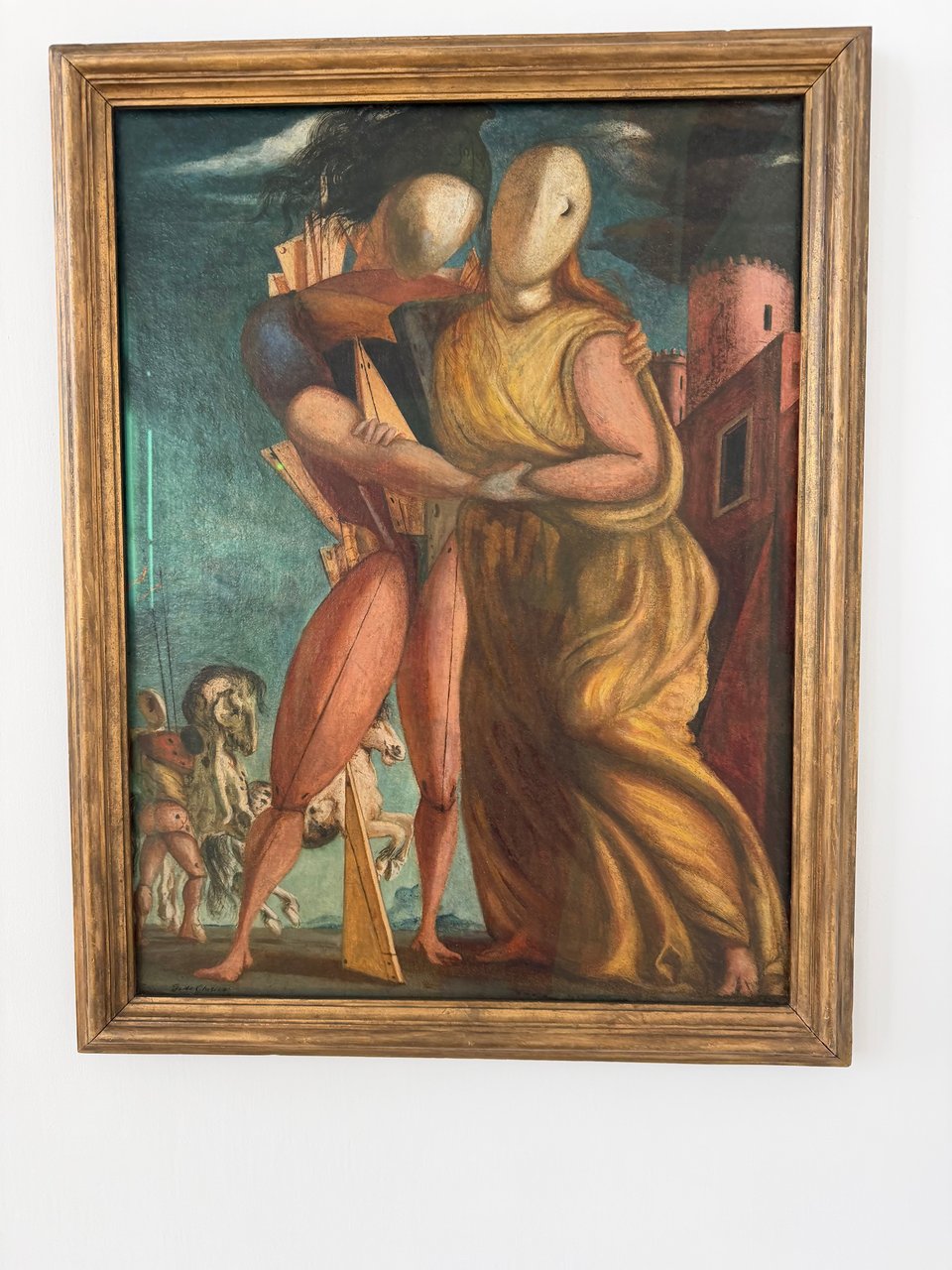
To start with: I was in Italy in November. Italy! The one in Europe. Did you know about that place? Turns out the hype is justified. Granted, I didn’t get to travel much — I was in Rome for a few days, with one day in Tivoli, but I had a really nice time. I didn’t do a lot of traveling while I was growing up—I was always envious of the other kids in school whose families traveled every single summer—so basically I’m making up for lost time nowadays. There were a good few highlights on this trip, including some really tremendous food, but perhaps the biggest kick I got was seeing a few paintings by Giorgio de Chirico, a favorite of mine:
More importantly, though, after a wonderful week in sunny Rome I went to England, for Thought Bubble followed by a few days in London. I say “more importantly” because if you know me then you know I hate traveling alone, and while Rome was a week of being alone all the time England was the opposite, as I tried to squeeze as many hangouts as humanly possible. And, lemme tell you, that was well and truly needed. I got to meet both old friends and people I’d never really gotten to have one-on-one time with before, and it was a nice reminder that, no, I’m not actually as averse to socializing as I tend to think, in fact I quite like people.
But now I’m back in my hermitage. Haha!
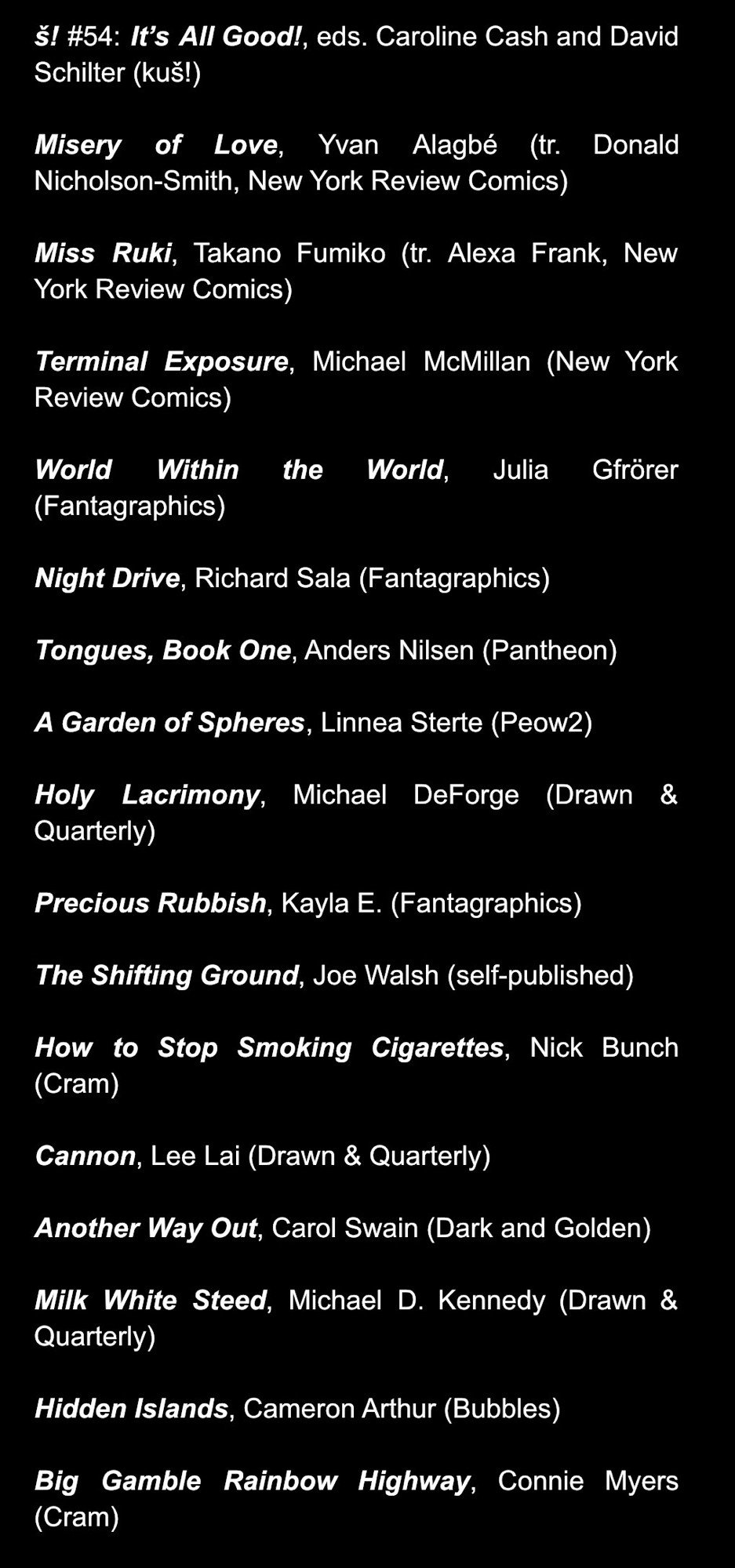
In other news, the most important thing about the year coming to an end is, of course, TCJ’s ‘best comics of the year’ megalist. Readers are, of course, encouraged to sift through everyone’s choices for a pretty comprehensive view of the State of Comics in 2025, but, just for your convenience, here is my own:
WHAT I’M WRITING
Comics
First of all, I should say that I put up a bundle of this year’s short comics on Itch.io — ten dollars for a total of seventy pages, with a host of process files for most of the comics for an additional five dollars, with all of the money here going to my collaborators (proportionally distributed according to page counts).
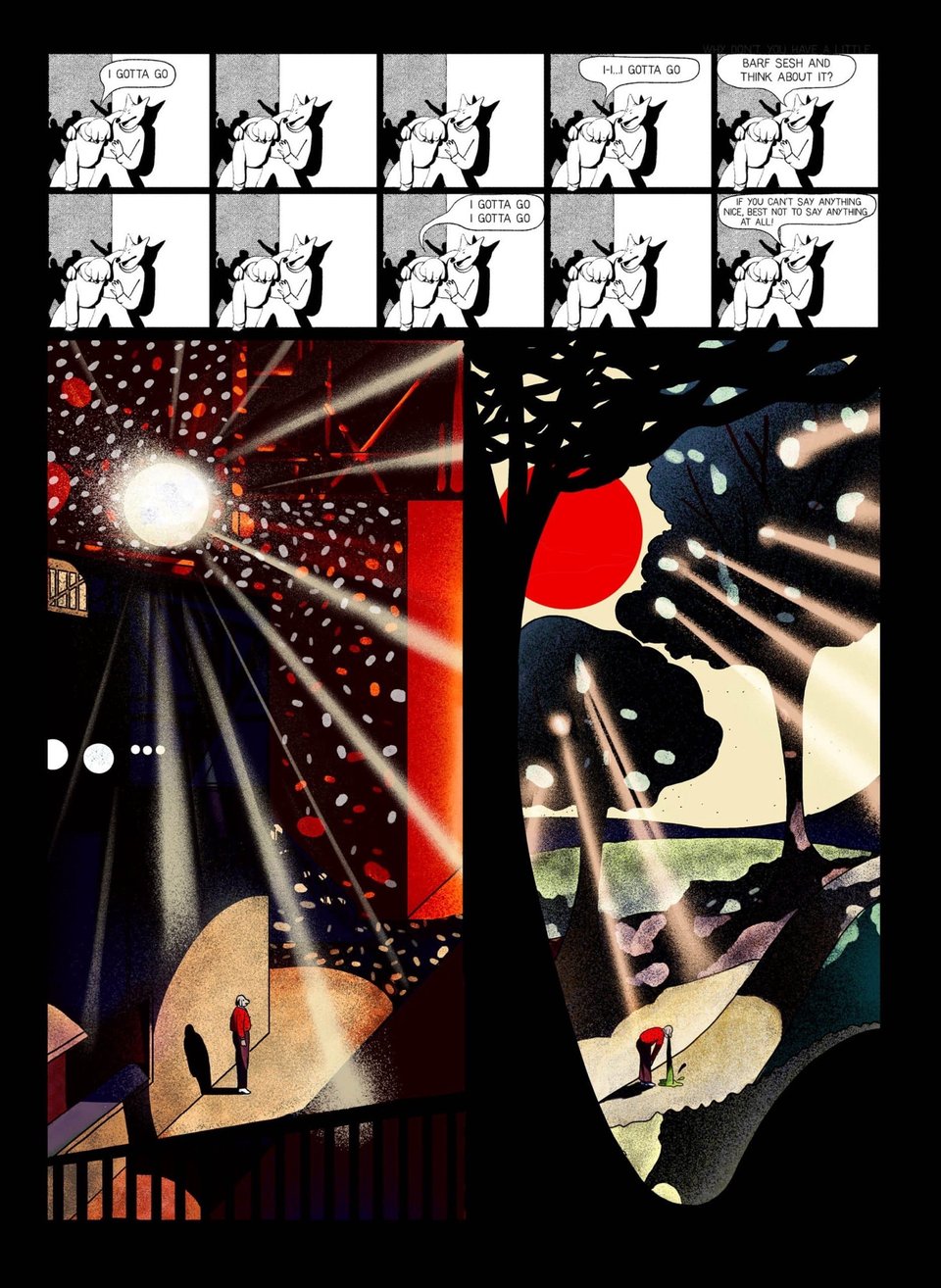
Among the comics included in this bundle are my two newest ones. First is my latest collaboration with Justin LaGuff, whom I made “Mosquitoes” with last year. Of the comics I’ve made so far, “Mosquitoes” is kind of a favorite — the sort of work where you feel everything has fallen just in the right place. Our new one, “I Thought I Heard Your Voice Just Then,” builds on the same tone as “Mosquitoes,” but with a distinct formal divergence; if I had to pinpoint the influences on this one, I would say either Richard Brautigan or Kevin Huizenga’s Gloriana (which, if you haven’t read, is one of the absolute best comics of all time). Unlike my usual, this one wasn’t scripted very tightly — or, really, at all; I gave the setting, broad plot progression (with marginally more specific breakdowns for the first and last pages), page-break suggestions, and stray imagery/texture ideas I thought would be good, but a lot of the execution is really just Justin flexing his muscles in a way I think works quite beautifully. How’s the first page of this one, out of a total eight:
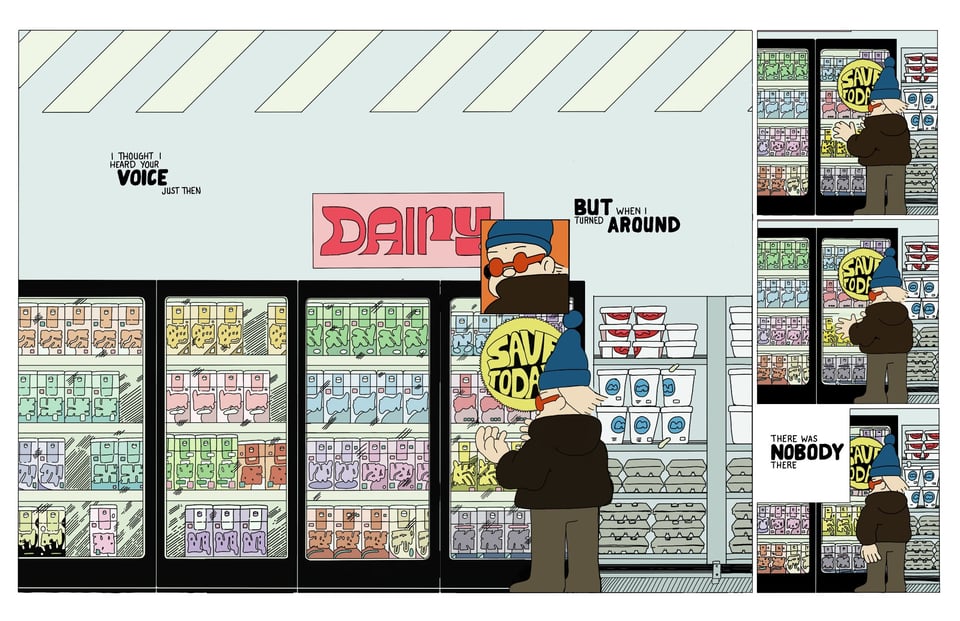
You can read the rest over on Bluesky, or download it individually on Itch.io.
“Corridor Again,” meanwhile, is a little horror joint inspired in part by Brian Evenson, and brought to life by my friend Luke Baker, whom you may know from the recent Hollow Press book Bramble. Luke is a great horror artist, and he hasn’t made a lot of comics, so it was a treat to make this with him. The first page (out of thirteen):
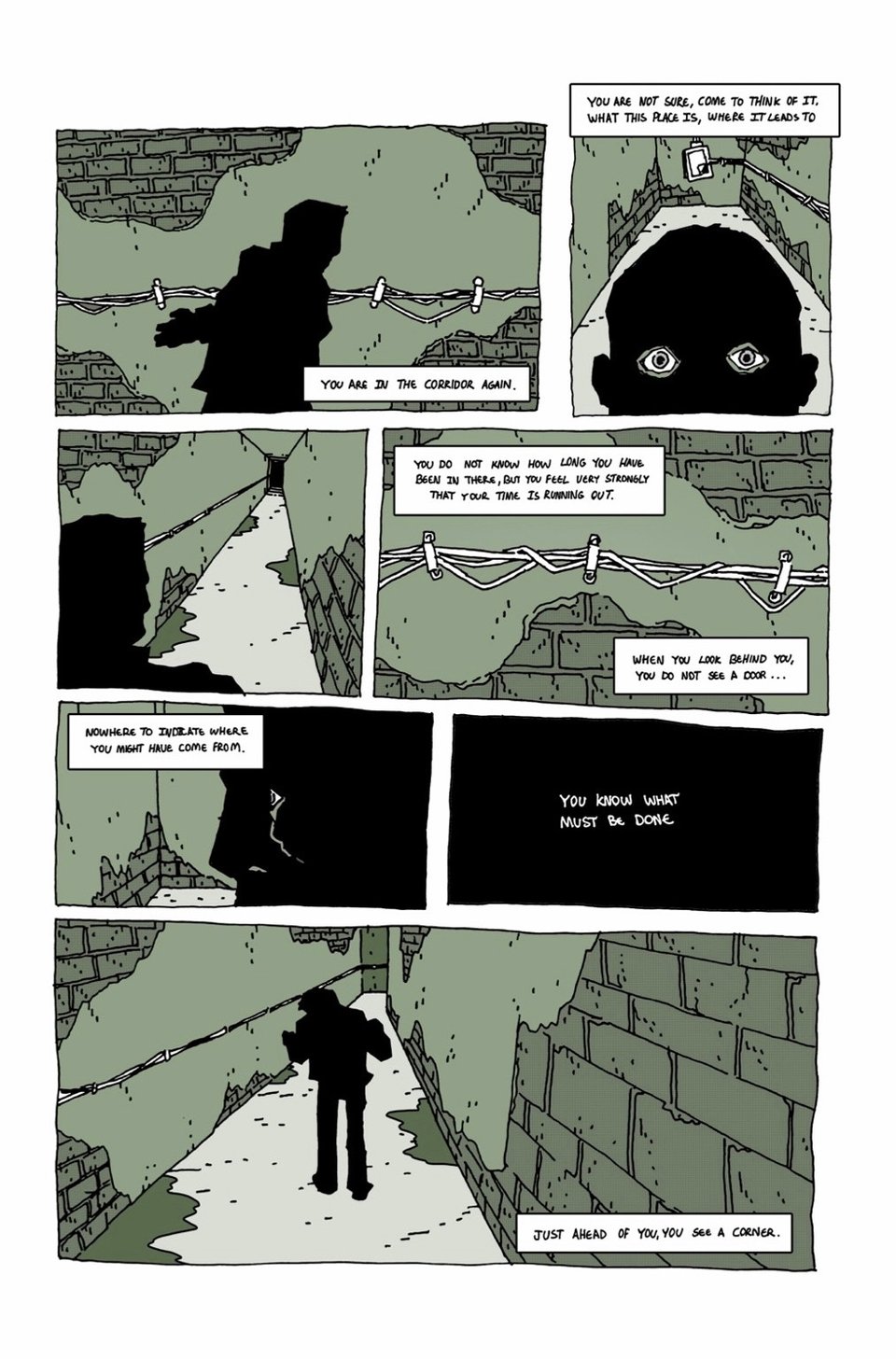
You can read the rest on Bluesky or download it via Itch.io.
There were a few comics I was hoping to have done by the end of the year, but these stalled out a bit, which is fine — that just means that, hopefully, the next couple of months will be busy.
Criticism
A bit of a quieter period for me, criticism-wise, at least relatively speaking — burnout coming to a head meant that I had to slow down, although I still had three new pieces up on SOLRAD recently: one about the recent reprint of Night Drive by Richard Sala (Fantagraphics, 2025), which I absolutely loved; another about Paranoid Gardens by Gerard Way, Shaun Simon, Chris Weston, Dave Stewart, and Nate Piekos (Dark Horse, 2025), which I distinctly did not love; and a third on Misery of Love by Yvan Alagbé (tr. Donald Nicholson-Smith), which I adored and found to be a lovely expansion on Alagbé’s previous Yellow Negroes.
Coming up next are pieces on:
Three comics I bought at Thought Bubble, by Carol Swain, Nadia Schlosser, and Karl Christian Krumpholz
Manga: A New History of American Comics by Eike Exner
Miss Ruki by Takano Fumiko, translated by Alexa Frank (New York Review Comics, 2025)
29,000 Years of Bad Luck by Olivier Schrauwen (Bries, 2013)
Paul Auster’s New York Trilogy: The Graphic Adaptation by Paul Karasik, Lorenzo Mattotti, and David Mazzucchelli (Pantheon, 2025)
Basket by Marie Derambure and Paco Moccand (Lucky Pocket Press, 2025)
A Drifting Life by Tatsumi Yoshihiro (tr. Taro Nettleton, Drawn & Quarterly, new edition: 2025)
WHAT I’M READING
Comics
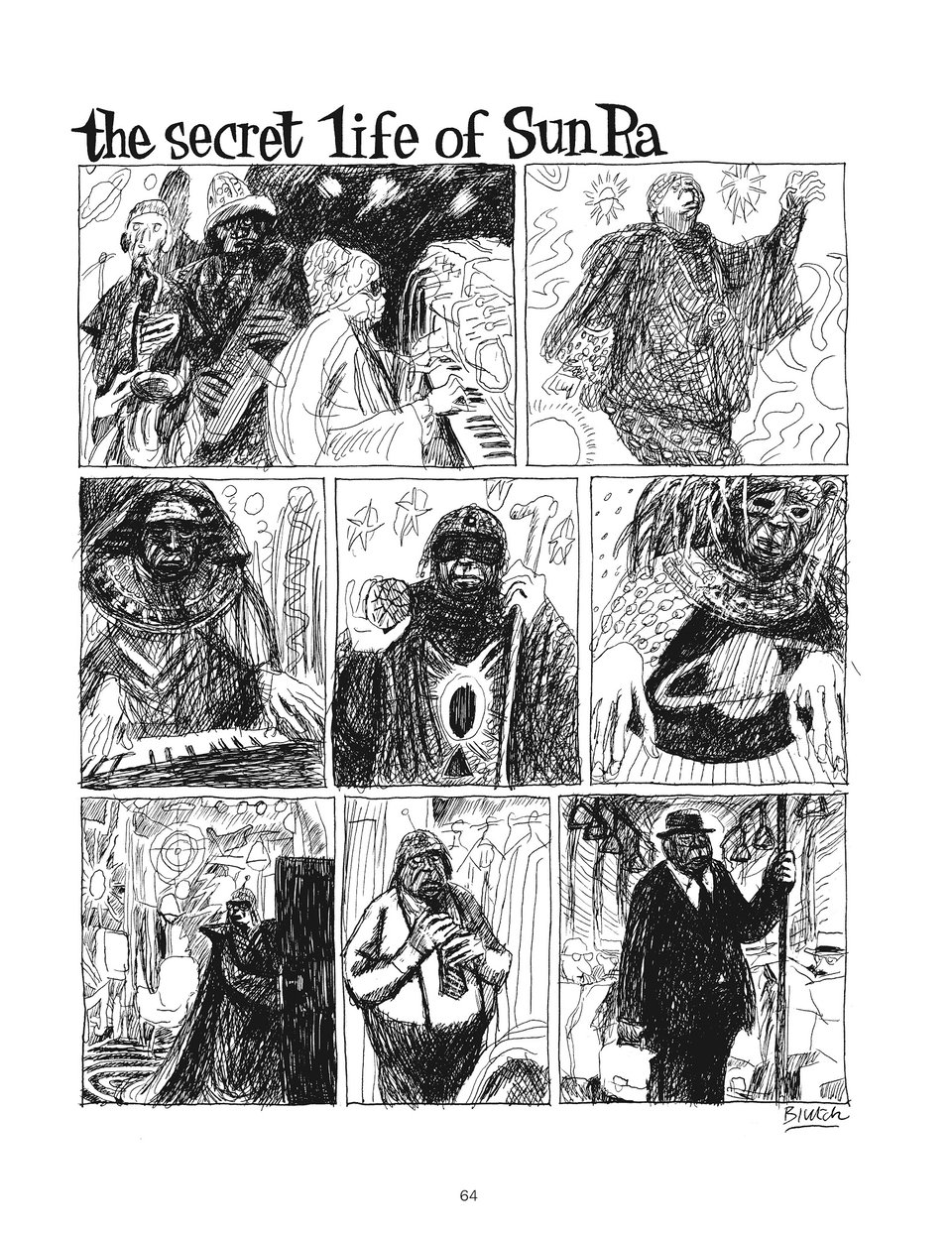
Total Jazz by Blutch (tr. Barbara Appleby, Fantagraphics, 2017)
I’m quite fond of Blutch, generally (at least I’m quite fond of the other book of his I’ve read, Peplum), but Total Jazz was quite underwhelming — in adhering to the format of mostly-wordless one-pagers, Blutch wounds up succumbing to a detached sort of intellectualism that has very little human atmosphere, only archetypal gesturalism. It’s ‘about’ jazz, but it doesn’t feel like it at all. A shame!
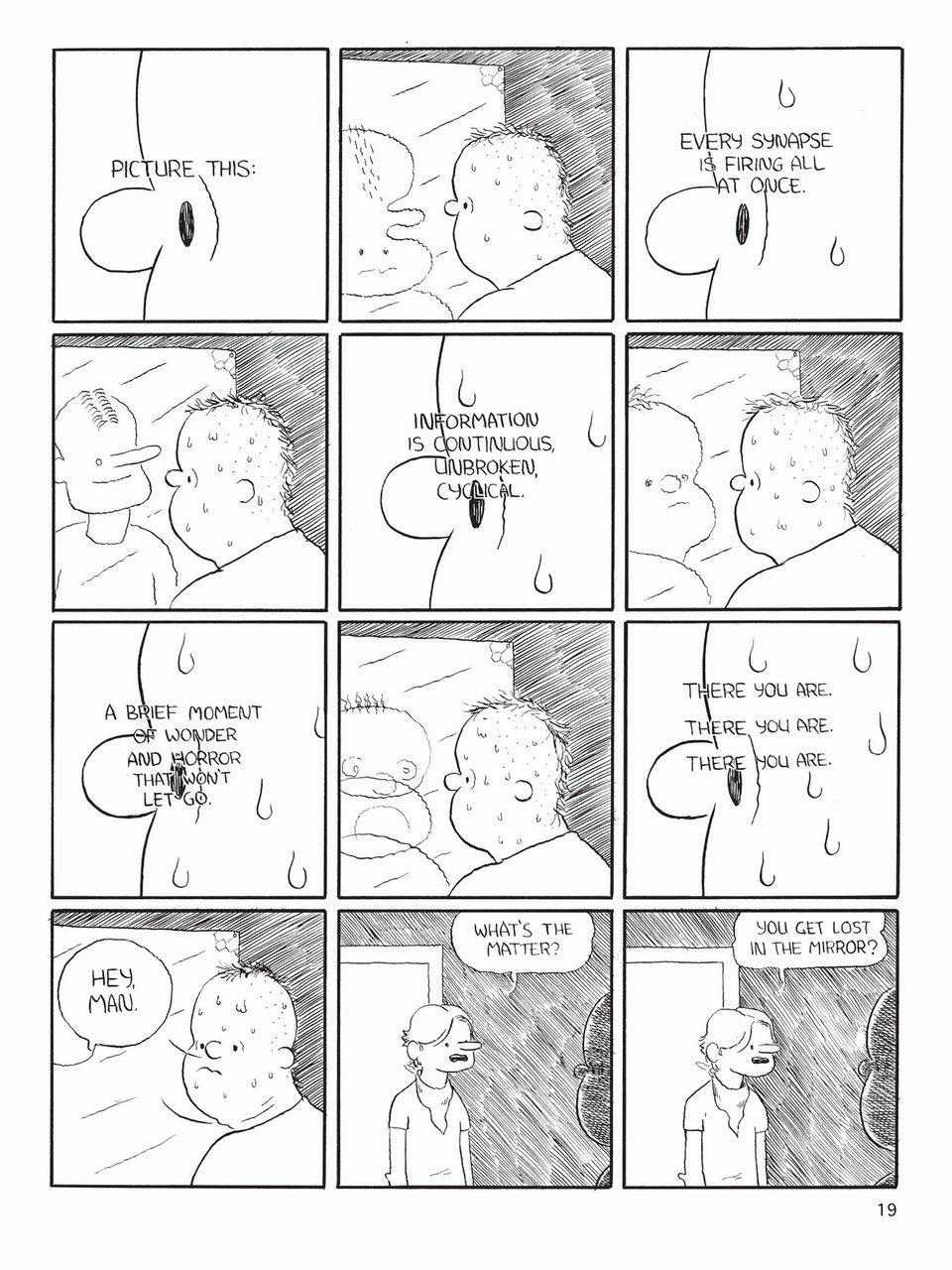
Celebrated Summer by Charles Forsman (Fantagraphics, 2013)
This, on the other hand, I found quite moving. I’m continually impressed by Forsman’s ability to make comics that read very quickly while still retaining weight — he’s remarkable in conveying atmosphere, and here he taps into the sort of emotional stuck-ness that I find myself compelled by. There’s a very real, very raw sort of fear at the heart of it, not altogether dissimilar from, say, Gilbert Hernandez’s Bumperhead or Daniel Clowes’ The Death-Ray — two books I admire.
Cornelius: The Merry Life of a Wretched Dog by Marc Torices (tr. Andrea Rosenberg, Drawn & Quarterly, 2025)
I’ve written a bit in the past about the ‘hyperreal artifact’ approach to fiction — that is, the conceit that the (in this case) comic you are reading at present has a (fictional) history/cultural context that modifies the impact of the work, et cetera. Nine times out of ten, this approach is bound to fail simply because, in clinging to real-world signifiers, the author reveals themself to be, simply put, not as good at forgery as they would need to be to sell it as truth. I’m sad to say that, in the case of this book, whose titular character has a “three-hundred-year publication history” of which this is the first of (if I recall correctly) forty volumes, that hyperrealist approach is an absolute burden that the cartoonist just doesn’t seem able to shake. I think Torices is a perfectly good cartoonist (not good enough to make me believe that he is, y’know, dozens of different people, but certainly versatile enough with his textural tools), but it’s a story that doesn’t really need the added fiction; its frenetic mode-switching would have, I think, been enough. The obvious comparison here is Schrauwen, I think, in that “pathetic loser comics” way, but ultimately I find Schrauwen more entertaining.
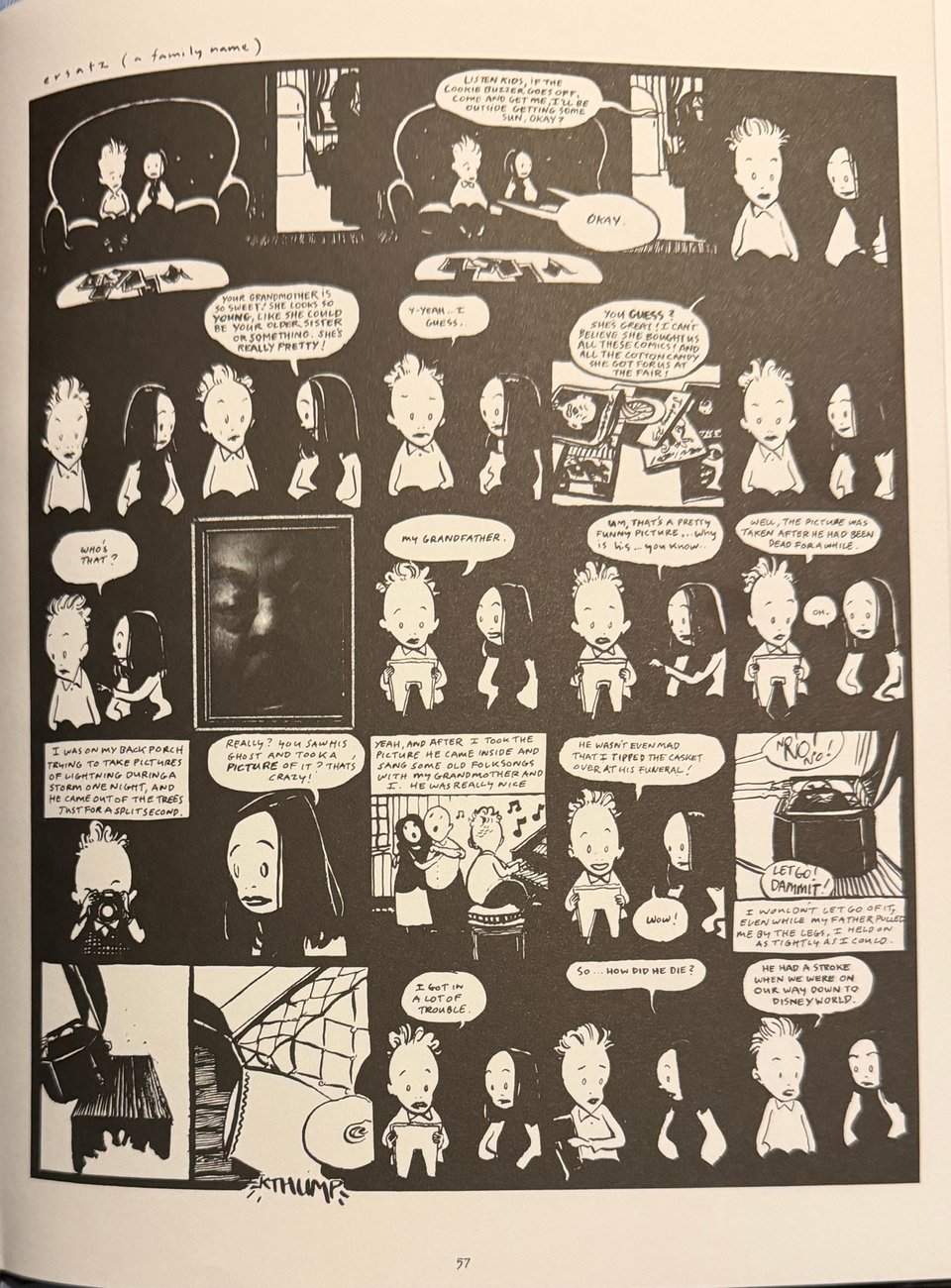
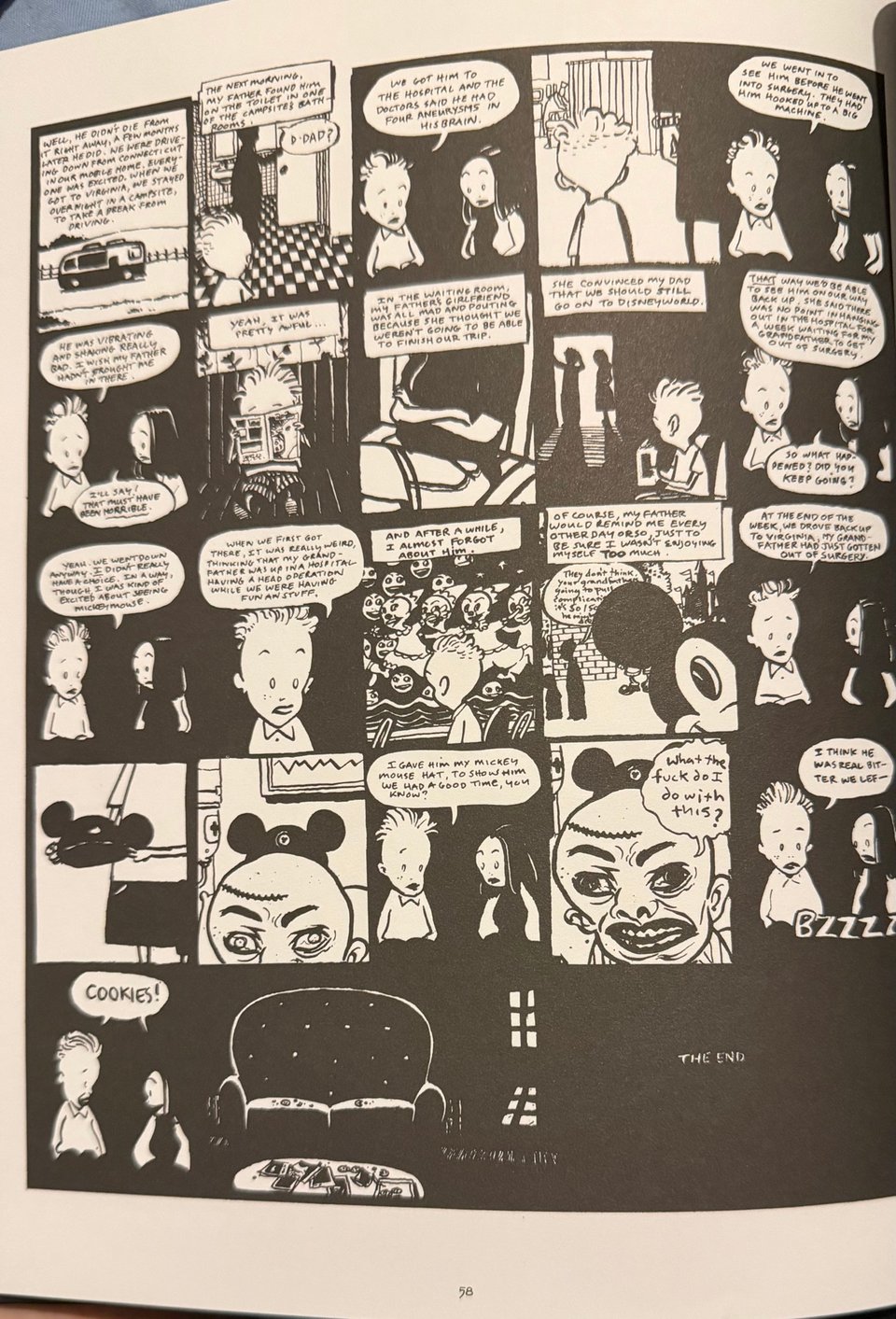
The Biologic Show by Al Columbia (Hollow Press, 2020)
This was given to me by my friend Tom Shapira, who has taken up the hilarious habit of giving me my birthday gift increasingly early (my birthday is in August and this would’ve been given to me in 2026), and… honestly, where does one even start with this? The true story around this book—that Columbia was so dissatisfied with the printing that he threatened to murder the publisher’s whole family, causing the publisher to essentially disavow the book before it was even made officially available for purchase—kind of overshadows the work itself, which is understandable (there are several such stories about Columbia, who sounds like something of a tragic figure to me, but I suspect I shouldn’t talk about this too much in the context of the work). As a cartoonist, Columbia is someone I appreciate more than outright ‘love,’ and this was something of a mixed bag, but there were a couple of shorts in here that I was absolutely knocked over by — the above, “Ersatz (a family name),” is definitely the highlight, and just my sort of tone — horrid events recounted even-handedly.
Prose
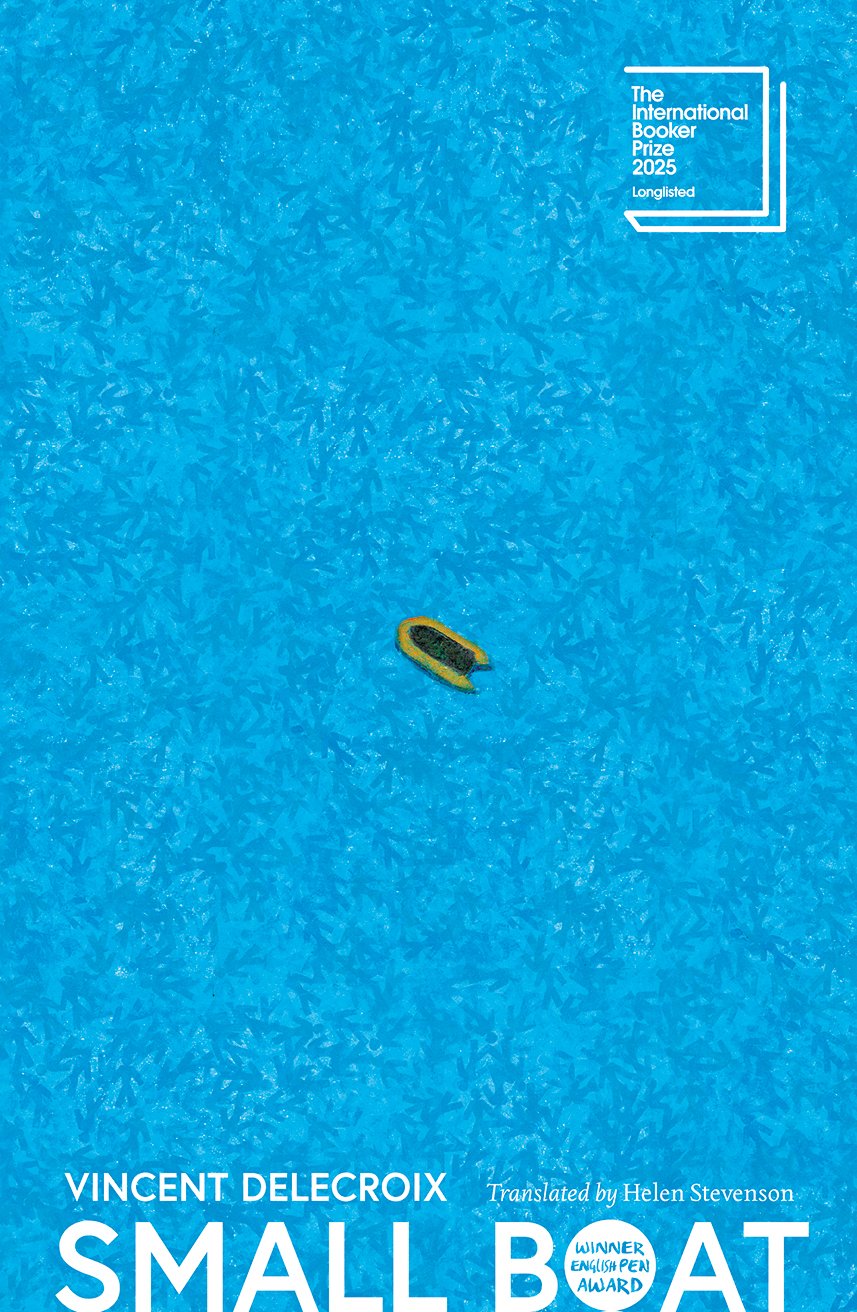
Small Boat by Vincent Delecroix (tr. Helen Stevenson, Small Axes, 2025)
I was largely unfamiliar with this one, but it came recommended by a friend I trust, and I really was quite taken with it. Delecroix operates on two planes of dilemma here, the internal (how much of the protagonist/narrator’s argument, condemning the rest of society for doing broadly or passively what she did more actively or pointedly, is as apt as it appears on its face, and how much is simply a kneejerk defensiveness and self-justification) and the external (what society is to do when the quantifiably ‘legal’ does not necessarily correspond with the more abstract ‘moral’). The result, certainly in parts 1 and 3, is a tight little psychological-moral play.
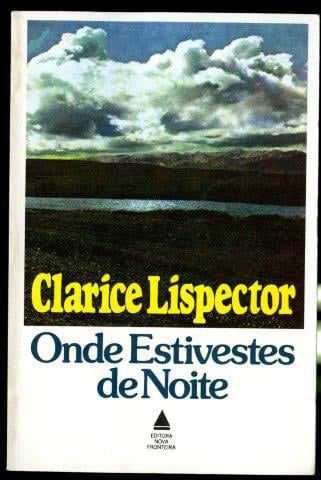
Where Were You at Night by Clarice Lispector (1974, available as part of The Complete Stories)
This year has been my year of getting into Clarice Lispector—I think I wrote about The Hour of the Star last time—so I was glad to stumble upon a Hebrew edition of this one on the street. Admittedly, I’m not so sure what to make of this one — compared to the fairly-traditional Covert Joy, the pieces here have a distinctly loose, opaque quality to them, and as a result I confess they often flew over my heads. Still, I must appreciate the free-form energy of it, a lot more spontaneous and expansive than I’m used to.

Shadow Ticket by Thomas Pynchon (Penguin, 2025)
Pynchon is an author I always enjoy, with the crucial caveat that between his density and my probably-undiagnosed-ADHD-addled brain I only truly understand him up to a certain point; I always forget how good he is at obscuring that density with that casual tone of his, which is an impressive feat. In Shadow Ticket, you do start to feel his age — the dialogue is a bit clunkier and more exposition-driven, stylistic tics become crutches (I stopped counting the [very funny] musical interludes after about fifteen of them). But then he hits you (me) with a little gem like “pasturelands so far away the cows say oom” that make you (me) go, yep, he’s still got it. As for the precise worldview of this book, the political parallels of the early ‘30s and the 2010s/‘20s are about as overt as they can be, which is in itself salient, an author of Pynchon’s stature being tempted to side-eye the camera knowingly. This piece by Richard Beck made me appreciate the book’s finer points a lot more.
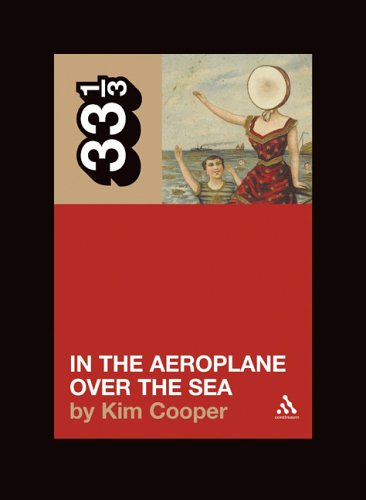
33 1/3: Neutral Milk Hotel - In the Aeroplane over the Sea by Kim Cooper (Continuum, 2005)
My first time reading a 33 1/3 book. I found it interesting in that I expected it to be much more of a criticism work, where in truth this one is much more of a biography/oral history. In fact, the one chapter that is devoted to criticism of the actual songs is by far the weakest piece. I’ve been thinking a lot, lately, about how I relate to art. It’s a subject I go back to every few months — when I was a teenager I used to dream of being a writer for a living, and over the years I have grown more and more repelled by the notion of relying on my creativity (to say nothing of market whims, &c) for my livelihood. Where I firmly land nowadays is “Art is an indulgence, I don’t want to think about it in the context of money, that should come as an afterthought at best.” I realize that quite a few of my artist friends are, in fact, working artists, that is, that’s all they live on — but, if I’m being honest, that thought kind of freaks me out. The reason I’m talking about all this is because, in the way the members (and surrounding circles) of Neutral Milk Hotel talk about the real-time process of making this album, I see, to a great extent, myself, or my ideal at least — these are people who got together for the pure love of craft and of each other, and they thought fairly little about what would come of the process; the only money concern seems to be survival in real time. And they made the best album of all time out of it! Obviously that’s not “just” the result of passion but of tremendous skill as well, but I think the former beats out the latter. It’s a lot like Fort Thunder, in that I think ‘success’ stories like this are few and far between, and probably it’s going to be harder and harder to both maintain these artistic-communal projects — but it is beautiful to see things work out in this way.
WHAT I’M WATCHING
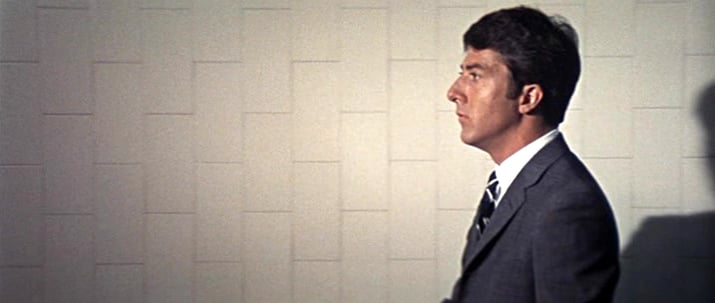
The Graduate (dir. Mike Nichols, 1968)
My favorite thing that I watched this year, by far. Like most people, I think I only knew this one as, well, “the cougar affair movie,” which turned out to be a fairly secondary element — far more important is Benjamin’s general disposition of existential distress and lack of mooring, which, as I said about Celebrated Summer, is just about the easiest way to hook me at this moment in time. It got me thinking about how most of the ‘mainstream’ representations of ‘being in your twenties’ are, to me, sorely lacking, because a lot of the time people seem to have their lives together in a way that doesn’t feel real (to me, a guy who totally has everything together, don’t worry about it). Dustin Hoffman’s acting here feels almost explosive — it feels recognizable to a degree that very few performances I’ve seen do.
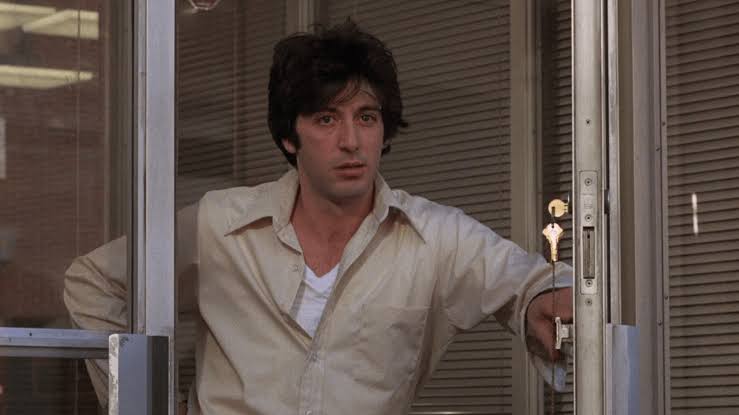
Dog Day Afternoon (dir. Sidney Lumet, 1973)
A shockingly fitting companion to The Graduate, actually, especially in terms of lead performances — Pacino toes the psychological line beautifully, making the viewer constantly wonder and rethink whether he actually believes in the lie he keeps telling himself (and his partner-in-crime). Again, deeply moving on the human level!
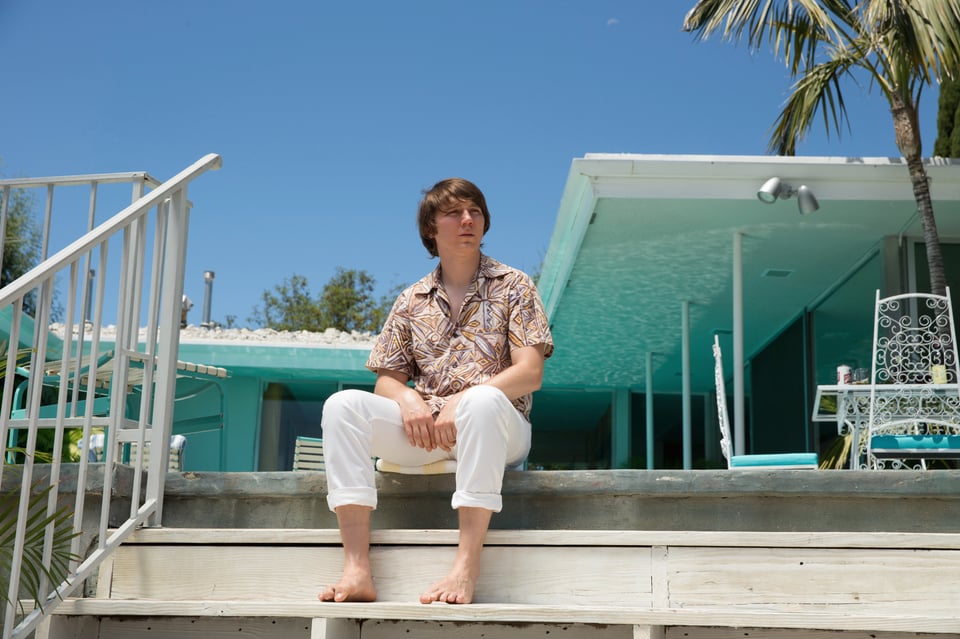
Love and Mercy (dir. Bill Pohlad, 2014)
This was an odd watch — Paul Dano and John Cusack both play a good Brian Wilson, trapped in a fairly shabby movie — on top of being very much “the safe and authorized version of events,” it largely consists of trivia and stories anyone who knows anything about the Beach Boys have probably heard a hundred times, except told inaccurately (or, rather, curated into inaccuracy) — the skip from the moment Wilson drops out of the touring group to the recording of Pet Sounds is deeply jarring (one must remember that a whole album was recorded before Pet Sounds, and that it is, in fact, a really good one), and, while I recognize that this is “a Brian Wilson movie” rather than “a Beach Boys movie,” the other members’ absolute lack of personality/inner life did strike me as unfortunate. The one thing I did find poignant, though, is the way the Cusack bits relate to music — the Dano portion is filled with needle-drops and callbacks, whereas Cusack’s Wilson seems essentially divorced from music: the only times you see him record or write is when Dr. Landy forces him. In a way that’s the perfect opposite of the ideal set by Neutral Milk Hotel: not only does music, work, become a prison for him — he realizes that that prison is the only thing that defines him, and becomes totally unmoored.
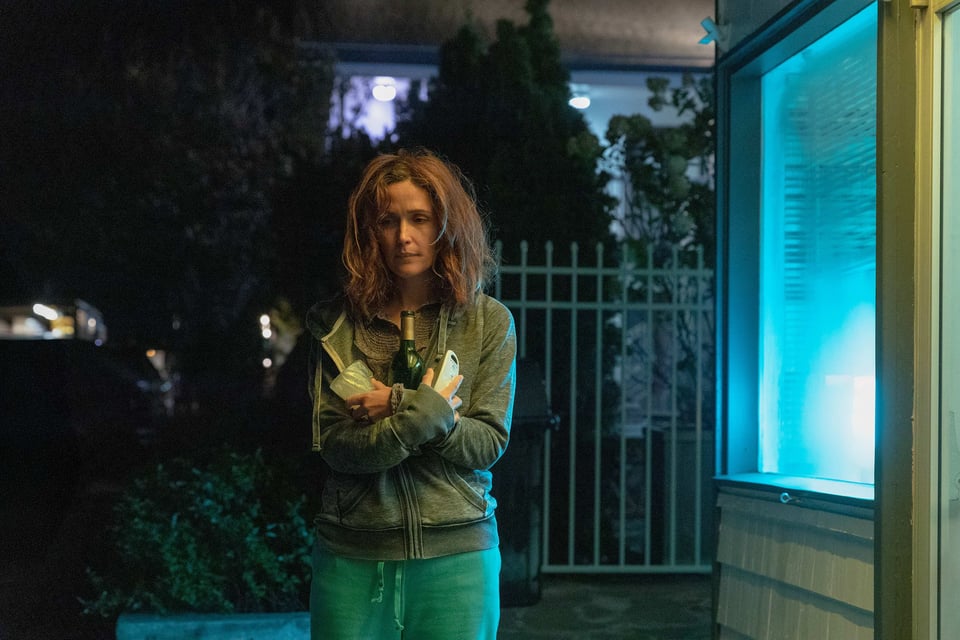
If I Had Legs I’d Kick You (dir. Mary Bronstein, 2025)
Some months ago, in my piece on Jordan Crane, I wrote about the idea of duty, in the familial (or more broadly communal) sense — what you owe to those around you in the long-term, and whether or not your feelings of fitness or ‘up to the task’-ness figure into it at all. That, to me, is the horror at the heart of If I Had Legs I’d Kick You — the constant realization that one is not cut out for the obligations that they nonetheless must live up to, until they become an ever-tightening cage. As a whole movie I’m not sure it fully works—relentless monotony isn’t necessarily a bad thing but it does often lose its impact without anything to offset it even for a moment—but if there’s one recurring theme in this specific newsletter it’s that I’m a sucker for a Bad Time. No lessons will be learned from this, the end.
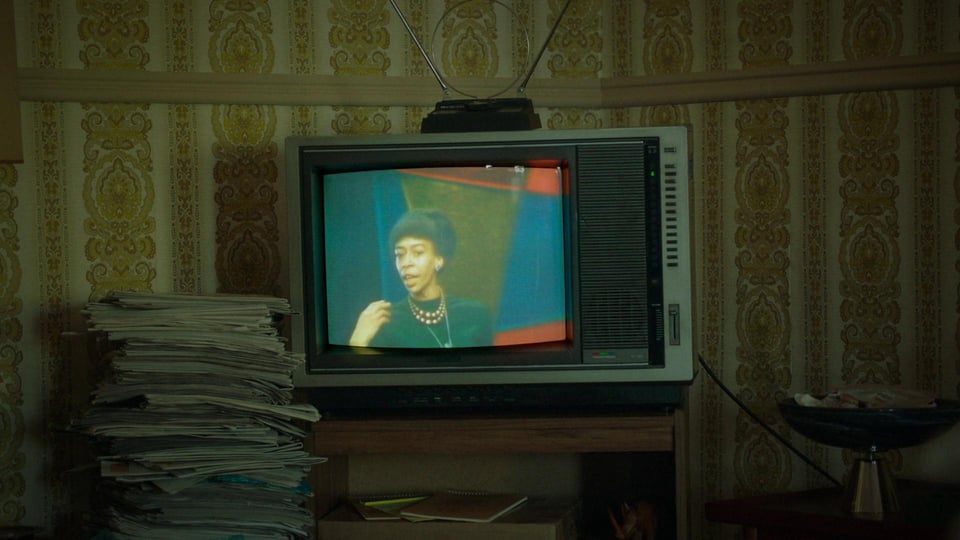
Recorder: The Marion Stokes Project (dir. Matt Wolf, 2019)
One thing I’ve noticed in this age of streaming and DRM reigning supreme is a vocabulary shift that blurs the line between ‘personal engagement with art/entertainment’ and ‘obligation’ — people talking about ‘lost media’ when they simply mean ‘a work that isn’t publicly available (but copies of which still exist)’ or using phrases like ‘physical media’ rather than ‘a print book.’ Recorder plays a similar game of shifting meanings. Marion Stokes, we are told, recorded years on years of TV news, essentially nonstop, out of the express conviction that people need access to knowledge in order to make wise decisions, and that, if the people can see how knowledge is not only mediated to us but also amended and distorted over time by the powers that be (the government, the television networks), they will gain a deeper understanding of the very nature of power and the relations between individual and state. If you take the documentary’s word, you will come to the inevitable conclusion that Stokes maintained an invaluable resource. There’s one issue, though, that the documentary tries to sidestep: these lofty convictions are defeated by the fact that, in her lifetime, Stokes—something of a hermit, zealously isolating herself from anyone outside of her husband and close circle of housekeeping staff—didn’t give anyone access to this knowledge; it was only when she died that her decades’ worth of recordings were donated and digitized, at which point they were not an treasure of real-time historiography so much as an artifact of archiving, of interest only to a fairly niche few. The filmmakers interview her staff and her family, and it is a compelling human story — but the constant attempt to frame her story in terms of political activism falls flat simply because, at a certain point, she withdrew from the political almost entirely. If this is a valuable documentary, it’s only because of what it fails to interrogate — it passes itself off as a case study in activism, but what it is is a case study in the limits of activist rhetoric.
WHAT I’M LISTENING TO
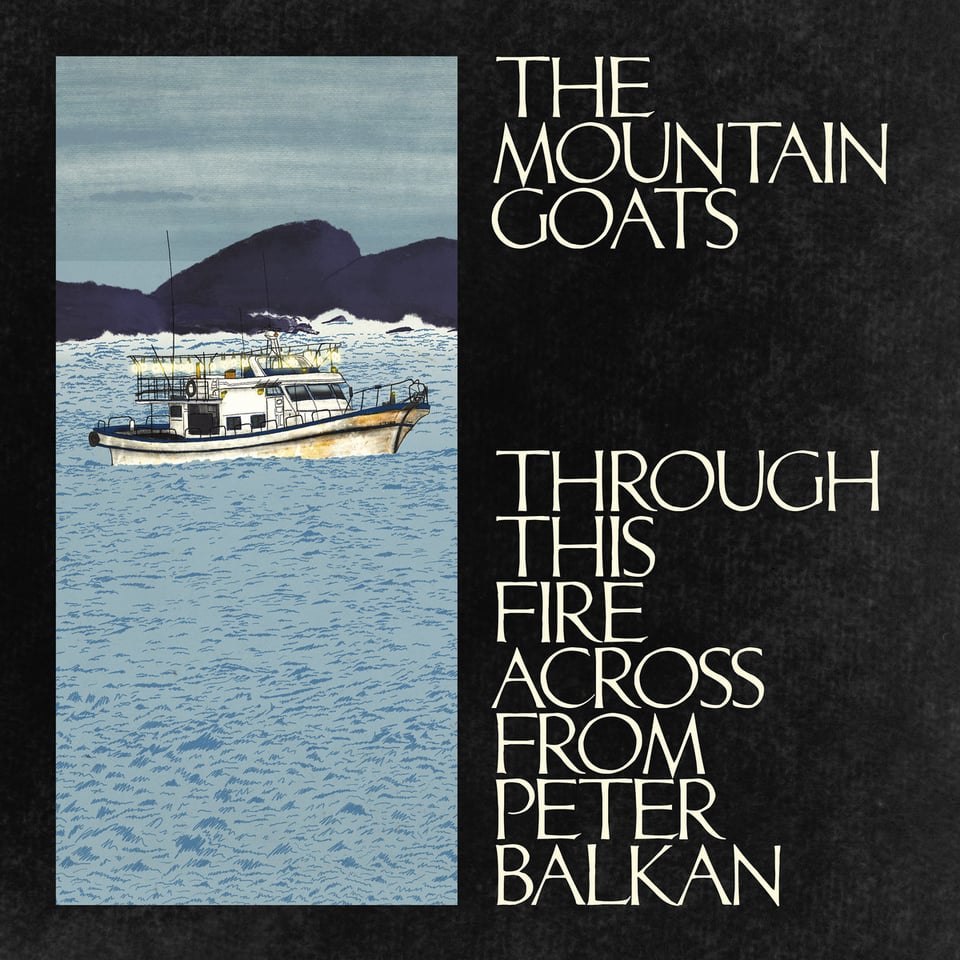
The Mountain Goats - Through This Fire across from Peter Balkan
In my last newsletter I focused on the first single from this one, so I figured I’d circle back to the album as a whole. I think the thing John Darnielle has figured out really well is how to write an ear-worm (which, when one thinks about earlier Mountain Goats, is quite a shocking statement); there’s a couple of tracks on here, and some lines in particular, that sit just right (the way he sings the refrain “looking at you through this fire” in the title track, for example). As a whole, though, I think the framing of this as a ‘musical’ kind of shows the structural weakness of the narrative — for a story that’s supposed to take place over several weeks, the impression you get of the three characters is a pretty thin one (after all, they all talk the same way, and they’re all sung by Darnielle so there’s little variance), and there’s fairly little in the way of concrete events. I think the songs themselves are better than in Jenny from Thebes—which was similarly described as a “rock opera”—but that album gave you a kaleidoscopic view of the central character (here she saves someone’s life; here she kills someone and has to run away) in a way that Through This Fire across from Peter Balkan doesn’t quite manage. It makes me wonder—and I do need to read more of his recent interviews—how much peripheral writing Darnielle did before (or while) writing the actual songs, because there’s a lot more tone than substance here in a way that feels off.
SILLY LITTLE GUY

I met a good few cats in Rome, but this one’s my favorite — as soon as I sat down, he jumped right in my lap and stayed there for a good twenty seconds. For this reason, he is, without a doubt, the silly little guy of the month, the year, &c.
CONCLUSION
That’s it from me, folks. I need to get better at writing these more often, so, if there’s anything you want to see me write about, please feel free to reach out.
In the meantime, happy new year and peace be with you.