2025-03: What I Want is Far Away
So, the problem with having a newsletter is that I don’t want to send one too often but by the time I get around to sending one some of the ‘news’ feels wildly obsolete.
About five minutes after I sent the last newsletter I realized that I forgot to mention a cool thing that happened, which is that the Cartoonist Coop, for its annual Minicomic Awards, chose my short comic with Anna Bow, “Diaphanoids,” as the best sci-fi minicomic of 2024. I’m real fond of that comic, honestly, so it was nice to have it recognized, in no small part because Anna’s art absolutely gorgeous. “Diaphanoids,” of course, can be read on Bluesky and Itch.
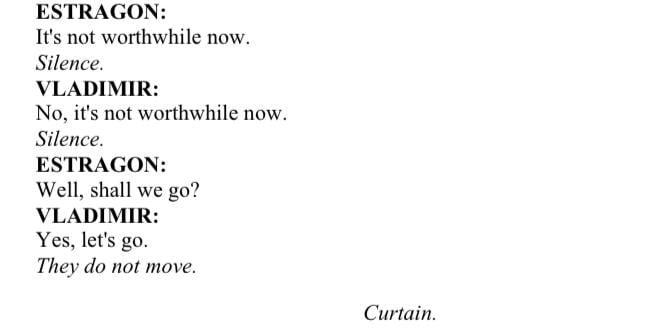
But then, a few weeks after that, I woke up in the middle of the night to an emergency alert: my stupid country had decided, on a dubious pretext, to go to war with Iran. After the first attack from Iran, last October, a friend of mine tried, very kindly, to help me move away from here, to the US, and for a hot minute that was actually a possibility; of course, soon afterwards was the Presidential election, and now that possibility is, well, not a wise one. I’m running out of things to say, really, about Israel — I don’t trust the new Trump-backed deal to “end the war” (between the laundered rhetoric of “de-radicalization and “redevelopment” and the notion of a non-Palestinian “board of peace” overseeing Gaza, I don’t know that this will end in anything more than modernized colonialism), and even in the best case scenario the past two years have shown me that I am fundamentally incompatible with this place. Quoth Beckett:
WHAT I’M WRITING
Comics
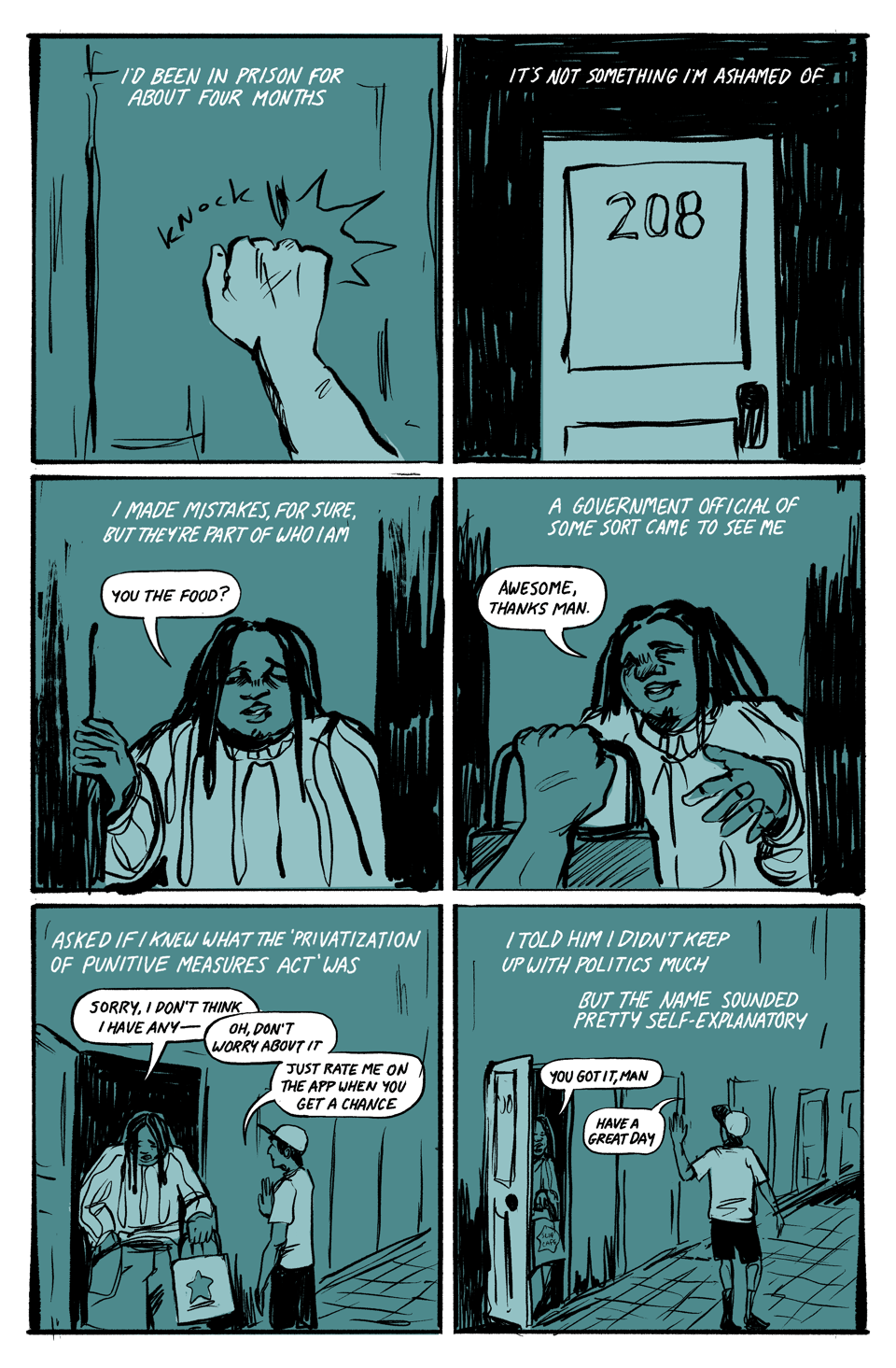
In July I posted the fifth comic of 2025, “Out for Delivery” drawn by Evangeline Gallagher. Longtime Hagai readers will of course remember that Evangeline and I previously did another comic together, 2022’s “The Beauty of Our Weapons,” and getting to work with them again was a blast; I think we both leveled up in our respective work, and I’m very fond of the result, which can be read on Bluesky and on Itch. Here’s the first page (of eight):
Speaking of Evangeline, I was thinking about Raymond Pettibon a while back, and about how I’d like to play a little bit with his almost-a-comic approach to art: image and diegetic caption, presenting a snapshot of a story that spreads in the mind of the viewer. It turns out that Evangeline was quite the Pettibon-head as well, and one thing led to another, which led to this mini-collaboration:
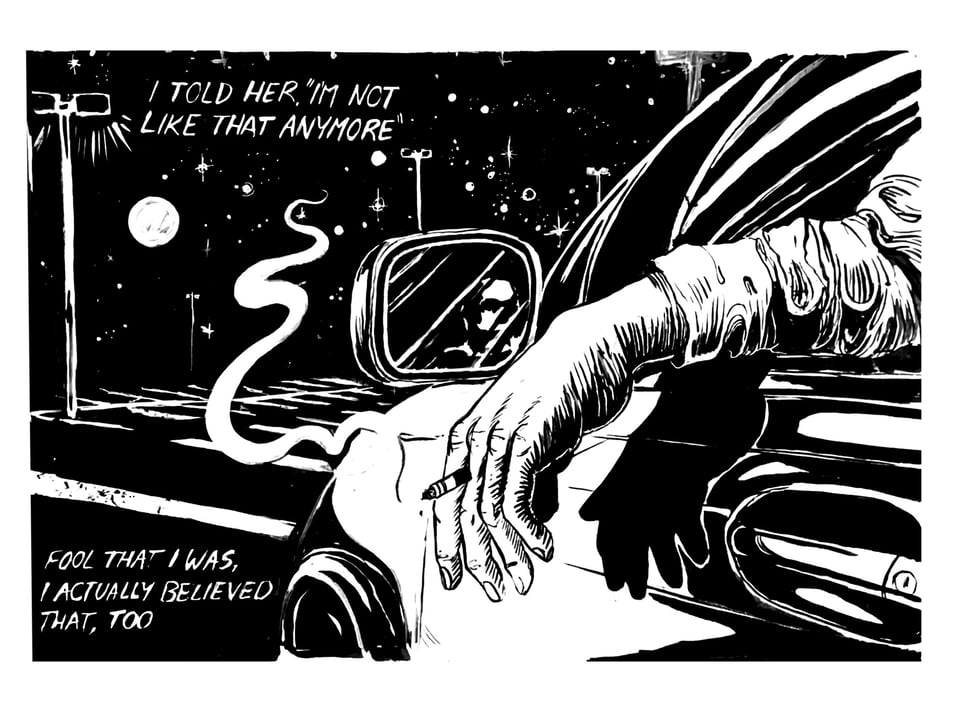
Which I think is cool.
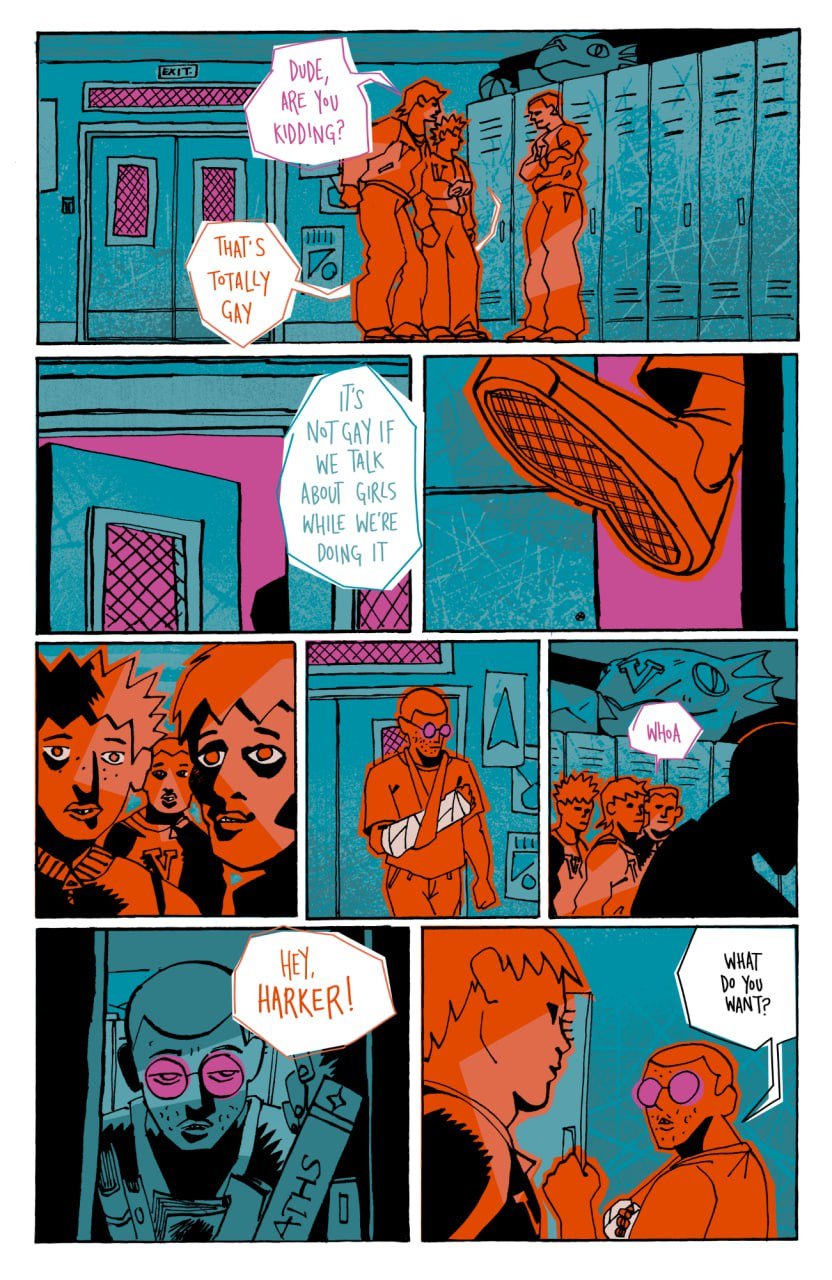
Early October, meanwhile, saw the release of “Cast,” a sixteen-page joint drawn by Aaron Losty, colored by Aaron (pages 1-8) and Marissa Louise (pages 9-16), and lettered by Claire Napier, which you can find on Bluesky and on Itch. It was during the work on this comic that Aaron’s workload popped off significantly, so I am delighted that Marissa and Claire were able to help as beautifully as they did. Here’s the first page of that one as well:
The next few months should hopefully be busy — I’ve got ten different comics either actively in the works or with artists tentatively attached, including one particular comic that I think is the best thing I’ve written so far. I’m excited. I hope you are, too.
Criticism
God, there’s a lot of this. Since we last spoke, I wrote for TCJ about The Concierge at Hokkyoku Department Store by Nishimura Tsuchika (Seven Seas, 2024), a manga I was excited for (I’m very fond of Nishimura’s illustrations) but found myself really rather frustrated by; about three releases from Cram Books (The Yard by Jack Lloyd, Big Gamble Rainbow Highway by Connie Myers, and Leone in Blood from the Stone and Others by Max Burlingame), one of the strongest small press operations currently going; Rebellion’s 2025 collection of Lion serials by Jose Muñoz, which sees one of the best artists of all time defeated by the constraints of ‘70s Brit-comics; and Martí’s The Cabbie (Fantagraphics, 2025) and Brosnan and Hopgood’s Night Zero (Rebellion via Hachette, 2025) — two comics that have absolutely nothing to do with one another other than they’re both late-eighties comics about taxi drivers (I mostly pitched that piece because I thought the idea was funny and I stand by it). Most recently I wrote about another highly-anticipated disappointment, Laser Eye Surgery by Walker Tate (Fantagraphics, 2025); I’ve been a fan of Tate’s since my friend and Fieldmouse Press publisher Alex Hoffman sent me a copy of his self-published comic Chattering, a neat little Martin Vaughn-James-y piece, and it was disheartening to see so many artistic limitations on such full display. Hopefully we will get more Walker Tate comics; hopefully they will be better.
For SOLRAD, meanwhile, I wrote about Tongues, Vol. 1 by Anders Nilsen (Pantheon, 2025), which sees various recurring preoccupations of Nilsen’s converge in a rather unexpected stylistic direction; Crumb: A Cartoonist’s Life by Dan Nadel (Scribner, 2025), in which depth of researching is defeated by historiographic conformism and pure fannishness; A Smart and Courageous Child by Yamamoto Miki, a book that, had I read it in time, I would have surely declared the single worst release of 2024; and Brat by Michael DeForge (Koyama Press, 2018) — a lovely little snapshot of the artist’s fretful mood at that particular moment in time.
Coming up next are pieces on:
Night Drive by Richard Sala (Fantagraphics, 2025)
Paranoid Gardens by Gerard Way, Shaun Simon, Chris Weston, Dave Stewart, and Nate Piekos (Dark Horse, 2025)
Paul Auster’s New York Trilogy: The Graphic Adaptation by Paul Karasik, Lorenzo Mattotti, and David Mazzucchelli (Pantheon, 2025)
WHAT I’M READING
Comics
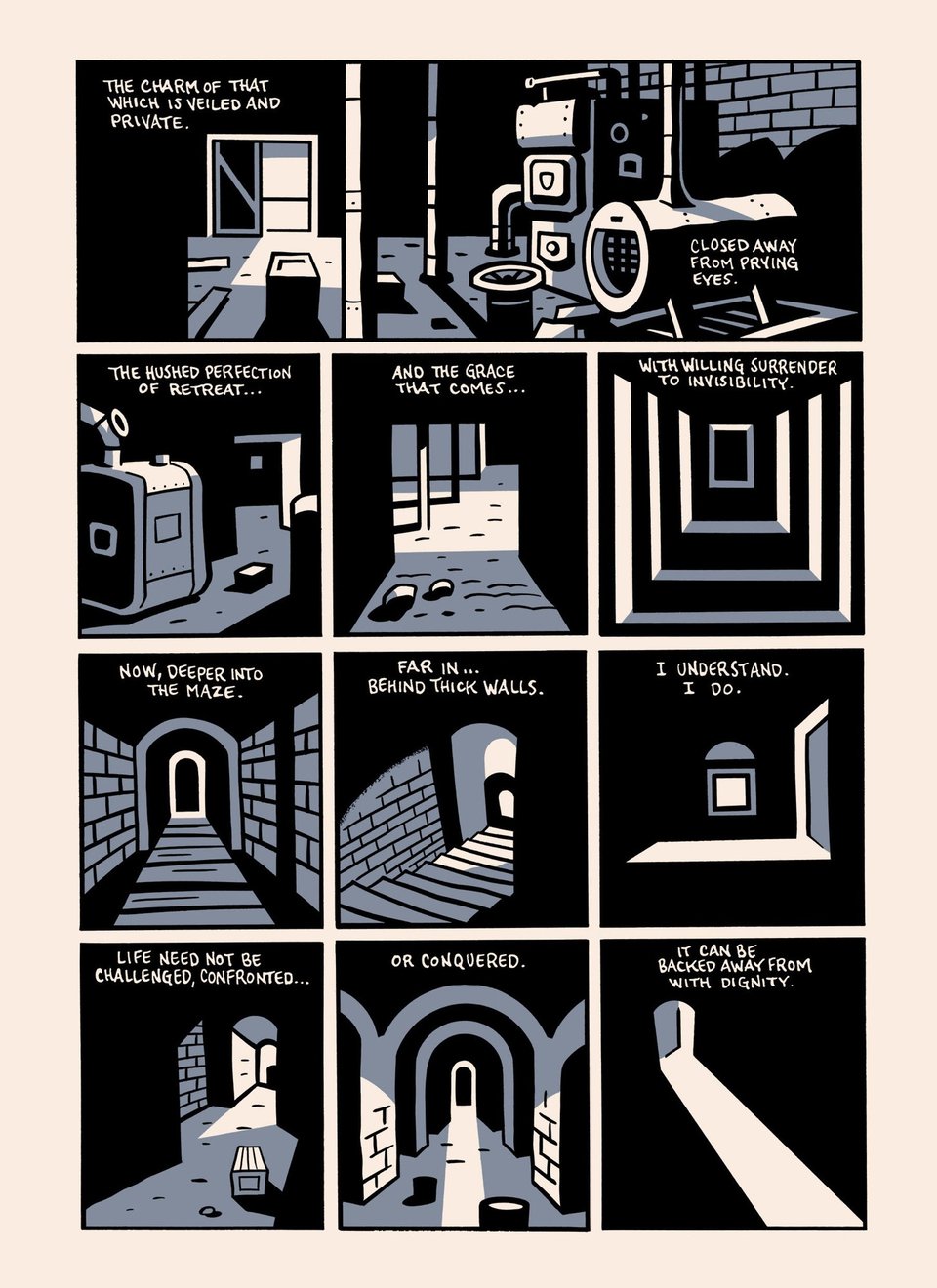
Clyde Fans by Seth (Drawn and Quarterly, 2019)
I can’t remember if I wrote this previously, but Seth is an interesting cartoonist — for years I had some kneejerk aversion to him simply because I dismissed that milieu of cartoonist to be ‘pretentious’ and largely anathema, and Clyde Fans in particular I remember some people deriding as “sad white man comics” when it came out. But the more I read of him the less convinced I was of my own dismissals. Well, I finally read this one—on my birthday, because I thought it would be funny to spend so much of my birthday reading a rather hopelessly bleak book—and, honestly, it’s beautiful. There’s an inherently beautiful thing, I think, about a project taking so long that you can see the changes in the artist’s hand over time, and to me Seth’s cartooning only gets better with time; I like the thick, chunky lines of his latter-day style a lot better than the Newyorkerisms of his ‘90s work. Plus, the fifth chapter features what to me is a clear (prolonged) riff on The Cage by Martin Vaughn-James — one of the best works of art in any art-form. Having now read all of his major works, I am largely convinced that Seth is one of the best cartoonists of all time, a really striking articulator of humanity, and this is quite probably his best work.
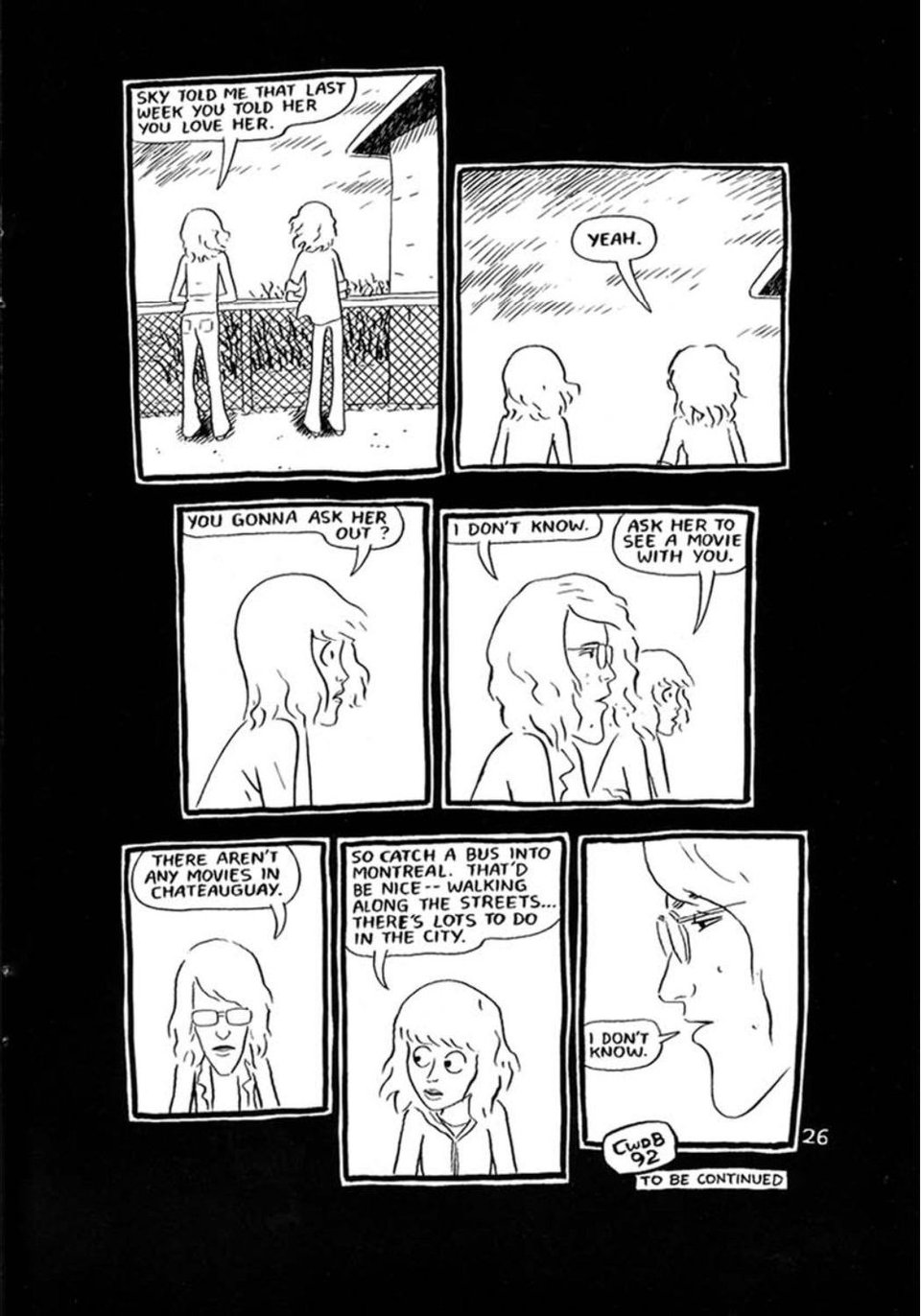
I Never Liked You by Chester Brown (Drawn and Quarterly, 1994)
If I’m already talking about Seth, I may as well talk about his #1 pal, too. What I found striking about this book is how sharply it breaks from the by-then-well-established tradition of autobiographical alt-comix. I think about Justin Green, or Crumb of course, or the folks that would come a bit later, like Bechdel — verbose work, tightly laid out visually. Instead, Brown offers an austere, airy piece of work, with little dialogue and low panels-per-page counts. It feels less like what came before him than what would come after, like the quasi-Dogme95 work of Sammy Harkham. It’s cool stuff! Definitely made me rethink a lot of tendencies in autobio.
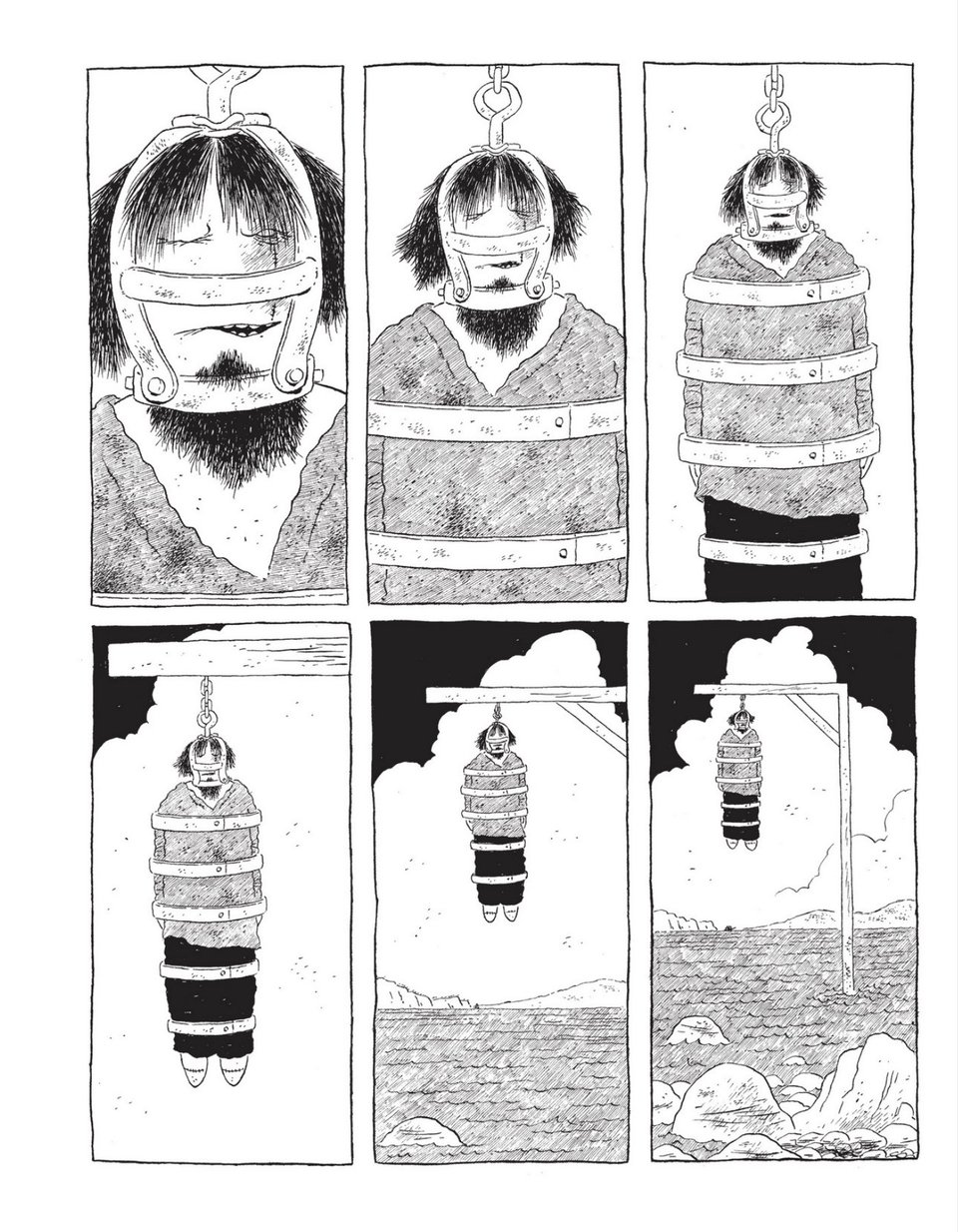
Blacklung by Chris Wright (Fantagraphics, 2012)
My friend Chris Schweizer recommended this one to me, and I admit that I came into it with some trepidation — my sole experience with Wright being a contribution to Fantagraphics’ Now that I admit I just completely didn’t get at the time (though I liked the art even then). Blacklung, by contrast, I found easier to click with, and I’m extremely enamored of it; the cartooning struck me as a cross between the aforementioned Chester Brown and Richard Sala, which is not a crossroads I ever expected, and the tone is just my kind of relentlessly bleak. I don’t really see anyone talk about this book, ever, but I very strongly recommend it to everyone.

The Drifting Classroom by Umezz Kazuo (Eng. tr. Sheldon Drzka and Evan Waldinger, Viz, 2019–2020)
I read all of this in three days in August, while I was laid up with COVID. I’m very much enjoying Umezz’s My Name is Shingo nowadays, and this was an interesting contra; where Shingo is about Umezz trying to understand what it means to make ‘mature’ comics (on the intellectual level more than anything), The Drifting Classroom still falls into the excitement-comes-first school, with its plot-warranted coincidences (a doctor’s son performing surgery successfully, for instance) and sometimes-histrionic drama. This is not to say that I dislike it at all, as Umezz was remarkably proficient and the comics are consistently exciting and compelling, but I do think I prefer My Name is Shingo.
Prose

Perfection by Vincenzo Latronico (Eng. tr. Sophie Hughes, New York Review Books, 2022)
A book I’d been hearing about for a while, and for good reason — it’s a work less of narrative in the dramatic sense than of pure mechanical pattern: a palpable dissatisfaction that intensifies with time, requiring greater and greater force to counter it. A wonderfully cynical piece of work, with a distinct worldview that I feel compelled to compare to David Foster Wallace, or to early Mountain Goats songs: happiness is always within reach — all you have to do is repress how you really feel.
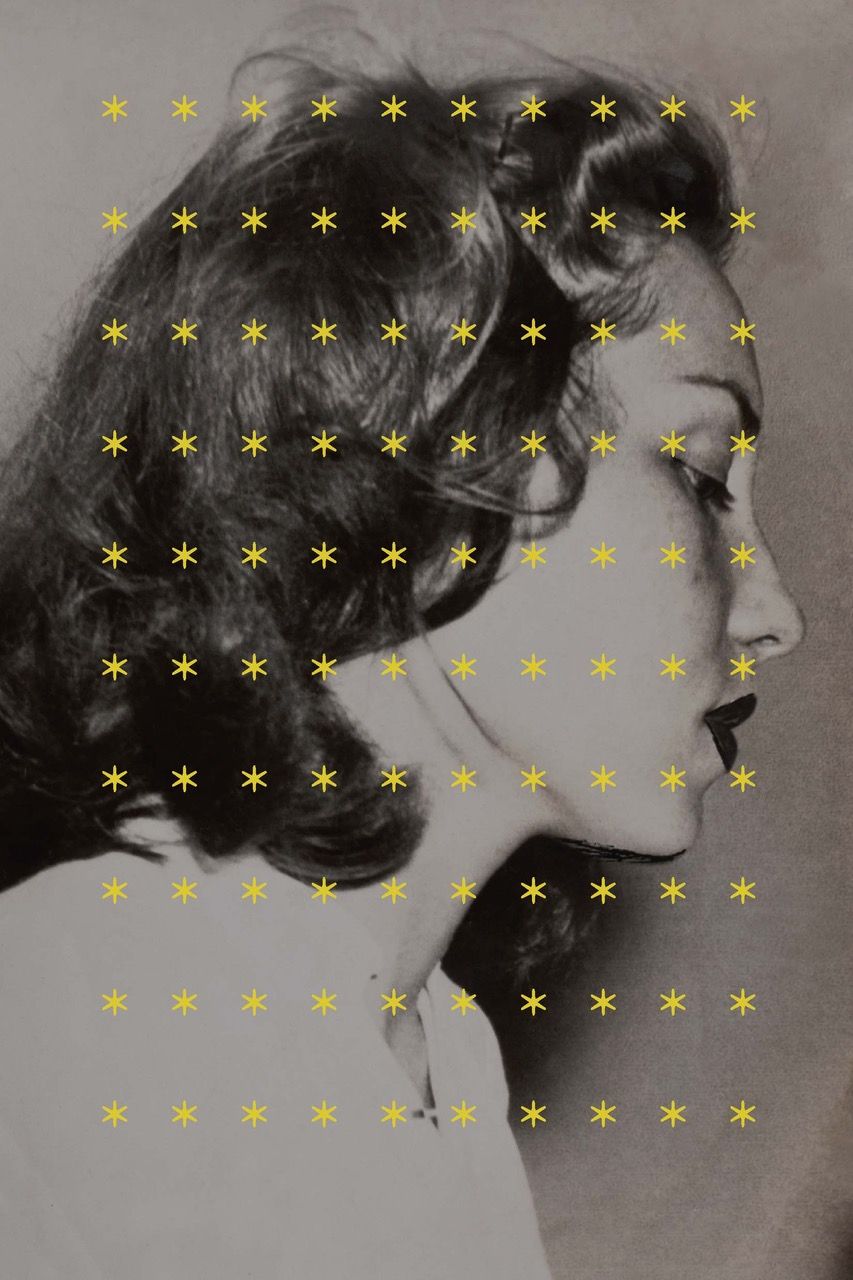
The Hour of the Star by Clarice Lispector (Eng. tr. Benjamin Moser, New Directions, 2011)
To me, this is up there with Nabokov in terms of the three-way play between reader, writer, and narrator: a pernicious little work of criticism-as-practice whose message, pointedly, lies in the framing device rather than in what is framed. I’d read a book of Lispector’s short stories previously, and I was quite taken with that one as well, but this is an immediate all-timer.
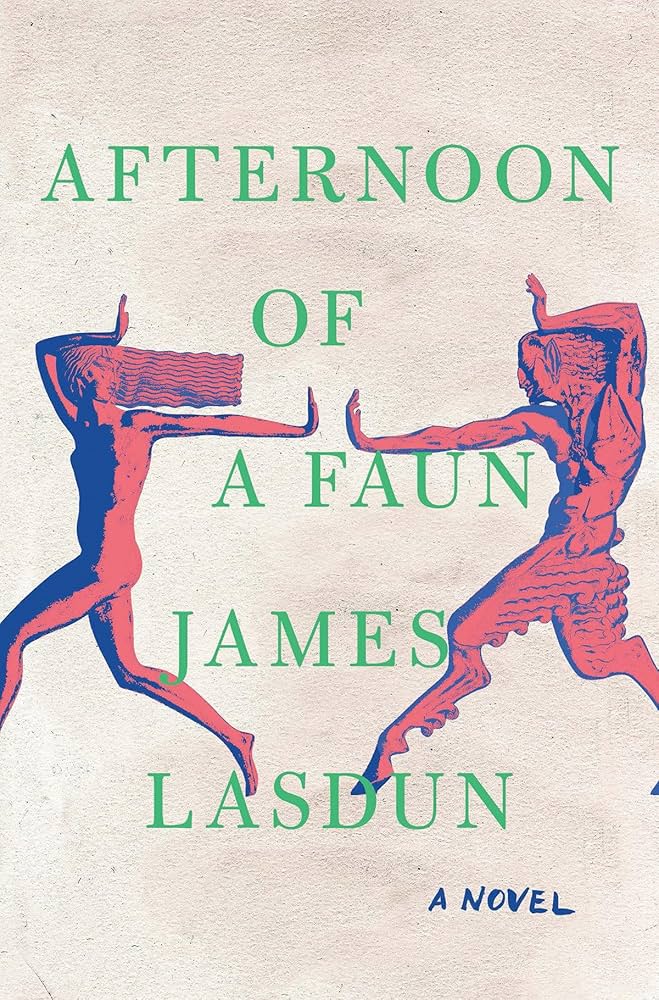
Afternoon of a Faun by James Lasdun (WW Norton, 2019)
It occurs to me now, writing this, that Afternoon of a Faun tries a lot of the same things as The Hour of the Star does — the storyteller as the main character whose combination of smugness or naïveté drives the plot forward. Lasdun, however, winds up defeated by his determination to write an ‘of the moment’ sort of story, zooming in on the events of 2016 (from Brexit to the U.S. elections, with the first signs of what would soon become MeToo in the meantime) as a demonstration of his key points at the expense of the characters: on the human level, he fails to go deep enough for the work to mean meaningful or novel. I’m tempted to compare it to Tár, a movie that, despite my issues with it, was infinitely more specific with its characterizations.
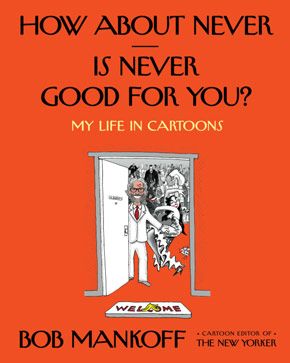
How About Never—Is Never Good for You?: My Life in Cartoons by Bob Mankoff (Picador, 2015)
This is the sort of book that makes me go, Could it possibly be that my argument is unfair? This is a book about New Yorker cartoons, by a long-time cartoonist and editor. And yet, reading it, I couldn’t help but think to myself, “Why is this guy constantly making jokes?” — not because the jokes weren’t funny (well, some of them were, at least), but because at some point, not long into the book, it becomes evident that the tone is more a means of padding than anything else — otherwise the book would probably feel too lean. It’s not that it’s lacking in insight, per se, but it fails to dive deep enough into that insight; an okay work that could have been—should have been—more.
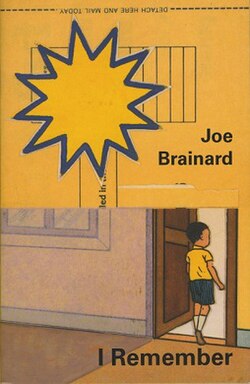
I Remember by Joe Brainard (Angel Hair, 1970)
This, on the other hand, is a special one. If you’re unfamiliar, I Remember is very much a work of a singular principle: the base phrase “I remember” followed by a specific detail (an anecdote, an object, a phenomenon) that Brainard remembers from his life or upbringing. Through this scattershot cataloging of ostensibly-throwaway details, he constructs a beautiful microscopic portrait of life. Two thoughts came to mind as I read it: the first was, How come I’ve never seen anyone try to do a comics riff on this? The second was, God, I would never be able to pull this off. My number one standard for good art is, “It shows me something I would not have come up with myself.” In this regard, I Remember is a mighty success.
WHAT I’M WATCHING
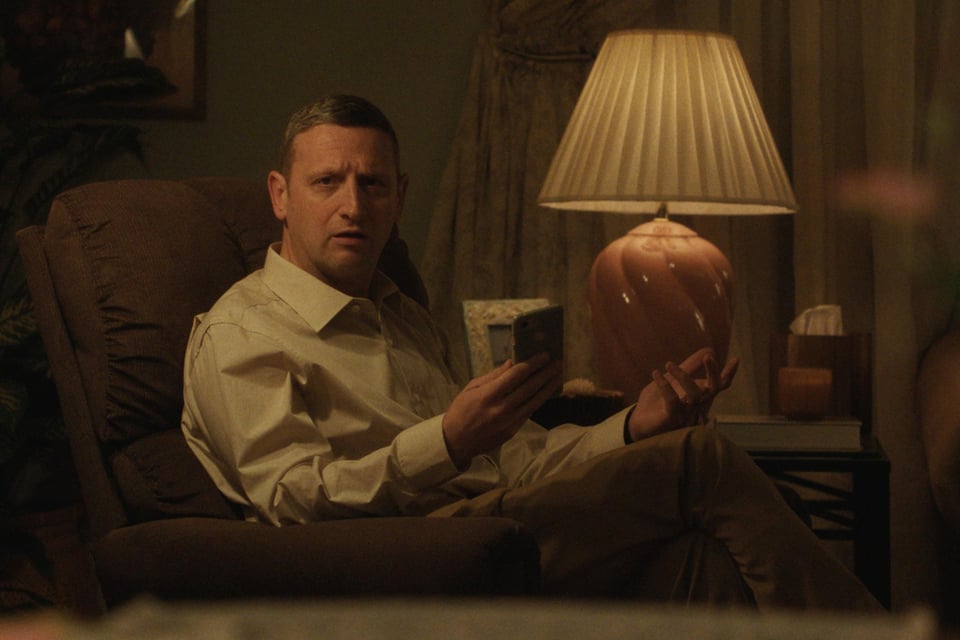
Friendship (dir. Andrew DeYoung, 2024)
I’m quite fond of I Think You Should Leave, a fondness I seem to share with Andrew DeYoung. Unfortunately, this fondness seems to be the singular point of reference from which this movie springs, even though the reason I Think You Should Leave works is in its brevity coupled with the extremity of its humor (taking broadly-recognizable Types and stretching them past the point of of real-life recognition). In light of its feature length, the script here makes the decision to ground Tim Robinson in a largely realistic world wild still keeping Tim Robinson as, well, a Tim Robinson character. This creates a tonal clash from which the movie cannot recover, a cartoonish asshole versus a world that has, for once, Consequences, forcing the movie to serve as its own counterargument. Not a conducive exercise, this poking-holes-in-one’s-own-jokes, and it should come as no surprise that the best part is Conner O’Malley’s appearance — because here is a guy who is not really bound by the movie-world’s perceived social Rules.
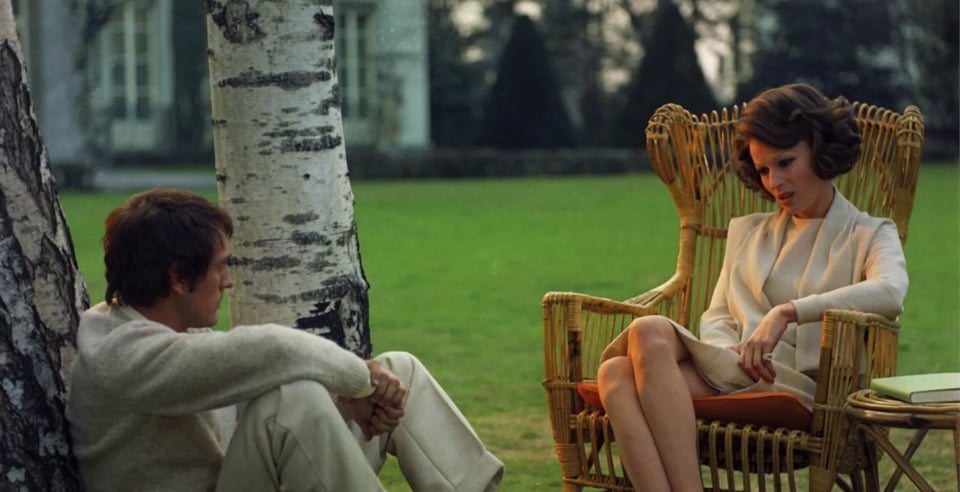
Theorem (dir. Pier Paolo Pasolini, 1968)
The first thing I thought when I finished this movie was I wonder if Julia Gfrörer has watched this, and if you’ve read Julia’s work (of which I am, of course, very deeply fond) this should give you some indication of the movie: deeply spiritual, interested in dogma but more from the outside than the inside. It’s beautiful, and harrowing, and deeply moving, in ways I’m not sure I can quite articulate.
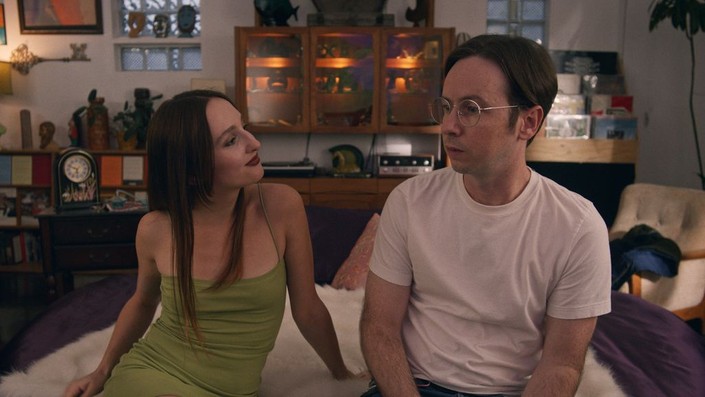
Paying for It (2024, dir. Sook-Yin Lee)
I haven’t read the comic, but I found this a fairly charming character piece, with two main caveats: I don’t feel that the key point—the notion that romantic love is a form of subjugation to be outright rejected—is argued in enough detail (I’m sure Brown has written about it himself extensively), and I wish we had more time with the supporting cast; as it stands, it feels like the whole friend group exists less as characters in their own right than as a collective contra to Chester’s argument. Did I find it funny that Chester Brown makes a cameo as a nameless john? I admit, I did. I’m simple that way.
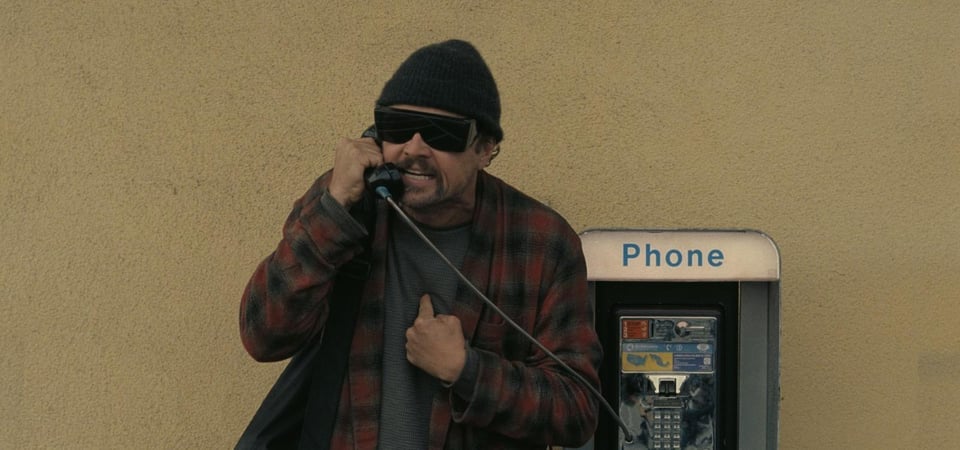
One Battle after Another (dir. Paul Thomas Anderson, 2025)
Thomas Pynchon is a major favorite author of mine, even though my probable-undiagnosed-ADHD-addled brain can only really process him about 70% of the time, and so I can’t help but approach this through a Pynchon lens. From that perspective, this does feel somewhat watered down (even taking into account that Vineland is maybe the most sedate of Pynchon’s books). Still, it’s an entertaining, energetic piece of work, with some striking performances — possibly the most I’ve ever enjoyed DiCaprio, certainly Sean Penn, whose performance manages to hit at the pathetic insecurities of the political right without quite devolving into the cartoonish reductivism of Jojo Rabbit, which is in itself worth mentioning. More than anything it makes me want to revisit some other PTA movies, as I haven’t seen his other movies in quite a few years and I wonder what I’d make of them now.
WHAT I’M LISTENING TO
Well, it’s kind of impossible to talk about music here without talking about Brian Wilson, who died a couple of weeks after I sent the previous newsletter. I was saying to a friend of mine a few days ago that, ever since I listened to specific two albums I simply have not been satisfied with any other music in the same way. One of these albums was Pet Sounds by the Beach Boys (the other was In the Aeroplane over the Sea by Neutral Milk Hotel, a work so big that I simply have no idea how to approach it). And, really, I am listening to the Beach Boys a lot more than any other artist, because most other albums just sort of come and go for me right now — even ones that I would’ve listened to nonstop a year or two ago.
But there’s also a new Mountain Goats single, so I should talk about that as well. If you care about me enough to subscribe to my newsletter, you probably know that I’m quite fond of the Mountain Goats; I’ve flown out to see them in concert four times, I’ve raved about their music extensively.
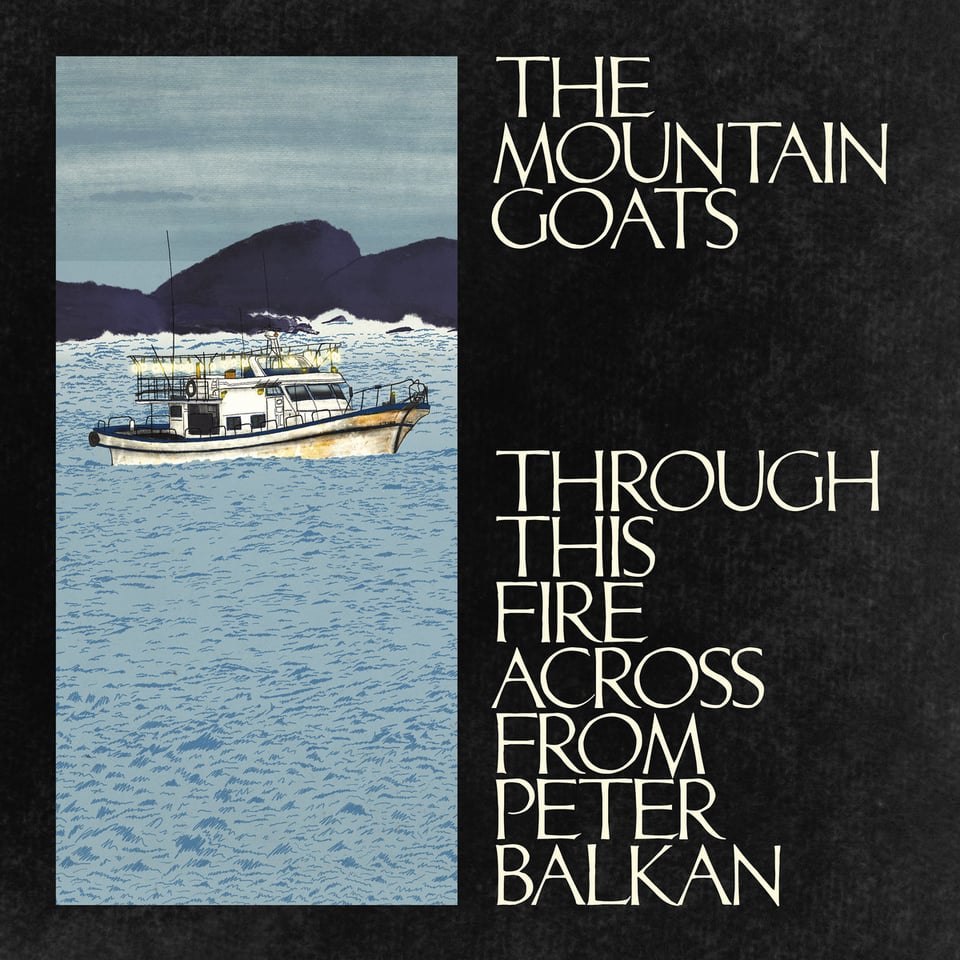
The thing I’ve noticed in the past few years—since Dark in Here, I think, though looking back it applies to In League with Dragons as well—is that John Darnielle has very much settled into the well-worn adage that as artists (regardless of their chosen art-form) age they care less and less about the exploratory spontaneity of voice and more about the rigor of technique. This does not, mind you, mean that the work is bad by any stretch—I don’t think Darnielle has ever recorded a song I didn’t at the very least enjoy—but it does mean more of an emotional distance, which is strange to think about given that the old Mountain Goats stuff was off-beat and often musically arrhythmic (I’m sure I would better articulate this if I knew literally anything about music) specifically because of their emotional specificity and the immediacy of process, from writing to recording often on the same day. If I had to summarize the difference between old Mountain Goats and newer Mountain Goats, it would be that older songs are written around an emotion whereas in the older songs the emotion is written into the song.
You can feel this distance in the new track, “Armies of the Lord.” It’s a handsome, welcoming sort of piece, heartfelt but refined — very much a flex of the musical and vocal muscles. Hard not to compare it to the Jenny from Thebes rollout — I certainly like this one better than I did “Blank Slate,” as the bulk of Jenny from Thebes, especially the singles, took a while to grow on me (mostly I came to appreciate it after seeing much of it performed live — it’s very different to see a band palpably have fun with the material than to just listen to a track on your phone). But I do feel, at least partly, like something is… if not lost then changed fundamentally. Which is alright, really—I can’t ask an artist to stand still forever—but I do wonder if there is a sufficient element of challenge at play here.
Anyway, there should be another single out this week. That should be fun.
SILLY LITTLE GUY
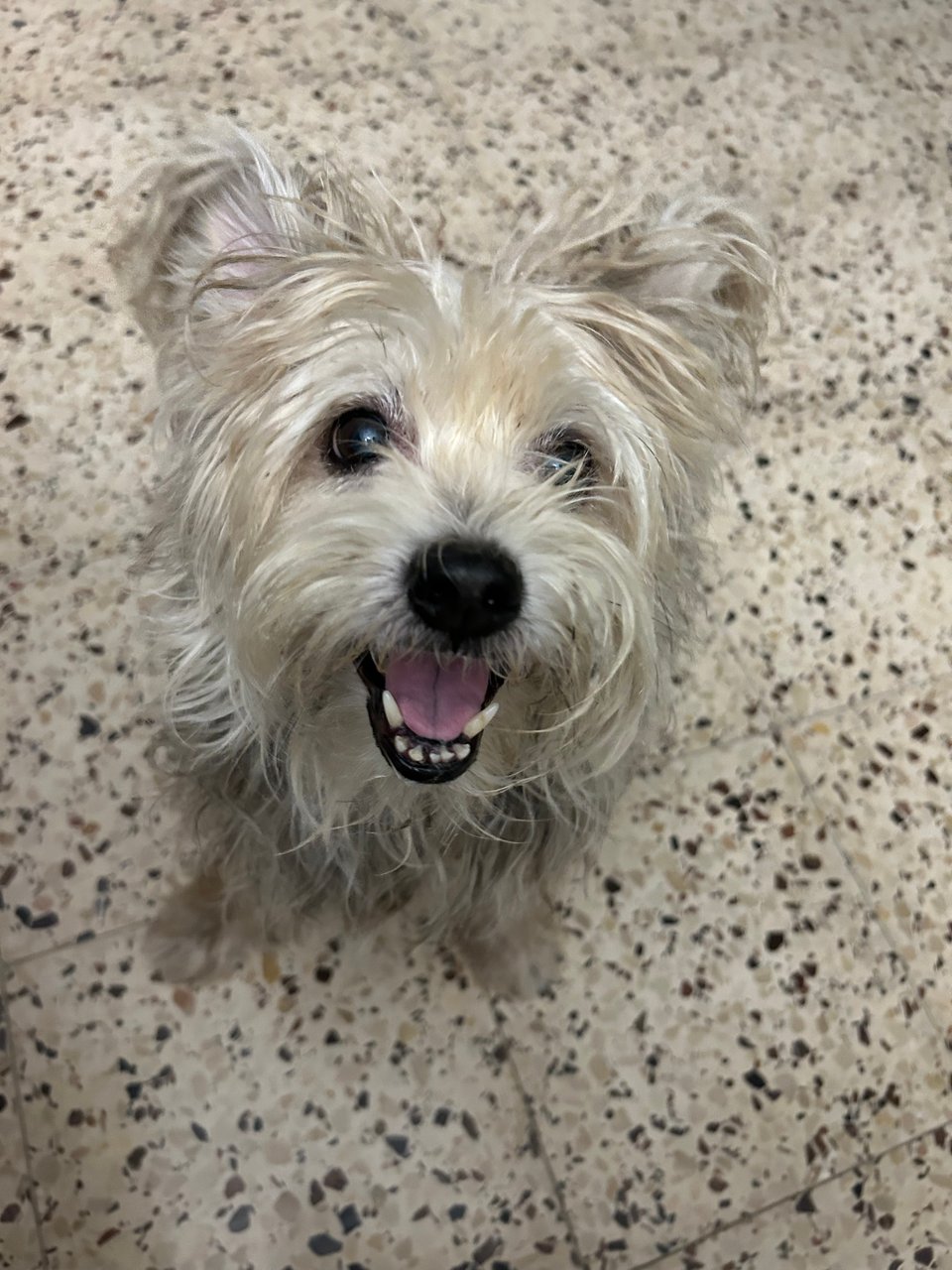
This installment’s Silly Little Guy is my sister’s dog Scruffy, who we’re watching for the next few weeks. She’s a sweet, muppet-like girl and I’m very fond of her.
CONCLUSION
That’s it from me. I’m hoping to get another newsletter out before my Europe flight in November, because if things go well by that point I’ll have three new comics to talk about. In the meantime, I invite readers to check out the currently-ongoing ShortBox Comics Fair — I’m hoping to write about a few of the comics for TCJ, though time will tell whether I actually manage that.
As usual, if there’s anything that people want me to use this space to talk about, feel free to drop me a line; if instead you would like me to shut up forever then you can say that, too, but that would hurt my feelings so please don’t do that.
Folks, peace be with you.