![[Indistinct Chatter] logo](https://assets.buttondown.email/images/6151609f-9740-4849-8e12-fa40bef93ca6.JPG)
[MF]#4 / The band The Beatles could have been
Oh PTA…
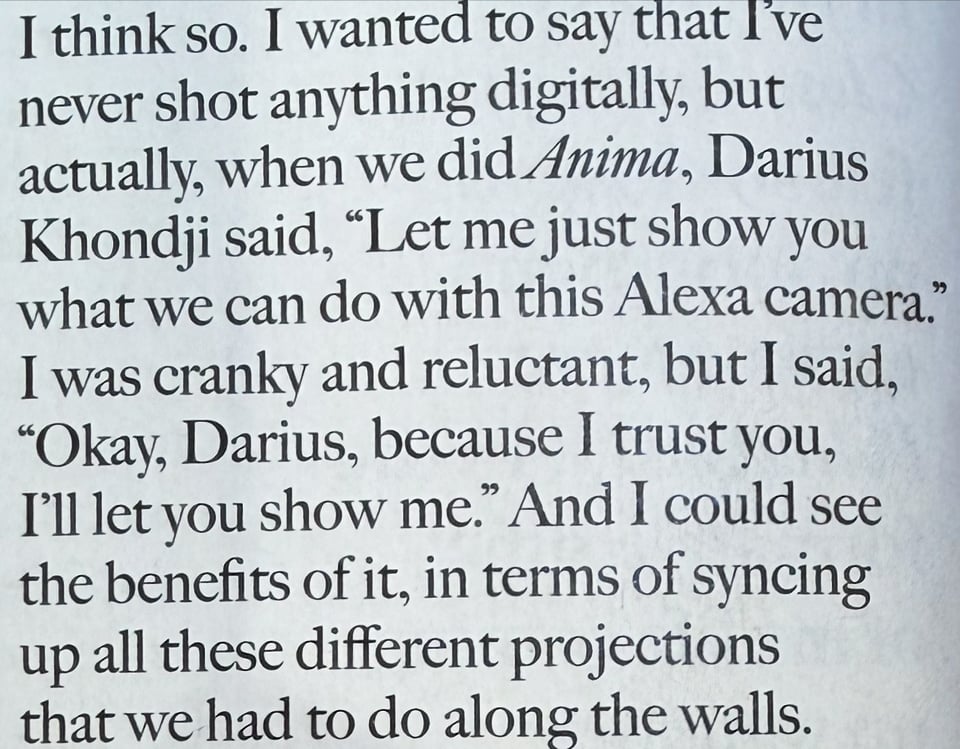
Paul Thomas Anderson is my favourite filmmaker so it pains me to start this month’s piece on music films by sharing some umbrage I have taken with him. In my book Music Films, write a little about how filmmakers of music films are themselves sometimes the most egregious critics of the unfairly maligned genre. Often it’s by using the qualifier ‘just’ when talking about a detour into the genre. As in, “I don’t want to ‘just’ make a music documentary or concert film”. Sometimes it’s by ignoring the film when talking about their filmography. As above. Often critics and fans when ranking the films of directors will only include narrative feature films, demeaning documentary and short work in the process. I’m always arguing for the inclusion of music films on an equal footing in discussion of director ouevre. It’s frustrating that PTA said what he did above, not least because of his relationship with one of the only filmmakers, Jonathan Demme, who is an exception to the above rules and for whom one of their music films, Stop Making Sense (1984), is always discussed on an equal level to their best narrative feature work.
It’s also frustrating because Anderson made a wonderful music film, and she most of it himself, using digital cameras. Le sigh. Junun (2015) is a deft and featherlight observational doc that captures the recording of a collaborative record, created inside the Mehrangarh Fort in Jodhpur, featuring frequent PTA collaborator, composer Jonny Greenwood. The film is playful and quiet. The tone is relaxed, in terms of the music-making but also the curiosity of the filmmaking. Anderson at points literally wanders around filming pigeons or going of with a musician to fix a harpsichord [which feels like a lovely happenstance callback to the harmonium so central to 2002’s Punch Drunk Love]. And, it was all shot on Blackmagic pocket cinema digital cameras, that PTA took to play around with and see what they could do. The result, a feature shot digitally, predates his dance film with Thom Yorke Anima (2019) by four years. It irks me that it was ignored in that above chat, by PTA and by the interviewer and editor.
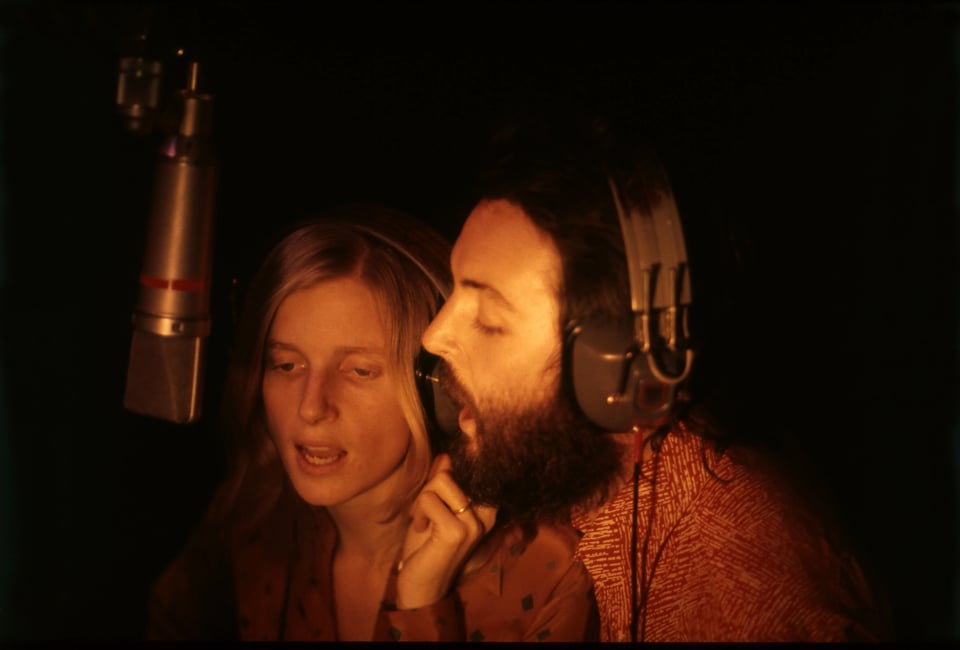
Paul McCartney: Man on the Run
I have honed my dislike for this film over a series of conversations (okay, rants) since seeing it (a week ago at time of writing). However, the best description of it might be something my friend Tim Plester asked “give me an example of something so good it’s bad”. This sprang to mind immediately, and not because I’d just seen it and the experience was still fresh. There is nothing wrong with this film. It’s competently made and has the slick veneer we have come to expect from prestige music documentary. There is solid archive footage and photos, and a couple of surprising interviews (Nick Lowe FTW!). It’s just, so, fine. Barely ‘mid’, if le kids are still saying that.
It is chimerical. It strives hard to convince the audience that something is at stake but nothing is. It also suffers from referring backwards to the Beatles era and outwards contemporaneously to what John is doing and due to both, solo Macca’s post-Beatles life comes up wanting. It’s not to say that there wouldn’t be interesting things to focus on, such as why he felt compelled to be a touring musician (John and George didn’t take this route), or more focus on Linda’s photography. It’s just that with McCartney clearly wielding an iron glove regards the telling of his story, it becomes a list of stuff [Wikipedia Filmmmaking, Facts and Footage] and none of it is that interesting. Also, the music objectively just isn’t as good. There’s nothing as heavy as ‘Helter Skelter’ despite one talking head saying the opposite. The scent of Alan Partridge’s assertion, that gives this post its title, is inescapable.
McCartney laments a tad that there was no one around (after John) to tell him when something sucked - and it’s funny to see footage of John saying that of Paul’s solo stuff - but the film suffers from a similar lack of editorial criticality. Fans of their favourite Beatle will find their argument stoked through a pretty whiny woe is me subtext that rankles. He says all he wanted was an ‘ordinary life’ and yet embarked on a continuation of the opposite and it’s disingenuous. After being a Beatle, there is no normal. It’s a shame that he didn’t embrace that and that the film didn’t push for a modicum of real emotional truth.
Art Will Save the World
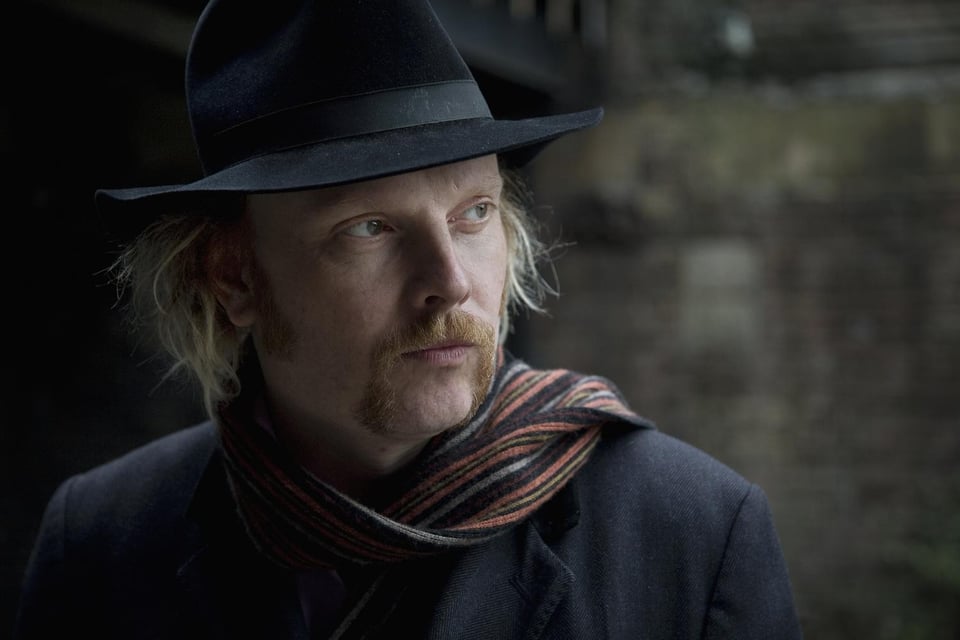
Niall McCann makes great music films. In my book I write about his wonderful 2016 film about the label Chemikal Underground, Lost in France. I mention also in a footnote his superb film about Adrian Crowley, The Science of Ghosts (2018). Around the release of Lost in France Niall reached out about something I wrote on the film and we had a short and meaningful dialogue. When the book came out our mutual friend Rod Stoneman reintroduced us as he knew Niall was looking for support making his new film, about Mark Fisher, and Rod knew I’d be both interested and possibly able to help.
It’s been a privilege to play a minuscule part in bringing the film to closure, a process that is still ongoing. Niall and I have talked on and off over the last year, sharing an open discussion about mental health challenges, parenting, and the complex task of making independent film. I love Niall’s work, and so it was a thrill when he sent me a link to his, still sadly unavailable to stream, film about (with?) Luke Haines, Art Will Save the World, from 2012. Having watched it, finally, in the wake of the asinine McCartney movie, I felt compelled to write about it here. It’s everything a music film can and should be.
It’s not a film about Luke Haines, it’s a film with Luke Haines. And is all the better for it. Haines is a mischievous collaborator. Narrating and commentating, on the soundtrack and within the frame. He is at best sceptical and at worst sabotaging of Niall’s film and it works perfectly as a vehicle for engaging with the main force behind the auteurs, Black Box Recorder, and the author of Bad Vibes: Britpop and My Part in Its Downfall. There are many meta layers to the film that sees Haines construct a persona for the film, and at parts comment on actors being cast to play him in a biopic/dramatic reconstruction of his life. It’s Pavements (Ross Perry, 2024) a decade and change before Alex Ross Perry’s seminal film.
Haines audibly hates this part of the film, and any of McCann’s reconstructive inserts. This is just one of the elements that makes the film hilarious and the fact that it also manages to be a deep critical engagement with Haines’s career at the same time is astounding. Haines’s articulation that Britpop didn’t exist because it wasn’t an idea and didn’t have any ideas is fantastic. As is Haines’s reflection on how his own book may have had a part in actualising an idea that it did, even in negative. Jarvis is in it, and on good form. It’s particularly funny when he learns that he is in Haines’s book and admits to being frightened.
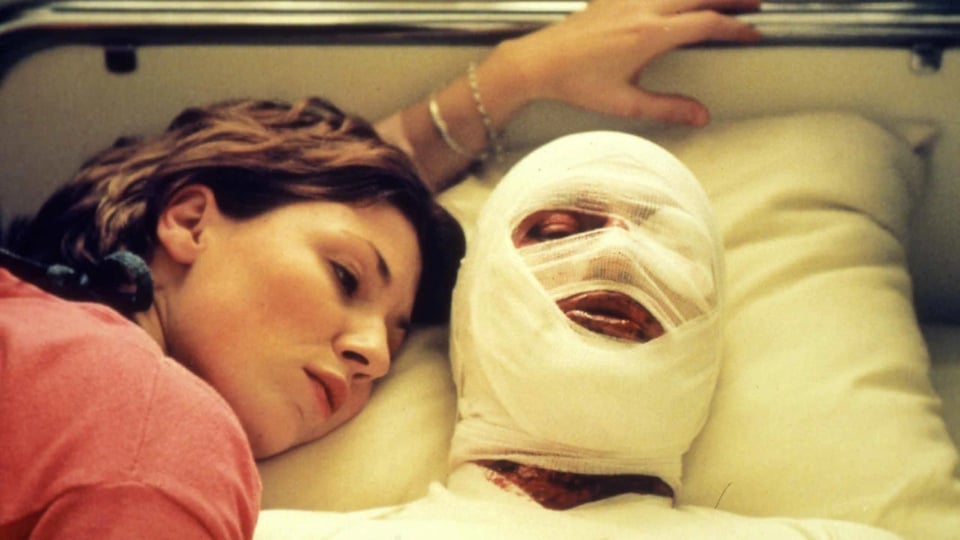
I was particularly pleased that significant time was spent discussing Haines’s music and score for the hugely underrated British film Christie Malry’s Own Double Entry and that director Paul Tickell is featured in the film. I have very fond memories of the film and have long championed it. McCann’s film says it was never released. I’m not sure if this is fabulism on the part of the makers, but it was released. I have the DVD. Well, it’s in Luton. My friend and collaborator Justin [still] has our copy. He’s going to send it to me so I can rewatch.
I say our copy, because we got the DVD when we programmed the film in Luton at the Hat Factory, a venue where we hosted some of our Filmstock festival and programmed regular seasons and films. We also had the Quad poster if I recall. For the screening in Luton, the star of the film Nick Moran came up to Luton to do a Q&A. We ate dinner at a lovely Italian restaurant over the road from the Hat Factory as the film played. We hoped Luke would make it to the event, but he couldn’t. We did see him do a Q&A about the film, with Moran [who was so lovely and himself made a wonderful narrative film about a musician, Telstar, about Joe Meek, in 2008] and director Tickell, at the Scala as part of a Shooting People special event.
The section in McCann’s film fits seamlessly with the rest of the narrative and telling. It’s enlightening, and astute, and enigmatic. Just like the figure at the heart of the film. It also did something that my favourite music films do, it has me reaching for the music to spend more time with the maker, having new emotional insight into the context of its making. A truth of sorts, because facts are meaningless, and as Haines says in the film “the past isn’t what they tell you”.